Tag Archives: Dance

Ballet Test | Quizlet


Fun little test and several ways to do it!

Ballet Test | Quizlet.


PAY ATTENTION – A Short Documentary on Vimeo


PAY ATTENTION – A Short Documentary on Vimeo on Vimeo

via PAY ATTENTION – A Short Documentary on Vimeo.

Two NYC Dance Landmarks Poised to Close from Dance Magazine


Amsterdam Ballet and New York Ballet Theatre on verge of closing, read on…

Dance Magazine – If it’s happening in the world of dance, it’s happening in Dance Magazine..

New York City Center’s Fall for Dance Festival’s Two Free Evenings of Dance| Sept. 16 & 17….


NYC Dance Stuff's avatarNYC Dance Stuff

10th Anniversary Season of New York City Center’s

 FALL FOR DANCE FESTIVAL

Kicks Off with

 FREE Dance in Central Park, September 16 & 17

 Hosted by The Public Theater

New York City Center will celebrate the  10th Anniversary of its Fall for Dance Festival with two FREE evenings of dance at the Delacorte Theater in Central Park,hosted by The Public Theater, on September 16 and 17 at 8 p.m.(rain date, September 18).

The FREE performances at The Public’s Delacorte Theater will feature four Festival alumni:

New York City Ballet (Red Angels, 1994)

Paul Taylor Dance Company (Esplanade, 1975)

Ronald K. Brown/Evidence (Upside Down, 1998)

STREB Extreme Action Company (Human Fountain, 2011)

(The same program will be performed on both nights.)

Free tickets will be distributed, two per person, at The Public’s Delacorte Theater on the day…

View original post 12 more words

A CONVERSATION WITH CINCINNATI BALLET’S KAPLAN NEW WORKS CHOREOGRAPHER JAMES KULDELKA


Reposted from Valinkat

valinkat's avatarValinkat

The Man in BlackCincinnati Ballet dancers Thomas Caleb Roberts, Danielle Bausinger, & Patric Palkens in James Kudelka’s “The Man in Black.”

 Photo by Peter Mueller.

 Recently I asked choreographers on the same bill (the upcoming Cincinnati Ballet Kaplan New Works, opening next Thursday, 9/12/13, at the Mickey Jarson Kaplan Performance Studio) questions: where they got inspiration for their work, and how doing a piece with quick lead and rehearsal time for a small venue stretched their choreographic chops. I asked them about their style and their music, and how music drove their movement. The resulting article appeared August 21, 2013, in CityBeat’s “Fall Arts Preview”: http://www.citybeat.com/cincinnati/article-28412-cincinnati_ballet_rings_in_50.html

The one choreographer I was not able to speak with personally (James Kudelka) recently responded through his agent with answers to questions I emailed him, trying to replicate the things I asked Heather Britt, Jodi Gates, Gina Patterson and Val Caniparoli about their “new works.” By…

View original post 1,616 more words

Love’s Limbo Lost


//www.googletagmanager.com/ns.html?id=GTM-5DBTHW
(function(w,d,s,l,i){w[l]=w[l]||[];w[l].push({‘gtm.start’:
new Date().getTime(),event:’gtm.js’});var f=d.getElementsByTagName(s)[0],
j=d.createElement(s),dl=l!=’dataLayer’?’&l=’+l:”;j.async=true;j.src=
‘//www.googletagmanager.com/gtm.js?id=’+i+dl;f.parentNode.insertBefore(j,f);
})(window,document,’script’,’dataLayer’,’GTM-5DBTHW’);

Picturing Shakespear. Mnsr. Vestris in  Les amans surpris / J. Roberts, del. ; Thornthwaite, sc. A favorite ballet of the time.
Picturing Shakespear. Mnsr. Vestris in Les amans surpris / J. Roberts, del. ; Thornthwaite, sc. A favorite ballet of the time.

http://www.opensourceshakespeare.org/views/plays/play_view.php?WorkID=henry8&Act=5&Scene=3&Scope=scene           (Shakespeare, “Henry VIII,” act v, sc. 3)

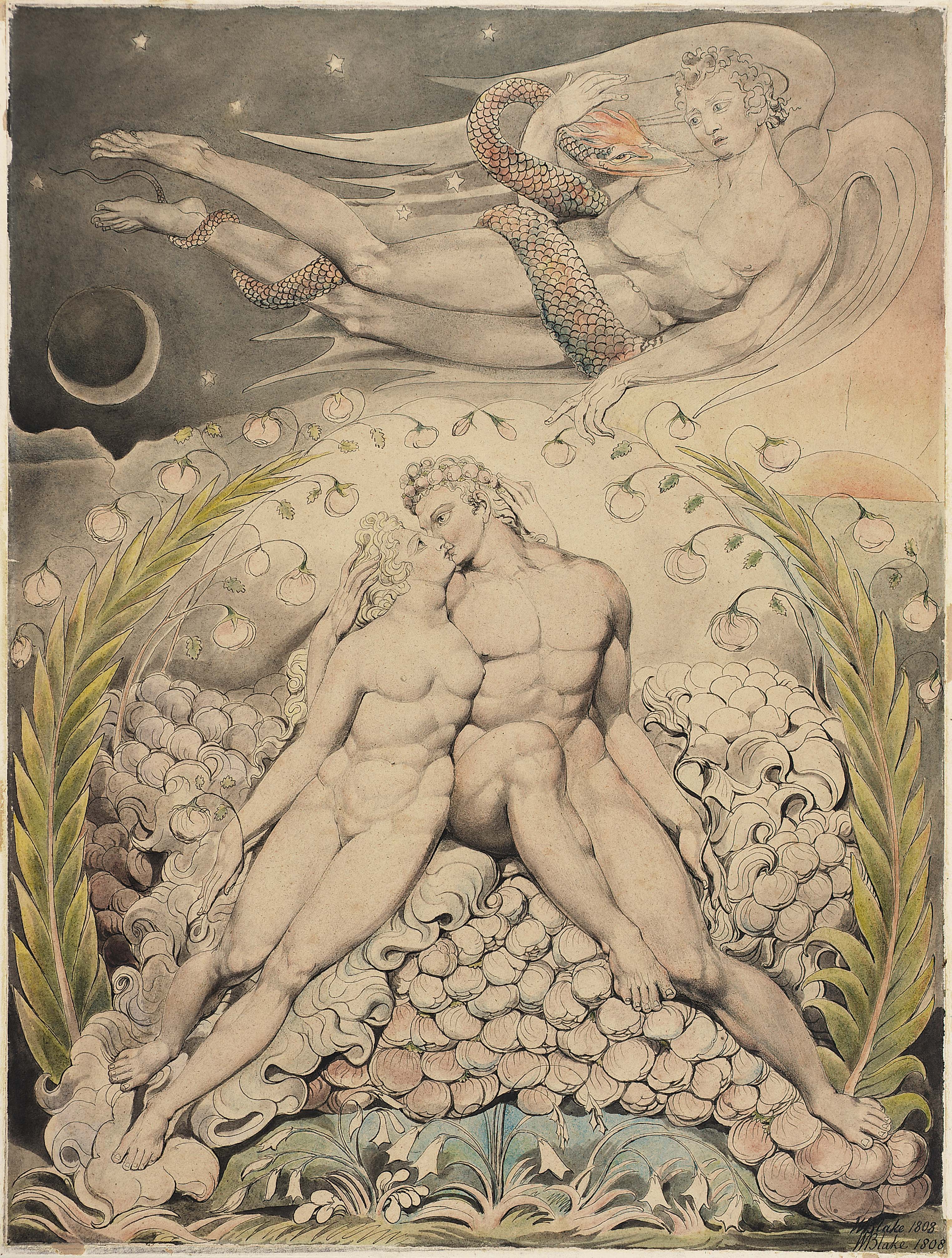
http://www.sparknotes.com/poetry/paradiselost/section11.rhtml   (Milton, “Paradise Lost,” III, 495)

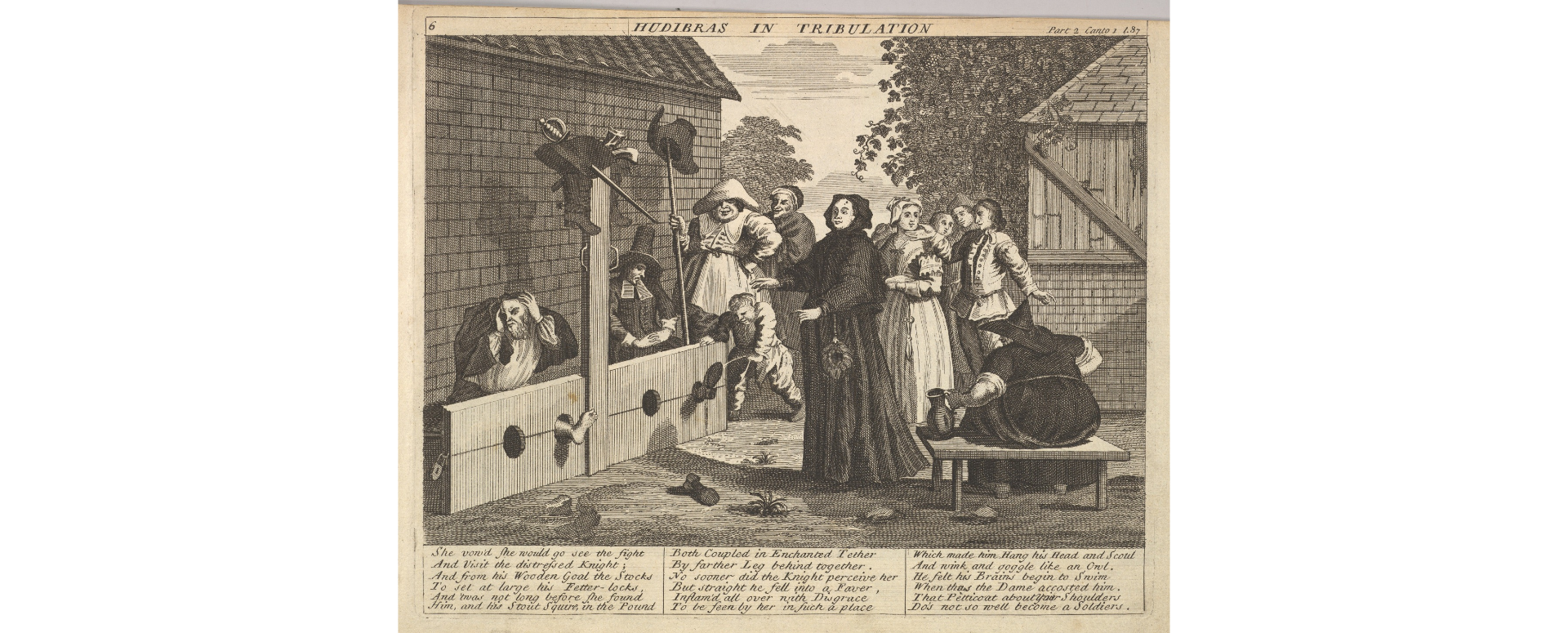
http://www.poemhunter.com/poem/hudibras-part-2-canto-i/    (Butler, “Hudibras,” part II, canto i)

(Late Latin limbus) a word of Teutonic derivation, meaning literally “hem” or “border,” as of a garment, or anything joined on (cf. Italian lembo or English limb).

Natural limbus infantium

In theological usage the name is applied to (a) the temporary place or state of the souls of the just who, although purified from sin, were excluded from the beatific vision until Christ’s triumphant ascension into Heaven  (the “limbus patrum“); or (b) to the permanent place or state of those unbaptized children and others who, dying without grievous personal sin, are excluded from the beatific vision on account of original sin alone (the “limbus infantium” or “puerorum”).

In literary usage the name is sometimes applied in a wider and more general sense to any place or state of restraint, confinement, or exclusion, and is practically equivalent to “prison” (see, e.g., Milton, “Paradise Lost,” III, 495; Butler, “Hudibras,” part II, canto i, and other English classics). The not unnatural transition from the theological to the literary usage is exemplified in Shakespeare, “Henry VIII,” act v, sc. 3.

Blake‘s epic poem tells the story of Sir Hudibras, a knight errant who is described dramatically and with laudatory praise that is so thickly applied as to be absurd, and the conceited and arrogant person is visible beneath. He is praised for his knowledge of logic despite appearing stupid throughout, but it is his religious fervor which is mainly attacked. Blake undoubtedly drew from Don Quixote for his witty satire about a man who thought he knew too much and gets repeatedly beaten for his views and interfering with the rest of the world’s vices. Unlike Don Quixote, who is humorous and draws our sympathy, Hudibras gets none. It was very popular in its time (1700’s), but was not a beloved story, for it spurred no ballets. However, many stories and art are descended from it. It’s main argument stems from political views and religious theorists at the time, sometimes combined into one group, and the public found this pairing amusing and ludicrous. Some writers and reviewers of the times felt Blake was too hard on certain puritan factions, so it did not please those everyone important.

My purpose in dredging up these hyperbolic entrails is that they serve to explain and accentuate my point the about idiocy of ballet politics, dance politics overall, and some characters of the world in general. It also underlines the fact that the attitude held by some teachers of ballet (certain people are destined for success and others aren’t) is fascist and not particularly conducive to the making of good dancers or art, at all. These people hold that they are the judge of the times. This self-appointed “hell” that parents pay for their children to be entombed in is called a competition studio, and not a ballet or (art) studio where expression and all great art is derived. Were it not for imperfection, there would be no art, as true art is not necessarily perfect. This is history repeated though, and nothing new occurs. It is part of the reason why it is impossible to achieve art in a school for young dancers and in many cases in a ballet theater, and probably some companies. Mothers and fathers, wooing administrators with money and work, fund raising efforts, and their own strings-attached beneficence result in the many studios I know of, which have some good elements, running a muck. At least in a ballet company these souls are excluded for the most part and the business of art may take place-and in most good ballet schools as well as in other types of other schools. At the studio my daughter was recently at, the operator had her own unique ideas about the dancers, their abilities and what sort she advanced into new levels. Each year she would change the levels around to accommodate her future plans without consideration for the families involved and especially the children whom she was hurting. If a parent was paying for more children, they got more attention, moved up, more and better roles, etc. If they contributed large sums of cash, those students could be expected to get privates and a lot of pushing even if they weren’t very good dancers, had poor technique, bad habits, arrogance, etc. A very few children, literally one or two out of each level, received her full attention and she would work with them for years, giving privates and coaching, lead roles, until she managed to get them something. She wouldn’t even give corrections (strike one) in class (especially my daughter) except to her very favorite few and she manipulated the entire class to evoke harder attempts from these few by using the others as comparisons. It was a very backward method, resulting in those few getting all the attention, etc., while the others continued to pay for the scraps leftover-even dancers who were quite good!

My daughter has spent the last several months in limbo, from an effort by this director to get her to leave. Her others students resented my daughter due to the attention she was getting from her Russian teacher, who no doubt was rewarding her hard work and effort. She also had privates with him, and in under a year was up to and in some cases better than her classmates. After six more months and more privates, she was better than her very best dancers-so she prevented her from doing YAGP- a punishment (strike 2)! Also, the other female teachers there would not giver her privates for fear she would compete with their prize students. They all held this attitude that each student belonged to a teacher-only one. It just happened that we had the best one and they ALL resented this. He also had the hardest working students and some of the younger ones and boys did competitions and they won. His won. But my daughter was not allowed by her. I did not realize it was the director controlling him, telling him to help other students who were willing to pay more money-who had more money, but it was. She would come out and not allow him to give my daughter privates when she was waiting, instead directing him to take someone else first/instead (Strike 3). Prison. Confinement, or so this mistress hoped, and by these actions she expected my daughter to be discouraged and repeatedly kept back and slowed down (2nd chance). Finally, I realized what was going on and we finished out the year-end performance and left. I did not pay her the last two of 12 equal payments for the year. Would you?

She may now yet again have a fair opportunity to enter the beatific vision of ballet Heaven. A school where she can dance hopefully unencumbered by these people who believe they hold the carrot and the key to her success. If the key is money and not art, not teaching, not learning, and performing is not possible without patronage at so early a level of training, then art sits in confinement, and talent is imprisoned, learning is sanctioned, and futures are undeveloped. There is no chance of my daughter growing into a beautiful dancer there, for the environment is evil and the hatred and jealousy running beneath the surface permeate the spirit of the dance. It was important to her to make these other students feel superior to my daughter and certain other students in an effort to keep the money coming in. My daughter was incredulous to find that she had been demoted (LAST STRAW) to a level with dancers who were ungainly (also ridiculed by her and humiliated in front of everyone else as an example-not to be overweight (seriously, in a little local ballet school????-yes, she actually calls herself a dance educator), did not even bother or try to learn (who could blame them?), and who showed zero interest in ballet (no wonder!), and whose families were not financially important (bingo). My daughter was age-level and training level appropriate for the higher level, but was being highly encouraged to leave, I would say…. I do not want to say much about the girls who were promoted, the previous takes into account their possible faults (false self-confidence, and their parents stupidity) being ignored in favor of monetary support, so I need not impune them further-wouldn’t be nice. Over time, we were able to see that each parent of each of these children held some advantage over the director, was useful, or was paying at least for two children. But my daughter was to be made miserable, to be cast down, by the director of the studio, whose arrogance rivaled Hudibras’, as if to say, “no matter how hard you try, you can never be better than my worst higher-paying student. it is a hard lesson for a teenager to learn-to see someone so cruel, and I can assure you, she was one of the best dancers in the class upon leaving. She was convinced it was a mistake, a cruel joke played by one of the parents who sent out the certificates and promotions, but when I realized it and called, I was told the director would “re-evaluate her” after the summer. The summer program there is usually pretty good, but for two years we have been unable to afford it. However, when we come back, my daughter is still more advanced than others, because she works very hard and continues her privates with her Russian teacher-who refused to teach anyone else who asked. I knew there was no evaluation or training issue, as some of the other girls in class are well behind my daughter in all areas, but I knew it had to do with money and politics. A child does not usually understand this, but my daughter readily saw the reasons for it, so it was not very hard to dispense with. She refused to go back.

This Summer that would have resulted in our being pretty much cut-off from her Russian teacher, but that dependence needed to be discouraged anyway for some other reasons. After about two weeks of this, she began to be led dancing into different directions. There were an inordinate amount of accessible master classes in the area-I wonder who was teaching at the intensives! Her vision must be pure as her luck was good! God never closes a door….

The mean Hudibras in the stocks.

This kind of imposed limbo by the director was averted by the number of available classes to take. Quickly, she perked up, finding plenty of support from other teachers. The other aspect of this is that she is the kind of able, ready and polite student that everyone else wants to teach. Once they see her seriousness and rapid improvement and other good qualities they usually (not always) help her, encourage her and eventually become attached to her. Each school she went to and auditioned for this Summer she was accepted to, and she was placed in a suitably advanced level in. In each master class, the teachers praised her and helped her. She wanted to go to New York and audition for SAB, and I almost doubted her. I thought perhaps she was trying to overcome those bad qualities projected onto her by that director and frankly, I was worried that she would not be accepted. She needed to erase the self-doubt that this woman had placed in her mind deliberately. The baby in limbo infantium, innocent of real sin or error, but far away from the beatific vision sought by dancers everywhere, but I was wrong to doubt her and she has a lot more mettle than I had anticipated (as usual). You’d think I’d learn and have more faith. She did it everywhere she went. She got better seemingly without even trying-she stepped up a level, a notch in her professionalism and self-confidence. The nervous, shy young girl is mostly gone, but in her place is a beautiful, confident young lady of just 15 years old who knows all of her hard work has not been in vain, shaking the dust off of the bottom of her feet as she goes. She was happy to see the girls there and was truly pleased that most of them were happy to see her when she went back for a few classes at the end of the Summer with her Russian teacher. She is convinced once again that she is happiest while dancing, more competition is better, and she was able, while at these other studios to compare herself to their best dancers and to see where she was in comparison. She found herself close to or better than their best, different, better in ways they were not, learning more and new things, getting new corrections and insights, different stretches and work, new combinations, and working just as hard, and getting much better, being more relaxed and open, despite a shorter schedule and fewer classes. She is finally working smarter! It is as though she finally sees in herself-herself and not a victim, but a fighter (the best kind) and a catalyst. She is a dancer!

Perhaps I did not make her appear chastised enough and down-trodden, from the perspective that those mothers felt sorry for her-some of those students felt sorry for her too. It did seem as though a very few of them actually took solace from this, feeling that they were better, but some others sought me out and were very kind and understanding. None of them felt we would come back, and the director sought her out in one class to dwell upon her expression and to watch her to see whether she had improved or not over the Summer, and to witness her unhappiness. But broken spirit was not what they beheld. She was better and improved! One teacher literally glared at me when she drove up. But enough of that. The good that came from the experience, for one, outweighed the bad. In fact, she won, for she has been accepted into a very exclusive school in a large city! I would like to blame them, but I am having to be thankful for all of their actions and roles played in this would-be tragedy, except for the indomitable will, spirit and grace of my child, who is a far better person than I have ever been or probably will ever be. She met Jacques D’Amboise and then took a nearly three-hour class with him, a lifelong memory and inspiration from someone whose heart has always been in the right place-I think this inspired her to go do the Fall auditions. She decided she was interested in Balanchine and Cecchetti and she was inspired to read and research, herself, where these opportunities lay.

We were prepared to enroll her in classes with another Russian teacher who wanted to train her, and we had enrolled her into public high school, when the unavoidable happened to thwart those plans. We have had mold in our house due to some repairs from several leaks that the landlord has not made over the past several months. She was finding it difficult to breathe and I moved her into the living-room to sleep over the Summer. She complained of stomach pain, nausea and headaches as well which caused me to confront the landlord and seek to force the repairs. I have been sick, but no one else in the house has been and I did not think it was due to the mold until she was affected. So at the end of August, awaiting repairs, I sent her to a big city with family. She was already inspired to take classes and do auditions. I set them up, we took photos provided by a good friend for free and they were beautiful to see! She was accepted to a school of some prestige, but most importantly with a very good program including all of the things those here lack, and an environment and philosophy which might work out perfectly for her, AND she was placed in the advanced level, second from the top-the top being an actual company-of company-ready level performers, which she is not yet (at 15, seriously-who really is? But advanced! I just hope she can handle all of what she is about to undertake. There will be quite a learning curve considering the deficiencies at the school she has been attending. At this school, the students do get placed into companies and have numerous opportunities to dance! The faculty is really amazing and it is reportedly “not so cutthroat” as some others schools. She will have classes six days per week and one or two with the company-level dancers. She will have pilates, character, yoga, pointe everyday, partnering, technique everyday, and variations. She will learn choreography, the students have choreography done on them for performances and workshops regularly, and there are many master classes, guest teachers, workshops, rehearsals and performances. It was like God just said, there. How can I say no?  She (hopefully) can practice there, study and do her schoolwork. She has family there who also will support her and encourage her, but she will have to be a little more independent of me. No more limbo. You must keep on dancing!

Hubidbras vanquished and protected by Trulla-text supplied-in his confinement

Behind the ‘ballet is like porn’ headlines is a serious point about women in dance | Judith Mackrell


http://m.guardiannews.com/commentisfree/2013/jul/18/ballet-porn-tamara-rojo-headlines-women


The Royal Ballet: just how ‘British’ do we want it to be? | Stage | guardian.co.uk


The Royal Ballet: just how ‘British’ do we want it to be? | Stage | guardian.co.uk.

Turn-out, Injuries, Hips, Knees and Feet: The importance of not overtraining, crosstraining, and specifically strengthening the opposing sides….


Margaret Barr's "Strange Children" [...
Margaret Barr’s “Strange Children” [ballet], 1955 / photographer unknown (Photo credit: State Library of New South Wales collection)

Dancers are strange children. For what other persons would set out to achieve the impossible, inch by inch, seeking a kind of perfection and freedom which allows them to communicate to others more artfully, those existing ballets created for bodies conditioned for performing these unbelievable and frequently imperceptibly impossibly difficult steps and combinations of steps? To the untrained eye, this intentionally looks easier than it is. But as they attempt to achieve more and more of the masterpiece that remains in the dancer‘s brain, only the very successful are considered to be so, and no one but a consummate artist can detect many of the imperfections and flaws contained therein. Certainly, no one but ballet dancers understand this, or stand united on the subject. Modern dancers detest it. The public doesn’t get it. And the trick is after all of that, dancers are forbidden to let you see their hard work. It is truly an art only really appreciated, deeply, by the best. And only they can criticize it, develop it, or lay at our feet the secrets of it. For most dancers themselves, you will find, find it difficult, if not impossible to explain, not all of it, anyway. They try. Misogynists or mystics?

jose limon

That photo is of Jose Limon. Sometimes, my thinking (and writing) delves into deeper, or more technical, areas where I am not an expert, but have concerns on the subject. Problems and experiences we have had may help to serve other people similarly facing such issues. That is by no means stating that I am, or have become, and expert on the subjects noted. It is very possible that I am wrong in stating some things, but I am thinking it out as I go-is there any other way? It is merely a line of thinking that I have found, or measures, which may prove to be, helpful to others. So I think, in this instance, I will share this. My daughter, has for some time been dancing and she is a hard worker. Because she started later, and had to learn so much to be caught up and prepared for her age level of dancing, she has traversed, in instances, very quickly, the long-practiced maneuvers, steps and poses of other ballet students, who frequently do not understand WHY they do things, or WHAT they are doing, but they do it everyday. So this is good for them, too. In addition to speeding up her practicum to achieve her dancer-sylph, she had had to work on her various short-comings.

All dancers have them. Each one, each area of the body needs to be fit, balanced and prepared for the hard work to come. getting to that point is obviously frustrating for even the best dancers (and the keeping it of it is also a repeated task). All dancers find they have some shortcomings. As the years, or levels, pile up, the dancing becomes more difficult, requiring the basic ability to execute various steps, and combinations correctly, and then more ability, and ultimately-perfection. But even at the preliminary stages when working, quickly, or more rapidly than they are accustomed to, and throughout your dancing career-however long that may be-foundation is forgotten in the moment of dancing, and you just dance as fast or as well as you can. It would admittedly be, a very tedious process,  if one had to stop every minute or so, and correct oneself, be corrected, or think about it, but that is what needs to be done, and what should be done, but it is NOT what is done beyond the basic level for many dancers. This is how most injuries occur.

Over-training is another common way to injure oneself. In order to become better, faster, it is very easy to get hurt and when you add on to that any other frailties, anatomical differences, technical abilities or shortcomings, it is a recipe for injury of some kind, all kinds, and we are finding-most kinds. One injury, when working at so high a level of training, can spiral outward, on the mend, with less than active (not as active) muscles, and result in consequential injuries, either to the first, or new. You almost can’t stop, but then you HAVE to. Most injuries will get worse if you continue to dance on them making the recovery time inevitably  longer and the possible injury itself-worse. My daughter’s injuries nearly all fall into this category, for nothing is essentially wrong with her-thank God. She is not deformed, has straight legs and only some hyperextension issues, which believe it or not is becoming more noticable with stretching and straining to become a ballerina. When anything is overstretched, it is a problem. Always.

She will have to watch out for these and many other injuries in the future, but for starters, these have been enough. In a nutshell, too soft pointe shoes (little support) resulted in an achilles injury (and a failure to really work her feet to make them stronger). While taking it easy on that (for months) and stretching to become able to do higher poses, achieve more turn-out and better grand jetes, she torqued her knee (and after 21 performances of Nutcracker, or something very close to that). Mind said, “turn-out” in plie, and knee refused. Overtraining and fatigue, I thought immediately. Then, while recuperating from that (80%) is about all I could rein her in-she experienced a deep groin pain preventing her from turning out at all, for no apparent reason. Many days had I suspiciously eyed her laying on the floor in the butterfly position, and thought,”too passive”, but….I was right, and wrong.

The hip injury is getting better, but for many weeks she has not been able to do much (involving turn-out) that does not cause pain. Oddly developpes do not hurt, while a simple ronde a terre-does, and a tendu! Movement of the whole leg in the hip joint. The hip. I came up with this after much research and found that most hip injuries in other dancers are down to five and we did want to rule-out the femoral fracture (Harkness/NYU). Whew! But all of them which did mention a pain, were on the outside or front of the hip and not deep inside it. The bad ones were deep, but, we knew it was

HTC modded keyboard running on my Samsung
HTC modded keyboard running on my Samsung (Photo credit: DanieVDM)

getting better and was not related to hip popping, so that ruled out all the rest except the femoral fracture-common to dancers, and she did not feel it was broken (she would deny it if it was!). They are very easy to break actually and require surgery…. Movements to the side hurt more and above the hip line in front???  Only certain positions means certain ligaments or muscles. Sometimes you can feel warmth (none), notice swelling (Ibuprofen), but she didn’t and neither ice nor heat were particularly effective. A warm bath might help, but it did not.

All of these things should be noted, and a journal should be kept following injuries so you can remember the activity associated with it that causes (caused) pain. My dancer cannot always recall what she was doing when it happened, especially if it becomes worse after class-could have been anything! A doctor will ask. The more you know, the better diagnosis they can give. Dancers do not like to think about their injuries, let alone, keep a journal of them. Morbid, but effective. Tell them to try recording it on their phones. Most Android phones have this capability and the recordings will show up in S Memo (or in Apps) and Media-they can find that; it is very handy for the lazy speakers. I did not say “lazy dancers.” These notes record by voice, too. Tell them to tell their phone to “record a memo.”

Her second injury, to the knee, I felt sure was related to her turn-out issues. I did not expect it was a turn-in issue. But is is. She has a great turn-out, but a poor turn-in. The doctor confirmed this, and we also ruled out hip or foot problems-basically they are perfect for life. We are still learning about dancing. Too much turn-out (stretching) has resulted in two injuries from weak turn-in-specifically the adductors and the hip muscles. If one is over turned out, and the body has to suddenly transition to a turn-in, and does not react quickly and forcefully enough-the counter-muscle strains-the one that helps you control turn-in and turn-out. Over turned-out-funny. In stretching, most dancers fail to realize strengthening has to be done in equal amounts as stretching, of the same muscles, for support and control. Teachers do not explain this. At all. And apparently, not effectively, especially for young students who have short attention spans.

For anyone involved in the serious study of dance, no doubt, the discussion of turn-out has arisen in class. You probably know by now if you have good or perfect turn-out because you will have heard it from teachers. It’s the next thing down from “feet.” Remarkably, many successful dancers have notably deficient turn-out. It is the actual foundation of all classical ballet. It is stated by doctors that the ease at which it is obtained (sometimes) appears to be correlated with the age at which dancing is begun. In short, turn-out is relative to ballet, therefore, it will be stated by some that it should be learned early. It is and it is not. Let me re-state that many professional dancers turn in all the time-they fail to remember to turn-out. It is perhaps the conditioning of it, not physiologically, but mentally, that makes it more well-remembered by the earlier you start, but in fact, that has to do with memory and not actual ability to turn-out. There is also functional turn-out and structural turn-out. Even those very rare students with “perfect (structural) turn-out,” turn-in (do not have good functional turn-out). It is not only one part of the hip that is actually responsible for how much turn-out one has, and actual deformity-again, popular in ballet (only), does occur, and is therefore deemed “perfect.” FURTHERMORE, it is just as important for dancers with this turn-out to remember, all the time, to turnout at the correct times-and they don’t! Children who do not want to work on turn-out are quick to notice this in professional dancers as “okay,” but it is not, necessarily. Everyone is different!

Perhaps they can exhibit better turn-out, which is nagged about in the studio, but face it, when they get on stage-they forget. Any dancer is only trying to remember 6,000 things on stage, and as you watch most of them, particularly soloists, you will notice they turn in, frequently, or you will notice that they do not exhibit their perfect turn-out, except when at the barre in first position or in plies, in second. Ligaments change, and dancers have to not only stretch to initially achieve turn-out, and exercises to strengthen it-do not stop at the barre (I’ll tell you why), but most dancers have to maintain their own degree of turn-out by stretching daily and remembering to reinforce turn-out in the studio and while dancing, all the time, for the rest of their lives.

As people get older, much older, all of their ligaments and muscles begin to deteriorate, so not exhibit the same elasticity as when they were younger, but dancers continue to dance, turned-out, or turned-in, and they continue to get nagged about it, until it is second nature, for the most part, for them to remember to turn-out or they get beyond the point professionally when any teachers complain about it anymore. That is one indication of a professional-not having to be taught anymore. It is up to the dancer to work on it, keep it and nurture it. Holding turn-out is how you refer to it in class and that is exactly what it means. Therefore, it is not the degree of turn-out which is extremely important in all dancers, but their ability to control it; that requires strength! And the lack of control causes injuries. Wait and see or get on it now, to prevent  injuries.

Dancers with perfect turn-out also turn-in, because of strength issues-not just memory loss or forgetfulness. It is the body’s natural inclination to do so, and the mind of a dancer must think about so many other things, occasionally (LOL), that sometimes it can just go-that is why you train to control it, so it goes where you want it to, and how far you want it to.

There are many exercises in ballet, poses in variations, and most importantly, but never mentioned,transitions in classical ballet, which cannot be accomplished without injury to a dancer who does not possess adequate turn-out to do them. Perhaps more importantly, not turning-out first and then failing to hold the required degree of turn-out can be dangerous if not life threatening, then dance threatening (and this is the worse of the two-for dancers!). This is anatomy and physiology, and fact. It is fairly safe to say, then, and I do, that all dancers turn-out excessively, whether good schools tell them to or not, they learn to, it is conditioned in other ways, even if teachers tell you they do not force turn-out. They teach turn out, refer to turn-out and yell, “TURN OUT,” and they have to if they teach Ballet.

English: First Position of the feet in Ballet
English: First Position of the feet in Ballet (Photo credit: Wikipedia)

Notice the “over turn-out” in first position? Slightly? What is too much for many persons is simply put, too much without control. I always releve (turned-out) in every position, just to check that my alignment is correct and that the right muscles are engaged, and that I can releve from that position. It is evident when doing this, if you feel awkward, or forced, that you are! Fix it-turn a little tiny bit in and gain control from that position before you open further. Practice making transitions and moving from these positions, think of variables, so that when the time comes, it is no sweat-you have done that before, and the body remembers it. Sometimes, I also attempt a plie from whatever position this happens to be, all of them, to make sure there is nothing wrong, to see what I can do, and to strengthen infrequently used muscles that may contribute to a better position in the end, by cautious means. What a lot of teachers mean by teaching turn-out young is that they can put dancers in over turned-out position and due to the laxity of the muscles at that age they do not readily see injury-that does not mean that it is not occurring, only that you can’t see it. Ask Mikhail Baryshnikov about his knees and forced turn-out and I am sure you will get an earful. I have found, over the years, that my habit, hard to instill or demand in others, fixes almost any turn-out problem, assures that I can execute the position(s) correctly (with the correct amount of turn-out), in transitions, or quickly, without hurting myself, and that after years of doing it, I have no issues or injuries! It’s like falling, with practice, you can learn to fall without injury, or with substantial reduction of injury. Falls happen-practice. After years of doing this, and I am much, much older than any of you reading this, it helps strengthen those muscles directly associated with each position, the best. How do you learn to surf? You surf. Is there exercise for learning to surf or be a better surfer? Yeah, surfing. How do you build up the muscles used in surfing? Surfing. Practice, practice, practice-not repeat, repeat, repeat! Also, holding these positions is easier after many repetitions, and many years. I have good balance from it in most ballet positions, and I haven’t really danced as hard as you are for 30 years! But I still do the exercises….

If, as a dancer, you attend a new class, and the teacher has you do something for which you are not physically prepared to do, you will fall out of it. That is the best sign, this muscle is not trained. Train it by doing the exercise over and over. Do not think to use the fail-safe quadriceps for anything except stability and pumping-force. The Amish say, there is always another way, and there is almost always another muscle that needs work when your quadriceps engage to protect you-they do not jump into action unless it is to protect you from a major tumble-from everything. The finer muscles responsible for controller finer movements-are ignoring you, not engaging, not working, because you haven’t trained them to listen. Most dancers think they have no faults, are not lazy, but mentally, there are things we just do not bother to do. We ALL do this. We also rely on routines and it is virtually impossible to do all of the exercises you need to do in one routine, so make list and rotate them-less chance for injury! It is hard, harder than 64 small jumps in center, all of them a foot or more off the ground, and then again, because it seems so easy we just take it for granted, but I bet you can do those jumps. Working and strengthening the finer muscles is hard, because these muscles are hard to find, hard to visualize, and they all work together at times, making the isolation of them very difficult to sort out, or the use of them fathomable. They are truly not as complicated as they seem, but you have to take the time and think about them, research them, practice using and finding them-or try to-and prevent injury.

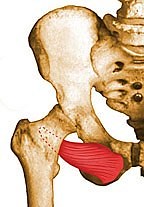
Adequate turn-out for dancers is that degree of turn-out required for that dancer, based on his/her body structure, bone shape (especially the femur, acetabulum and pubis) which determine the range of movement of the hip, and also the ilio-femoral ligament, obturator externus (front-see picture below), and piriformus, gemellus inferior, obturator internus and externus (front), which in addition are responsible for the strength of the hip movements. Overstretching in the butterfly, for example, which virtually no teacher will tell you is harmful (“do it 3x a day!”), but it is. It is when you do not strengthen the hip, or stretch the hip sufficiently in the opposite direction. But enough is said about this to beginning or ambitious dancers who

OBTURATOR EXTERNUS MUSCLE

must stretch to attain a better degree of turn-out and they need to be particularly watchful, especially if they are teenagers. No exercises are specifically given for it in ballet class. Repeated 2x per day, these stretching exercises can overstretch the adductors, resulting in serious groin pain in the student, usually deep in the tissue, where ice and heat may have little impact. Ibuprofen can help, but must not be relied upon for daily use. The pain can be so severe the dancer cannot turn-out-that is actually the key to the cause of this pain, for most other injuries to the hip result in different kinds of pain inside or outside the hip, but not affecting the turn-out per se.

Piriformis - Muscles of the Lower Extremity An...
Piriformis – Muscles of the Lower Extremity Anatomy Visual Atlas, page 8 (Photo credit: Rob Swatski)

From all of the material I have read about possible hip injuries, it is my own conclusion, and that of a venerable dance doctor, that without sufficient strength in the adductors, and overstretching present, a sudden twisting or turning can result in a straining of the muscles of the groin and on the inside of the upper thigh if they lack the tone to prevent overstretching. The pain in the upper thigh is frequently called “rider’s strain,” and is caused by too much stretch of the adductors when doing movement a la seconde (Dancer’s Book of Health, L. M. Vincent). It is said that some dancers, with ligament laxity, may even feel the thighbone “go out of joint.” This continual dislocating may lead to joint degeneration, so the importance of good muscle conditioning and avoidance of over stretching cannot be ignored! He says to “always seek control more than height”, and when warming up, do not risk strain by caving in to the temptation of placing the leg on the barre for the first stretch. Check with your dance teacher/physical therapist before performing these exercises to make sure they do not interfere with your goals.

Interestingly, students who feel that they do not possess enough turn-out can fall prey to this type of injury if their leg is inclined to drop “backward,” so they will often find that their turn-out is not lacking, but rather their ability to control it is. These types of exercises will help, but for specific muscle attention (there are six sets- count them- of muscles and ligaments responsible for turn-out, and a few other muscles besides) it would do to look up and verify which muscles to strengthen, what each set does, and the individual ones, and to go over where they are, when they are used and what to do to strengthen each one and each group, just to prevent injury and to be aware of this rather complicated area of the body, prone to injury in female dancers with a high level of ballet classes, training or just plain dancing. There are classes, sometimes, led by physical therapists (and dancers) to integrate whole body strengthening and conditioning to prevent injury in the different parts of the body that ballet dancers are susceptible to. These injuries are particularly a problem for adolescent students for growth and hormone reasons. Look no further than the Nureyev Foundation in Switzerland, to locate a dance doctor (a real one-not a quack) in your area, or a dance-trained physical therapist, who can help you discover more about your dancing body and its limits, as well as its possibilities!

http://www.noureev-medical.org/content/contact-information

Deep muscles of the medial femoral region.
Deep muscles of the medial femoral region. (Photo credit: Wikipedia)
Your hip adductors (left) are all responsible for moving your leg in toward the midline of your body–a movement called adduction. Located on the inside of your thigh, your adductors stretch from the inside of your knee to the bottom of your pelvis. Strong adductors are important in knee and hip stability, and if they become weakened, you may find your knees are prone to dropping outward. Additionally, performing exercises for your adductors will tone the area of your inner thigh. There are a variety of exercises you can perform for this important muscle group.
Medicine Ball Squats

Stand with your feet hip-width apart. Place a light medicine ball or soccer ball between your knees. Keeping the ball in place by squeezing your knees together, squat until your knees are bent to 90 degrees and your thighs are parallel to the floor. Push your hips forward and straighten your knees to stand up. Make sure that you concentrate on pushing your knees in against the ball throughout this exercise.

Lying Side Inner Thigh Lift
Lie on the floor on your left side with your body straight and your head resting on your outstretched left arm. Cross your right leg over your left and place your right foot on the floor, creating a figure-4 shape and allowing space to lift your lower leg. Raise your left leg inward by using your adductor muscles. Lift your foot 8 to 12 inches off the ground. Slowly lower your foot back to the floor and repeat before rolling over and changing sides. Make this exercise harder by wearing ankle weights-no more than 1 lb, and work up to that!

Hip Adductor Machine

Sit on the machine with the leg pads against your knees and your legs as far apart as comfortable. Press against the pads and push your legs together until the machine arms touch. Pause for one to two seconds before slowly returning to the starting position and repeating. This machine can strain your muscles if you are weak here, as most dancers are, it is advised to put it on its lowest setting and do no more than 12 reps the first several times, working up to three sets of 10 or twelve. Dancers also have to be careful not to bulk up-so many of these exercises have to be done in moderation, compared to general athletes, or those trying to get into shape. Dancers have a preferred shape, and need to remember to work the opposing side EQUALLY. In this case, that means, to put the pads on the outside of the leg and reverse the exercise. Most dancers will find it is easier to press the pads out (a no-brainer), than in. That is where you need work!

Lying Pillow Squeeze

This one is easy, so you will really feel “the pee” muscles working. My daughter hates it when I say this. Lie on your back with your legs bent and your feet flat on the floor (also on the bed or while you are waiting for lights to change to green in the car-anywhere and from any position). Place a large pillow between your knees. Keeping your head on the floor and your arms by your side, press your knees together and squeeze the cushion as hard as you can for five seconds. Relax slightly, but keep the cushion in place. Push your knees together again and continue repeating for the desired number of repetitions. Only a few will be possible at first, so do not overdo it. It is more important to hold it for 5-10 seconds than to repeat it often. It is also more challenging. Work up!

Many dancers experience imbalance between the hip adductors or inner thighs and abductors, the hip and gluteus muscles. To counter this muscular imbalance, here is a stretch which needs to be held at least 30 seconds. Personally, I do not recommend “adjustments” like pulling the leg (performed by some over-zealous chiropractic offices, and  frequently, without any warning!).

Preparation:

1) On floor or mat, lie face up with arms extended at sides

2) Lift one leg straight up then bend knee and hip to 90 degrees flexion

Execution:

1) Lower bent knee leg to opposite side toward hand.

2) Hold stretch for 30 seconds, maintaining 90° flexion in hip with both shoulders flat on the floor.

3) Repeat with opposite side.

For definition and reaffirmation:
Think that some dancers use the outer thigh more than they ought to, when it is the inner thigh which is typically responsible for turn-out.  Working the turn-out muscles require isolating them and using them-nothing else will work. The adductors are the frequently forgotten five muscles of the inner thigh that connect to the pelvis—the Pectineus, the Adductor Magnus, the Gracilis, the Adductor Brevis, and the Adductor Longus. Look those up and write down their meanings, then locate them in yourself and work on them. When a dancer has had an injury to the knee, for example, these muscles will have atrophied while the dancer was resting from the knee injury. The tendency for the dancer to resume the level of previous training that his/her body was accustomed to is presumed, since most dancers who have not had a previous injury will not be aware of or expect these initial limitations so they just jump right back into class “to get back to where I was”! Right? NO.WRONG!!!!!!!!!!!!
Even a few days off, literally, can lead to some scary loss of muscle tone and requires s-l-o-w and steady passive and active stretching to get back to ground zero. I also recommend the warm-up exercises of Ballet for Dummies (Evelyn Cisneros is one of the authors-and certainly NO Dummie!) In it, they well discuss passive and active stretching and the importance of EACH for dancers. Too much passive stretching before dance class can also lead to injury in dance class. Best to do moderate exercises (warm up) before class, and stretching OUT after class, for up to 45 minutes.
Yoga and Pilates demand strong inner thigh muscles — fortunately, routine practice of both strengthens the inner thighs.The Pilates Reformer is also said to produce amazing results, but work with a trained professional. Don’t do any stretch to the point of discomfort and don’t force any stretch. Work up!
A good stretching program is key to maintaining muscular balance. Hip and adductor muscles are focused on in CORE workouts, but prior to this, which can result in overworking some muscles and under working others that dancers use, dancers had to rely on themselves to diagnose and usually fix what was wrong, and in good ballet classes, teachers address this, usually through modern dance techniques and other exercises. There are many modern dance exercises which I believe prevent any issues in these areas through dancing. On The Count of One and The Dancer Prepares give some really good advice, and there is no end of information available on the subject. You will not hear this through an orthopedic doctor, who relies on personal links with general physical therapists to practice exercises, get patients “back”, which might be good for octogenarians or football players, but are not fulfilling for a dancer beyond an early stage of injury recovery. Dancers demand more-faster.

Although some of the same muscles come into play with athletes and the general population, dancers refine their use, and rely on a good deal many more muscles than does a football player, and also work at a higher level of training each one for specific uses not understandable to most orthopedic doctors unless they are also dance professionals. A dancer also uses them a lot more and a lot more turn-out stretches, means a lot more and tougher turning-in exercises. My argument here is that most of these types of injuries are turn-in injuries, rather than turn-out injuries, actually. A good modern (basic, then intermediate) technique class-Graham or Horton is best and can also work absolute wonders to this balancing act; it can act as the antithesis to ballet, thus working all of the needed muscles in a dancer’s range, while being easy on the body, when exactly properly performed, and done at least four days per week for any significant results. Since this is not available or possible for all professional dancers (who do not have the time to become modern dancers), many of them rely on yoga. Yoga is everywhere and gets you in places nothing else does, but is not as active as modern, and not dancing.

The important points here are to listen to your own body, and do not readily accept the physical therapy or medical advice of a medical professional untrained in the dance profession. Dancers are different and require the patience themselves to identify areas of concern, underwork, overwork and injury. All bound together, usually. Any pain in executing any position might indicate the dancer is doing something wrong, and the sooner this is diagnosed and corrected, usually through re-teaching and strengthening the affected part, ASAP, the better. You might say that dancers are continually pushing the limits and need to train smartly. They hold their fate in their own hands and how they approach such injuries can be the end of one or most connected injuries as well, or the beginning of several more related ones. Therefore, it is important to sort it out, when you can’t dance it out.
Keep on Dancing!

What Was That Combination?


May is underway already and my daughter has been attending ________Ballet School for over one year now. She has had many ups and downs, working very hard, but she has definitely improved. I see a fine dancer emerging from her. She has grown in confidence and strength, although she needs more strength, I hope it will come. Strength is apparent in many things, not just ballet. I learned when growing up, and finding dance, that dancing is not only good for the soul, it is good for discipline, is character building and improves your ability to perform just about any other lesser sport, such as volley ball, etc. I found that after a few years of dance I was able to play sports with above average ability, that previously I just wasn’t into at all. Every year my grandfather used to buy me sporting equipment, baseball, bat and glove, badminton equipment and a net, ice skates, roller skates, and one year we even bought a tennis racket from someone in The Trading Post (where he spat in a dog’s eye), and all of these things I tried to eschew for him, and more, but to no avail-they just did not enthuse me. I swam every day in the summer, sometimes staying at the pool until after dark, but other sports I just didn’t excel at. I remember the other girls driving home other players in softball, and standing in the field letting the ball go by me-irritated, that is what I was. In volley ball I could not serve a ball over the net with any force or impetus. I could run. I climbed trees. I did roller skate, but not with any stability or verve, and not as well as my friends. I could ice skate pretty well but they closed the rink. No one I knew really played any of these different sports and surprisingly it was not kids from my local school that would go to the pool. But I did make friends. I walked and we danced to popular music a lot. We wanted to have a girl singing group, or my friends did, mostly I just liked the music and to dance. I was creative in many other ways though, drawing, I could build things, and I did go through long periods where I would just sit by a window and read books, until my mom had enough and kicked me out to go do something else, and “not be a house plant.” Maybe that is why I put my daughter in ballet. Because after ballet, I could do anything better than anyone else, practically. It just made me an athlete-confident, strong and focused. It is what I needed. When I had a teacher that said to go back and do something over, I didn’t complain, but just went and did it. We didn’t have much money, and I paid for classes myself.

The world today is different, but what ballet can do for you is not. I know I didn’t put my daughter into ballet thinking,”she is going to be a ballerina.” I put her into ballet so she could see what she could do with herself, to grow in confidence, to use all the muscles she wasn’t and to gain some discipline. Each day, she grows a little (almost two inches since August 2012) in stature, and is beginning to “know what she knows.” She is beautiful to me of course, but I can begin to see the woman she might become, all the more confident and lovely each day, and ballet helps-it works wonders! She knows that ballet makes her special, and that we cannot avoid in our children-why should we? But, todayI asked her why she did not ask her friend to join her in a modern class one day next month, and she said “no way.” I thought,”Well!” I said, to take _____wouldn’t be so bad for her, she might like dance, thinking, certainly she is not competition yet, and why would she say “no?” Well, I can remember wishing my friends wouldn’t take ballet, because I felt it was mine. I didn’t want to be competitive with them, I just wanted them as friends. As soon as one of them did take a contemporary class, by my example, I immediately left off that friendship, and now I feel remorse over it. Well, not exactly remorse, but rather I see now that it really doesn’t make a difference who takes ballet, and to have a friend in ballet does seem like an impossible thing sometimes, but it happens, when both parties are mature enough to realize everyone is different. I think that girls in ballet ought to have the same kind of trust exercises required of boys and girls in ballet in pas de deux classes. Girls should stick together-boys do! But do boys in ballet? But this has never been done, addressing these issues of petty competitiveness which actually serve to make us better dancers, strive harder, follow other examples, laugh and have fun, support each other when we fail, or fall, instead of smugly thinking, “it serves her right-good-she fell!” Wishing other dancers to fail is actually bad-not good, and we always think of other dancers as merely competitors, but we need to put this in the right perspective, for without other dancers, who would we have to be better than? Or better put, possibly, we are only as good as the best person in the class, and seek to be better than that person, whoever it is, and without them, our bar just went down to the next best person. How does that prepare us as dancers for the rest of the world?

One thing I noticed about my daughter when she was just starting ballet in I think, her second year (she was eleven or twelve), and that was that the teacher created a lot of competition between the girls by praising one or two, and my daughter was from that moment on, determined to be better than that one, or every one, at every thing, and I found myself using them to explain that while she was good at these things, this other dancer was good at these other things, but I did not have to-she knew. And she likewise talked about this, but mostly it served to try and make herself better. There were some things she knew this other dancer had, such as ridiculous feet, but she spoke with sympathy about the other faults the girl had, and it did not take me long to realize that my daughter did not really feel sorry for her faults, she was happy that she did not have those faults (at least). Subsequently, I have not tolerated (often) the talking down of other, better in some ways, dancers, who have been selected for summer programs, year-round programs, scholarships, etc., that my daughter coveted. In fact, when the teacher gets after these other dancers after competitions, too much, to try to instill some humility into that dancer, I pointed out to my daughter that the teacher was possibly only doing this to make the other dancers feel better about themselves and to spark competition between the dancers and this child, who is a good dancer. Who is? She has most of the physical qualities companies look for in their dancers, and she dances pretty well, I think. I said my daughter ought to substitute, in the phrase,” you only have good ________, something that she felt confident about in herself, her vanity-and apply the entire criticism, personally, for if she did not, she too would run the risk of thinking she was too good, better than everyone else, would not strive to become better in that area, other areas, or feel she was good enough, or better than everyone in her class/school.

I suppose I am too jealous of the corrections. I wanted them ALL as a dancer, and every dancer is aware of whom the teacher is giving corrections (mostly) to, and envies or pities that person, but any correction can and must be applied to oneself if there is to be improvement of a substantial nature and understanding of ballet. Yet, professional dancers can almost never broach criticism, particularly when they turn to teaching or the direction of a school. They automatically think they know everything and must be respected above all other parties for their expertise, by their students and parents. When opening up communication between parents and teachers might result in improvement in not only the dancers, teaching but teach these children that as a group they are strong. If students witness their own teachers vanity and those at other schools, are we not grooming htem to be vain peacocks, like their teachers, instead of artists and dancers? It is an art. It is not simply put, being someone people want to watch dance because you are pretty, otherwise why would we say of Plisetskaya that she was “beautiful when she danced?” It is not just gymnastics, otherwise why would Pavlova’s teacher said, “cease these gymnastic routines! They are not for your delicate frame! I shudder when I see you try to compete with the gymnastic didoes of other dancers, for delicacy shall be your mien, your strength.” It is not the early starter who can burn out or be injured, for otherwise we would not have had Rudolf Nureyev, Margot Fonteyn, Gene Kelly, Suzanne Farrell, Misty Copeland and many others in many countries at many times (I am so tired of reading you can’t when you can-if only you will!). It is not merely technique, or Vaganova would not have been compelled to  create a science of movement and training, and there would be no great Russian dancers. Without Isadora Duncan there would be no history of contemporary dance, exercises by her, or any dances, ballet or otherwise in a tunic, and all dancers would probably wear scarves! There would be no modern dance. It is not likely that there would be just one ballet, one choreographer, and no variety of music to choose from, but there is, and there are many varieties of dancers, including many types of ballet dancers. Students of dance need to realize they are not the only ones, and they should be taught to accept challenges, open invitations to other people to dance, prepare to perform, dance, and that this does not change their ability at all. In fact, it makes them grow. It is hypocritical to say, ” I love dance, and I want to see dance continue and ballet, in particular, to be popular”, if you shut out competition, other dancers, others schools, choreographers-you do nothing for the art. Watch “Chocolat.” If no one tries it, they may not ever be advocates of it, may not seek to see it performed, understand it, and may only enter their children in it as competitors, to be better than everyone else at gymnastics, or prettier, or at technique, or performing-it is all inclusive. Ballet needs to open its doors to adults, all children (rich and poor), all kinds, in order to survive.

I told my daughter that if her friend attended a dance class, perhaps she would invest in my daughter’s dance company one day, her grandmother is very wealthy. Perhaps they would have more to share-not less. The focus should not be on the end result, but the process. The process should be an enjoyable one, and the experiences at our dance studio suffer because of the competitions, the parts which everyone fights over, the parents sitting in their cars because of the perceptions that 1) Their children are not that good, 2) Are overlooked, and 3) The competitiveness between the parents-which is passed on to the children in most cases-not all-to the point that these dancers are not NICE. My daughter, is always nice, congratulates everyone, and genuinely cares for them and they do not like her one bit. Funny. Jealous and her teacher just quit giving her privates because we had a fight and he said she would never get into a really good ballet company. This is just ridiculous-who cares? She does, but it is ME he got into the fight with. He likes her, and even though it was awkward, she says, at first, now he looks at her when she isn’t looking, comes over to correct her (like he used to), and she is recovering from her latest injury (in the hip) so is able to do more each day. For us, everything is looking UP. She decided not to go to ABT (more about that later), not to go to The Rock, not to go to Dance Master Class (Italy, this year-see my Pinterest), and not to go to English National Ballet in Ohio. Instead, she is taking the summer session with her favorite dance teacher and the one at her school. She will also go to Desmond Richardson’s Master Class at LBHS on June 19th. She will be in the recital and is doing a Hungarian (marriage) dance for recital, and is a dancer of the Winter pas de trois in Cinderella for recital here, and is doing a variation from Don Quixote at another school recital. As well as her regular classes, that seems enough. Maybe her teacher will try to teach some pas de deux. That would be nice. Never know.

Sh is busting herself to complete her school work and is doing a semester with Geometry and Algebra (she failed first quarter algebra) and she is doing it! She also has French, Honors English, Biology and a Juilliard-music class online-as well as gym! She walks with me and will soon begin swimming and doing yoga (for healing and stretching). Now, if I can just find volleyball…..

As for my daughter being accepted into the world of ballet, getting into a major company, being able to do the contortions required by ballet dancers the world over these days, I do not know. But, she is certainly going to be a lover of ballet. Perhaps she will be a great artist, anything is possible if you work hard enough and long enough. Dance is fickle. Directors are fickle. But one must be prepared in life to set out one’s goals and to plan an attack. If the first attempt does not work, you hit again, and each time you set out to achieve new goals, reach a new plateau, it is important to look back at what you did the year before, pat yourself on the back for what you have accomplished and to move forward with certainty that this year will produce as exceptional results, catastrophe withstanding! Everyone also has a different path. She had three injuries this year to contend with (one was a carryover from last year)and I wish more than ever there were doctors of dance in every county, as there are more dancers today than ever and nothing is worse than a dancer with a misdiagnosis. The harder you dance, the more injuries you are likely to sustain. I wish there were a school for dancers in this state which offered dance to all students who wanted to learn and which provided the essentials of training for great dancers to emerge. It would make so much more sense than 500 little schools able to teach only the minimum and not to offer other courses and training which is so important-mime, acting, makeup, hair, stretching, yoga and other therapies, modern and ballet, jazz and character, and wherever there are dancers there should be healing tools for dancers, dance doctors, etc….Instead, schools are set up to make money for themselves, all claiming a not-for-profit status, not dancers, and their directors are usually motivated by their paychecks, their fine cars, paying for their houses, their own companies, themselves-not the art, the student, not scholarships, and if those schools banded together, they could support a company in our area and a school worthy of the name. Somehow, it could be done. This would lower the costs to all, thought it would equalize the payment of teachers, it would be able to support itself and would lead to these dancers being able to stay in their own area and dance.

My daughter stands in class everyday and her teacher looks at her to remind him of the combination, everyone seems to forget it.


Celebrate Dance featuring Steps Repertory Ensemble at Ailey Citigroup Theater, April 18 – 20 | NYC Dance Stuff


Celebrate Dance featuring Steps Repertory Ensemble at Ailey Citigroup Theater, April 18 – 20 | NYC Dance Stuff.

Moving On


I have written a lot of posts now. 101 or something like that.Often, I do not have technical information to pass on, but my post is really not about that-it is just a lot of research, knowledge and regurgitation of what other people write-somewhere. To me that is bordering on copyright infringement (yes, I have a conscience). Perhaps, I feel that trying to give too much technical information about injuries (I’ve had them) and what to do for summer intensives, and how to become a ballerina are far-reaching topics, that require specific information abofut the people who might be receptive to them, and cautiously, I guard my advice. It is not my endeavor to help other people, but rather to help myself, and I certainly do not want to give misinformation to anyone out there looking for the truth.

The purpose of this blog is to compile information about dancers, and so far not one person has responded to my request for information about why people dance, what motivates them to start/continue (at any age), share the highlights of their dancing career, and report to people who might find this information interesting, useful, or inspiring. At best, I hope that, eventually, some people who read this will take the time to respond so that I might share their post with the world of dancers, which may grow, and from which, we might all see the sort of private life of dancers that at least I am interested in. What makes them tick, why they go for an art/sport which is highly competitive, results in injury, and may leave them destitute and possibly unappreciated at some future date.

The positive side of this manner of research is to hear from the dancer’s themselves about their lives, their highs and lows, their accomplishments and their methods of perseverance in a field so ripe with jealousy, rejection, rewards, joy, freedom, discipline, a real mystery to me, is why some dancers continue to seek perfection of the sylph and why some don’t. I suppose, to me, this might be the same as the root for people who stop drawing, never try to sing, are afraid to stand up in public, or don’t dance in public. There are many taboos in society for casual dancing, as there are many rules of etiquette for the ballet studio. It seems sometime that if people followed the simple rules of etiquette in the ballet studio, in life, many problems of society might be followed: why do damage to the sacred temple, respect your teachers, respect each other, be quiet, strive to do the best you can, learn all the rules before you break them, always say thank you, and come to class in clean attire with your hair neatly back. I am not sure why dancers gravitate together, but they do, they have, and they probably always will. It is like a religion for them, and they are wiser from their experience.

It is a shame when business comes into the studio-it is entirely expected for anything coming out of it to be fair game for capitalists. But the studio is a sacred ground and there ought to be someplace in everyone’s life for peace, for digging deep into oneself and being the best that one can be, strengthening the body as well as the soul. Perhaps, I am not so concerned with why people dance, but why others don’t. Keep on dancing!


Life is the root


“Life is the root; art the flower.”

-Isadora Duncan


Isadora Duncan, Part IV


English: Urn-grave of Isadora Duncan in the co...
English: Urn-grave of Isadora Duncan in the columbarium of Père Lachaise Cemetery in Paris. (Photo credit: Wikipedia)

Though this may seem a little disconnected from my first speeches about the importance of Isadora Duncan, halfway through her autobiography, I felt compelled to sit down and write again about her vis a vis my impressions of her book. Fortunately, I will not lead the reader of this on a page by page review of the book, and I can’t, sorry to say, even if I tried, for she did begin to drag a bit, or maybe it was me. But, little by little, she left me thinking each time I put the book down, looking eagerly for the mood to take me so that I might pick it back up again in the spirit she wrote it, and read on.

She does rub off on you. Isadora Duncan was a very unique woman. I found out I admire her greatly and can see, why she elicited from bystanders such a response. No movie could really convey all that was monumental in that historic and eventful life, such is the nature of a movie, an essence-one perspective, and to dwell too much on the fascinating personage she was, or her lack of training as a writer would be to judge and diminish what I really feel is a great book. I am drawn in and repeatedly drawn back to find out what incredible journey will next unfold. No life of shorter duration could possibly have been lived with such perspicacity. I will let those who wish to read about her, do, and those who do not presently find themselves interested in or able to, don’t. I will say that some of the names of those famous and infamous she encounters include painters, philosophers, dancers, impresarios, musicians and venerable, one of my particular favorites was Pavlova, and Stanislavsky.

Also, I will mention in Russia, she found acceptance and her descriptions left out much detail that I would have liked to have known more about, heard more of, but these extraneous sentiments that flitter through the pages of her memoirs seem to be like tastes of delicacies that have motivated the life we are reading about, her book, were prompted by the doing of the writing of her book, and were influential to her. Her accounts of her lovers, loves and pain are concise and matter of fact. She was not a hateful person, did not have time, I believe to waste her energy on the pastime. Her portrayals at first seem vapid, and gawking, too much like an engenue in reverence to those she wishes to impress, and later, her perspective of their greatness diminishes, or is replaced by the observations of an equal, wiser and more experienced artist in her own right. There is no doubt that Isadora was a great artist, and influenced the world of dance, and not just modern dance-ballet. At once she is passionate about the people of Russia, how business seems to leave the conflux of her ideas and is replaced by her thankfulness of their deep appreciation of great art and finally a place for her (possibly) is considered. For us westerners, it is as if a closed door of great strength and impenetrability is flung wide open and its rich desserts apparent at last; the mystery solved, for they welcomed her with open arms into a glittering world of the paparazzi, the rich and decadent world that was art in the beginning of the last century, ecstatic to embrace new ideals, and Isadora’s impressions are nearly surreal in their intensity. She seemed and acted as if in a dreamlike state and was overwhelmed.

From this first visit came the momentum to finally open her school and to pass down the 500 or more specific exercises that were to form her actual technique, and as well certain facts about her motherly instincts, the blessing came with the droves of children who applied for admission to her school upon the announcement of its opening in Berlin. She took in many orphans into that school and invested her accumulated fortune in it. One idea passed onto the next in her life, impulsiveness was one secret of her success, and she accomplished so much in so short a time-she lived just fifty years. I am fifty this year-me and the James Bond movies. She never let the knock of opportunity go unanswered, even if it was whimsical, unconventional, mythical, fantastical or animalistic. She was truly led by her id, and aware of her power as time went on.

It will disappoint readers to find, if expecting debaucherie and promiscuity. None really, so far. But she did seem to come into her womanhood later in life. She had great self-control and as she aged, she found less and less in men her inferior to rouse her desire, and fewer men of her own equal not intimidated by her charisma and intelligence available, or willing to commit to her brand of life. Her descriptions of her impressions of experiences, childbirth, and her first child deserve a second read, and are sadly omitted from any self-help/guidance books I have seen passed along by mothers, and her perceptions are fitting if not couched in euphemistic terms. So much in fact, that to say she is frank would be a disservice to her. She is honest, I believe, and I can barely read her discussion of her feelings toward her lost children, without true empathy. Of motherhood, she says,” The baby was astonishing; formed like a Cupid, with blue eyes and long brown hair, that afterwards fell out and gave place to golden curls. And, miracle of miracles,that mouth sought my breast and bit with toothless gums, and pulled and drank the milk that gushed forth. What mother has ever told the feeling when the babe’s mouth bites at her nipple, and the milk gushes forth from her breast? This cruel biting mouth, like the mouth of a lover, and our lover’s mouth, in turn, reminding us of the babe. Oh, women, what is the good of us learning to become lawyers, painters, or sculptors, when this miracle exists? Now I knew this tremendous love, surpassing the love of man. I was stretched and bleeding, torn and helpless, while the little being sucked and howled. Life, life, life! Give me life! Oh, where was my Art? My Art or any Art? What did I care for Art? I felt I was a God, superior to any artist.” And she said she was not a writer. There is more, lots more, where that came from. Words from a soul which felt life so intensely, and could express it, that I am almost scared to continue, expecting tears at the end.

But that is just the book and really does not give her enough credit. She wrote other little books apparently and now I feel it is my duty to seek them all out and read every word. Not just the books, but the exercises, the choreography, her words, her guidance. I am not convinced that she is ably represented by her followers, who try as they might to capture her presence and her spirit in their copies, cannot possibly convey what Isadora managed to, upon those who witnessed her. No wonder imitations paled and fell by the wayside-no one could recapture her. She applauds gymnastics as the first preparation for the dance and compares styles of it, denouncing some and upholding others, but she states that this is merely the basis on which a body grows healthy, and I think she means by exercise in general (and ready for more specific teachings in dance and steps and the interlinking of music in those steps is explained in pretty good detail). Then she refers to the mind becoming the art and the body a sculpture with which expression and feeling alone can bring to perfection, through art, living and nature-rather Pygmalionesque- but I won’t explain any more details here, and will continue reading hopefully providing a few more impressions at the end. Keep on Dancing!


Isadora Duncan, cont (Part 3/4)


//www.googletagmanager.com/ns.html?id=GTM-5DBTHW
(function(w,d,s,l,i){w[l]=w[l]||[];w[l].push({‘gtm.start’:
new Date().getTime(),event:’gtm.js’});var f=d.getElementsByTagName(s)[0],
j=d.createElement(s),dl=l!=’dataLayer’?’&l=’+l:”;j.async=true;j.src=
‘//www.googletagmanager.com/gtm.js?id=’+i+dl;f.parentNode.insertBefore(j,f);
})(window,document,’script’,’dataLayer’,’GTM-5DBTHW’);


Isadora Duncan, American dancer

Isadora Duncan, American dancer (Photo credit: Wikipedia)

Isadora Duncan, American dancer (Photo credit: Wikipedia)

But Isadora did not die, though she took into her dance, her pain and her sorrow from her life. But she was an artist long before that time, and thereafter. Hence good choreography, to future generations of dancers, is more important a legacy, to leave behind , than dancing. Isadora left no films of dancing behind. There is only one short film, pictures, and drawings, and many descriptions of her dancing. Her relatives taught her dances to others and those dancers have formed companies to memorialize her choreography. My teacher once told me, it was less her actual movements and more her essence, her freedom and her liveliness, that we incorporate into modern dance-the acceptance, finally, that the mechanical precision that is ballet, which Isadora was against. The freedom to express oneself, as in acting, and to let that lead us into dancing, to expressing, and to blending with and being part of nature. Isadora also believed that dance was religious, and if it was not, it was merchandise. The art has always held that there are always dancers, but not enough good choreographers, not all of whom have been successful at dancing. Perhaps, then, there is just as much importance that could be placed on the failure to win a competition of dance, in the sense that one is not able to perfectly copy, the variations in question, less likely to become a perfect representation of the idyll of a form of dance than another-and more likely to be original, than could be made in support of it and winning.

Her life told of a woman who despite her very best efforts found the need to escape life, even love, to pursue art and to create-to think she would be any different when not making art is not even fathomable to me, as those articles suggest she should have done. If she had lived her life any differently, and her art was more commercial, her actions more conventional, her art would not have been possible. In an age where World War I, was fought, the age of industrialism began, German expressionism found its way up and out of a country torn by these new ideas, into the rest of Europe and in America, where Isadora was considered revolutionary, and artists, musicians, philosophers, and actors of the era flocked to her salons, where her school was welcomed and survived, Isadora brought the form of dance into the 21st century-she revolutionized it. Those great minds were not sure that dance was important enough to hold a position among the important arts-Isadora convinced them that hers was the body electric. Artist, yes, politician, no, but in her dance, as in their writings, and art and music, they expressed their collective desire for change, Isadora represented those changes in freedom of form, dress, and action, especially for women, whom men would have left on their pedestal, to remain for generations to come. Isadora did not just bring dance into the revolution, she brought herself, willing to give her life, to be part of and to support that change and those freedoms for other women. She made the ultimate sacrifice for this freedom-her children. God gave his son and Isadora gave her only two children, whom she loved.

 I am sure Isadora said a lot of things, but I have tried to find anything she said outside of her book, unsuccessfully. It is if by divine right, and wrong, I know what she would have approved of, and what she would not. She did not approve of marriage, and the notion that women were chattel. She could not have stayed isolated in the home, where women were bound, to rear children, to cook, sew and clean. She would not have felt sympathy for women who took that vestige upon themselves and then complained about it later. She not only felt equal to men, she knew that men responded to her dancing, that language, and that if communication were impossible with a man on one level, it was wholly possible on another. Her words and beliefs are little known to us, but in a time without technological advances, she was drawn, studied, watched, written about, and copied more than any other dancer in history-to this day! She was the first really modern women. She was like Athena, Aphrodite and Hera, and all the greek and Roman goddesses rolled into one. She chose to emulate the chaste superiority of classical figures, instead of the weak, wishy-washy women of more current history. She went back in history to find her sources of strength and encouragement, when women were figureheads on their own and not at the side of a man, and yet in living her life, she found this a very difficult philosophy to put into place. While she could segregate this in her art, she was not able to put it into practice entirely in her love-life, where she always found pain, abandonment, and people who fell short of her expectations. So she turned to her religion, her dance, and there she found fortitude. These are not lesser ideals, but rather greater ones, she practiced what she preached, completely. Her ideas and actions caught fire and blew in the wind to the four corners of the earth and modern dance and the modern woman was built-just like that, by observation, and carried on by other artists who continued on in her image.

Most composers of the time did not like to do ballets at all because they did not consider them art, rather music for stories for the masses and political, commercial-ballet was a popular art form at the time, compared to ET, Star Wars, and the circus, art for the masses, and almost all of the dances that young classical dancers dance have to do even now, deal with death, unrequited love and sometimes victimization of women. Dancers today do not always understand these dances, that are history, exhibit socio-political levels, such as serfdom and aristocracy, and the showcasing of the talents of the poor, not being able to rise up to be the queen, but to die instead, where the love of her rapture is eternal. These are not ideals I want my daughter to copy, even though they are beautiful-they are old, misunderstood and not appreciated. Shakespeare and opera are the same, but it is as if we are trying to carry on these traditions without understanding them. Even then, Isadora knew they did not express her angst, her feelings or her hopes for the future. She knew that what lay ahead would emanate from herself, her soul, and not the soul of some old composer or choreographer. She danced to new music, the music of other minds, not commercial music. If not for the supporters of that music, much of it would have been lost as well. Many of the great ballets are political, and express viewpoints that today are not in the mainstream and we spend all these decades, imbuing our daughters with the right to vote, be educated, run corporations, the world, only to send them back centuries to be courtesan dancers and flexible women-what power do women have in dance, if after one century, the foremost achiever in that field, for women, is to be denounced on the basis of a statement she made concerning the appropriateness of training for exclusively one purpose? YAGP is not about great art, great artists, or great dancers, it’s about money and separating parents from it, and well, whatever positive things might happen for themselves, their friends and consequentially, ballet. Isadora’s was a businesswoman, too-one of America’s first prominent ones. She was not trying to sell old culture, she was trying to sell something completely different-the freedom of women and dancers, and she proved that it could be done.

When I was in high school, and could afford to pay for dance classes, I wen to the local ballet studio, and asked about beginning dance classes. The receptionist asked if I had any previous dance training. I said, I had danced since I was young, but I did not have any ballet training. She said I needed to go to the community college and take some ballet, or get some from somewhere, before I could take there. She said they had only one adult ballet class and it met on Friday evening, and in order to do well in that class, I would need basic ballet principles. I was very disappointed, but not for long. I went to the community college and registered as a special high school student in order to take their dance classes. They offered ballet (Patricia Burke) and modern (Patricia Fox). I registered for both, after having talked to the head of the department (Patricia Fox) and explaining my problem. She said that I would show improvement with 4 classes per week. Each class met 2x each week. At first, it was very, very difficult. There was class, warm-ups, etiquette, clothing, center/barre, center/adagio, floor/allegro, winding down, actual dancing, music, history, and pain. But, after the end of the summer semester, I went back to the dance company school and registered for the Friday evening class, as well as the Fall semester at the college.

I had friends, who were pregnant, dead, in jail-or on their way, drinking and doing drugs, raped, fighting, and finding other myriad ways of venting their rebellious and youthful, feelings. In modern dance, and ballet, I found two different role models in myself, one natural and self-loving, strong and free, the other obedient and disciplined, beautiful and resilient. Each parent was in myself and within the principles of each discipline that was being passed down by these two teachers, and within these different, but similar structures was a sort of yin and yang of the body and the mind. My spirit grew and was strengthened, helping me to avoid the dilemmas that had frustrated me before, and the pitfalls of youth. Dancing helped me to become more disciplined and to believe in myself and what my body and my mind were capable of achieving-who says dancers are not smart? I pointed in one, flexed in the other, was parallel in one and turned out in the other, one was natural, one was formed, but both were to me, an idealistic life of self-expression, strength and beauty, but only one would take me in, accept me, and mold me, allowing me the freedom to dance-modern dance. Or so  I thought. Had I applied to and attended the North Carolina School of the Arts, then, I might have become a great ballerina, for in the next two years, I was able to master all of the ballet and modern dance which was put before me, and my ballet teacher was a dancer with the Royal Ballet, and she believed in my ability to do anything. The teacher at the dance company school, Josephine Schwartz, would also come to invite me to other ballet classes, and to encourage me. I remember when she said I had perfect balance and suggested that I enroll in the Summer Intensive the following year. It was that summer that I felt that dance was my alter ego, and I began to express myself through it. I would say that my strength was my strength, and my ability to express myself naturally, some people just do not have or are not interesting to look at. First comes form they say, until they kill the dancer that is within the self, expecting her to find it again, when technique meets expression later on, while modern dance nourishes both the expression in the dancer and the technique of the dancer from the start.

But, I was creative in other ways as well, and dance taught me to give credence to those abilities as well. Having achieved on my own what I set out to in dance, I pursued my drawing and painting with the same verve, my causes and support, and acting in theater productions, all at the same time. I found numerous ways in which I could create, express myself and dance was not the limit of my imagination, but rather the imagination extended from it and began. It was the seed. I found that alone, it did not fulfill me completely, I wanted to draw, print, paint, speak, move, act, sing! I did. I even found that the discipline required in dance, the improvement of the self, was like therapy and within that classroom, in my body and mind, other seeds were being sown, voices were riding up in other disciplines, which called to me to investigate them, and I did. Even when I went to New York for college, I carried my portfolio, my Chinese book (Speak Chinese), my clothing and jewelry, my potions and lotions, my dance bag, my books and journals, art supplies, coats and sweaters, socks and boots, and a book of where to dance in NY. Within a few years, I had danced everywhere in NY, ballet and modern, I had stacks of gallery cards, and many Chinese artifacts, many more books, more and different clothing, dancewear and journals. I had many more ideas, drawings, paintings, prints and hopes. I had music manuscripts and was learning to sing opera. I danced in clubs and socialized. I knew the Zuckermans, and had attended many ballets at Lincoln Center, seen many plays and musicals, met many interesting people and worked to support myself, primarily. I went one day for the position of a receptionist at the Merce Cunningham Studio, after submitting my resume, and Merce Cunningham asked me to attend his classes and possibly to dance with him. Merce Cunningham was not at the top of my list, but I realize now that I turned down the position, because I was more moved by creating art than dancing. I was too academic, and I was afraid that committing to dance classes and a life of dancing was not for me. I was a dancer, I had to dance, but I had to draw and paint and communicate in some other, more tangible way, what I felt to be important, and that because I had been given so many gifts, I could choose a more practical way to communicate, more direct. I continued to dance at Martha Graham, where I also met her-she still taught at that time, Eric Hawkins, and many other studios as well as at NYU. But most of my time was taken up by drawing, painting, making art, and my other classes, as well as social relationships with film students, art students, dancers, communications majors and writers. I was very involved in music events in college, dancing, and going out to see these many interesting places and people. I spent every weekend day walking and going to art galleries, and this was the most inspiring thing of all to me. The culture on exhibit, everywhere you go, in a great city, the ability to have, right at your fingertips, the great masters alongside the new. But dance was the seed of all that and more. Youth is a period of physical self-searching and age is a period of indexing and analyzing what you have learned and all that your life has meant. The agony is, becoming lost on that trail or having things not work out as planned. This can be a real setback for some people. Love is for people like us, just as much of an experience, and necessary, for artists, for from their great pain frequently comes great work. But, in the artist’s life, there is not always the understanding desired in love, the soulmate, which is sought. Frequently, there are demands made in a relationship which bring into question the very purpose of one’s existence, and even while I have reared my children with and without mates, I have never found the perfect union, where I was encouraged or supported truly in my work, but have had to take on the cloak of motherhood, sole supporter, and ego booster to a man, who while he was following his own muse, never took the time to really encourage me to do the same. Hence, only while I was alone, even with my child, was I able to take time away from the relationship, or the caring of others, to work on myself. Now I do not dance, I do not draw, I write. Many opportunities have passed me by as a result of age, my beauty is not longer the flag it once was, but I do still have my soul and the freedom to express myself in many ways. I have time ahead of me to do those things which I want to do, and hopefully, my health.

Isadora Duncan, was, however, one means by which I found my own path of enlightenment, and I prayed. A lot. But, God pointed me to dance when I was lost. Dance is the way I discovered that I had something to say, that there were ways of learning languages, unlike the common everyday patois, that there were reasons for learning to do things, that there is no gain without pain. Who would think that by the body, a temple unto itself, one could emerge, like an explosion, where after such discipline and self-searching, one could become, almost magically, capable of expressing that same energy and zeal in every aspect of one’s life. A stronger animal, a survivor. Suddenly, I got more meaning out of everything else. I was suddenly able to make the cheerleading squad-I did not stay-but I made it with that one jump. I could suddenly devote myself to drawing for hours, find that place in my mind, in art, to create, close my eyes at a symphony and he ar the music. Feel it. I could dance, up and down the streets, at the bu stop, in the stores, everywhere I could move. Even in my bed I was pointing and stretching, never dormant. I could act, and put myself fully into a role. In fact, acting alone was not enough, theater and politics was a waste of time and boring, so I would move, even as I was instructed to do something else. I could multi-task, as long as one of those tasks was dancing. Business became creative for me as well, much as it did for Isadora, going from door to door, determined that my ideals were worthy and my beliefs were important and groundbreaking, if only someone would listen. It gave me the confidence in myself that I needed, in other areas, maybe more important, to me. I drew with a newfound conviction, and spoke my thoughts even if they were not appealing to everyone in the room, or understood. I was not afraid of failure, I knew that failure was the means to success, to trying and trying again, by dance.

I am not sure ballet dancers, alone, understand the need to express their own feelings artistically, and it is certainly discouraged if one is taking only ballet. Ballet has not reached the level of a national pastime, like football, or baseball, and even sports events are not as well attended as they once were. But I do not think people tire of dance, watching bodies in motion always seems to inspire other bodies to motion. Anything that promotes motion I am all for, even ballet, unless by doing so, it naturally and deliberately is a business undertaking disguised as a non-profit, as so many arts-related undertakings are these days. But, when so much emphasis is on the technique, and not the artistry, and self-expression, children get confused and are tricked into thinking that ballet is the only form of dance that is capable of perfection, true beauty and harmony. The message is very clear that if you undertake the study of ballet at a Russian school, you have a better chance of being accepted, for you will be doing things “right.” Parents do too. It is not harmful to learn ballet. But to excel at ballet, one must be of a certain form and ability. Also, one is certainly going to be put to the test of one’s abilities, whether physically possible or not. At least 80 percent of ballet dancers have injuries. Most of these children begin ballet to appear in recitals, learn to dance, have fun with their friends, gain confidence. But in order to dance the great ballets, a dancer has to have a high level of technique-and Russians believe in doing it properly, and so do other methods, but they do not begin serious study before age ten usually because the mind is not mature enough to understand the theory behind it. Many parents train their children in gymnastics or other forms of dance before commencing ballet. This is seen as practical by many teachers, but there are dancers that are harmed in their dancing careers this way, by ruining the muscles needed for strength and endurance in ballet. But I believe it really comes down to those expressly formed for dance and those who are not. However, I do not think that anyone should be discouraged in dance, but rather all should be encouraged, do you never know who will be the dancer and all benefit who try.

Nearly all of the dancers at YAGP, including winners, do not fit the true mold of Russian dancers starting out, having not been selected by body type and groomed, the way only Russians, do. And many of the winners of YAGP are trained by Russians or in the Vaganova method, and so YAGP is also about Russian ballet method and not Cecchetti, Bournonville, or Balanchine. Some very good dance studios do not participate in YAGP-in fact most studios do not. I think this is because no matter how many other judges, two of them are always going to be Russian. It is probably too late for many of the dancers eying the competition to get the specific Russian training they would need to win this competition, but it is not too late for them to dance or dance ballet specifically. Russian studios are supported by these people and vice versa. Remember when Balanchine said he could train elephants to dance? Well, they are, but even then, only some dancers do it well enough, or consistently well enough, and improve, to get the attention of the teachers, even for performances or competitions. The other students get left behind, not encouraged in ballet, and pay the fees necessary for the studios to survive. If more studios taught forms of modern dance, then students, who were not gifted in ballet, would move into other kinds of dance, but I do not think ballet studios, in general, have strong modern dance components. One reason is, they do not believe in it. It is not their passion. That is why, I think it necessary to have schools in which all children can have the opportunity to learn the forms of dance and other arts. I think if many of these teachers pooled their resources, they would have very fine dance schools and programs, instead of fighting and disagreeing, offering not one Nutcracker but 50 nutcrackers per season, mainly for the families who attend classes there. Surely, there must be some other fare, and performances they can do.

Art seems somewhat lost these days, and there are many really good dancers, but most of them were never in YAGP. These days someone has a cool idea, a quick fix, a batterie of incredible gymnastic feats and they call it “art,” and to me, that is what I see at YAGP. That’s sort of impressing but it is not what Isadora Duncan was calling art. Art is within the self to achieve and come out, in any form, not just dance, but in the physical expression of ideas and feelings. Some dance, some paint, some make mobiles, buildings, create companies, promote causes, or represent other artists. Anything can be creative and everyone (nearly) is, but it is not enough to say, if you have flexibility, that you are an artist. That is what our children should learn so that if they do not feel they are able to express themselves in one language, they do not feel all is lost, but rather that they can achieve anything and dance is a pretty good language to start. This is not stressed in competitions, such as YAGP, but rather technique is eyed closely and one dancer is given a medal for apparently having the traits of a dancer, but who is to say who will become the better dancer? Or that merely the ability to copy someone else’s choreography, to better effect, is worthy of a medal? Especially when those dancers are in class everyday and everyone around them knows their strengths and weaknesses better than the judges. It is silly.

There was no bandaid for the pain of having one parent, or having another parent who did not desire to see me, or to know me, while other children had theirs, and siblings, too. I assumed. Sometimes all that was going on in my head made it difficult to concentrate on schoolwork, and though I have learned to channel my feelings somewhat more constructively, they have always been my master. I am impulsive. I was also gullible, and not a coward, maybe dumb. I had no fear of being kicked out of school. I created escapes in my mind, every hour of the day had a different room, a different path to go by, to avoid the school hierarchy, and learning anything they sought to teach me en masse, I figured we all had to be dummies if they were teaching us the same things. There was no opportunity for reward, sincerity or achievement. I only picked up in high school and graduated, because I had finally figured out where I wanted to be was New York, and I had to have the grades, and a plan to get there, but one of the vehicles was dance. But, reading the last article, I suddenly remembered that film. I remember her dancing and her life and much of my own life suddenly made complete sense. I was vindicated for there again was my secret role model. if only I had remembered her before this life happened so long ago.She could be the inspiration for many of us in this day and age, if only we could all see that film.

Anyone who does not remember her choreography, imitating nature and the forces of nature, casting off point shoes and the strict regimen of ballet, and setting out to do something different-to express herself-does not have a clear enough picture of Isadora Duncan to revile her publicly. YAGP, above all else, was created by a woman, who saw a need for dancers to receive scholarships and assistance, who would otherwise not be accounted for (probably) in the dance world. Isadora also had her own school, where at least the hand kissing was peremptorily done and over with, whereas at our own schools, this hand kissing is done each and every day, and all through the career of the dance student, in the form of more and more investment in not only classes, but donations and in furthering the ideals of the dance studio and its performances, whether or not your child in particular will succeed.


Isadora Duncan performing barefoot. Photo by A...

Isadora Duncan performing barefoot. Photo by Arnold Genthe during her 1915–18 American tour. (Photo credit: Wikipedia)

Perhaps I always thought women were more powerful than they actually turned out to be in real life because of my late night heroines. Isadora Duncan was definitely one of them. She said, “I can do this.” And she just did it. In school, I would have been doing pretty much the same thing as Isadora, and I too, found that boring at times. Forced to sit in Ms. Broadbent’s class (why is it that teachers often fit their names?), doing math, completely lost in fractions, and sneaking off to the bathroom to ruminate on why vitamins make your urine green. I would go to the window overlooking the asphalt playground, seemingly several stories high, and swill in the chilly clear air. The sun shone, and on cloudy days, I always eyed that closed window, and its sheet of gray, remembering its opening to brighter days, perhaps a passage, as in Narnia. Perhaps this is the way Isadora felt. Not only dance, but Isadora’s way way of life also was a means of expressing herself, her grief, her boredom, the pat lifestyle, that for women of those days was imminent and required. She acted like a man to her critics, but we now know she simply did not learn to depend fully on men for her ideas, her actions and her substance. Though an artist of great ability, Van Gogh took his own ear, Cezanne wasted a life recounting the nuance of light and shade of the same scenes and still-lifes, Frida Kahlo expressed turmoil, sadness, loss, and jealousy through her work, not always depicting these things, but consequentially as a vehicle for her feelings. Are all artists to be condemned for their lives being second to their art? Other unquestionably great artists of this period and before (and after) searched for a new way of expressing the angst and beauty of a world changing fast due to industrialization, communication and new thinking. Isadora was just one of many artists, but in the world of dance, she was not the only one either. She was just the most famous one, the most interesting one, and the most stunning. I am certain that if we were able to view more films of her dancing, we would see what the general populace saw and why she hit a note with them, what they found so formidable and inspiring about her performances, would also be able to be seen by us, if not fully understood, and in context of the times.

Today, in Russia, fighting of a violent level has occurred concerning the actions and beliefs of one faction in the world of ballet, whether to move forward, create new choreography, open the world of Russian dance to foreigners, or whether to remain the same, with the exacting standards only maintained in Russia and China (perhaps), where ballet is considered such a vital part of its cultural identity that no change or interloper should be allowed to set forth ideals that might threaten the very integrity and sanctity of its history. Change is imminent. The artists of Russia, in the past, who have sought change, have left Russia, and who we have had the privilege to learn from and to appreciate, have been responsible for keeping ballet alive and strong in the United States in part. It is also due to their abilities in this medium, that our own dancers have been seen not to have the same technique. These artists have become great stars here, due to their virtuosity and training. Without them and their great contributions, such as teaching and performing, choreography, and even YAGP, we would not have that level of training available for our children, but it should not become the only training or philosophy of ballet in this country. This would have deprived us of choice, and forced us into a regimen of ballet where only one methodology was unanimously upheld as the best. Great dancers have emerged in this country without strict Russian training. There is a place for everything. There are many great dance companies in the world and they are not only Russian. Even though YAGP has judges from other schools, there is much politicking of the founders of the competition, with Russian schools here in the states, and attendance oat these schools has increased since YAGP, due to students who come there to be taught specifically with hopes of winning. It would not be fair to expect Russian teachers to teach something other than what they were taught and to have anything other than high standards, but other teachers also have high standards, and it is a sad day in America, when those teachers are not being promoted because they do not undertake to win YAGP. The public might be conflicted and kept ignorant of the fact that there are other equally good dance schools, teachers and ideals-in ballet.

I understand the strength it takes to have an idea, and carry that idea over into something meaningful. Who knows whether it will be successful or not, whether it demands too much of children and parents, but we have always been a nation of people who were open to new ideas, impulsive as we may seem, many of these ideas, including YAGP, or a film about Isadora Duncan, or modern dancers, would not have been possible without us. Despite the fact that many foreigners criticize us, they hearken to our shores to make a salary, where they feel they will be appreciated and where they may succeed. If they did not feel that we were friendly and open to them, they would not come. The American people have accomplished and supported great things, and it would fall to us whether to be supportive of YAGP and to what extent we will believe the diatribe of the classical dance competition. I do not think these people expected to form relationships, to have students whom they felt were spoiled and lazy, and ones that were determined and poor. Just like in Russia. I do not think the violence in Russia stemmed from a group of people who expelled change, but rather with one person who expressed retribution violently, like any insane person might be expected to do. I do not think we can judge anything at all by that.

I did not understand life when I first saw the film about Isadora, danced a few steps in the living room, with no one watching, seeking to meld with her free spirit, and taking steps of my own. But I did learn something. To dance. I remember her flowing hair, bare feet and gossamer gowns, styled after the ancient Greeks, music-she believed in the natural body, being able to move freely, unfettered by corsets, whalebone and suffering for art. Her short and violent life, her pain of losing her children, and her wild roaring twenties exploration of the chaotic new-found freedom for women, was not her contribution in dance. That was a contribution to humanity-to women. Life is short. That film was all Vanessa Redgrave’s interpretation of Isadora’s minute on the planet, wasn’t it? Not really the whole truth or the whole story. It is very hard to get a true picture of someone without the pictures, the memories, the history and even sometimes the future, especially viewing it as though they had not been a part of it. People cannot make true that which they want to believe, and much of history is written of a poison pen. But we do have our imaginations. She was. She was not. How would history have been different without her? Who knows. But dance would have been different. Independent women would not have had the example she made to follow. So, I ordered her biography today and I am going to read it posty hasty. What was said about her after her life, was in some sense, more important to dance-what was discovered, how it is being interpreted, and how her influence has continued and is still visible to today even in the great ballet dancers. Dancers, not aware of her feelings about ballet, owe their thanks to her for being able to dance ballet as well as modern dance and to dance at all openly and freely, in public, half dressed, without fear of reprisal. We owe her our thanks for the blending of ballet and modern dance forms into what is currently expressed as contemporary ballet. We owe her our thanks for the ability to learn both and not be confined to mere interpretations of historical ballets and “acceptable” forms of dancing. Expansion of the kinds of movement acceptable in dance. Costume. Music. Choice. Thinking and decision-making-women choreographers. All of it was done by Isadora first.

Sergei Yesenin with his wife Isadora Duncan in...

Sergei Yesenin with his wife Isadora Duncan in 1923. Both were bisexuals. (Photo credit: Wikipedia)

Sergei Yesenin with his wife Isadora Duncan in 1923. (Photo credit: Wikipedia)

I re-posted the links to several articles about YAGP and one author used Isadora Duncan as a reference to support his view that YAGP was limiting dancers, and another condemned him for that use, and smeared Isadora Duncan as an example of bad living and gross weakness. It is actually pretty funny that people write about things they do not even know about and manage to publish them in major newspapers. What happened to fact checking? Thinking? For without Isadora Duncan, it is likely that dance, all kinds, in America, would have long ago been placed on a back shelf, for classical dance simply would not have adapted to the 21st century as it finally has, despite ballet theorists who, just as guiltily condemn modern dance or any movement not stemming from the practicum of ballet,  and it would not have been possible for ballet or the teachings of it,  to be a vehicle to communicate new feelings or ideas. Who knows what YAGP’s accomplishments to dance will be in the future, whether great ballerinas or danseur nobles will emerge from it, but it is worth it, to have the opportunity to see all of these dancers and artists emerge on the stage, exciting not to know what to expect, and one positive is that is available for all to see, either online or live for $5 or thereabouts, and to rise to the challenge or form their own opinions about it. George Balanchine, Agnes DeMille and other choreographers would not have seen the need for new balletic choreoghraphy in a world without modern dance and dancers. Martha Graham would have never been. Isadora Duncan is a part of dance history-all of it, whether a few fans of YAGP recognize this or fail to. Whether we want to see artists on the stage who have bullied us into thinking they are the best or not, one cannot deny their determination or energy. Perhaps these dancers will grow into artists knowing now that people care enough to write about, watch them, and become involved in ballet. It is supportive of ballet and dancing. Dance will go on as a medium for expressing feelings, telling stories, old and new, and for freedom by both men and women to move their bodies to whatever music they choose and to live their lives independently.

While this is a blog (only) and I primarily use it to vent, I can say with certainty that some people may find inspiration everywhere or somewhere specific, that the rest of us do not agree with, but that inspiration, and that by Isadora Duncan, has been vital to the changes of the the dance. I am pretty sure that the next time I heard about Isadora Duncan was in a beginning level modern dance class in high school/college. We had to read a book called “The Dancer Prepares” by James Penrod (and a few other books), and Isadora Duncan was the first relevant pioneer of modern dance mentioned in the book. Modern dancers did not seek to express their own feelings completely, but often looked to incorporate other steps or views into their dancing. American Indian, various tribal, folk dancing and eastern influences were just a few of the dance forms explored by them. James Penrod, is still on the faculty at UCI, as a revered professor. His book refers to modern dance as “dance developed in the last one hundred years.” I think its history is constantly underway, rolling along, and like a stone has gathered no moss, frankly, ignoring the principles of dance established by great modern dance innovators, so that now the only true form of modern dance accessible to students is in college. So few are its progenitors. But other kinds of freeform dance are popular because of the freedom to explore it underlined. The fact that modern dance did have a technique associated with it seems to have been forgotten by most, and this is clearly evident in the YAGP competition which loosely categorizes all modern dance as “contemporary” because it is a ballet competition. Many of the dancers in it have studied ballet for less than two years and may not win on the basis of their strong ballet technique, but may be recognized as having potential based on their contemporary contribution. So, in its way, it seeks to recognize the best dancers in a free form style as well, or those that show some kind of potential to be professionals. Perhaps the author of that first article was expecting “modern” dance at a ballet competition, but those of us with dancing students know that contemporary ballet is a different animal altogether. But, Isadora Duncan’s primary contribution was to begin that search with an open exploration of movement, a sort of  birth of movement without technique, finding ways in which the body moved beautifully without the dogma of ballet intertwined. YAGP currently does not recognize or seek to inspire other types of dancers, except those with balletic training, but other competitions do. Without naming a technique, many of Isadora’s “natural” steps became the foundation for what is termed as modern dance technique, set by later dancers and choreographers, basically a study of accepted form of natural movement that we repeat every day without even being aware of it, i.e, Twyla Tharp, and specific movement and preparation for doing those movements. So to criticize that foundation is in a sense to criticize nature, human physiognomy, all modern dance forms, and any modern dances/choreography-silly. To condemn YAGP for its presentation of any and all dancers, no matter the winners and no matter the judges, and no matter the rules, is also contrary to supporting dance today.

Penrod’s book was published a long time ago and is currently in its 4th edition. It is still widely used, only 104 pp and should be read by dancers. He outlines in one chapter the framers of the idioms of modern dance and explains that its history is rich and varied, and even if only dominating the dance scene for a relatively short period of time, it has outlasted, but is also incorporated into, hip hop, and other forms of dance. He writes,” it broke from the traditions and disciplines of the stiff formality of the ballet of the nineteenth century. At the beginning, modern dance was a way of life, an expression of the freedom of the spirit, unfettered by outdated traditions and worn-out beliefs. Modern dance was in its adolescence at the time of the women’s suffrage movement, Prohibition, World War I, and new movements in art. One such movement was called expressionism (my favorite period-more about that later). Expressionism, which originated in painting, is a subjective expression of the artist’s personal reaction to events or objects through distortion, abstraction, or symbolism. It was a dominating influence on modern dance.” Whether you like it or not, at every YAGP event, you witness Isadora Duncan’s contribution to dance, and most likely, applaud it. Obviously, not all Russians approve of our freedom in dance, our choice, our creativity or various methods of achieving ability, as compared to their own philosophies and education, but apparently enough of them do not feel fulfilled by what is available to them in Russia, to come over here and make their own contributions. I, for one, feel grateful for this, as my daughter’s primary teacher is Russian. While my daughter started late, did not fit squarely into the mold of student dancers in Russia, she loves to dance and works very hard to learn about ballet. Oddly, only her Russian teachers have encouraged her in ballet. They have been supportive, even protective, of her abilities and assets, her health and demeanor. They have not criticized her feet, or her flexibility. They alone, have been willing to take her on, urged her to greater abilities and strength by constant practice and dedication. They have corrected her and rallied her. They alone have said she can dance, have taught her variations and given her parts. And yet, other schools, and teachers, have told her that she was too old to begin dancing, not flexible enough (though they offered no classes to that end), or that she was not good enough to perform with their other dancers. Since this is not Russia and these productions, not the Bolshoi’s, this is ridiculous and exclusive. So important to them are their own self images, what they feel other dance professionals will expect of them, that they lose dancers over time, in favor of dancers who began early enough that they usually have flexibility, or are performance children, ones who have been taught to perform, that they forget that even in Russia, the children start training only at ten, dance in public or for teachers regularly, and that any dancer, willing to learn may become a great dancer. Granted, in Russia, they are all carefully inspected for certain characteristics, and it is evident in watching YouTube videos of them that they all look just alike in early classes, but later, when their body types change, and they grow, they are replaced by dancers more favorable to the future choreographers who will be judging them for performances and roles. They are taught to act as one unit, begin point right away, follow the teachings of Vaganova entirely, by interpretation largely, and yet uniformly for the most part. Theirs is a system.

It has even become clear to Russian dancers, who come here, and teachers, that while our children are treated and groomed very differently here, perhaps great things are possible even if these other criteria are not identical to Russian children’s, and that perhaps the baby will not be thrown out with the bath water, as it is sure happened to them in Russia. Perhaps they all end up in the same place with the same training, eventually, or close. The end result in Russian upper classes, however, is very different, with different grown-up bodies, different coloring, style, strengths and features, albeit the training is amazing, only a certain number of those children graduate or are accepted to either the Bolshoi or the Kirov. The rest have to manage on their own to achieve contracts with companies in Russia or elsewhere. How many Russians must feel that to have lost that opportunity to dance in Russia, might have been down to not fitting into the required mold of Russian ballet, not having the right political standing or advantages, so to escape oppression and to pursue what they know and love, they leave Russia and come to our country? Unquestionably, they were not weak, they were not washed-out, they were not allowed to or given the chance to succeed in their own country. They were not accepted. So they came here with their talents. I am honored and welcome them and their gifts, to this country, where I hope they will make great inroads and achievements possible in dance, for our children and for ourselves. I do not think that YAGP is the culmination of those achievements, where more inroads are necessary to revive and encourage dancers of classical ballet and true modern dance.

This piece, so far, is an example of expressionism in writing. The title, associates a modern dance term with its opposite of a turned-out position (in ballet) and in which is an automatic contradiction, for of course, in ballet, there is no parallel. Or is there? Also a pun….It is, as well, written from a subjective point of view (my own), and also uses other literary tricks to help my viewers visualize my point of view. It is the subjective expression of my personal reaction to a film and articles about Isadora Duncan, the requirements and exacting atmosphere of ballet, and dance competitions in general. Anything can be expressionism, unless it is something else….If anyone objects to this mode, then they probably would not appreciated Isadora Duncan, YAGP, Russian ballet history and consequence, and yet these authors, actors and filmmakers all used expressionism to communicate their personal opinions or feelings, subjectively. Ironic, isn’t it?

English: A picture of Isadora Duncan's student...

English: A picture of Isadora Duncan’s student’s, including Isadorable dancers. Caption card tracings: BI; Dance–Modern; Shelf. Duncan, Isadora, 1878-1927 (Photo credit: Wikipedia)

Dance is, in the words of someone, I do not remember who, is a form of communication to be used when words alone, music or art (should be included) do not effectively express feelings. Dancers, like other artists seek to express their feelings, not just use their instruments for the repetitive performance of known existing works. Dancers also have other ideas besides dancing. I think the most influential aspect of Isadora Duncan’s movement, in this circle, her contribution, actually, was the lack of one. The antithesis of ballet, yes, but apart from that, something not even akin to ballet, and yet, not impossible for ballet dancers to learn, eventually: to be free to express themselves with that very technique and love of form that was taught, in completely different way! Yes, there are some choreographed dances of Isadora’s extant, but I am not even sure Isadora herself would approve of the repeating of those, for she felt that hers were original interpretations, all, and that other dancers who copied her were not feeling the grass, or the movement of water, or the leaves, but simply copying her-badly. Maybe that is the way Petipa would feel about dancers doing variations in YAGP-that they were not ready, graceful, or accurate and therefore they should go back to the classroom and let the professionals go public with these imitations.

Isadora was very precise about how she wanted the dances done at the time and did not improvise on stage. She danced on tours, for hours at a time, and repeated the same choreography each time. She practiced each morning and danced at other times during each day. Her school was acclaimed and some forward-thinking parents sent their children there to learn the new way. Not all of them liked it. Elsa Lanchester, the wife of British film actor, Charles Laughton, was one, who did not care for her remembered experiences there and would probably agree with that writer of the second article, but chiefly she felt that as a child, it was boring, and she from a socialist family, that was more forward thinking. She felt that Isadora relegated her art form to a more aristocratic and noble position than it deserved. Isadora’s curriculum emphasized the free spirit and open interpretation of movement and absolutely no ballet. She used the symphonies of Mozart and Wagner, et al, which was also not the norm. Today, there are many kinds of music which dancers are free to choose from for their pieces. Balanchine would also put a great emphasis on new music created specifically for dance and not ballet classics. This brought in a range of music theretofore unheard of, allowing dancers to have substantial freedom of selection and expression, and movement, even technique. Balanchine closely guarded his choreographed pieces and did not improvise on stage either. Isadora’s life did not mirror her work ethic, where she was zealous and protective of her art. She held her own life out on her sleeve, where all must know it, not unlike actors and actresses or celebrities today, who rue their fame when calamity affects their lives and the world must see their pain, their private business held up for the world to see and judge them by. Once upon a time, privacy was easier to fortify. But what Isadora discovered is that, even isolated, the press is going to write things about you that are not true. You cannot give credence to mere criticism, or let it influence your actions, if you believe in what you are doing. Your art has to retain its position of importance to have any integrity. Whatever we have to say about Isadora Duncan, she was devoted to her art.

Isadora Duncan at Theatre of Dionysus, Athens

Isadora Duncan at Theatre of Dionysus, Athens (Photo credit: Wikipedia)

Although Isadora chiefly looked to the Greece, the antiquities, and neo-classicism for her influences, nature, other movement innovators, acceptable because Isadora paved the way for self-expression, looked elsewhere for their unique interpretations of dance. But Isadora was also influenced by the artists and musicians and thinkers of the time, the world at large, progress and even politics and idle thinkers. She was aware of opinion about her, and though she defended herself against it, she continued to believe in her goals. She felt self-doubt, guilt and all of the other feelings that the rest of us would feel, but despite that, she went on, strong in her belief of herself. Isadora was the first really famous choreographer and progenitor of modern dance and her message spread around the world, much as Pavlova was a brilliant publicist, Isadora, in her own way, brought attention to dance and ideas. Therefore, I think it safe to say that dance has a long history of women being able to make statements, find their statements accepted by a wider audience, and therefore we have benefited from this as a population. Without Isadora Duncan, Maria Tallchief might not have been accepted on the stage, or Katherine Denham, or today Misty Copeland. Even Larissa Saveliev and Irina Dvorovenko and Aleksandra Efimova might have to agree that Isadora Duncan paved the way for them to be both talented and smart, finding an opening for an opportunity and exploiting it, and the United States ballet market! Today, many older American ballerinas have finally found their teaching desired, their opinions important and their lives’ histories a learning tool for millions of young dancers. Without their differences in choices, experiences and histories, how would any of these women come into being later in their lives, when it is finally acceptable to have a history, a past, and they may have felt they should not make a contribution, because the world was not open-minded enough to hear their stories, understand their lives, or forgive them their mistakes (if you can call life a mistake), and to learn from their greatness. Perhaps, when she died, Isadora, was not yet finished with what she could have later contributed, perhaps there was more, but she never got to live it, or speak it, or dance it. But her contribution in dance, of the extreme circumstances and experiences life sometimes grants us, to learn from and to grow from, may never impede the great ones from persevering, and this should be a lesson to us all. Take a look at all of the women in dance (just in America for starters) who must be thankful that they are certainly no worse than Isadora for being human, having great spirits and for overcoming overwhelming odds and being successful.

Once upon a time, this would not have been possible here, or in Russia, where they the three listed were from. But Gelsey Kirkland, Suzanne Farrell, Cynthia Gregory, Martine Van Hamel and countless others of our own making (mostly) have recently stepped forward in a world only lately accepting of women pedagogues in the highest sense. Not since Isadora, has a woman so confoundedly and openly challenged the pretexts of a male dominated world and field, until now, and singularly gained the influence and prestige that was awarded Isadora. Dance remains a catapult for women to attain strength and demonstrate ingenuity not only in dance, but in business, publicity and marketing-even fashion. Isadora was way ahead of her time. Many other female artists in that middle history have gotten short-shrift for their efforts and progress. Our daughters are lucky to have them as examples of strong women, and so are our sons! Pavlova would have been proud of them, Isadora would have cheered them. I salute them, as strong, intelligent women, like Pavlova and Isadora. Both were important to ballet and the world as we know it. All these histories are apparent today and Isadora’s influence made possible the freedom in dance by which, even competitions such as YAGP, would not be possible without. So, ironically, there does seem to be a parallel position.

Isadora Duncan #29, c. 1915
Isadora Duncan #29, c. 1915 (Photo credit: Wikipedia)