Category Archives: Dance Education

beat that! Millepied’s plans for the Paris Opéra


REPOSTED FROM DANCING TIMES

Millepied’s plans for the Paris Opéra : Wednesday, 04 February 2015

Benjamin Millepied has announced plans for the 2015–16 season of the Paris Opéra Ballet, the first he has programmed as director. It’s an ambitious season, with many new works, including one by new associate choreographer William Forsythe and a new production of The Nutcracker, to be choreographed by Arthur Pita, Sidi Larbi Cherkaoui, Liam Scarlett, Edouard Lock and Millepied.

Millepied announced his season alongside Stéphane Lissner, who has been general director of the Opéra since July 2014: the two leaders promise a new level of cooperation between the ballet and opera companies. The new Nutcracker will be performed as a double bill with Tchaikovsky’s opera Iolanta – as these works were performed together at their premiere in 1892. The five choreographers will create separate scenes for the new production.

Millepied has also commissioned new works from Justin Peck, Wayne McGregor, Jérôme Bel and himself. Peck’s work will be danced to Poulenc’s Concerto for Two Pianos and Orchestra, with designs by artist John Baldassari. McGregor’s piece will be set to Pierre Boulez’s Anthème II as part of an evening celebrating the composer.

Millepied, who danced at New York City Ballet (NYCB) from 1995 to 2011, brings an American slant with some of his programming. The season will include Balanchine’s Theme and Variations, Duo Concertant and Brahms-Schönberg Quartet, Jerome Robbins’ Opus 19/The Dreamer, Goldberg Variations and Other Dances. Justin Peck, the resident choreographer at NYCB, is represented by In Creases as well as his new commission; Christopher Wheeldon’s Polyphonia, created for NYCB, also joins the repertoire. The season will also include company premieres by Anne Teresa De Keersmaeker, Alexei Ratmansky and Maguy Marin.

There are just three evening-length revivals: Giselle and Rudolf Nureyev’s productions of Romeo and Juliet and La Bayadère. There will also be works staged in the foyer of the Opéra Garnier. Choreographer Boris Charmatz will stage a new event to open the season, with 20 dancers performing solos from the 20th-century repertoire in the public spaces of the Opéra Garnier.

Millepied and Lissner also announced a new digital platform, “3e Scene”, or “Third Stage”. Hosted on the Paris Opéra website, this will present new work by composers, choreographers, directors, visual artists, filmmakers and writers. There will also be a new Paris Opéra Academy, which will offer residencies to young choreographers from inside and outside the company. The choreographers will be mentored by William Forsythe. Millepied told the New York Times that the academy aimed to teach dance-making as a craft. “We won’t necessarily discover more geniuses, but there will be more competence,” he said. “Composers learn the principles of harmony, counterpoint, technique, and choreography is no different.”

Millepied has also announced touring plans, and works scheduled for later seasons. The company will visit one French city each season, touring to Brest in the 2015–16 season. Major tours to the US are being planned. Guest companies at the Paris Opéra will include Anne Teresa De Keersmaeker’s Rosas, Batsheva Dance Company and English National Ballet, who dance Le Corsaire at the Opéra Garnier in June 2016.

Looking ahead, Millepied has commissioned an evening-length work from Alexei Ratmansky for the 2016–17 season. He also expects to schedule some work by the iconic modern dance choreographer Merce Cunningham. At the press conference, critic Laura Capelle reports, Millepied explained that he had almost left NYCB to dance for the Cunningham company.

Performances for the Paris Opéra Ballet’s 2015-16 season are now on sale.

Picture: Benjamin Millepied at the Opéra Garnier. Photograph: Julien Benhamou

via Millepied’s plans for the Paris Opéra.

Sidi Larbi Cherkaoui to direct Royal Ballet Flanders


REPOSTED FROM DANCING TIMES Sidi Larbi Cherkaoui to direct Royal Ballet Flanders: Wednesday, 04 February 2015

Choreographer Sidi Larbi Cherkaoui is to be the new artistic director of Royal Ballet Flanders, it was announced on February 4. Cherkaoui will take up his post on September 1, 2015, with Tamas Moricz as his associate artistic director.

Cherakaoui joins the company after a series of upheavals. In 2012, director Kathryn Bennetts left Royal Ballet Flanders after clashing with Flemish culture minister Joke Scahuviliege; her successor, Assis Carreiro, left abruptly in 2014.

As a contemporary choreographer taking over a classical ballet company, Cherkaoui has said that “The course I will be seeking to pursue with the company is one of reconciliation”. Tamas Moricz said: “We want to take Royal Ballet Flanders to a new and inspiring place in the world of dance. We both share the aim of allowing dancers to maintain their firm classical background by continuing classical training and repertoire, while also bringing the company into a contemporary space. Classical ballet and contemporary dance can exist alongside each other, and that is the situation at present. Our aim is to draw both these worlds into a creative hub within this company.”

Cherkaoui praised the company’s achievements: “As a contemporary choreographer who was born in Antwerp, I have been following the development of Royal Ballet Flanders for 20 years now. The talent, technical virtuosity, sensitivity and musicality of its dancers have always inspired me, so it was an honour for me to share a piece from my own repertoire with the company last season. Faun [as part of Diaghilev Unbound, 2013–2014 season] was a first step towards an exchange of repertoire with the ballet company.

“For the past ten years, as well as developing my contemporary choreography work I have also worked with foreign ballet companies every year… Through all these experiences I have gained the confidence and energy that I will need in the role of artistic director at Royal Ballet Flanders…

“For a number of years there has been a constantly growing exchange between the different dance disciplines, as classical ballet and contemporary dance increasingly complement each other. Although there is always a key idea running through the content of my work, what I am able to achieve with ballet dancers in terms of form and technique is very different from my work with contemporary dancers. I am therefore looking forward to seeing these differences evolve further in future.

“At Eastman I open up specific themes that allow contemporary dancers to translate them into earthbound gestures with strong contrasts and an animalistic flexibility, but in ballet I can develop feather-light pointe movements to draw outlines in space in a more calligraphic way. In time, I also want to be able to reverse those ‘differences’; I find it exciting to let the two worlds flow into one another without losing any of their fascinating differences or nuances.

“I am not making this move to Royal Ballet Flanders alone. I am bringing with me Tamas Moricz as my right hand man: a highly talented dancer and dance teacher who has himself danced for many years in performances created by William Forsythe. Together with him I will be working out the future direction for the ballet. That direction will respect its history while also cherishing the ambition to open up new paths. Eastman will still be my contemporary company. Organic exchanges with Royal Ballet Flanders will of course develop, but I am definitely not going to force that.”

Picture: Sidi Larbi Cherkaou. Photograph: Koen Broos

via Sidi Larbi Cherkaoui to direct Royal Ballet Flanders.

Bolshoi Ballet Class Concert [insearchofdryads.wordpress.com)


Bolshoi

via Bolshoi Ballet Class Concert.

Carmen and Maya, Oh My! Oh My! (43 minutes)


Starring Plisetskaya, Carmen Suite, is Cuban choreographer Alberto Alonso’s ballet in one-act set to music by Plisetskaya’s, husband and composer, Rodion Schedrin (Russian). First choreographed in 1967, this enduring version is available on YouTube (below) and features Alexander Godunov, as well.

Bizet’s melodies are modernized with percussion, faster rhythms, and new color, heightening the effect of the instrumentality and choreography, which in turn violently accents the music’s rhythms and sharpens the senses, underlining the theme.  There is an almost artwork-like approach to parts of the choreography-my favorite is the bull. The stark scenery, almost hell-like coloring and pit appearance of the walls, use of red and lighting, devil innuendo, slithering movements which contrast with the doll-like movements of Maya’s legs, Godonov’s solo is particularly moving in the bright yellow shirt, mocking his tender feelings, and making him appear the clown in love. The costumes, and lighting, creation of  sharp contrasts in the choreography, movement between dark and light,  black lines, and even the shadow-like manifestations of fates, bulls, and the watchful eye of the police in silhouette, which draws the viewer in on many possible different levels, sequence of the movement of film, impossible on stage alone, make this a most interesting use of cinematography and art in film and ballet. In a surrealist way, Maya is content to sit back, predatory almost, watching, while these other themes are played out, though all the while remaining the object of desire which results in the story being told in a sort of “round”, as the scenery suggests, and as in comedy, timing is given very practical and followable use here. Like a clock or time, in a sometimes whirlwind way the hand plays out, and the camera circles in much the same way, all in a dance. Many different things are going on at once, creating a higher sense of drama and a sense of urgency. Initially banned by the Soviet hierarchy as “disrespectful” to Bizet, the opera, and the ballet, it has since become Shchedrin’s best-known work and is more frequently attempted by companies, perhaps one of the only ballets which works better on film. Of particular interest is the fact that the artful components, and Plisetskaya’s natural understanding of how to play the role, not focusing as much on the dance, or acrobatics of it, but rather on the subtlety of the “less is more”, fine acting, upper body and expression, leaving a mystique to Carmen’s possibilities unlike any other, but also supporting the version of one of the readily available and best examples from the period of modern choreography with clear story-telling. Several other “stars” have attempted it on stage, but I like this version best. Another favorite, for other reasons, is Alicia Alonso’s version  http://youtu.be/SEOmKbvHT_U  which is a bit more Spanishy, perhaps, and simpler, but she is just a wonderful and physically expressive dancer. Some people prefer her version of it.

Uliana Lopatkina’s version http://youtu.be/5Zie4d4MbGo is a successful “copy” of it (in some senses), but the choreography is reworked to highlight Lopatkina’s assets, rather than focusing on the story and the original choreography, though able to be performed by her technically, it just does not resonate with me at all. Perhaps a case where Maya’s more sprightly and lightning quick abilities while moving, due to her small size, give her sufficient time to wait, pause and act. Despite Lopatkina’s obvious talents and abilities, this is perhaps not the best piece for her due to height. However, disappointingly, the full version of it is not available online, just a scene from the habanera. I am sure she is good-it would be so much better if it were, probably. Maria Alexandrova’s more recent version http://youtu.be/h8VUfO-3G4o is also pretty good, but I do not see the control or maturity in her movements in it that Maya possesses and what the heck, it’s wonderful, but not the same (to me). That version is also available for comparison below.

http://youtu.be/1KDA52GUd8I


▶ (The Little Humpbacked Horse: Ocean and Pearls) Трио Океана и Жемчужин из балета «Конёк-горбунок» – YouTube


Grand Prix Final of Mikhailovsky theatre (November, 21, 2012)

Vaganova Ballet Academy

Trio of Ocean and Pearls from ‘The Little Humpbacked Horse’ ballet

via ▶ Трио Океана и Жемчужин из балета «Конёк-горбунок» – YouTube.

▶ From The Humpbacked Horse: Ocean and Pearls (Almayeva)


▶ Katia Almayeva, 12 and Gillian Fitz, 11 perform Ocean and Pearls – YouTube.

Pleasant Stuff: Understanding How Ratmansky Reminds Us of “The Art of Ballet”


//www.googletagmanager.com/ns.html?id=GTM-5DBTHW
(function(w,d,s,l,i){w[l]=w[l]||[];w[l].push({‘gtm.start’:
new Date().getTime(),event:’gtm.js’});var f=d.getElementsByTagName(s)[0],
j=d.createElement(s),dl=l!=’dataLayer’?’&l=’+l:”;j.async=true;j.src=
‘//www.googletagmanager.com/gtm.js?id=’+i+dl;f.parentNode.insertBefore(j,f);
})(window,document,’script’,’dataLayer’,’GTM-5DBTHW’);

Cendrillon, Théâtre Mariinsky, 2002

Crédit : Iouri Belinski / ITAR-TASS

The Bolshoi is a hit on the big screen

En commandant à Ratmansky ce ballet en trois actes de Prokofiev, le théâtre a porté le chorégraphe de 36 ans du rang de débutant à celui de professionnel de haut niveau. Seul un maître peut donner vie à ce genre de partitions, et Ratmansky l’a fait comme l’un des plus grands. Il a invité d’autres artistes, Ilya Outkine et Evgueni Monakhov, qu’il aurait été auparavant impossible d’imaginer sur la scène académique russe.

By ordering Ratmansky ballet in three acts by Prokofiev, 
theater choreographer brought the 36 years of the rank beginner 
to high-level professional. Only a master can give life to this kind of 
partitions, and Ratmansky has done as one of the greatest. He invited 
other artists, Ilya Utkin and Yevgeny Monakhov, it would have been previously 
impossible to imagine the Russian academic scene.

Ensemble il ont conçu un hommage à l’utopie soviétique du ballet, avec une « valse des étoiles » citant subtilement la « valse de Mochkov » et les « études de Glier », que les ballerines adoraient danser avant la guerre et au son desquelles marchaient avec enthousiasme les jeunes du Komsomol.

Together they designed a tribute to the Soviet utopia of ballet, with a "dance 
of the stars" subtly quoting "Mochkov Waltz" and "Glier studies" that 
worshiped ballerinas dancing before the war and marched to the sound which 
enthusiastic young Komsomol .

Le Clair ruisseau, Théâtre du Bolchoï, 2003

Crédit : E.Fetisova / Bolshoï

L’idée de faire renaître un ballet soviétique réprimé sur la vie dans les kolkhozes a été accueillie avec scepticisme par plus d’un. Mais Ratmansky a choisi de se concentrer principalement sur la musique colorée et grotesque de Chostakovitch. Cependant, sous le voile du kolkhoze était caché un véritable vaudeville français, où le mari-agronome n’a aucune idée que sa femme du kolkhoze a étudié à l’école de ballet, ce qui donne lieu à de nombreuses situations comiques.

The idea of reviving a Soviet ballet repressed about life in the collective farms 
was greeted with skepticism by many. But Ratmansky has chosen to focus primarily 
on the grotesque and colorful music of Shostakovich. However, under the veil of 
the kolkhoz wa hidden a real French vaudeville, where the husband - agronomist 
has no idea that his wife kolkhoz studied at the ballet school, which gives 
rise to many comic situations .

Le clou du ballet est le solo d’un danseur classique avec un vieux paysan, qui doit jouer le rôle d’une partenaire-Sylphide. Dans cette scène le chorégraphe a finement joué avec le style du vieux ballet, la danse sur les pointes par un homme, et la psychologie masculine même. Contre toute attente, le spectacle a rencontré un grand succès lors de la tournée du Bolchoï à Paris et à Londres, et l’American Ballet Theater a même monté ce ballet sur la scène du Metropolitan Opera de New-York.

The ballet of the nail is the solo of a ballet dancer with an old peasant who 
has to play the role of a partner - Sylphide. In this scene the choreographer 
finely played with the style of the old ballet, dancing on the tips of a man, 
and the same male psychology. Against all odds, the show was a great success 
during the tour of the Bolshoi in Paris and London and the American Ballet 
Theater has even mounted this ballet on the stage of the Metropolitan Opera 
in New York.

Saisons russes, New York City Ballet, 2006

Crédit : New York City Ballet

Loin des réalités russes et des querelles de ballerines, Ratmansky a monté un ballet mordant basé sur la musique des chants du Nord russe, recueillis et revisités par le compositeur Leonid Desyatnikov. La musique de ce dernier sera, pour le chorégraphe, au moins aussi importante que celle de Chostakovitch.

Far from the Russian realities and ballerinas quarrels Ratmansky 
staged a bite ballet based on the music of the Russian North songs, 
collected and revisited by composer Leonid Desyatnikov. The music of the 
latter will, for the choreographer, at least as important as that of 
Shostakovich.

Malgré le nom du ballet, on n’y retrouve pas de détails ethnographiques : ces danses rappellent les rondes traditionnelles de manière subtile, comme les tuniques des ballerines les sarafanes, et la coloration nationale du spectacle ne vient pas des couvre-chef des danseurs mais du jeu irrégulier des rythmes.

Despite the name of the ballet, we do not find ethnographic detail: these 
dances are reminiscent of the traditional round subtly, like tunics ballerinas 
the Sarafan and the national color of the show does not come from hat dancers 
but the irregular rhythm game.

Ces combinaisons semblent très claires et le mouvement est facilement reconnaissable. Tantôt le festin, tantôt la grande nostalgie, sont incarnés par cinq couples de danseurs, et chacun de ces dix personnages conduit, à un moment, le reste du groupe.

These combinations seem very clear and movement is easily recognizable. 
Sometimes the feast, sometimes great nostalgia , are played by five pairs 
of dancers, and each of these ten characters leads at a time, the rest of 
the group.

Opéra, Théâtre La Scala de Milan, 2013

Crédit : Teatro alla Scala

Ce spectacle créé dans la maison d’opéra la plus connue d’Europe a dévoilé que Ratmansky était plus qu’un simple connaisseur et admirateur du passé du ballet soviétique. En collaborant de nouveau avec Leonid Desyatnikov, il a voulu rendre hommage au grand art d’avant-Mozart.

This show created in the most famous opera house in Europe revealed that 
Ratmansky was more than a connoisseur and admirer of the past Soviet ballet. 
By collaborating again with Leonid Desyatnikov, he wanted to pay tribute 
to the great art avant- Mozart.

Dans ce spectacle, les majestueux dieux et héros antiques se livrent à des festins baroques sur les textes de Metastasio et en paraphrasant Gluck. La chorégraphie conserve également tous les paradoxes subtils des rythmes de Ratmansky et la densité diabolique des mouvements de chaque action musicale.

In this show, majestic ancient gods and heroes engage in Baroque feasts 
on the texts of Metastasio and paraphrasing Gluck. The choreography also 
retains all the subtle paradoxes rhythms Ratmansky and diabolical density 
movements of each musical output.

Paquita, Ballet d’État de Bavière, 2014

Credit: Bavarian State Ballet
Crédit : Ballet d'État de Bavière

This former ballet by Petipa is another love of Ratmansky. 
When he headed the Bolshoi Ballet, Ratmansky was mounted it 
in collaboration with Yuri Burlak's luxurious Corsaire. 
Paquita is another rare piece of the ballet repertoire. 
To reconstruct this lost work after the Revolution, 
he had to study the Harvard University Archives. The 
ballet creates a perfect harmony of the past and present.
Cet ancien ballet de Petipa est un autre amour de Ratmansky. Quand il dirigeait le ballet du Bolchoï, Ratmansky avait monté en collaboration avec Yuri Burlak un luxueux Corsaire. Paquita est une autre pièce rare du répertoire de ballet. Pour reconstituer cette œuvre perdue après la Révolution, il a dû étudier les archives de l’Université d’Harvard. La ballet crée une harmonie parfaite du passé et du présent.
All the vicissitudes of fate of high French aristocrat in a gypsy camp in Spain
are told by expressive pantomime . Ballerina legs do not go up to the ears 
but gently raise a little above the waist.

Toutes les péripéties du destin d’une aristocrate française élevée dans un campement de bohémiens en Espagne sont racontées par des pantomimes expressifs. Les jambes de ballerines ne montent pas jusqu’aux oreilles mais se soulèvent délicatement un peu plus haut que la taille.


Leurs partenaires n’essaient même pas de lancer les danseuses au-dessus de leur tête mais touchent à peine leur ceinture, en les retenant dans des positions pittoresques. La bohémienne se permet d’accepter la proposition de l’aristocrate épris d’elle seulement quand elle découvre ses origines nobles.

Their partners do not even try to start the dancers over their heads but barely 
touch their belt, holding them in picturesque positions. It is only possible 
to accept the proposal of the aristocrat in love with her only when she discovers 
his noble origins.

NEW! Marcelo Gomes Scholarship at Harid Conservatory ($25,000)


BIG news! Please share…

HARID Conservatory Announces $25,000
Marcelo Gomes Scholarship Program

The HARID Conservatory recently announced an exciting new initiative to support the training of male dancers. The Marcelo Gomes Scholarship Program will provide a number of qualified finalists the opportunity to attend HARID’s four-week Summer School on full scholarship. During the Summer School, they will compete for a grand prize: the Marcelo Gomes Scholarship. The Scholarship will support the winner’s continued studies at the school during the 2015–16 academic year.

Each of the Program finalists will receive an award valued at $3,200 to cover his tuition, room, and board at HARID’s Summer School. The Marcelo Gomes Scholarship, valued at $6,000, will offset the winner’s fees for room and board during the academic year. (All students study tuition free at HARID during the academic year.)

HARID director, Gordon Wright, stated, “We are pleased to name this new scholarship initiative in honor of Marcelo Gomes, one of HARID’s most-distinguished alumni. Marcelo has enjoyed an esteemed career as a principal artist with American Ballet Theatre in New York City. He is revered worldwide for his technical expertise, artistic sensibility, and his exceptional abilities as a partner. Being named the winner of a scholarship bearing Marcelo’s name will be a tremendous honor and a feather in the cap of any young male dancer.”

Male dance students 13–16 years of age are invited to apply to the Marcelo Gomes Scholarship Program by attending a HARID Summer School audition in January or February (www.harid.edu/auditions), or by submitting an electronic application on or before February 15, 2015. Electronic application requirements include a video presentation of class work and a personal statement. Visit www.harid.edu/marcelo-gomes-scholarship for details. The finalists will be selected by a jury comprised of HARID’s director and ballet faculty. The winner of the Marcelo Gomes Scholarship will be announced at the conclusion of Summer School.

………………………………………

Marcelo Gomes left his native Brazil at age fourteen to enroll at The HARID Conservatory. While a student at the school, he competed at the Prix de Lausanne international ballet competition. There, he was awarded the Hope Prize in recognition of his significant potential. After graduating from HARID, Marcelo spent an additional year studying at the Paris Opera Ballet School and was then asked to join American Ballet Theatre. He was soon promoted to soloist and, just two years later, he was made a principal dancer of the Company.


Most balletomanes know that Marcel Gomes was (in part) a product of the famed Harid Conservatory in FL, and the prodigal son has returned to endow the school with the well-spent fund in hopes of assisting male dancers to their dreams of becoming ballet dancers. This is an amazing endowment (from a dancer). Called putting your money where your mouth is….call it a LEAP of faith. They are very happy and would appreciate a SHARE-

HARID Conservatory Announces $25,000
Marcelo Gomes Scholarship Program

The HARID Conservatory recently announced an exciting new initiative to support the training of male dancers. The Marcelo Gomes Scholarship Program will provide a number of qualified finalists the opportunity to attend HARID’s four-week Summer School on full scholarship. During the Summer School, they will compete for a grand prize: the Marcelo Gomes Scholarship. The Scholarship will support the winner’s continued studies at the school during the 2015–16 academic year.

Each of the Program finalists will receive an award valued at $3,200 to cover his tuition, room, and board at HARID’s Summer School. The Marcelo Gomes Scholarship, valued at $6,000, will offset the winner’s fees for room and board during the academic year. (All students study tuition free at HARID during the academic year.)

HARID director, Gordon Wright, stated, “We are pleased to name this new scholarship initiative in honor of Marcelo Gomes, one of HARID’s most-distinguished alumni. Marcelo has enjoyed an esteemed career as a principal artist with American Ballet Theatre in New York City. He is revered worldwide for his technical expertise, artistic sensibility, and his exceptional abilities as a partner. Being named the winner of a scholarship bearing Marcelo’s name will be a tremendous honor and a feather in the cap of any young male dancer.”

Male dance students 13–16 years of age are invited to apply to the Marcelo Gomes Scholarship Program by attending a HARID Summer School audition in January or February (www.harid.edu/auditions), or by submitting an electronic application on or before February 15, 2015. Electronic application requirements include a video presentation of class work and a personal statement. Visit www.harid.edu/marcelo-gomes-scholarship for details. The finalists will be selected by a jury comprised of HARID’s director and ballet faculty. The winner of the Marcelo Gomes Scholarship will be announced at the conclusion of Summer School.

………………………………………

Marcelo Gomes left his native Brazil at age fourteen to enroll at The HARID Conservatory. While a student at the school, he competed at the Prix de Lausanne international ballet competition. There, he was awarded the Hope Prize in recognition of his significant potential. After graduating from HARID, Marcelo spent an additional year studying at the Paris Opera Ballet School and was then asked to join American Ballet Theatre. He was soon promoted to soloist and, just two years later, he was made a principal dancer of the Company.

Gomes was named one of “25 to Watch” by Dance Magazine in 2001. In 2008, he was awarded the prestigious Benois de la Danse following a performance of Lar Lubovitch’s Othello in Moscow. Marcelo has performed at numerous international dance festivals and as a guest artist with many companies, including the Kirov Ballet, the Bolshoi Ballet, Dutch National Ballet, Mikhailovsky Ballet, The Royal Ballet, National Ballet of Canada, Teatro Colón in Buenos Aires, Teatro Municipal do Rio de Janeiro, and the New York City Ballet.

Marcelo has recently begun a successful career as a choreographer while maintaining his schedule as one of classical ballet’s most sought-after male dancers.

Ballerina over the moon with selection | Illawarra Mercury


Dapto’s Charlee Corrie is headed for New York City

By LOUISE TURK

Jan. 6, 2015, 4:43 p.m.

Charlee Corrie is a finalist in the prestigious Youth America Grand Prix. Picture: CHRISTOPHER CHAN

Charlee Corrie is a finalist in the prestigious Youth America Grand Prix. Picture: CHRISTOPHER CHAN

The world is a stage for Dapto ballet dancer Charlee Corrie who has been selected as a finalist in the prestigious Youth America Grand Prix ballet competition.

The nine-year-old is among a shortlist of international finalists who will compete in the annual event, which is held in April over six days at multiple venues around New York City.

The Youth America Grand Prix is the world’s largest student ballet scholarship competition and is regarded by many as a stepping stone to a professional dance career for young people aged nine to 19.

Charlee will dance in workshops and in staged performances with other finalists, under the watchful eyes of judges and scouts from the world’s best ballet schools.

To be selected for the New York finals, Charlee submitted a DVD of her performance of the doll variation from the classical ballet Coppelia and a contemporary piece titled The Ballet Dancer.

Charlee is trained by her mother Vanessa Corrie, principal of the Vanessa Lee Dance Academy at Dapto, and dance teacher Chantelle Watts.

Ms Corrie choreographed the contemporary piece; and Ms Corrie and Ms Watts instructed Charlee as she learnt the classical variation.

The DVD audition took place in November and the Corries were notified of Charlee’s success by email on December 21.

‘‘I was shocked and over the moon with the news,’’ said Ms Corrie, who will accompany her daughter to New York.

Charlee’s father Brad Corrie and her younger sister Ruby, 6, will also make the journey to cheer on the budding ballerina.

‘‘We are all going over to support Charlee in this fantastic opportunity,’’ Ms Corrie said.

‘‘It will broaden her experience to participate in classes with kids from around the world and the performance experience will be amazing.

‘‘She will be dancing with the cream of the crop.’’

Charlee will compete in the 9-11 years age division of the competition which culminates in a gala night performance at the Lincoln Center’s David H. Koch Theatre.

Ms Corrie said she noticed her daughter’s strong dance potential around the age of seven.

‘‘She has the physical facilities – good flexibility and turnout – and she is also clever at picking up choreography and retaining it,’’ Ms Corrie said.

‘‘She is also very responsive in class and picks up the corrections easily.’’

Charlee successfully auditioned for a position in the Australian Ballet School’s Interstate Training Program in 2014. She will start attending workshops and personal visits with the esteemed Melbourne-based school this year.

Meanwhile, before Charlee starts polishing her New York routines, she is rehearsing this week with other Vanessa Lee Dance Academy students in the lead-up to the Showcase National Dance Championships, to be held at Jupiter’s Casino on the Gold Coast from January 12 to 19.

The dance school is competing in 20 troupe dances at the event which attracts competitors from Australia, New Zealand, Canada and the United States.

Charlee will perform in 16 routines during the week.

via Ballerina over the moon with selection | Illawarra Mercury.

Nowness: Haut Vol


Haut Vol, Benjamin Millipied/Louis du Caunes

2015


2015.

Ballet Festival Week: Bayerische Staatsoper


April 18 to 26, 2015

via Ballet Festival Week: Bayerische Staatsoper.

Theatres Closing Down Means Fewer Venues Featuring Dance and Other Productions


Reposted from the New York Times-Arts Beat

Théâtre de la Ville
Théâtre de la Ville


ArtsBeat – New York Times Blog

Theater

Dark Times Ahead for Two Major Paris Theaters

By Roslyn Sulcas

January 1, 2015 2:07 pm January 1, 2015 2:07 pm

PARIS — The Théâtre de la Ville and the Théâtre du Châtelet, two of the most important theaters in Paris, will close for extensive renovations at the end of the 2016 season, darkening the houses for one and a half to two years.

The theaters, which face each other on the Place du Châtelet, next to the Seine in the heart of the city, were designed by Gabriel Davioud and constructed between 1860 and 1862. Both have been important to theater and dance history. Sarah Bernhardt directed the Théâtre de la Ville (at the time, named the Théâtre Sarah Bernhardt) and appeared there in her most important roles between 1899 and her death in 1923, and the Ballets Russes presented its first European seasons at the Théâtre du Châtelet.

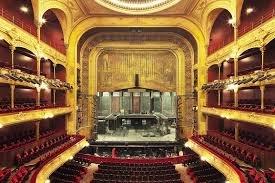
Théâtre du Châtelet
Théâtre du Châtelet

The theaters have different artistic mandates. Châtelet, where “An American in Paris” is currently playing to sold-out houses, tends to program musicals and concerts; the Théâtre de la Ville is an important destination for international theater, contemporary dance and world music. Both receive large subsidies from the city of Paris: 17 million euros (about $20.5 million) a year at the Théâtre du Châtelet, which has an annual audience of around 320,000; and 10 million euros at the Théâtre de la Ville, which has about 260,000 spectators each year.

The announcement of the long closures, made this week by Bruno Julliard, the mayoral deputy responsible for culture, did not specify what arrangements would be made for the employees of both theaters (130 at the Châtelet, 110 at the Théâtre de la Ville, according to a report in Le Figaro). Although Mr. Julliard did not offer details, he said that the closures “did not mean that programming would come to a complete stop.”

He did not give figures for the renovations, which fall within a 100-million-euro budget for refurbishment allocated to the two theaters and a number of museums.

The Théâtre de la Ville, directed by Emmanuel Demarcy-Mota, has a second, much smaller house in the 18th Arrondissement, but its larger productions are unlikely to be shown there. The Théâtre du Châtelet, directed by Jean-Luc Choplin, is likely to have a harder time finding alternative venues, particularly as another Paris theater, the Opéra Comique, will also be closed for renovation for at least 18 months from mid-2015.

Darcey Bussell dazzles in elegant Audrey Hepburn documentary – and gets Twitter in a spin – Mirror Online


Darcey Bussell dazzles in elegant Audrey Hepburn documentary – and gets Twitter in a spin

Dec 30, 2014 11:47

By Kara O’Neill

The Strictly Come Dancing judge proved to be a hit as she delved into the glamorous actress’s life and the secrets of her past.

Darcey Bussell is already a firm favourite on primetime telly, and her latest venture in the land of showbiz has made her even more popular.

The former ballerina, who is also known as a Strictly Come Dancing judge, was a hit on Monday night with her documentary Looking For Audrey.

Delving into the past of glamorous film star Audrey Hepburn, Darcey stepped back in time to uncover the truth about the actress behind the glitz of a Hollywood smokescreen.

Paying visits to locations all around the globe that played an important part of Audrey’s life and career, Darcey discovered how she started as a dancer, risked her life in the war, and was often a lonely individual looking for true love.

But while Audrey’s past swept enthralled viewers along quite nicely, it seems that Darcey’s softly softly presenting style and her clear passion for her idol really shone through.

Twitter users were suitably impressed with her performance with one writing: “Brilliant, Darcey. Do more. You both sparkled!”

This could be just the beginning for Darcey, who also made her name as a dancer.

The 45-year-old trained at the Royal Ballet School before going on to have a long career in The Royal Ballet.

She is most widely know now as a judge on BBC One show Strictly Come Dancing, when she joined the panel in 2012.

Speaking to the Telegraph about her idol, Darcey admitted she had been obsessed with Audrey and her life from a very young age.

“She has inspired and intrigued me since I was about 10.

“She was always very real, one of those natural stars who never tried to be anything other than who she was. It’s hard to stay true to yourself and it’s rare, especially today.”

*Catch up on Darcey Bussell’s Looking For Audrey on BBC iPlayer

Patricia McBride-Still Living the Dancer’s Dream (Protege of George Balanchine)


Patricia McBride lived a dancer’s dream: Her mentor was George Balanchine

2   Patricia McBride and George Balanchine

Patricia McBride rehearsing with choreographer George Balanchine.

This was normal for McBride, then the New York City Ballet’s principal dancer (now the associate artistic director at the Charlotte Ballet), but working with Balanchine would have been a dream come true for aspiring ballerinas around the world.

He is known as an artistic genius in the ballet world. A gifted choreographer responsible for changing the face of dance and famous for the New York City Ballet’s ” Coppélia” and “The Nutcracker.” And this man personally invited McBride to join his company when she was just 16 years old.

Balanchine and McBride would work alone in a studio, not speaking much. Balanchine would cue the music and dance in front of McBride. A pianist himself, musicality was of the utmost importance to Balanchine. He wanted the dances to flow naturally, so he let the music do the speaking. McBride followed along behind him, learning the steps. Forty-five minutes later, McBride would have a new solo in her repertoire.

“He worked so quickly and he didn’t have to experiment with you. He knew exactly what you could do,” McBride said in a phone interview. “Once something was made to you, you had to remember it forever. You were the guardian of the choreography.”

Balanchine trained McBride for a 30-year career with the New York City Ballet. She danced over 100 ballets in that time, including 30 choreographed just for her. When she performed her final ballet in 1989, McBride was showered with 13,000 roses and a standing ovation.

But McBride did not leave dance behind. She went on to teach at Indiana University and then took over the Charlotte Ballet in North Carolina with her husband and dance partner, Jean-Pierre Bonnefoux in 1998. She’s now 72 and still teaches eight ballet classes at a time, on top of running rehearsals for performances like The Nutcracker.

This lifelong dedication to dance has been noticed by the outside world, too.

Earlier this month, McBride walked down a red carpet in Washington, D.C., to be honored for her commitment to the performing arts. She mingled with Tom Hanks and Sting, had dinner with John Kerry and met the Obamas. She was given a rainbow-colored Kennedy Center Honors ribbon and listened to actress Christine Baranski praise her accomplishments.

It was a celebratory weekend all about honoring the ballerina (among other honorees), but McBride was quick to thank others in our interview. Especially Balanchine, her mentor.

Theirs was an intimate setting to work in, but Balanchine was more than a teacher to McBride. She looked up to him as a role model and desperately wanted to please him. McBride‘s own father left her family when she was just 3 years old, so Balanchine stepped in to fill that role.

“I grew up without a father so he was everything to me — the man I most admired and just the most wonderful role model anyone could have,” McBride said.

And their relationship was not lost on the outside world.

“A true muse for George Balanchine, he created many ballets especially for her,” said Larry Attaway, executive director of ballet at Butler University. “She was one of the most remarkable ballerinas of the 20th century.”

McBride still remembers leaping for joy when Balanchine invited her to join the New York City Ballet Company all those years ago — and did not hesitate to give up a normal teenage life for one of endless rehearsals, travel and intense dedication.

Balanchine took McBride under his wing and trained her to dance his ballets, many of which are still performed around the world today. She traveled to Tokyo, Italy, Germany, London, Paris, South America and Russia to dance, including five performances for U.S. presidents. Leading roles in her repertoire include the Sugarplum Fairy in “The Nutcracker” and Colombine in ”Harlequinade.”

“I cherish the ballets made for myself by Mr. Balanchine,” McBride said in a phone interview. “He never lost his temper. He was quiet, humble, the genius of the 20th century. He changed the face of what dance is today.”

Balanchine was her teacher, her mentor and inspiration during her long-lived dancing career. He pushed her and drove her to perform at the highest possible level, but he was also kind and patient — a notable trait in the perfectionism-driven world of ballet.

“In the beginning, he taught you how to hold your fingers, use your head, hold your shoulders, how you glissade, bourre — the exact way he wanted you to do the steps,” McBride said. “It was relearning the whole Balanchine technique.”

He was not a man of many words, but when he did offer praise, it stayed with McBride for years to come.

“After performances he would say, ‘Good, good.’ He never really gave a harsh word. I don’t ever remember him saying, ‘That was awful,’ ever. He didn’t praise that much, but when he did, it was wonderful. He would say, ‘I loved how you used your eyes, you were mysterious.’ It would make you feel like a million dollars.”

Balanchine passed away in 1983, but McBride carries on his legacy by teaching her students his ballets with patience and kindness. She gives her students at the Charlotte Ballet Academy praise and talks highly of her “beautiful dancers.” She believes in nurturing her students and making them feel secure in themselves.

“Mr. Balanchine wanted me to be myself. He didn’t want me to look like anyone else,” McBride said. “I love teaching our company dancers the Balanchine ballets. I try to give them what was passed down to me and what I learned from him. They dance it so beautifully. It also keeps me close to Mr. Balanchine. He’s with me every single day.”

dance book discussion et al