Recently, I wrote a Fall Arts Preview in dance for Cincinnati CityBeat (the alternative paper here in town). It’s worth noting that for 2013-14, the company’s first production, “The Kaplan New Works” series again has featured three women choreographers (Jodi Gates, Heather Britt and Gina Patterson). For the 2012-13 season, Cincinnati ranked first on the list, with seven women against sixteen total for the entire remainder of the list. Just do the math!
For the rest of 2013-14, Victoria Morgan’s “Frisch’s presents The Nutcracker,” and the world premiere “King Arthur’s Camelot,” join Cincinnati Ballet & Over the Rhine (Jodi Gates again). Only four women total, but two of them have work presented twice!
These are revised histories of great ballets as published in a supplemental education newsletter for students and practitioners, or those interested in the history of the ballets-useful as a starting point.
New York City Center will celebrate the10th Anniversary of its Fall for Dance Festival with two FREE evenings of dance at the Delacorte Theater in Central Park,hosted by The Public Theater, on September 16 and 17 at 8 p.m.(rain date, September 18).
The FREE performances at The Public’s Delacorte Theater will feature four Festival alumni:
I am a strong advocate for dancers developing more internal feedback based on what they feel rather than what they see in the mirror. (In part because a lot of dancers use the mirror as a crutch or enemy, rather than a tool…) It was wonderful to see the same sentiments in print from the master teacher himself (from the New York Times obituary published on August 18, 2013):
““Out of the feeling comes the form…Ninety percent of the time students are taught the form first. And then they’re expected, through some act of God, to get the feeling.”
Mr. Howard’s pedagogy, unorthodox in its day, entailed a kinesthetic approach, in which dancers were taught to rely less on external feedback from the mirror and more on the minute internal signals that telegraph the position of the head, limbs and torso in space.”
Cincinnati Ballet dancers Thomas Caleb Roberts, Danielle Bausinger, & Patric Palkens in James Kudelka’s “The Man in Black.”
Photo by Peter Mueller.
Recently I asked choreographers on the same bill (the upcoming Cincinnati Ballet Kaplan New Works, opening next Thursday, 9/12/13, at the Mickey Jarson Kaplan Performance Studio) questions: where they got inspiration for their work, and how doing a piece with quick lead and rehearsal time for a small venue stretched their choreographic chops. I asked them about their style and their music, and how music drove their movement. The resulting article appeared August 21, 2013, in CityBeat’s “Fall Arts Preview”: http://www.citybeat.com/cincinnati/article-28412-cincinnati_ballet_rings_in_50.html
The one choreographer I was not able to speak with personally (James Kudelka) recently responded through his agent with answers to questions I emailed him, trying to replicate the things I asked Heather Britt, Jodi Gates, Gina Patterson and Val Caniparoli about their “new works.” By…
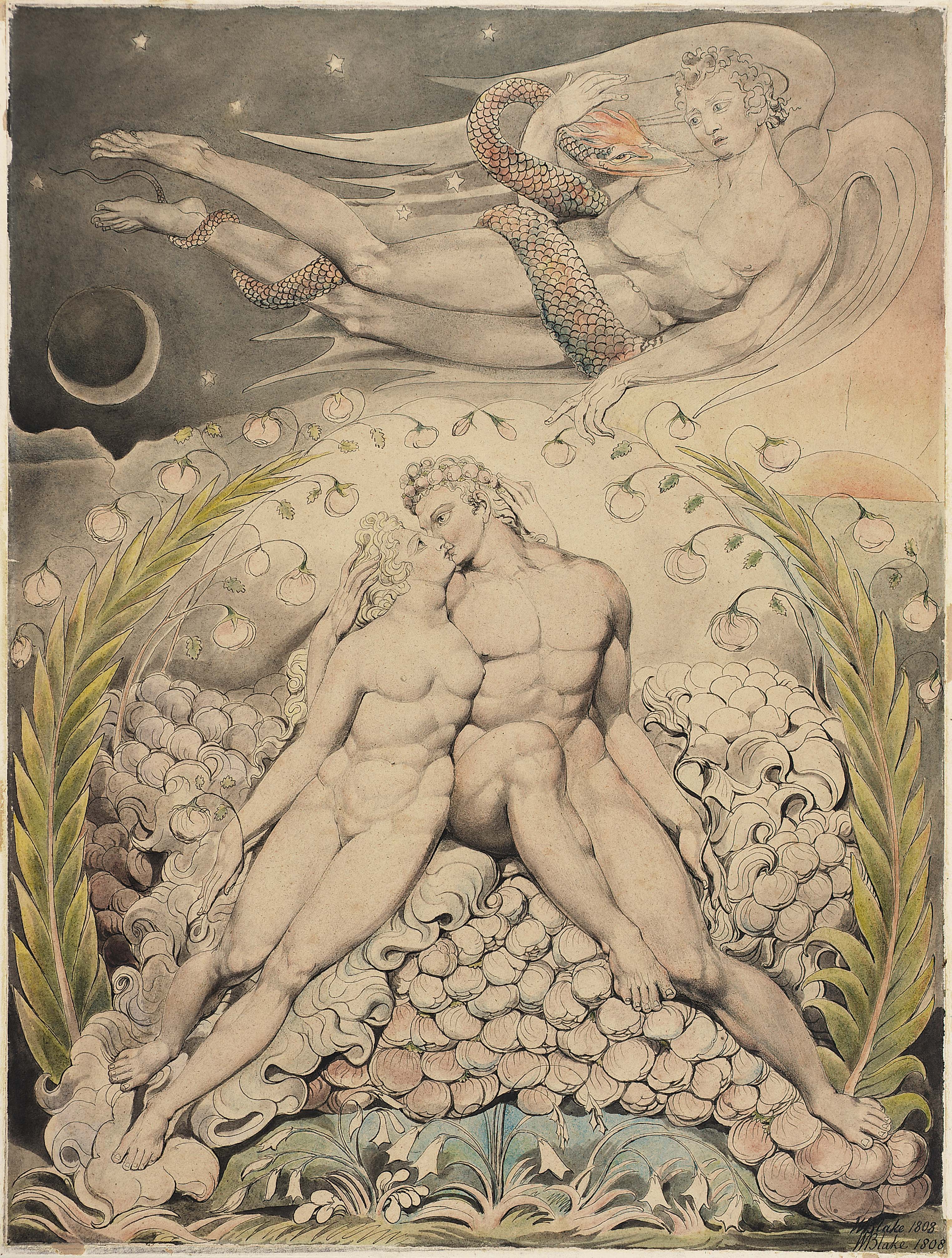
(Late Latinlimbus) a word of Teutonic derivation, meaning literally “hem” or “border,” as of a garment, or anything joined on (cf. Italianlembo or Englishlimb).
Natural limbus infantium
In theological usage the name is applied to (a) the temporary place or state of the souls of the just who, although purified from sin, were excluded from the beatific vision until Christ’s triumphant ascension into Heaven (the “limbus patrum“); or (b) to the permanent place or state of those unbaptized children and others who, dying without grievous personal sin, are excluded from the beatific vision on account of original sin alone (the “limbus infantium” or “puerorum”).
In literary usage the name is sometimes applied in a wider and more general sense to any place or state of restraint, confinement, or exclusion, and is practically equivalent to “prison” (see, e.g., Milton, “Paradise Lost,” III, 495; Butler, “Hudibras,” part II, canto i, and other English classics). The not unnatural transition from the theological to the literary usage is exemplified in Shakespeare, “Henry VIII,” act v, sc. 3.
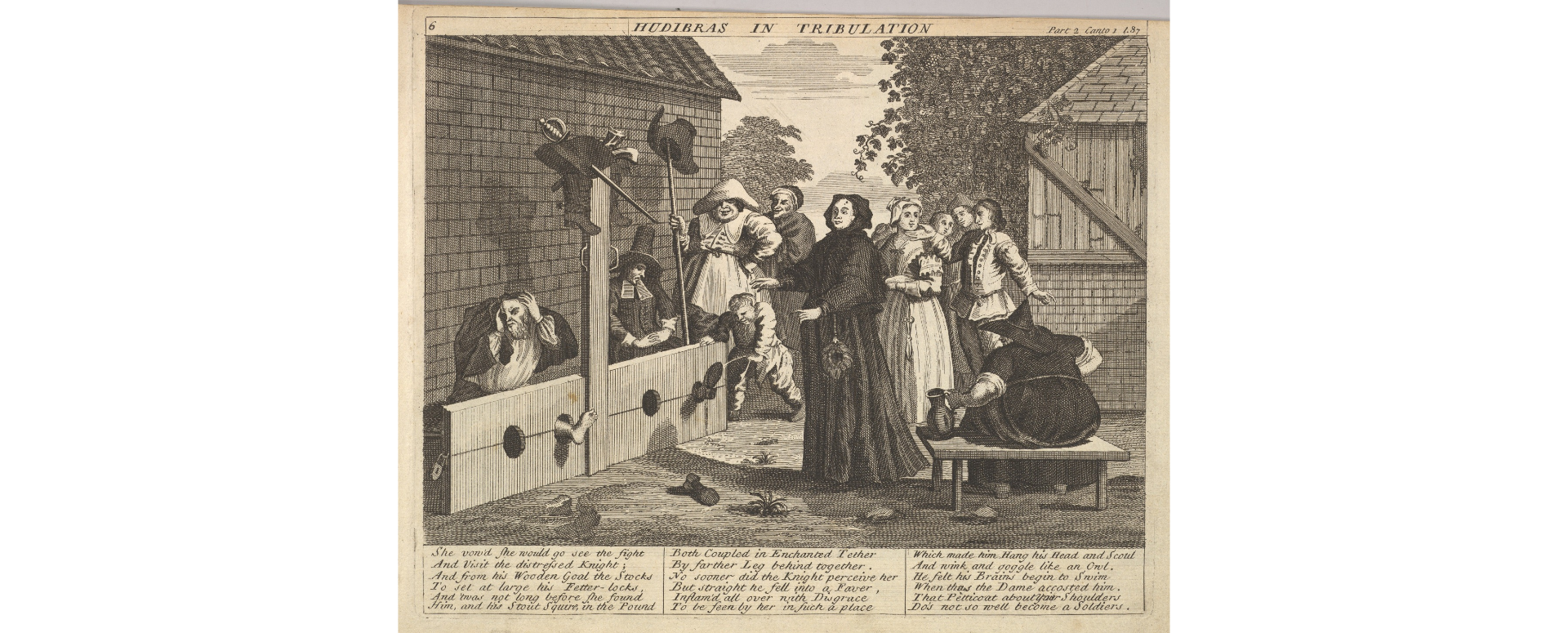
Blake‘s epic poem tells the story of Sir Hudibras, a knight errant who is described dramatically and with laudatory praise that is so thickly applied as to be absurd, and the conceited and arrogant person is visible beneath. He is praised for his knowledge of logic despite appearing stupid throughout, but it is his religious fervor which is mainly attacked. Blake undoubtedly drew from Don Quixote for his witty satire about a man who thought he knew too much and gets repeatedly beaten for his views and interfering with the rest of the world’s vices. Unlike Don Quixote, who is humorous and draws our sympathy, Hudibras gets none. It was very popular in its time (1700’s), but was not a beloved story, for it spurred no ballets. However, many stories and art are descended from it. It’s main argument stems from political views and religious theorists at the time, sometimes combined into one group, and the public found this pairing amusing and ludicrous. Some writers and reviewers of the times felt Blake was too hard on certain puritan factions, so it did not please those everyone important.
My purpose in dredging up these hyperbolic entrails is that they serve to explain and accentuate my point the about idiocy of ballet politics, dance politics overall, and some characters of the world in general. It also underlines the fact that the attitude held by some teachers of ballet (certain people are destined for success and others aren’t) is fascist and not particularly conducive to the making of good dancers or art, at all. These people hold that they are the judge of the times. This self-appointed “hell” that parents pay for their children to be entombed in is called a competition studio, and not a ballet or (art) studio where expression and all great art is derived. Were it not for imperfection, there would be no art, as true art is not necessarily perfect. This is history repeated though, and nothing new occurs. It is part of the reason why it is impossible to achieve art in a school for young dancers and in many cases in a ballet theater, and probably some companies. Mothers and fathers, wooing administrators with money and work, fund raising efforts, and their own strings-attached beneficence result in the many studios I know of, which have some good elements, running a muck. At least in a ballet company these souls are excluded for the most part and the business of art may take place-and in most good ballet schools as well as in other types of other schools. At the studio my daughter was recently at, the operator had her own unique ideas about the dancers, their abilities and what sort she advanced into new levels. Each year she would change the levels around to accommodate her future plans without consideration for the families involved and especially the children whom she was hurting. If a parent was paying for more children, they got more attention, moved up, more and better roles, etc. If they contributed large sums of cash, those students could be expected to get privates and a lot of pushing even if they weren’t very good dancers, had poor technique, bad habits, arrogance, etc. A very few children, literally one or two out of each level, received her full attention and she would work with them for years, giving privates and coaching, lead roles, until she managed to get them something. She wouldn’t even give corrections (strike one) in class (especially my daughter) except to her very favorite few and she manipulated the entire class to evoke harder attempts from these few by using the others as comparisons. It was a very backward method, resulting in those few getting all the attention, etc., while the others continued to pay for the scraps leftover-even dancers who were quite good!
My daughter has spent the last several months in limbo, from an effort by this director to get her to leave. Her others students resented my daughter due to the attention she was getting from her Russian teacher, who no doubt was rewarding her hard work and effort. She also had privates with him, and in under a year was up to and in some cases better than her classmates. After six more months and more privates, she was better than her very best dancers-so she prevented her from doing YAGP- a punishment (strike 2)! Also, the other female teachers there would not giver her privates for fear she would compete with their prize students. They all held this attitude that each student belonged to a teacher-only one. It just happened that we had the best one and they ALL resented this. He also had the hardest working students and some of the younger ones and boys did competitions and they won. His won. But my daughter was not allowed by her. I did not realize it was the director controlling him, telling him to help other students who were willing to pay more money-who had more money, but it was. She would come out and not allow him to give my daughter privates when she was waiting, instead directing him to take someone else first/instead (Strike 3). Prison. Confinement, or so this mistress hoped, and by these actions she expected my daughter to be discouraged and repeatedly kept back and slowed down (2nd chance). Finally, I realized what was going on and we finished out the year-end performance and left. I did not pay her the last two of 12 equal payments for the year. Would you?
She may now yet again have a fair opportunity to enter the beatific vision of ballet Heaven. A school where she can dance hopefully unencumbered by these people who believe they hold the carrot and the key to her success. If the key is money and not art, not teaching, not learning, and performing is not possible without patronage at so early a level of training, then art sits in confinement, and talent is imprisoned, learning is sanctioned, and futures are undeveloped. There is no chance of my daughter growing into a beautiful dancer there, for the environment is evil and the hatred and jealousy running beneath the surface permeate the spirit of the dance. It was important to her to make these other students feel superior to my daughter and certain other students in an effort to keep the money coming in. My daughter was incredulous to find that she had been demoted (LAST STRAW) to a level with dancers who were ungainly (also ridiculed by her and humiliated in front of everyone else as an example-not to be overweight (seriously, in a little local ballet school????-yes, she actually calls herself a dance educator), did not even bother or try to learn (who could blame them?), and who showed zero interest in ballet (no wonder!), and whose families were not financially important (bingo). My daughter was age-level and training level appropriate for the higher level, but was being highly encouraged to leave, I would say…. I do not want to say much about the girls who were promoted, the previous takes into account their possible faults (false self-confidence, and their parents stupidity) being ignored in favor of monetary support, so I need not impune them further-wouldn’t be nice. Over time, we were able to see that each parent of each of these children held some advantage over the director, was useful, or was paying at least for two children. But my daughter was to be made miserable, to be cast down, by the director of the studio, whose arrogance rivaled Hudibras’, as if to say, “no matter how hard you try, you can never be better than my worst higher-paying student. it is a hard lesson for a teenager to learn-to see someone so cruel, and I can assure you, she was one of the best dancers in the class upon leaving. She was convinced it was a mistake, a cruel joke played by one of the parents who sent out the certificates and promotions, but when I realized it and called, I was told the director would “re-evaluate her” after the summer. The summer program there is usually pretty good, but for two years we have been unable to afford it. However, when we come back, my daughter is still more advanced than others, because she works very hard and continues her privates with her Russian teacher-who refused to teach anyone else who asked. I knew there was no evaluation or training issue, as some of the other girls in class are well behind my daughter in all areas, but I knew it had to do with money and politics. A child does not usually understand this, but my daughter readily saw the reasons for it, so it was not very hard to dispense with. She refused to go back.
This Summer that would have resulted in our being pretty much cut-off from her Russian teacher, but that dependence needed to be discouraged anyway for some other reasons. After about two weeks of this, she began to be led dancing into different directions. There were an inordinate amount of accessible master classes in the area-I wonder who was teaching at the intensives! Her vision must be pure as her luck was good! God never closes a door….
The mean Hudibras in the stocks.
This kind of imposed limbo by the director was averted by the number of available classes to take. Quickly, she perked up, finding plenty of support from other teachers. The other aspect of this is that she is the kind of able, ready and polite student that everyone else wants to teach. Once they see her seriousness and rapid improvement and other good qualities they usually (not always) help her, encourage her and eventually become attached to her. Each school she went to and auditioned for this Summer she was accepted to, and she was placed in a suitably advanced level in. In each master class, the teachers praised her and helped her. She wanted to go to New York and audition for SAB, and I almost doubted her. I thought perhaps she was trying to overcome those bad qualities projected onto her by that director and frankly, I was worried that she would not be accepted. She needed to erase the self-doubt that this woman had placed in her mind deliberately. The baby in limbo infantium, innocent of real sin or error, but far away from the beatific vision sought by dancers everywhere, but I was wrong to doubt her and she has a lot more mettle than I had anticipated (as usual). You’d think I’d learn and have more faith. She did it everywhere she went. She got better seemingly without even trying-she stepped up a level, a notch in her professionalism and self-confidence. The nervous, shy young girl is mostly gone, but in her place is a beautiful, confident young lady of just 15 years old who knows all of her hard work has not been in vain, shaking the dust off of the bottom of her feet as she goes. She was happy to see the girls there and was truly pleased that most of them were happy to see her when she went back for a few classes at the end of the Summer with her Russian teacher. She is convinced once again that she is happiest while dancing, more competition is better, and she was able, while at these other studios to compare herself to their best dancers and to see where she was in comparison. She found herself close to or better than their best, different, better in ways they were not, learning more and new things, getting new corrections and insights, different stretches and work, new combinations, and working just as hard, and getting much better, being more relaxed and open, despite a shorter schedule and fewer classes. She is finally working smarter! It is as though she finally sees in herself-herself and not a victim, but a fighter (the best kind) and a catalyst. She is a dancer!
Perhaps I did not make her appear chastised enough and down-trodden, from the perspective that those mothers felt sorry for her-some of those students felt sorry for her too. It did seem as though a very few of them actually took solace from this, feeling that they were better, but some others sought me out and were very kind and understanding. None of them felt we would come back, and the director sought her out in one class to dwell upon her expression and to watch her to see whether she had improved or not over the Summer, and to witness her unhappiness. But broken spirit was not what they beheld. She was better and improved! One teacher literally glared at me when she drove up. But enough of that. The good that came from the experience, for one, outweighed the bad. In fact, she won, for she has been accepted into a very exclusive school in a large city! I would like to blame them, but I am having to be thankful for all of their actions and roles played in this would-be tragedy, except for the indomitable will, spirit and grace of my child, who is a far better person than I have ever been or probably will ever be. She met Jacques D’Amboise and then took a nearly three-hour class with him, a lifelong memory and inspiration from someone whose heart has always been in the right place-I think this inspired her to go do the Fall auditions. She decided she was interested in Balanchine and Cecchetti and she was inspired to read and research, herself, where these opportunities lay.
We were prepared to enroll her in classes with another Russian teacher who wanted to train her, and we had enrolled her into public high school, when the unavoidable happened to thwart those plans. We have had mold in our house due to some repairs from several leaks that the landlord has not made over the past several months. She was finding it difficult to breathe and I moved her into the living-room to sleep over the Summer. She complained of stomach pain, nausea and headaches as well which caused me to confront the landlord and seek to force the repairs. I have been sick, but no one else in the house has been and I did not think it was due to the mold until she was affected. So at the end of August, awaiting repairs, I sent her to a big city with family. She was already inspired to take classes and do auditions. I set them up, we took photos provided by a good friend for free and they were beautiful to see! She was accepted to a school of some prestige, but most importantly with a very good program including all of the things those here lack, and an environment and philosophy which might work out perfectly for her, AND she was placed in the advanced level, second from the top-the top being an actual company-of company-ready level performers, which she is not yet (at 15, seriously-who really is? But advanced! I just hope she can handle all of what she is about to undertake. There will be quite a learning curve considering the deficiencies at the school she has been attending. At this school, the students do get placed into companies and have numerous opportunities to dance! The faculty is really amazing and it is reportedly “not so cutthroat” as some others schools. She will have classes six days per week and one or two with the company-level dancers. She will have pilates, character, yoga, pointe everyday, partnering, technique everyday, and variations. She will learn choreography, the students have choreography done on them for performances and workshops regularly, and there are many master classes, guest teachers, workshops, rehearsals and performances. It was like God just said, there. How can I say no? She (hopefully) can practice there, study and do her schoolwork. She has family there who also will support her and encourage her, but she will have to be a little more independent of me. No more limbo. You must keep on dancing!
Hubidbras vanquished and protected by Trulla-text supplied-in his confinement
Choreography:William Forsythe Music: Thom Willems (1987) Staging:Glen Tuggle Scenic, Costume, & Original Lighting Design:William Forsythe Duration: 28 minutes Premiere: May 30, 1987; Paris Opera Ballet
William Forsythe is an American choreographer who has spent his career primarily in Germany, where he directed Ballet Frankfurt and now the Forsythe Company. His athletic choreography is a union of classical ballet and modern dance—a bold regeneration of the academic dance vocabulary.
Commissioned by Rudolf Nureyev in 1987 for the Paris Opera Ballet, where it was danced by soloists Isabelle Guérin, Sylvie Guillem, Laurent Hilaire, and Manuel Legris. Forsythe’s In the middle, somewhat elevated was recognized immediately as a contemporary masterpiece…
Great article on the make-up and elimination process of the Royal Ballet Academy. Considers homegrown versus international students, ratios of such in company and impact on British dance. Though thought provoking, what many of us imagined. Unknown to us was that other schools, besides the Bolshoi, are nearly fully comprised of students from their own countries, while the Royal Ballet calls ballet “poaching” good policy and ballet a “global marketplace.”



 mysylph