One of the three “babies ballerinas of the Ballet Russe de Monte Carlo. Tamara Toumonova appeared in Invitation to Dance with Gene Kelly and Days of Glory with Gregory Peck!
One of the three “babies ballerinas of the Ballet Russe de Monte Carlo. Tamara Toumonova appeared in Invitation to Dance with Gene Kelly and Days of Glory with Gregory Peck!
Tendus Under A Palm Tree | tendusunderapalmtree.com.
Great interview with Stephen Manes, author of Snowflakes Dance and Swear.

We have all probably heard that Catherine de Medici, brought culture upon the French people (whether they liked paying for it or not), and that she, with her husband Henri II of France, their nine children (one of whom was affianced to Mary Stewart-Queen of Scots from before 10 years of age and died, shortly after their marriage), and his mistress (Diane de Poitiers), their three(?) children, were harbingers of the period of enlightenment and of a trendy form of government called (royal) Absolutism -“One King, One Law, One God”, an expression epitomized in the 17th century by Louis XVI, though not even a direct descendant of Catherine’s; his wife, Marie Antoinette, was. All of Catherine’s children married into prominent royal families of their own and in turn (copying their mother) spent a great deal of the public largess staging outrageous splendors including victuals, parties, a personal zoo, triumphs, and fêtes unlike any of us have really seen the magnificence of except through tapestries and artworks. Though Catherine’s heirs (probably hundreds even though many of her own children died or had no issue) promulgated culture, I do not think their diversity, significance, or largess ever exceeded or met their mother’s, at the time (they tried). People really do not understand to what degree or how ostentatiously the French, or royalty in general for that matter, in those days, lived, and that as a result of these opulent expenditures how fortunate we are to have benefited from these grandiose festivals, or from them came what salon arts-among other things, ballet.

Catherine brought, and repeatedly sent for, chefs, tailors, artists, poets, writers, musicians, personal dancing masters, and any number of other coaches, teachers and “servants”-not just from the Italian court where she was a scion as well, but from around the globe; they instructed not only her own children, but the entire court, on various arts, as well. Many great performances were planned by her for the enjoyment of her guests, and later the public. These spectacles, I have read, involved not only the ladies and gentleman of the court dancing in normal surroundings, but imagine great and opulent sets featuring rides and forests, whole elaborate gardens brought in to recreate lavish and fantastical environments to excite the senses, enveloping viewers (and participants) in delights and repasts, and performances the like of which we could not possibly recreate due to their cost alone, and not possible at all to replicate the magnificence of not just the gesture, but the potential of the world as seen by their complexity, technology, and imagination at the time of enlightenment-oh, were we to enjoy life from the vantage point of a 14th century participant! Not only were these designed to be highly interactive, each one was deemed better than the last, and so on, but also unique, and in no way like the last. Original.
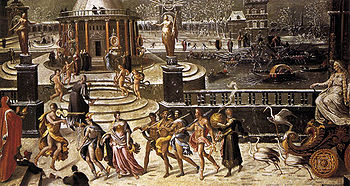
Queen Catherine was a great promoter and through these events managed to keep the court (and the world) poised and waiting for what she would do next. Additionally, she used these soirees to entice illustrious counterparts from other kingdoms to France, to her salons in order to exact her due; this was deliberately done to iterate her family’s political force, and to strategically keep her friends close and her enemies closer, for there were many who aspired to the seat of France. By this, and other methods, she married her sons and daughters to royalty, calling in the obligations for favors as she needed them. You were “in” if she liked you and “out” when she no longer had any use for you. Mary, Queen of Scots, despite having been a part of that royal family for over 10 years, considering herself a Frenchwoman, hastened out of France by a circuitous back route after the death of her young husband, Francis II, King of France, and Catherine’s oldest son. Despite their oft demonstrated closeness (Mary was reared by Catherine as one of her own), Mary somewhat feared her mother-in-law just the same and knew when it was time to tuck tail and leave.
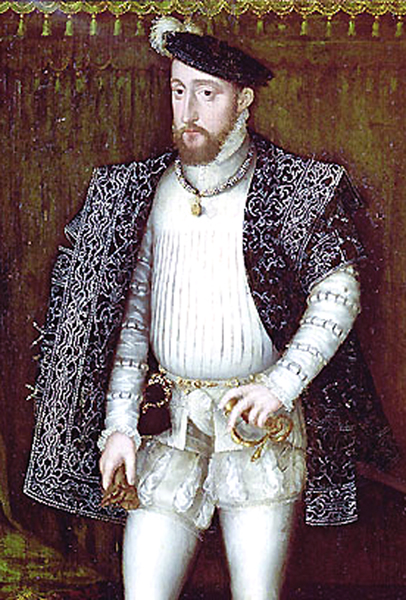
Mary, next in line to the English throne, after Henry the VIII’s children, was originally affianced to Henry VIII’s only son, Edward VI (Jane Seymour). But, as political intrigue of the day would have it, and the time-honored feud between the Scots and the English (for their autonomy), the Scots broke the match and scuttled Mary off to France, preferring to maintain the alliance via the Valois house, as her mother was a member of the Guise family (a compatriot of Henri II, King of France). A political move to put a French Queen and King into the Scottish realm, also Catholic (Catherine would probably not have allowed her son to ever go unprotected to England anyway), but tricky. Catherine’s rise was accidental, more or less, and this was early on, but she was busy finding royalty for her offspring to marry, and betrothals were a guarantee (of sorts), but she might not have been as clever then as she was later. At any rate, it was Mary’s life at stake there and while in France, Mary was still a Guise. Catherine, like many royals, here and there, had come to France to marry the 2nd son, not the heir apparent (who died, as they did then, suddenly), but she seemingly took up where her predecessor had left off, swimmingly in most regards. Henri II was not known to share affairs of state with Catherine in any way at all; but he did support her in her wifely duties which she appeared to take very seriously. It must have been a different life than Catherine hoped for, married to a sullen and gloomy Prince taken by bouts of depression and who, having been held hostage for four years in Spain, purportedly, was difficult to please and unpredictable-he also had a very famous mistress, Diane de Poitier. Catherine worked hard to make a success of her life and legacy, and also surprisingly, to make her King happy, and it appeared that entertainments were the chief employ she used (also food). Henri II, King of France, like later Kings of the Bourbon line, enjoyed dancing and the company of certain people.

His affair with Diane de Poitiers began then, and lasted his lifetime (not that long). It is said she had greater influence, not only on policy, but on development and the budget, than Catherine did, so it was not until his death that Catherine really gained more control over matters of state, and then, mainly through her children or rather, because of them. Perhaps France was better for Mary to grow up in, as she gained more popularity as an “escaped” ruler living in decadent France-the glorious France Catherine was promoting, than she would have, without any romantic excursions, living in rustic Scotland. Francis I, King of France, died shortly after their marriage, at age 15, of tuberculosis (some said ear infection) in 1560. France afforded Mary a life of excitement and wonder, and, if nothing else, the privilege and dynasty of the French court, and untold luxury and surroundings-truly a fairy tale lifestyle. The entire “situation” infuriated Henry VIII, King of England, and his wrath was witnessed in a series of attacks on Scotland, known as the ‘Rough Wooing.” Mary and her new fiance, the Dauphin (Henri II’s heir), Francis (1544-1560), were wed on 24 April, 1558, and Mary, briefly, became Queen of France (1559-1560) as a result. Mary’s was not a happy life, or a long one, but it was a more typical life of that period than we would be prepared to believe. Catherine’s own story is not dissimilar, and Mary was possibly comforted by the thought that her fate might end as well as Catherine’s, and followed the advice of her betters; this was not to be. But, had Catherine married Henri VIII’s son, it is very possible that Elizabeth I, still would have had her head. So, Mary, Queen of France, became Bloody Mary, though it is said. much loved by her people.

In the same year as Francis’ death (1560), Mary’s mother, Mary of Guise (a Bourbon, married to Henry V, King of Scotland), died also; Henry V was her second marriage). Her daughter, Mary, longed to return to Scotland (supposedly), particularly after her mother’s death (and wise, too), since the French were anxious to rightfully establish “their Queen” as the monarch of Scotland-apparently to serve dual political purposes, she was given the boot, permission to leave. The French had the young Queen (Mary) sign documents, prior to this “release,” which they sent to (Henry VIII) England ahead of her, naming her as the rightful heir to the Scottish throne. This arrogant claim by a Queen, upset the English, and undoubtedly set off the chain of events which led to her own execution there in 1567, a mere 7 years after the loss of both her husband and her mother, but this was not the grand design planned for her, and it might be said that what she had learned in her life, prepared her for that eventuality in some respects. Mary was a political pawn, and may have done well to stay in France, or was this was a power move keeping with Mary’s own desires, after all? It is never mentioned that Mary had a desire to rule, but we can assume she was prepared to do, and had done, what was expected of her, despite any other longings. If death was a possibility, then she had clearly already chosen this path to avoid that end already in France -maybe seen as the lesser of two evils by her, and also one of at least, hope.
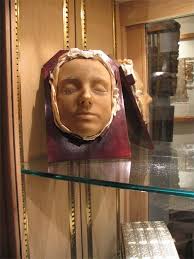
While this may seem a long way away from ballet, it is not, and had Mary stayed in France, had Catherine de Medici not been vigilant in her ambitions to remove threats to the throne, promote her court, or had her own hold not been so tenuous ballet might not have played the part it did, repeatedly, to evoke the results Catherine desired. Afterall, endorphins make people happy, and somehow, Catherine managed to make “non-sporting” courtiers and the public happy with this fete. It is important to also compare and contrast the power of women, felt by some to be less than natural and overflowing, so here was a women par example who exercised that power cleverly, if not ruthlessly-and as a man, she would not have taken any criticism for it. This might be the first example also of using ballet for power as a tool. Seen as a transparency today, the political goings on of ballet companies, choreographers, schools and governments, or with other women (or persons) with whom we compete daily, and for what reasons and ultimately to what end-it almost seems par for the course, child’s play, compared to the lives drawn from it, movements created by it, and occurred throughout the history of ballet, in the halls of the great Kings, not merely in the studio today. I think this is what Shakespeare (1554-1616) meant in As You Like It, Act II, Scene VII, to preserve art faithfully, when he spoke
"All the world’s a stage,
And all the men and women merely players;
They have their exits and their entrances,
And one man in his time plays many parts,
His acts being seven ages."
Far less is at stake today, and despite issues of governance, Catherine dutifully upheld her position as Queen, in providing diversions and costly entertainments to persuade her adversaries; it is said that words are far more important than weapons, and in this case, it might have been her choice of entertainments which actually carried her family as far as they went. Ballet has played an integral part in the political and financial processes of many countries, and this was just the first. So, it is also important to note that history contests the Queen’s concern for Mary, and poses some life or death reasons for her rapid departure from France, not only for Catherine’s political interests in England and France, but resolved what best to do with her, as she was Queen, and seen as a threat to Catherine’s offspring, and a possible pawn by outside parties. It is hard to imagine that Catherine had no idea how far alee that wind actually blew. She was still of very marriageable age (purportedly very beautiful), fiery (no doubt due to her Scottish background), and also considered reckless and passionate, and not very cautious–which some attribute to her liberal French upbringing), and might have been the natural choice for another claimant to the throne of France. Perhaps it was not said by Catherine, and instead these words sonorant in history instead:
“Many of us saw in the place where we are now assembled to deplore her, the Queen on the day of her bridals, so covered with jewels that the sun himself shone not more brightly, so beautiful, so charming in all as never woman was. The walls were then hung with cloth of gold and precious tapestry, every space was filled with thrones and seats, crowded with princes and princesses who came from all parts to share in the rejoicing. The palace was overflowing with magnificence, fêtes and masques, the streets with tourney.
“A little time, and it has all vanished like a cloud. The marble, the bronze and the iron are decomposed in the air or corroded by dust, but the remembrance of her brightness shall live eternally.”
~The Archbishop of Bourges
Or, in the words of Elizabeth I,
“The Daughter of Debate,
that eke discord doth sow.”
(~Ascribed to Queen Elizabeth)
So much is perhaps written about her, compared to Catherine, that it is possible to feel more intimately the realities of the time, dark contrasts, possibly fates, and opinions of others through her, when we might look at what was PR by Catherine, and believe that this was indeed a fairy tale existence. This is, in reverse, the path which Catherine herself so arduously avoided. Mary might also have not favored the political process of Catherine, including, ballet. It is however, also interesting to note that has Mary brought these spectacles to Scotland, England’s own influence on the craft might have commenced much, much earlier than it did.

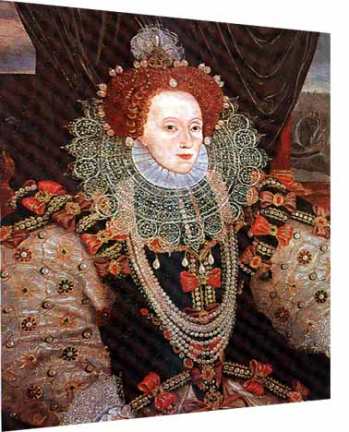
Catherine’s husband, the King, Henri II, who jousted and performed many feats for her, including dancing, had died less than two years prior to these events, by an errant splinter to the eye (during a joust), yielding to an infectious fever. This diversion of the new Queen to Scotland, also left France to Catherine’s will (and Recency) until Charles IX (about her 5th child) was old enough to become King himself. Catherine never ruled herself, but was probably one of the most powerful influences behind any throne in the 16th century (or any other-truth be known). Reigning as Regent (governor) over 30 years, and including, during her youngest son’s (Henri III) reign (last male of the Valois line), where she was said to be his most potent advisor until very shortly before his own murder in 1589. Without Catherine, who only reigned as “consort” alongside her own husband (Henri II, King of France) from 1547 until 1559, it is very doubtful whether her sons would have remained in power at all; they were all seen as weak. In her own way, Catherine had many disappointments in life, but as an orphan, a follower of Machiavelli, it was not what Catherine understood about ruling which limited her power, but what she failed to grasp or have patience to understand which did, at the end, seem to be her and her family’s undoing. She seemed to be vulnerable only due to her great love for her children, unable to counter their whims, transfer her greatness to them, rule for them, so she did the next best thing by actively protecting them, guarding their interests, and influencing their decisions.

By this measure, Catherine was a good mother, and a careful ruler, if unable to see/correct her own children’s flaws, she did her best in spite of them. Her ruthlessness is popularly underestimated. Poor Mary, therefore, was doomed from the start due to events completely out her control, a cog in the wheel of a vastly complex coup d’é·tat, and a real tragedy in a game of thrones. Perhaps, had she lived, Scotland might have been a seeding ground of culture, ballet, and arts, as she had not the chance to rule, but she and Catherine, and many great “outsiders” and “black sheep” have come into their own by sheer determination and persistence, have survived due to not luck, but by circumstances, grit, and indomitable strength of will-perhaps mere stubbornness, none of which could be known in advance, predicted, or changed, except by death, and only history shows us possibly where they might have erred. The fact that it was the imagination, intrigue, and manipulation of women, who created something as interesting as ballet, as beautiful, and as full of the possibilities of art as it could be, does not surprise me. Catherine had to think, she had to be smart, and because of the plight, deaths, and resourcefulness of women, and mothers, in many senses, there is ballet. One can readily see why Catherine had concern for Mary’s charms, which besides unparalleled beauty (at the time), including known kindness.

Little remains of real information for this period of French rule, and despite Catherine’s patronage of the arts, very few paintings exist of the events and festivities which characterized her court. One painter, Antoine Caron, did win her favor, but perhaps his paintings are not as realistic as many people would like. Either that, or the probable fact that his subjects are fantastical and allegorical, elevating the surroundings to heights partially within Catherine’s imagination [sic, this is what it was supposed to look like] and therefore found her support. Catherine was not ugly by any means, but she may have suffered from rickets, however slightly, and other deformities, such as slight sexual ones, but this was commonplace among royalty (See, Hapsburgs), etc. he did have somewhat protruding eyes and a larger mouth, which were not considered beautiful traits of the day, but was, accredited with beautiful hands, a fine figure, and lovely skin-it is no wonder that these features are exemplified in approved paintings of her, and her faults are minimized, without appearing patronizing.
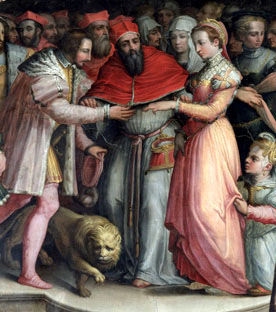
At Henry III’s death in 1589, her realm collapsed, religious wars were ongoing, both within and without France, and with no male heirs left, Catherine probably looked for her daughter Margaret’s match to Henri, King of Navarre (of mixed Catholic and Protestant background), to extend the rule, preserving the control of at least her immediate heirs-he had, after all, promised to convert to Catholicism, and did during her lifetime, anyway, thus gaining her favor by his loyalty. It was not until later that his army defeated her son’s in favor of more tolerance to the Huguenots, his reasoning being that the country was divided. He won overwhelmingly, but continued on, with Henry, in this way, and this was when, no doubt, Henry III contradicted the will of his mother, to come out in more liberal position toward the Huguenots, and at which time he was killed, whether to insure Henri of Navarre’s ascension to the throne, or due to its inevitability due to birthright, and the fact that Henry III had no heirs.

Henry, became Henry IV, King of France, in 1859. It is notable that at the festivities of Henri and Margaret’s arranged marriage, nearly 20 years earlier, on August 24, 1572, Catholics and Huguenots were brought together. The killings and slaughter of Huguenots, some said at Catherine’s own order, are ever after referred to as the St. Bartholomew’s Day Massacre. Henri escaped with his life, with the help of his new wife, promising to convert. Later they would divorce, and Henry would issue the Decree of Nantes, becoming briefly one of France’s more humane and democratic rulers, offering “tolerance” to Huguenots, as well as tax concessions, which made him popular during his reign, and before the reversion of the line to the House of Bourbon, where continued rules, absolutism, and Catholicism by the devout Catholics and the line of Louis XIII would again find a foothold. Catherine had no way to foresee all of this, and at her death probably rested permanently with the thought that the arranged marriage for her daughter with this direct descendant to the throne of France was insured, but unstable, as Margaret and Henri had no issue by that time, so it is probable that when she died, she died knowing of the likelihood of the reversion, and more than anything, perhaps, all of her life, Catherine had feared failure of that- loss of the throne by the House of Valois to the House of Bourbon-probably praying for some interception of fate, desperately. But no one could ever say that Catherine de Medici had not done her very best by her family, or that she had not been strong, or true to her purpose.
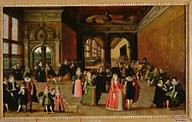
Though historians often credit Catherine with various decisive and history-changing, terrible actions, actions such as the massacre of the Huguenots, it is pretty clear that the length of time she was able to keep the Valois line on the throne, had much to do with memory and perpetuity, if not the final and permanent adoption by France of the Catholic faith, and she did not know another way of dealing with this problem. Without all of these publicity and political attempts to entertain the population, establishing what she was to be remembered for, it makes clear this great woman did that, and did not put more strain on the purse that her successors did, and that she and her children were at least able to govern ostensibly, if not equitably. Often called “the rival queens”, Catherine had her own trouble with her daughter, Marguerite de Valois, who married the future Henry IV, and changed the path of france, was in many a historian’s view, the ultimate betrayal, of a daughter to her mother. Clashes of religion, not culture, were Catherine’s undoing, and so much was made of the Valois’ contributions to France (collectively), that it is no wonder Louis XIV took nearly a century to catch up to her or best her.
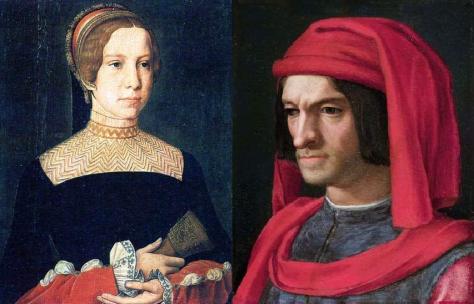
However, without this turmoil, this strife, and these innovations, ballet might never have been the success that it was, so the concentrated efforts of Catherine de Medici to ignite her House of Valois, make it memorable, cannot be too much inflated. At last, it was Henri IV (Henri of Navarre), who had married her daughter, Margaret, who was radical to that end, selfish in other ways, and who was the cause of the destabilization of the House of Valois, and not Catherine, probably due to his more liberal religious views (and his ambitious wife). The zig-zag course of Catherine’s life, the loss of her parents as a newborn, her commoner status, her luck, the decisions she made, that she was able to bear so many offspring following medical corrections, the loss and death of her children, betrayal, overcoming of certain odds, such as her husband’s lifelong affair with Diane De Poitiers, the selected marriages for her children, her promotion and ingenuity, all bear testimony to the fact that she was perhaps the last and most ambitious of France’s great rulers, and a determined warrior queen, and whom, in the future, France has had no equal. Aside from Cleopatra, whom even less is known about, Catherine de Medici, remains an object of controversy in many more arenas than any other Queen, and the most fascinating subject of films, books, and diatribes-however scant the text and proofs-the imagination runs wild, and her interests spanned everything.

Dancing was one of Catherine’s many passions and she knew it pleased others greatly. Many dancing fetes were held at her many palaces and there was always music, theater and poetry. All of the arts were represented in her court, but not all at the same time, or at once. There were those who wrote and directed ballets with their household members and as early as 1530, and there is a reference of the Count of Savoy preparing and acting in ballets with the princes and princesses of his court, but the most remembered and copied ballets d’action were those of Catherine de Medici who brought an Italian dance master by the name of Baltazarini to teach her children. Everyone knows (probably) that Queen Catherine brought many fashion experiments to the French court as well, making popular the high heel. This shoe was designed, especially for her, to give her the look of a more pointed (and therefore) more attractive line. A bit chubby and ungainly, she felt that this extended, made more graceful her legs and feet, and looked prettier while dancing. Soon the whole court was wearing them! The gesture of presenting the foot was made more popular and of course the ankle was turned out, facing the partner, and presentation for her was everything!
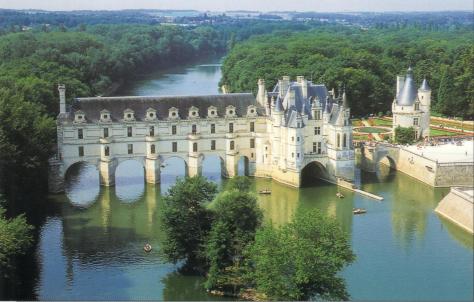
So not only did she feature the first choreographed dances, usually the polonaise (but enough information is not available to discern the truth completely), with costumes, sets, music and scenery, but she also fed the idea that “turnout”, grace and a focus on footwork was necessary for a most appealing presentation of the spectacle of dance. These rules and refinements were the minimum set forth in her court and passed along to other courts as “the thing to do,” and how to do them properly. Through word of mouth, art work and in-person eye-witness accounts these facts remain.There is a lot of speculation regarding Catherine’s planning and motives for the Ballet Comique de la Reine, as nothing she ever did was not for a political purpose (or several), but this, which was to become precedent for ballet, started the form of the cour, and was possibly motivated by personal reasons as well. In her own way, perhaps Catherine threw herself into the creation of spectacle and entertainment to cast a different light on the Royal family, enduring his affair, and most of all to insure the popularity of her court and therefore her children. It is said Henry III, her fourth son, maybe/maybe not gay, was encouraged to (actually) celebrate his favorite’s marriage, Duke de Joyeuse, to Margaret of Lorraine. In order to give this sacrament its most noble and elevated appearance, it is said Catherine planned a most elaborate performance for her son’s benefit, and for her court and admirers, entitled The “Ballet Comique de la Reine.” It is is said to have been the most costly performance of hers to date, coming in at over one-million ecu. Although these tidbits are widely argued and disagreed with by historians, it does seem important to mention them, as in a lot of gossip, sometimes there is truth.

This extravagant entertainment (Ballet Comique de la Reine) cost more than a million ecue (a la couronne). Money was rather unstable in this period of history, and monarchs tended to play around with the value of coinage, but merchants did not, so it is fairly certain the cost of the affair was remembered accurately. Although the ecu did not rise in value comparatively and stabilize until 100 years later, the French sovereign’s coin was undoubtedly solid gold, and having the same approximate value as an English or Spanish sovereigns coin would have had (for they desired to best each other), thus the expression, “worth your weight in gold.” Henry of England’s gold coin, in British culture, was worth more to its people (and to Henry), but in France, the Queen paid in her gold, probably never in silver, so a commission from the Queen would have been in gold, at the going rate universally, but worth much more (in gold) as coming from the Queen, whose “weight” was greater than anyone else’s. So when these costs are bandied about, and uncertain, the only absolute certainty was that there was status in being paid by the Queen, this payment was the best and highest monetary payment one could receive, even if its value on the common market was roughly equal (gold did not go up more than 10x silver which is still a little low), until later in the next century, and the affair was by principal the most costly. In grams, the ecu was 3.399 weight of gold, and imagine one-million of them for this triumphant spectacle!

One-million! From gram to Troy pounds this is approximately 2,700 pounds of gold-a ton is 2000 pounds-more than 1 ton of gold. Possibly the weight of her entire immediate family. A lot of gold. It’s fineness was 96.35, and the composite of fine gold to trash gold was 3.275:3.399-a very high ratio of fine gold (the Queen’s). In comparison, however, Henry’s English coins were much heavier-and contained more actual pure gold, and were therefore worth more, side by side, had gold been valued or measured intelligently at a common market rate, but it wasn’t, and the gold sovereign sets the standard for gold weighing in at 15.552 grams in 1489. With 15.471 grams of that being fine gold. But Henry would never have spent his gold on this folly. He liked dancing, but he was more occupied with the costs of war, so reserved his fortunes for security purposes. France knew the what money could buy and they bought what they could if only for promotional purposes. For us, this was the moment ballet was sold to the highest bidder, established as an important art and entertainment form, used for a political purpose, and thank goodness, Catherine wanted to buy it instead of opera or acting!
The Queen’s gold had high value in France, but not so much in England, where there was growing hostility for the Catholic French, but perchance in Italy, her gold had more value even because although of French, and even English descent, Catherine had originally come from the Italian court. This may have been the reason she sent so frequently for things from Italy, and her gold might have had even more value there; she was able to spend less of it, bring what was exotic, cultural, and pleasing to her-it underlines that Catherine knew about Italian culture, understood what was missing from the French culture, and with this knowledge, she planned to make her empire great and unique. She did, and whether the Italians worked on credit, sale prices, or obligation, they came and brought their skills where they were paid for and could be perpetuated and appreciated, for if the Queen would introduce them-how could they fail? Had Henry the Eighth felt that ballet and dancing won compatriots, defined civility, or counted for more than war efforts, in other words, competed, ballet might never have become what it was and has been, for through the influence of Henry we would have seen a much different form of danse. But England was always frugal. France extravagant, and Catherine could see that things other than war could make a civilisation memorable-she ruled from her seat, not from her horse.

Balthasar (also known as Baltazarini) de Beaujoyeux’s most important work, was the “Ballet Comique de la Reine” in 1581, considered the first ballet de cour. Of course sets, costume and dialogue were all coordinated as before, but what set this apart as different was that the ballet told the whole story-it was the central theme-the dancing. Catherine recognized this difference, and had a libretto scripted from it due to its success-sort of a princely gamble, setting it down in history as a fete remarkable. As such, the libretto still exists. The event was memorialized with drawings, which were sent in remembrance to all the courts of Europe, sort of like a photo or belated party favor. In this way, they have been passed down in memoriam. She publicized it. As a result, it was copied. Instead of Italian ballet masters, the courts now looked to the French for their dancing examples. In one fell swoop, she did what Nureyev did for ballet, in the 1960’s, she popularized it, stole it, vanquished her artistic foes, and took ballet, the art form, away from the rest of the world and made it French! Italy was so far behind, they focused on opera, and England’s art became the theater. Such a coup has not been seen before or since, and Nureyev merely stole a stage for a generation, Queen Catherine stole the stage for 200 hundred or more years. She made ballet public.
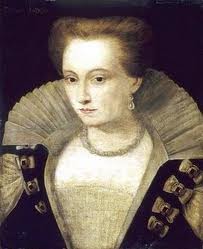
On October 15, 1581, Queen Catherine’s household would showcase this first staged public ballet. Due to Catherine’s influence, and after the succession of her son Henri III, his wife, the reigning queen, Louise de Lorraine-Vaudémont, would formally host the event. The Ballet Comique de la Reine was a four-hour spectacle commissioned by her for the wedding of her sister Marguerite, to Anne de Batarnay de Joyeuse, who was not only a a royal favorite, but also an active participant in the French Wars of Religion. It was probably not by accident that each of Catherine’s grandly staged events was also a testimony to the power and authority of her House, but also were Catholic events, staged by the Catholics, much like the events in Rome, and miracles, to magnify the power of the Catholic Church and its chosen royal family. No doubt Catherine had seen this done, and the success of it. Though this was a new way of promoting her line and her heritage in France, it cannot be ignored that these carnivals and fêtes were often the site and cause of tension and uprising, even violent, with the Huguenots, such as the one in 1572, referenced above.
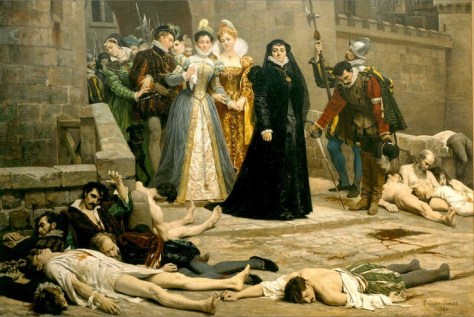
A Gate of the Louvre, after St. Bartholomew’s Day
A complete and utter favorite of Henry, The Duc de Joyeuse, as he was thereafter called, was not to have this soiree, as his only elevation. King Henry III used the marriage as a pretext for raising his rank to the dignity of ‘Duc de Joyeuse’. He was given number one standing over all other dukes of France, with the exception of ‘Princes of the Blood’. His dowry, in consequence, was over 300 000 écus, and he was given the sovereignty of Limours. This is called ‘keeping it in the family and the gift of significant lands and title were to bestow upon him, by royal privilege, parlements above and beyond any other noble.’
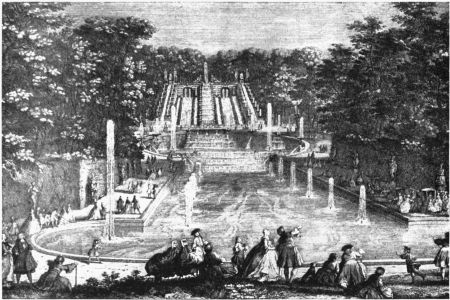
In this, we can see the French crown’s ambition and path toward absolutism really beginning, which would see its end in the revolution over 200 years later. So, with ballet, and unprecedented honors, festivities, and celebrations, came politics-always. Today’ antics can hardly be called unique or unusual, but pale famously in comparison, so matter how dastardly they might seem. Beaujoyeux , or Baltarizini, originally a violinist and tutor, headed the direction, staging and designing this Ballet, with a group of writers, musicians, actors, dancers, architects, and designers of many talents and copious skills. Beaujoyeux also was the court dance master and choreographer as well as valet de chambre to herself and the King. This marriage called for a larger-than-usual celebration and consisted of no less than seventeen events including horse ballets, allegorical feats, a triumph, a water fete, fireworks, and masquerades. One of these was also “Le Balet Comique de la Royne,” described in great detail in various accounts of the period, in artwork and poems. So memorable a festival it was, and lasted for nearly two weeks. The performance took place in the Salle de Bourbon, near the Louvre Museum (which is described as a large rectangular space) which was festooned with flowers and other decorations placed at strategic points around the perimeter of the room. Later, a sort of park, memorialized in some paintings, with a carriage circle, it was a common venue for such entertainments by the royalty at the time. There were few spaces, even in France large enough for such spectacles and frequently they were carried on out-of-doors, so we can assume this venue was of such a size and demeanor that it qualified for such an event.

The story itself concerns the sorceress, Circe, who captures men, turns them into beasts and keeps them in her garden. The performance is stated to have lasted over four hours, and the ballet opened with loud music. One victim escapes the enchanted garden and asks the King for help. A huge fountain is drawn into the hall containing the Queen and her ladies in waiting. The Queens praises are sung and here begins a large battle of good and evil. The Queen and her ladies dance as naiads until the sorceress casts a evil spell over them. Mercury descends from the clouds and dissolves the spell. They begin dancing again and the sorceress casts another spell upon them, forcing them to stop again. Wood deities enter and begin dancing and Pan is summoned to help the naiads but he refuses. The four virtues enter and sing about the King and they call Minerva. She enters and sings with them and herself summons Jupiter. He descends among thunder and music from forty musicians in a golden grove. A brief battle ensues between the sorceress and Jupiter, which she of course, loses. A long and complex variation follows consisting of dancing geometric figures. When the ballet is over, gifts were given to prominent audience members; it is said a dolphin, from his mother, to King Henry III, to signify that a son (Dauphin) be born to continue their rule (which did not happen), though it appears that Henry was in love with his wife, made many efforts, and had been in love deeply before with another woman, Marie de Clèves, whom had died prior to his becoming King (or he would have married her).
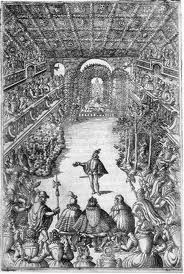
The music , singing and dancing continue throughout the performance. Music is the main theme-a lute, a small ensemble, and pieces for up to a whole orchestra, but it is varied and constant. Written accounts stated that the music was “unlike anything ever heard!” Apparently, there were so many diversified performances in costly programs, that no prevailing kind of dancing arose from any of them, as they seemed mostly to be unique and highly experimental. The Balet Comique, a rarefied example, was seen to be the beginning of the ballet de cour-in essence, a clear and dramatic story-line with a structured development and a cohesive theme replete with many art forms. What we do know is that each of these spectacles ends with a grand ballet which is long and complex. Those ballets, up to 1610, were not very well documented and none seemed to be as detailed or elaborate as Circe, although there are histories of many copies. The general public, as well, seems to have been influenced and impressed by them. Their history stemmed from the Italian Commedia dell’arte which was a traveling comedy show in which their characters wore masks. There were a lot of ballet de cours subsequently, but the genre seems to have disappeared by about 1673.

Beaujoyeux’s choice of music was that type composed by Lull, Bach and even Mozart,
and had a very distinct rhythm much like a sixteenth-note polska. Despite the fact that these singing, dancing, poetry-laden independent productions, ending in a ballet, were started in France, they were not formed into a permanent unison by the French. Until much later there was not apparent what we now recognize and exhibit as the art form, but it is Catherine de Medici, and her family and descendants who are the forbears of such noteworthy entertainment and who we can thank for the history of these continued divertissements. What is particularly significant about the ballet de cour itself is the strong position of dancing as well as the theatricality of the dancing productions. Plates exist to detail some of the creative hyperbole, which the French were known for, and the allegorical references in the productions did become the theme for classical ballets, such as those by Fokine, again popularizing their form in what was not strictly original but a neoclassical revival of that bygone era. In other words they became the subject of history of ballet and therefore fodder for later choreographers to develop onto.
Research is partially credited to articles which appeared by Andros on Ballet (http://michaelminn.net/andros/biographies/de_medici_catherine/), Richard Cavendish (http://www.historytoday.com/richard-cavendish/marriage-mary-queen-scots), and Kristin Rygg, Masqued Mysteries Unmasked: Early Modern Music Theater and its Pythagorean Subtext. Pendragon Press Musiclogical Series, 1953. All highly recommended reads!
Helgi Tomasson, the San Francisco Ballet’s artistic director and principal choreographer, combined elements of modern and classical ballet to create “Trio,” set to Tchaikovsky’s Souvenir de Florence. While much of the ballet recalls the aggrandized ballroom prancing one sees so often, softened arm positions and unusual footwork modernized the movements. The women’s richly autumnal-colored dresses, though shaped like a slightly less stiff version of the lampshade skirt (ballet’s frumpiest costume), were slit to the hip, and allowed a leg to swing out in many steps and kept the piece from looking as primly traditional as it might have otherwise. But while the first and third movement of “Trio” seemed trapped in a sort of generalized exuberance, the middle piece offered a heartbreaking, and ambiguous, drama.
The program notes describe the pas de deux (which turned into a pas de trois) as “lovers and death,” but I admit I had…
View original post 68 more words
San Franciso Ballet’s Balanchine Tribute Honors the Company’s 60th Anniversary of Performing the Masterworks of Choreographic Legend George Balanchine
San Francisco Ballet’s all-Balanchine program, its nearly annual tribute to the late Great and Powerful George Balanchine, known fondly as ‘Mr. B’ to his dancers, one of the world’s most prolific and most musical choreographers, who also just happened to change the face of American Ballet as we knew it, is finally upon us and we are all abuzz with anticipation for the revival of the master’s Scotch Symphony, not performed by this company in 40+ years.
The opening night cast honors for Scotch Symphony are given to Yuan Yuan Tan, Davit Karapetyan, & Courtney Elizabeth (a perfect cast based on Odette’s rusty memories of her one and only time seeing the ballet as performed by Sacramento Ballet over a decade ago), with additional excitement peppering the program as company favorites Taras Domitro and Vito Mazzeo will be making their debuts…
View original post 732 more words

Well, this week has had a lotta bit of good and a pretty good chunk of bad too. The good is career-related (I know I’ve been vaguely saying that in the last couple posts. Soon I will tell you. SOON.), the bad tax related.
*shakes fist at taxes*
Taxes really are The Worst. THE WORST.
But that’s all really boring and I am positive that none of you want to hear about it.
So instead I’ll tell you about the couple things making me happy this week.
1. New CMS

Tihs is so insanely nerdy, but on Monday I received the new edition of Chicago Manual of Style. And it’s soooo pretty. The teal and coral color scheme is oh-so au courant, and CMS still believe in the Oxford comma.
It’s the little things, ya know?
2. Joss Whedon has read Jane Austen
3. Jane by Design

The other…
View original post 157 more words
by Ava Brown
copyright © 2012 by Ava Brown
Boris Lermontov–The Red Shoes: My dear Livy, even the best magician in the world cannot produce a rabbit out of a hat if there is not already a rabbit in the hat.
I love to look at old film of Pavlova. Perhaps it is the shadow effect in the film, the way she appears to flit around the space allotted to her in the film-she seems to push to the edges of the celluloid and back again, up and down-the cameraman has to be fast to catch her! She jumps, she runs, she darts, she flutters, she falls and oops, she’s back up again and dancing away, but she can never get out of your sight. She is on film. I imagine that dancers were more mobile then, freer, less confined to the stage. The screen can barely contain her. Her energy. I feel I can watch her again and again because she has so much to say! Like a butterfly, I have the urge to release her from her celluloid cage. Surely, there will always be something new. Her black hair gleamed in the films; her dresses had a silvery, iridescent quality and sparkled. Her dark eyes looked at you occasionally, so intensely.
Remember The Red Shoes-Moira Shearer and her red dresses, red hair, yes, but she moved! Not static, not posing for her picture in the camera. Movement! The film era had changed since Pavlovas time. The use of color, music and acting in the film was much heralded. To me, the thing that is different from all other films of then, is the main character’s long dancing sequences. Her desire to dance is tied to the storyline, we know. Since that time, I am not sure any film has come even close to depicting as much dance, as many places, so furiously. The message is: Life is short if you dance, or for that matter make any art-it is never long enough to create enough masterpieces for everyone. Life is also viewed in the context of being an artist if you are one. No art without life, no life without art. In the film, when Lermontov meets Moira Shearer (Vicky), the dialogue goes like this:
“Lermontov: When we first met … you asked me a question to which I gave a stupid answer, you asked me whether I wanted to live and I said “Yes“. Actually, Miss Page, I want more, much more. I want to create, to make something big out of something little – to make a great dancer out of you. But first, I must ask you the same question, what do you want from life? To live?
Vicky: To dance.”
It is the fact that Vicky was possessed by the red shoes which made her dance, in Hans Christian Anderson‘s story, upon which the movie was based. Most children read this story, or did. The Red Shoes has recently been restored and premiered in its revised glory at Cannes and can be found on Youtube. Certainly, directors such as Martin Scorcese have been influenced by The Red Shoes due to the use of vivid red color as a focal point in the film. It is also a fact that the dramatization of the story, while containing the story, is far more interesting than the original story. The death of Vicky is shocking when it happens because you are so caught up in the new story and the dancing in that story that even as a fact in the book, you cannot accept it, and feel she must keep on dancing forever. It is my contention that The Black Swan is in fact the same story, without the red shoes. It is this obsession and Van Gogh-like insanity (by the way supposedly caused by absinthe, and not dancing), that would cause her to do anything to be the object of this choreographer’s interest initially, her naivete, her hopes and dreams, and the fact that she just cannot stop dancing!
Though patrons did not believe cinema would keep the ending in The Red Shoes, they did, and Vicky dies, tragically. The many pithy one-liners delivered by actors in the film, the depiction of the tribulations experienced by dancers, the pain, compulsion and experience of living your life in the theater are all eloquently relayed in this little film. At the time, this was not really what patrons wanted to see, so the film had little fanfare and initially no money for major distribution. I read that it was in one theater only, and released on a larger scale much later. Nearly, 100 years later, it is being referred to as one of the most important pictures ever made. I agree, it is an artwork, but what else has there been to compare it to artistically? Not much. It is not that we need more films about dance, it is that we need more films with dancers in them. Everyone knows one-talk to them.
In The Red Shoes – your eyes are drawn to the living color moving across the screen, forcing you to watch her dance-it’s like blood flowing-life being lived as it was meant to be, in movement. It is that movement to which our eyes are drawn and the color accentuates that which we are already, as predators, bound to follow – very Hitchcockian. Like Vicky, we can’t get away! Moira Shearer danced and moved, more liberated than the dancers of older films. In The Red Shoes, at least, the cameraman did not have to chase after her, as he did Pavlova, probably due to the dolly, which had by then been invented and the moving background. Of course there was also editing and Pavlova did not have that option, either. I feel if she did have those tools, she would have used them! The red shoes know no boundaries and they dance her into the streets, they dance her over the mountains- they dance her everywhere, not just in a ballet studio, on a stage, or in front of a mirror. We feel we are there, seeing something impossible, no one in the audience could keep up with her if it were not for the film and the cinematographer. We need the film to go on seeing her. In order to make sure everyone sees the ballet, apparently, we need to view it on the screen or on a stage-and choreographers do construct their pieces with the view to them being danced on the stage and frequently videotaped, even if only for reference. This limits dance, causes it to be created, modified in practice, for performance on the stage and within a box. But still so few pieces are actually filmed and film does not really seem to cross the dancer’s mind-it would interfere with dancing! Dances and choreography were not originally done on stages, but were done in court and socially. It seems to have become more formal as we become less so. Choreographers used to add natural backgrounds, costumes and scenery to their pieces in an effort to create the feeling of landscape settings. Many of Pavlovas films were done outside! Not one contemporary film uses nature as a background when filming dance. Why not film Don Quixote in the streets of Seville, or Sleeping Beauty in the mountains of Hungary or, well, you know what I mean.
In yesterday, theater was an informal thing, performed in front of the masses, for religious purposes and the churches were great promoters. They knew if you wanted to reach people, you had to bring the theater or the message to the people. In the streets, squares, open air, dancing is life, and should be danced everywhere. Although the church was not above device-I like to think of them as the founder of the special effect, think Shroud of Turin, bleeding fountains, bleeding statues. Criticized for their “pop” mentality and devoid of any classical references, music videos have catapulted the careers of many dancers into the six-figure range, but we can not seem to make ballet a nourishing feast for the masses or the senses on film. Perhaps choreographers should use film more often. If ballets were not so “flat,” and dancers were more three-dimensional, perhaps ballet would enjoy a wider appeal. Dancers are looking for films on the Internet, and on Youtube, and there are relatively no(?) contemporary films featuring ballet or modern dancers in real-life scenarios or in dramatic pieces.
When you read many novels, such as The Hunchback of Notre Dame, a character will be described as a dancer, such as Esmeralda. We imagine her skillful dancing abilities, and then we see a film of Salma Hayek dancing, and Walt Disney’s animated version, and it is just not what we imagined possible-a real letdown. Those performances would inspire no one to dance, let alone steal hearts or cause heads to be severed! I have heard people state that seeing The Red Shoes (1) made them want to dance, but I have not heard one person cite The Huntchback of Notre Dame (any version). The director wants her to beguile us with her beauty not her dancing, it is not believable. These women must be the personal obsession of the director alone. Many dancers claim that it was a certain performance of ballet that created in them the desire to be a dancer. However, Gina Lollobrigida, despite not being a professional dancer, is able to give a credible performance as one, the public (at least) feels, that she is a siren. I do not feel she danced, but she moved well and from appearances the filmmakers were persuaded that Quasimodo was not enraptured by her dancing, but rather her sexuality. One can’t help feeling that more dance films would have been made if there were more women making films.
Salome, upon which these later gypsy/exotic heroines are loosely based, is totally within our own imaginations to create, and I have as yet seen nothing that compares with what I conjured-and based on how my mother described her Dance of the Seven Veils to me. It took me a bit of time to separate those words, from a young age I believed it was The Dance Oftheseven Vales , then The Dance of the Seven Vales, and then years later and more mature, I finally realized that the removing of these veils one at a time, to reveal the body, was a seduction. A child in my day be confused about what could be so great about dancing around in or removing the veils. So What? It takes a lifetime, perhaps to understand the statement that less is more -perhaps this was the first written description of a striptease and due to film, its meaning is universal at once. But in all the portrayals I can find in film, only Rita Hayworth’s is considered memorable and take it from me, it is not. It is a let down, frankly, and no one cares to pick up the gauntlet of challenge and recreate this tempestuous display in a faithful manner. On the stage or in film there is no memorable production I can find. Rita Hayworth had many qualities and dancing is one of them, at times. But, she is not able to depict Salome credibly.
Moira Shearer was not boring, and she was really dancing, unlike some stars contracted to portray dancers. We are tricked into watching body doubles and misled into believing that the scene is comprised of real dancing and real ballet dancers. I would prefer to know this before I went to the theater as it is an important consideration for my laying out my $10-15 to see a film. I really feel cheated and duped. I expect device and special effects in Star Wars, but surely not dancing. Similar to the the control employed in virtual animation, such as in Tin Tin, is the manipulation of the senses by the director of Swan Lake. The more convinced film makers are of our the complete betrayal, the more the Screen Actor’s Guild wants to reward them for it. If actors were convinced, entirely, of Ms. Portman’s efforts to imitate a dancer, then they must not have had very much knowledge about dancing or ballet! Without artists in films, actors, dancers, writers, costumes and lighting, any connection with reality is cut, and so is the connection to art. Life is reduced to cartoons.
“What art offers is space – a certain breathing room for the spirit.” John Updike
Every time a major production that could use real dancers does not, it harms the dance community, by separating us from what dance is today and pushing it further back in our consciousness to an indefinite place called history. Dance is alive today! If dancer’s cease to pass this art form down, then the complete record of it will be lost, only to be studied from films and archives, as it practically is already-argh!
Those who dance, who take it seriously, do feel a bit of qualm in stating we are “dancers.” Are we? Does the artist not question himself in the presence of the masters as their works, and sometimes they, look down upon us, from the walls of museums or galleries, on high, and on the stage, and if we have thought of ourselves as artists, do we not reconsider (even a little) as we put the question to ourselves? Are we? Are we dancers, artists, musicians? Do we call ourselves that at first, or do we call ourselves that finally, because there is no other word which describes us? It is at last that we must say so and not at first if we are true artists, no matter what our particular calling. A film maker is not necessarily an artist, anymore than anyone else, nor is an actor, but film is a powerful tool for or against an ideal. Dancers may be the last artists standing! The human spirit is alive in children, who move. For them, at least, dancing comes naturally, just watch them!
Dance films are interactive-they should make you feel like dancing! If a “mere” actor can trigger this reflex, then it could be said one goal has been achieved in the film. Think of Gene Kelly, Fred Astaire, Shirley McLaine. Whether comedic, romantic, or lusty, dancing can be beautiful and exemplifies the human form, and our natural emotions, no matter the perception. I do not think The Black Swan accomplishes this. After waiting for so long to see dance in film again, or a film about dancers, that is all we got? Hollywood studios taught dance to their stars but then there was a switch from the major studios and actors were no longer taught to dance unless, like fencing or boxing, a role required it. Actors have sometimes received kudos for attempting to assume the role of a fighter, country singer, or other notable, bringing a popular icon back to life, successfully. Salma Hayek’s portrayal of the artist Frida Kahlo, was less than stunning, but there are scores of dramatizations in English and in other languages which are triumphant. I worked at the opening of Frida’s first major retrospective of her work which was scheduled to coincide with the release of the biography by Caroline Herrera, and having immersed myself in both her art and her life history, I felt very connected to her. The film was extremely self-indulgent none of the feeling from her work or her life were conveyed. I had similar feelings of disappointment in The Black Swan. Right away, I sensed-this is not a dancer, this is artifice. The film had tons of meaning and innuendo, but i felt as the selection of a non-dancer was part of the trickery. As that it was successful, and there was passion, but it was not the passion of dancing. Ballet was the film’s score-it was set to the music of ballet, but was not.
There is “hoofing”- or getting the job done, compared with classical or modern dance, and hardly an artist was required for that, but “Broadway” dancers who were dancing “extras,” made their living, like Vegas dancers in these chorus lines. A few dancers would rise to stardom from the chorus lines, but even these are few and far between, and more importantly, they became famous, or were noticed for other reasons than their dancing. These dancers are pawns of the director’s vision for a film, always secondary to the story-line, almost never the stars. Sadly, dancers have come to the point where this is acceptable to them as a way of life and they do not fight for more more recognition, rights or artistic control. If dancer’s are not dance “experts” then who is?
In a real dancer’s life almost everything is secondary to the dancing! And it is shocking to me, that a film, such as The Black Swan, whose main purpose is to portray this would use non-dancers at all. Perhaps dancers are okay with taking the crumbs proferred by the writers and director and producers of this film, but I believe artists should have more to say about it than they have. When Little Saigon was on Broadway, the producers were required to use Asians in the parts. Why should film makers not be required to use dancers in the parts? Well, dancers are not a protected minority but I think this might be a good time to fight for that status. I will not buy the video! I think parents, ill-informed about the realities of the entertainment industry, make a grave error by forcing their children to study dance, based upon a fantasy they have derived from looking at the media. Due to the way that dancers overall, are treated in the media, and due to the fact that no opportunities exist for them beyond the classroom and small stage, parents should not mislead their children into believing that false hopes exist and the pursuit of ballet should only continue seriously if the dancer herself, is aware of the remote chance of any success. There should be an International Dancers Forum to address these matters and I would like to be involved! Why torture them, learn the discipline that is dance, pay for coaching and do competitions, and then turn them loose on the world – to do what – hoof for pennies? At least a sports player has the opportunity to make some money!
If parents and teachers and children find dance important to be the best at-why do film makers not consider their audience and their standards? Their expectations? Part of the excuse for not using live dancers in roles would be that dancers are not taught (anymore) to show emotion, to dance with feeling, pieces are usually all about line, music and the choreographer, and very often, abstract. It is no wonder so many dancers cannot really act, they have too many other requirements to get to the top of their field to add another one-even an important one! They must have the feet or they are discouraged. They must have the body or they are discouraged, They must have the flexibility and control of an Olympic gymnast or they are discouraged. They must balance. They must listen to the music. They must dance on point. If they fail in any one of a number of other areas they are also discouraged. They are seldom encouraged unless they have all of the above and money. If it were not for misfits and oddballs, this country would have virtually no entertainment! I for one, am glad that Audrey Hepburn was too poor to continue ballet and opted for films, otherwise we might have never seen her again!
Balanchine was not a great dancer. He was a great publicist and choreographer and he gave the people what they wanted. That is why he rose to such prominence and fame. He taught dancers to dance what the public wanted to see, and he made jokes about it, teaching elephants to dance! He did not find the public very picky, but he did realize that the public wanted to be entertained. Later, he became more entranced with bodies, the art, or the “refinement” of the spectacle, but this related to his work as a choreographer and in no way disavowed those previous works any more than Picasso’s last painting was his best one. Those who witnessed this passion for dance were drawn in and convinced, that ballet was formidable. But, such is the public fervor-on and off. To date, no other dance benefactor, choreographer or artist has brought ballet to us in so many ways and from so many different perspectives. Many potential stars, who might have astounded us, probably did not get a chance to, so little attention is paid to the art. Perhaps it would have been better to turn over the reins to someone who was more of a publicist or a manager than another dancer. Perhaps dancers do not know how to promote their art because they are too busy learning it. The market is still there, but it is different and even more sophisticated than it was, and more particular. It is ready to be tapped. If shows like “So You Think You Can Dance” can succeed, then it must be time for ballet!
Why not make movies using real dancers, write stories for dancing films, and not just use dance as a device for another story within a story within a story or as the profession of a character? The Black Swan said, “we all love ballet- if the dancer is a psycho, there are lesbian love scenes, gratuitous sex, murder, gore and violence.” It did not say, “we should all appreciate ballet,” but instead, the dancers depicted in the film are characterized as sweaty and pathetic victims who are tied to ballet until they get a chance to shine. I liked the film, too, it really shook me up-it took something sacred and stately and gave it all the drama of 90210. I believe there is a place for everything in art, but in dance films there should be real dancers used. That’s all, no matter the supporting story, I think there are dancers who can act it and it should be a rule for them to find them.
Some of this responsibility also rests with the dancers. The ability of a dancer to convey the temperament and feeling of a piece should be required and taught, otherwise we will always see vapid actresses mimicking serious dancers and vice versa. There is no law that says a dancer cannot be both and they should be! Why not create new roles, push forward to collaborating in great films using real dancers? Why spend any time at all in this life, publicly practicing? Why redo the same old tired pieces and not freshen the pot, bringing new works with new dancers, creating new films and memorable dancing moments.
Compare and contrast Maya Plisetskaya and Sylvie Guillem in the short film of the piece Bolero by Maurice Bejart. Sylvie Guillem unwittingly (or not) allows the comparison to be made of herself with Plisetskaya. With her choice of opportunities, Sylvie Guillem is surely always looking to dance that master role in which she finds herself perfectly formed to dance. Any other new piece would have fostered her own creativity and would not rehash, almost exactly, what was already done by Plisetskaya, and I think better. Self-indulgence should not ever, and theory should not always, be taken to the stage-it sets us, whether we like it or not. It shows a lack of creativity. Film and video give us the opportunity to see what we are producing before we let others see it, so art can be better for films existence as a visual correction tool. why copy, even from the filming angles and the set design, what has already been done before?
These are two completely different dancers, in different times, and with the technology available, naked of tricks, I do not feel as though, oh well, Sylvie Guillem has picked up where Plisetskaya left off, so forget Plisetskaya! No more are these classic modern pieces or ancient ballets set for the present? If one film maker, or one dancer, could imbue into those old relics, the relevance of those performances today, then I would be impressed, but making dance no better off by their production, harms the cause. Instead, Sylvie should use her power in dance to make something entirely new (preferably film as it can popularize the art form) and spread that all over the media channels. Why not use that power to promote ballet, cement its importance and relevance in this new century, right away. Perhaps other dancers to come should think about this, and their fellow dancers, when they become famous-do originals! Dance and theater and music, unlike art begs you to recreate a piece, to live in it, yourself and to bring it to an audience desirous of seeing it performed again, but theater is different, even an art of its own, lends itself and can connect to other forms of media, including film, although their are adaptations that are failures, there are more numerous examples. Some people have said, they find it unbelievable that a character suddenly begins to dance. Why not dance if that is how you express emotions. Too many people are ignorant about dance, unaware of the artform, and equate it with popular musicals and farce. Yes, it is in those, too, but not exclusively.
A dancer has to have respect for the choreographer-they are taught to-one has to adhere to the work, be true to it. But they are not. We would all be less impressed with annual Nutcracker performances, if we had to watch children and amateur dancers perform the original parts of the ballet as they were designed for dancers of consummate skill. They are revised, shortened and changed at the discretion of the teacher, so that the students can dance them and so that uneducated audiences can sit through them. The purpose of art is not always to please, but to touch the viewer and to cause in that person some emotion. Like sitcoms and blockbusters, pop music and romantic comedies, when we attend shallow performances,we are not moved deeply, we are being entertained shallowly usually using the most basic forms of humor and predictable situations. But we are wrong if we think this is art, maybe bravado and canned laughs, the same devices in film after film, pushing the same emotion buttons, but not art. This is understandable, but to superimpose Natalie Portman over any professional (and beautiful) dancer is just artistic suicide by the director and every person of intelligence out there, with an appreciation of ballet, had to ask themselves at first, is this going to be a comedy? Well, it is considered to be acting, at least in Natalie Portman’s case, bar far too much was made of her tortured performance. Shot in the style it was, her acting was cut off (fortunately) and scenes changed so quickly that you were again in the director’s control, but you couldn’t have helped but notice the limit of her emotions in the film, which, if the editing had not been so adept more people would have observed. We again have to ask ourselves, when she did not actually dance the parts, if her awards were truly earned? I definitely believe the editor deserved an Oscar and it was an important film because nothing else has come out in so many years. But those who were anticipating it, for the dancing, or to be entertained, were disappointed. Does the film industry even understand ballet? And this brings the whole question around again to, is integrity of ART totally forgotten, lost? Compared to The Red Shoes, whose producers had not just knowledge of ballet, apparently, but also a storyline, it was just a better film.
If I were Natalie Portman, I would give the mantel ornament to the dancer who spent her life learning to dance, faceless and unnamed in the film. Paid for her work in the film, like an extra, this dancer fell prey to the oldest tin pan alley trick in the book. Dancers also need to be a little more savvy about entertainment law. That dancer never should have signed that contract without being aware of what it meant. But it is a big issue nonetheless. If you were to imitate a piece of art, you would be called a forger, but dance, like theater, has at least two variables in every work-the dancer, the choreographer and the public; the artist, unless working under a benefactor, has only two, himself and the public. When you add in a film, it gets much more complicated. In other words, she could be expected not to fully understand the impact of her performance, how the film would be edited or the public opinion. Is mimicry in film or acting any better than forging an artist if the artist’s medium is dance?
In Bolero, I see the subtle differences in the movement of their feet and hands at first (watch the videos), Sylvie Guillem, being more staccato on the movement, and her hands being held more rigidly, angularly if you will, as if she were trying to do something right, like cheerleading. When you are free to dance, you don’t worry so much about so much, you just dance. It’s not only that I think Maya is more sinuous, but she seems to me to just have less fear of doing something wrong-she feels it, originally-no fear. Sylvie points her feet sharply, with every step, as she has been taught to do, but Maya does not seem to be thinking about it at all, although we know her foot points. She is more concerned about the subtle expression created, and intended by the slight releve, and not a pique (what is the viewer supposed to notice? That is the question Bejart might have asked the dancer). It is also what is going on in Maya’s torso that we are watching and I think this is what Bejart intended-a the seduction-of the senses. Dance should force you to watch. Maya becomes more beautiful as the piece progresses. In The Black Swan, precisley where we would be watching the dancing, the scenes are cut and there is just a great flapping of wings! It is very funny actually. Maya is happy, smiling, inviting. Look at her. It is her piece. Natalie Portman as the The Black Swan, a fraud. Who could dislike Sissy Spacek for playing Loretta Lynn-what did we really know about her? Well, we could ask Dolly Parton. But somehow, I have no doubt of Sissy Spacek’s ability to portray Loretta Lynn and she did a good job-the film was really carried by the story and the acting abilities of the stars alone. A dancer or an actress need to look for those pieces that they can make their own. Why not something new? A new ballet? Only new ballets? I can understand a film maker wanting to capture Maya’s performance-it was original, but I do not see the same necessity for capturing a second version of the same thing. Remakes, rarely as good as the original and made because the artists have no repertoire of their own. The idea that one must make something do something prevails. After viewing The Black Swan, it does not seem as though there was a rabbit in the hat at all. But it does remind us subject can be the basis for a horror story and that there is turmoil offstage.
Pavlova, being gone, can have no objection to all these ballerinas portraying her work and trying to emulate her, but she would probably note the lack of understanding and passion, maybe even enthusiasm for dance performance, and probably be very disappointed in the failure of ballet to move to the big screen with the same intensity it was then beginning to do, and I feel dancers might disappoint her too, she clearly used every part of her body and mind for the seduction of her audience, nothing was left to chance. Had she lived, I have a feeling we would have had scores of real films of ballet, as it is she alone seems to have left the most history of dances on film! I think she would have left the theater laughing. She would also have demanded to be in the film! She could have. Imagining what the film could have been, with a real dancer, a real artist, causes me to go back to those old films of Pavlova and try to figure her out, see what made her tick. Film makers wanted to capture dance on film at that time, why not now? pavlova was not intimidated by film, but seemed to relish it, as a way to communicate her message to more people. Was she more provocative, passionate, determined than dancers today? Was she more talented, if you mean by the use of every device within her reach to herald herself and dance? I believe so, and if ballet performers encompassed more of those characteristics today, perhaps film makers would feel that they must capture this spirit on film.
Maybe it is indoctrination which compels dancers to dance the old ballets and now the old modern dances? But we should learn from this and work to give the public what they want-in a ballet and then perhaps film makers will be inspired to make films about dance once again. Maybe we have forgotten that dance to Pavlova, to Shearer, to Plisetskaya, and to Guillem – was not just art but life. With greatness not only comes the opportunity to perform ones art, whatever it is, but also the opportunity to inspire others to dance, to choreograph and to write. So I guess, even in that sense a dance film about anything is a film about dance which may inspire writing, choreography and maybe even dancing!
Dancers from the American Ballet Theater dancing La Bayadere went on television to say: “We do not know what this ballet means, we just show up and dance it-it is too confusing to explain.” How can I ever watch those dancers again? I am no idiot. I have read 101 Stories of the Great Ballets! Is it all right to just be a dancer and not an artist? Does dancing imply only a body capable of gymnastics, but not artistry? Fire those dancers and they were principals! An artist attempting a master’s style used to write “in the manner of” Cezanne or Da Vinci, so that a “study” would not be mistaken for the real thing. Is it really different for dancers or actors? Should we re-think dance ethics before entrusting those choreographers works or ideals to mirlitons to influence whole generations of other dancers? Does any dance performance require believability to be great? Or authenticity? Originality? Do all ballets or dances have meaning and is it important that the meaning be adhered to? These are questions which are not dealt with in most dance schools. Dancers have the obligation to educate others about dance. Otherwise and eventually, these decisions will be left to the aspiring 14-17 year-old want-to-be-dancers who feel that they have the right body type or ability to copy other great artists movements-that is all. “Mommy, I want to grow up to be a replica.” We have to pass on, not just the ballets, but the art of dance.
An appreciation for great art may be a higher ideal than to be an artist. I worry about what masterpieces the next generation will leave out in their so-called estimable appreciation of great art. I hope history does not stop here for too long because there isn’t much worth keeping. Anyone who has been to the bookstore looking for dance books, even magazines, can attest to the one book they have on the dance shelf, Apollo’s Angels. In the biography section, there are at least 1000 books. If anyone wants to submit a dance manuscript to me, I will act as their agent and try to get it published. It is as much in our tolerance we promote this apathy, not bothering to learn much about it and yet shelling out for classes, privates, toe shoes, the works. For what? If there is nothing in the hat?
A point is made to preserve the works of ballet as though in anticipation of its demise. Of the moment, briefly publicized, dance performances or works do need to have an archive, like films, or museums like art. Why are there no museums of dance artifacts? It is things like this that really get across the lack of protection for the art. If dance is not protected, it will become extinct, like the emu. But, instead of putting so much focus on what dance was, energy would be better spent in creating new works, promoting new dancers, promoting dance! Maybe, part of the problem is, the dancers themselves. I must be perfect, thin and sylph-like (what is a sylph?), have hyperextended feet, be beautiful, be like other dancers, be a gymnast and an acrobat,” rather than being creative, having a voice as well as a body, anything to communicate and not just a vehicle for choreographers or directors to use. In the words of Jane Austen in “Pride and Prejudice,” If a woman must possess so many traits to be considered accomplished, I am no longer surprised at your knowing so few, I am surprised at your knowing any!” If a dancer must be all of the things the schools intimate they have to be, then how can they be artists, too? Where is the opportunity for education, and why are only some children exposed to the prestigious education dancers receive at some schools. What about the feeling, the stories, the self? With so many insipid posers standing about, I have more desire to see the male dancers, who have the best time of it, except for the lifting-there are so few of them, they can do whatever they want and bad or good, they are cheered. They can be funny and entertaining, a little short or fat and still be successful. They appear more relaxed, you almost never hear about their anorexia. I am surprised that the double standard which exists for women in ballet is not challenged as being grossly discriminating and unconstitutional, because it is no better than Nazism. If so many things come to the mind of every artist or composer or writer, before we put a word on the page, a rendering, a song, then, as we all know-nothing gets made! Therefore, I am not surprised that few new ballets come into being, I am surprised that ANY do!
I believe we spend too much time in dance copying the great masters instead of getting on with the art of dancing. If art comes from life, and drama and greatness from torment, then all of these young dancers should have plenty of it-and they don’t. It becomes posing and not dancing. I think real torment is not being able to tour with your Russian company abroad because you are Jewish and other natural disasters which life affords you. In other words, there is no point putting obstacles in your own path, or in the path of children who just want to dance, because there will be lots of real trouble along the way. And they can truly have nothing worthwhile to say at such a young age, so why torment them and force them to do The Nutcracker every year which draws away from their work in classes? It is to the detriment of the art that these traditions are reinforced, as if to say, just keep doing it and you will be great, when in reality, it is what puts money in the pockets of the studio for sure! More money should be spent on training, acting and music if studios really want to turn out dancers who can earn their keep in adulthood. Dancers need to think, be educated and be smart!
So how do films reinforce this? They don’t, but they are just as devoid of creative talent as ballet studios and companies are. Our country used to sponsor the arts and encourage thinking and creativity. It was not Russia or even France that put modern dance on the map, it was Americans who understood it, supported it and made it our own, and yet, we have no link in the chain between Merce Cunningham and today. When the greats die off, there are no new and rising stars or choreographers to take their places. There is less about dance now with all the technology available to communicate it. There is a lot of buzzing and talk, but no fruit. There are some great choreographers around today, and there would be more if more children were encouraged to dance. It might be relatively easy to begin a dance company, invent new forms of dance and works, make films, but we have to educate them first. If filmmakers used the technology available to them and collaborated with dancers, some amazing achievements could be made.
I enjoyed the Black Swan for what it was, a film. It was no more about real dancers than its lead was played by one. With all of it came Natalie Portman, with her usual self and that colored the film for me. Instead of feeling that the film was about dance or dancing, it managed to reduce dance if possible to even more of a cliche than it already is becoming. All actors-no dancers, like all Caucasions playing Asians on Broadway. Zero believability. Not believable in any way and not anymore related to dance than McDonalds is to “health food.” I took my daughter, not realizing that the movie was r-rated, and her response to it (of course I covered her eyes-for most of the movie), was that she did not like it at all. Did I mention I was not going to buy the dvd? Why? Because the movie was cliche. It had all of the predictable twists, turns and scenarios that a viewers poll would dictate it to if those polled were blase about the film, and were stoked for Rocky III or Twilight. At least Rocky III viewers did see some real fight scenes! It was simply: let’s put all of these devices in the story in case the public finds it boring. I think it could have stood on its own, and with real dancers, would have been a much better (and believable) film.
I was surprised, when I thought about it, about how little we have progressed in not being able to do anything more with real dancers, in fact less, than was done by even Pavlova in those films, The Red Shoes, or in The Hunchback and in other films of those days, with all the creative minds and technology available. 100 years have passed since Pavlova made her little black and white films, dancing wildly in the light viewer-and NOTHING has come close to capturing her essence, or almost any other dancer (Hines and Barishnikov did cross-over in White Knights and that was an excellent film), but there has been no succession of good films involving ballet or dance. If the Black Swan had used a real dancer in the role and not just been the vehicle for the glorification of a certain actress, I would have liked the film better, and obviously a lot of people disagree with me. It captured emotions, but not those felt by dancers, really. I do not believe dancers to be maniacal at all-in the words of Elle in Legally Blond, “exercise makes endorphins and endorphine make people happy.” Not entirely, but nearly true.
Non-dancers and the public will say, what is the point, why does it matter? It does. I fear what is being lost is any integrity in art put to film. Pretty soon, writers won’t even bother to verify their sources! Dancers should work on acting skills, mime and learn more about dance. Perhaps if dance topics are popular, more books on dance will appear on the bookshelves of stores and libraries. Perhaps more focus on arts education is necessary, because if more people were taking ballet classes, and more emphasis was placed on dance as a career, and more parents could afford ballet, more students would emerge, becoming choreographers and writers, as well as more dancers and more dance teachers, and more schools and more dancing. When the final curtain is drawn it will be dancers who make these changes, demands, and innovations and lovers of dance. But there must be a rabbit in the hat.
Keep on dancing!
TeZukA: Turning drawings into dance – YouTube. Sidi Larbi Cherkaoui


 mysylph