Category Archives: Ballet Photos

Part 2 of Winning the War Against Fat: The Emergent Sylph


//www.googletagmanager.com/ns.html?id=GTM-5DBTHW
(function(w,d,s,l,i){w[l]=w[l]||[];w[l].push({‘gtm.start’:
new Date().getTime(),event:’gtm.js’});var f=d.getElementsByTagName(s)[0],
j=d.createElement(s),dl=l!=’dataLayer’?’&l=’+l:”;j.async=true;j.src=
‘//www.googletagmanager.com/gtm.js?id=’+i+dl;f.parentNode.insertBefore(j,f);
})(window,document,’script’,’dataLayer’,’GTM-5DBTHW’);


I found this on a dance diet Pinterest page, which is interesting to gander at when you have the time, but contains slightly different foods than I would expect to see listed for dancers-namely, the purple highlighted section toward the the bottom says “Foods and drinks high in fat and/or sugar.” NO. Definitely not.  But it does show a lot of information being gathered in an attempt to discover the sylph as well as eat enough of the right kinds of food for dancing long periods of time, and as well underlines the need for information on this subject which is available for all dancers in one place.  This search by dancers, on the Internet, most visibly, underlines the need for good advice and guidance in this area. You can check it out here http://www.pinterest.com/explore/dancer-diet/

eat healthy plate


In recent media, we would be told to believe that barre exercises alone will work those trouble spots, sit-ups and leg lifts will out those little fatty pockets, giving us six-packs and a space between our legs you could drive a truck through, but especially that “anyone can have a ballet body”, by just following a ballet regimen or ballet barre-dancers know is just NOT TRUE, no matter the specious facts which support it. I would find the references sited in this article useful possibly, rather than the whole question (and certainly not her answers) posed by someone who is evidently struggling with the concept at best. Yes, this information is published in a magazine (!) Yet, her sources could have answered some of her questions (some of them), but all dancers know this is full of absolutely false information and theorizing. Almost no facts. No facts. Be careful what you read on the Internet! I do not want you to think I am just dissing on dieting folks writing around the web, I am not-this is a random (more or less) search and find on dance dieting articles which I have come across and I am pointing out the benefits of researching further, not being afraid to be skeptical and of listing those questions you might have as you read, so that your answers become part of your own solution. But you can read the article here:


The fact is, the more you run, exercise, spin, aerobicize, yogasize, or do pilates, you can lose weight, build muscle, adapt, change, and the body will continue to adapt, if you starve it, or low-carb-it, or paleo it, and these things = big money for their progenitors, but do not work for everyone all the time or at all for some people, depending on many factors. I would say if you spin all day and do yoga you will lose weight, but you will not have a dancer’s body. You will also lose a lot of muscle, and information stating that yoga leads to a ballet body is also false. Weight lifters do not have ballet bodies. Much of this information is fad dieting and touts a weight-loss promoters form of diet and exercise as the best form of diet and exercise for everyone. Again, not so! Take a look at a 104 year old yogi-does he look like a ballet dancer to you? I am not saying crosstraining and yoga are not good for you, they might be, but for some people they are not necessary for losing weight or building lean muscle. In our case, yoga is good, certain kinds (Vinyasa, especially), for opening up the hips and stability, but I think if you are a dancer, you dance, primarily, because that is what you have time for. If you do other things, it benefits you, but it is a small part of your regimen.

http://youtu.be/AUgFtJZS1MI

For dancers, some workouts and diets may do more harm than good, and some diets may be extreme, actually dangerous for some people, and result in loss of muscle (skeletal, too). There is a lot of talk about cleanses, and purification, and in my day this was Ex-lax, enemas or diuretics. Fasting might be good for some people and they might swear by it, but if you are not basically dirty, eat well, are young, and don’t drink or smoke, then what exactly are you getting cleansing? Well, for starters, water, and lots of it, is absolutely necessary for everyone. So you must drink what you need of it-that is not dieting or cleansing-that is common sense. Muscles are 70% water and the rest of our body needs water, too. Naturally, we consume water, so to lose water weight, which will all be gained back, is not the best way to “diet”, and a lot of diets, a lot, start out by causing you to lose water and this is cheating and lying to yourself and your body-it knows, maybe you don’t. Too much sodium will cause you to drink too much water, so a low carb (all fat and meat diet) could make you very, very thirsty, but when people go on them they usually have trouble with raised sodium levels. No wonder! Can any diet that prevents you from pooping seriously be good???  Again, common sense. Ideally, you are supposed to pee out the FAT globules (in a perfect world). You can do so many things on this diet to mess it up,  a lot of people fail on it anyway, and gain back all the weight (and water) in under a year, so that each time it is attempted, the end result is some weight loss, a sense of failure, and then inevitable weight gain. Carb dieters report that the first few days you are very tired and unenergetic (duh). This can be really detrimental for a dancer who needs all that strength and power to lift her leg and hold a pose! She could get injured horsing around like a drunken dieter (carb dieter alert-get out of the classroom, you could be detrimental to everyone else’s heath and safety! ) That euphoric feeling of fasting or starving could be like an alcohol or drug high.

So, where can a dancer get enough carbs, fat and protein (as well as all the vitamins and minerals to keep her healthy) while dieting and keeping or creating a superb form? The differences in diets may be like a sound board, where you increase the bass, treble and volume, and other incidentals, or lower them, ever so slightly, and the sound changes. While the layman may not readily hear, see or be able to quantify these minute differences, to the trained ear or eye, those changes will be discernible, and the proof is in the pudding or the product. In reality, little modifications to diet are very big changes to your system. Are you tired, worn out, malnourished, hungry, fat, too thin, lethargic? Only dancers can answer these questions about themselves and dieting is highly personal, too. Everyone has habits, psychological failsafes, and patterns as well as different personal taste, but only by EATING can you discern what you like.
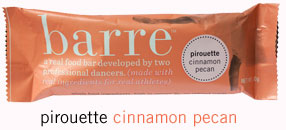
barre barI am not downing dancer industry I quite like (Irina and Max’s Booties), and dancers do go-to bars for a meal in a bite, but I have my doubts about whether Lara Bars, or any other product, actually provide enough sustenance and protein for dancers, and they are all very high in sugars. They are a snack, so stop treating them like a meal! The last thing I do thinks about bars are even though their ingredients may be wholesome, are they combined, what you need? Why not eat the ingredients clean?  By clean, I mean, 7 walnuts, a half a dozen almonds, a fig, a date, rolled oats, pumpkin seeds, flax seeds, cinnamon, chocolate and agave syrup, when all you really need is one yogurt and a handful of blackberries/blueberries right now, especially if you want to lose weight. A bar of any kind is all these ingredients rolled into one and equals a healthy candy bar. It does the same things, it weighs a lot, it has calories, carbs and fat, but not much protein. and if you want protein why play around? Get protein. Get it straight from the source. Those extra CARBS in that bar are excessive, not slow burning, may not be worked off in one classroom or technique class, and are most likely eaten at a time of day when you do not need that kind of energy-unless you are performing. It’s like dancers who eat nothing but ice cream for the casein protein I suspect. It has sugar! Tons of it and the alternatives to straight ice cream, like sorbet, or Ices, have as much sugar and virtually no protein, so are not healthy. If you want milk drink it, but drink organic because it has loads more (70%) omega-3 fatty acids because they feed them grass and “grass-fed usually means: Cows were meant to eat grass, not grain. But nearly all milk producers, including those that sell 100% Certified Organic, exclusively feed their cows grain. Studies are currently underway on the health benefits of dairy products produced from the milk of grass-fed cows. This much is known: grass-fed dairy products contain an increased amount of CLA (conjugated linoleic acid)”. Nearly six times as much. Is this bad? Decide for yourself http://www.natural-by-nature.com/milk-organic-myth.htm

Eat healthy, but keep in mind that not all information is required to be on labels (for your protection) and in advertising, companies tend to try to sell product on the merits of it, but may omit other details which may be of significance to you. I will not say they lie, but most cannot tell the complete truth or their products would not sell. Sometimes just eating the best foods you can find, cleanly, is the best way to lose weight and eat healthily and you do not have to spend a fortune doing it. It is an elitist concept that “rich” or expensive foods are necessarily better. Sort of like the Emperor’s New Clothes. You can study all of this information later when you have lost the weight and are making decisions based on your new more lovely appearance and attitude. Not all of the facts about health foods are out yet and this is not about agriculture and industry as much as it is about you liking what you see and eat, and being able to afford to maintain an eating habit.

Dancers eat and train, they don’t diet and exercise. This stress, diets, constant vigil, trying to find things to eat that are readily available, rather than what you choose or plan, other exercises, aerobic exercises, can take that extra weight away, whittle it away and expose taut lean muscle of the Gods, alone, is a fallacy. Stress alone adds fat. All that expended energy doing crosstraining to burn fat can wear out your instrument, make you old, make you fat, and make you just plain give up and eat whatever is available. Largely, what you eat determines, chemically, what happens that you cannot see and there is no adequate measure for it, except the mirror, and your physical self, so I tend to advise not looking at scales very often. Anyone who has struggled with issues, like I have, will know it defeats you when you expect to see numbers but you don’t understand them and no amount of starving yourself lowers them. Losing weight and toning depends on diet, activity, genetics, body chemistry and desire/discipline but the scale can be a friend, eventually. I have lost more weight not dieting than all of the conscious efforts of someone who watches their weight. I use the scale now (when I diet) to check one aspect of the process, but completely ignoring it can provide better benefits to some people and less stress until you are communicating with your body intelligently and that means listening to it. It is like Google translate-the scale understands the weight, but the context of the conversation is lost in translation! It is the right diet that is important and staying on it until you begin to see results, the right diet of food! Eating enough, not less of the right things, and more caloric intake, rather than less is usually necessary, and which is ultimately important, should increase the more or harder you work. How many hours per week/day do you exercise? How many times do you nourish your body per day? What time do you slow down? Stop eating carbs? What kinds of slow-burning carbs are you eating and when? Protein? And do you allow yourself rewards or cheats? Do you pick at least 20% of your fats per day? Are they good fats? Do you drink enough water?

while in france

And for most of you, who think French food (or Italian food, or British, or Russian) is healthier, it depends on what you eat and when you eat it. These ingredients, bought on a shopping trip, would reflect the appetite of a cyclist racing across Europe, and not a tiny dancer. Why? You tell me. Even in Fre! nch, I can recognize the word “lard”. Canteloupe is one of nature’s only fruits which contains fast-burning carbs-but it is not a dinner item for a dancer trying to build lean muscle, because carbs should be eaten when we are or are going to be active-and sugars, especially, in the early part of the day, say before 4pm, or earlier. It is not suggested, when dieting, to have them later in the day or to subsist on fruits rather than certain veggies because there is a carb chart of veggies, just as there is for fruits, and variety is important in both, but you just should avoid fruit for weight loss and fat loss because all that sugar does is turn into fat. One reason carb diets work is because you are allowed true fats, butter, oils, whipped cream, fatty meats, in short all of things by nature you should know to avoid, they tell you to eat, because chemically our bodies do not turn fat into fat-we make our own-Out of sugars! But you are to starve your body of healthy foods to lose weight! These items were turned into this meal_

Dinner at farm

Which for many reasons, not alone the time of day eaten, a dancer does not need and should avoid. It is fine for a cross country cyclist, though.

Most people would say dancers are disciplined. Not necessarily. If they are professional, they must learn to be. Many of them possess a lot of incorrect information and subsist on that, starving themselves to eat their favorite things, and eat lots of things that they don’t like “to be healthy.” 1st of all, if you do not like something-take it from me-you will eventually reason yourself out of your diet unless you can find a way to make that food palatable, which usually involves putting something you do like into it anyway, thus ruining (possibly) the good of it. Making your own food is key to enjoying it though, and liking it, and being a lot more healthy.

We tend to argue larger portions of the foods we like balanced (?) by smaller portions of the ones we don’t and announce that we ate healthier. Some people need to completely revise their thinking about food and find good reasons for not eating things that are bad for you. Most of these foods are readily available, everyone else eats them, but like smoking, you have to try not smoking before you can say food tastes better and you should just avoid smoking for the health reasons. It is the same way with soda-I have never liked it, just the occasional small sip is enough to remind me that it is just too sweet, and a lot of times, when you train yourself to eat less sugar, less salt, you find later, when eating something pre-prepared that it is too salty or too sweet.

You have adapted your eating habits and are subsequently requiring less salt and sugar, or other things to satiate you, and the inevitable finickiness thereafter is rewarding to you. When you eat good things, bad things taste, well, bad. You have to try it to see if foods are naturally salty, naturally sweet, or whether butter is truly better than healthy fats, to get used to it. It doesn’t sound palatable necessarily, but some things are actually better when they ARE healthy. Feeling good is also about eating healthy and the more you do it, the better you feel.

For some people, adjustments alone, require that dieting may take longer than one expects-like for me. It takes time, but even small results are immediately noticeable. You may feel better, be more energized, and begin to get in tune with your body. It is pretty easy to get healthy foods anywhere now, and with the whole population going Whole Foods crazy, we forget that some things in cans, in cupboards, and frozen are still healthy. Health foods could put a world of good companies out of business forcing up the price of groceries by fulfilling demand for so-called healthier foods.  Natural foods are a good thing and I have always known when I had too much meat in my diet because I tended to make less and eat less. But this is more psychological than nutritive or fact-based. Our bodies tell us something and we have to learn to listen, but that doesn’t mean we have to be food snobs to be healthy. http://content.time.com/time/covers/0,16641,20121203,00.html

time food snobs

x

Part 1 of Winning the War Against Fat-The Emergent Sylph


//www.googletagmanager.com/ns.html?id=GTM-5DBTHW
(function(w,d,s,l,i){w[l]=w[l]||[];w[l].push({‘gtm.start’:
new Date().getTime(),event:’gtm.js’});var f=d.getElementsByTagName(s)[0],
j=d.createElement(s),dl=l!=’dataLayer’?’&l=’+l:”;j.async=true;j.src=
‘//www.googletagmanager.com/gtm.js?id=’+i+dl;f.parentNode.insertBefore(j,f);
})(window,document,’script’,’dataLayer’,’GTM-5DBTHW’);

Lean muscled bodies Sarah Lamb

Lean-muscled bodies in dance-that is what we have come to expect to see-in the media, at a performance, at competitions, on Instagram, on the Internet, in the movies, on So You Think You Can Dance, in the classroom AND in front of the full-length mirror, at home. Riiip! Stop right there! Not perfect, not seeing what you want to see? Not what others see? You are what you eat, and if you do not see that desired image in the mirror, you might feel somewhat of a failure. You might think that no matter what you do you are not ever going to succeed, improve or be the  image you have in your mind that is perfect-usually. Your body may get in the way of your seeing yourself as the best dancer you can be, and feeling good about yourself inspire confidence. Aside from that, it may have nothing much to do with your ability to dance. Getting the body you want is not the same as not being able to rock a hairstyle, bodies are usually obtainable, believe it or not. But, you might be guilty of projecting someone else’s body onto your own.  If anyone tells you you cannot achieve what you want to, prove them wrong!

You are unique. You have to believe that, but you are also capable of being the best that you can be, and the most healthy and strong dancer you can be. To me, and to a growing number of companies who invest large amounts of money in training, and lose dancers due to injury, this is also very important to succeeding in a professional career in ballet. Posers who do photo shoots might just be that, and it is possible that they are not as good a dancer as you are! A career lasts at least 20 years. What you do now will definitely impact the longevity of your dancing career as well as a competition in 4 months. So, you must make a commitment to eat right for the rest of your life and not just to lose weight, only to gain it back again, up and down and so forth.

Therefore if you are gearing up for the winter and you are a dancer you might want to try this plan:

old fashioned winter menu

NOT! Let me say again NOT!

It speaks of holidays and comfort foods and lots of starch and fat and sugar. But what is wrong with it? You say. “I am a dancer and I burn off calories-that is what I do. Well, for every calorie you burn off, another ten of these above turn into fat while you sleep. It isn’t just the sugar, it’s that all the right foods are there, hidden in gravy, butter, marmalade, cheese, sauces, and taters and other foods which you will have to eye cautiously over the holidays and during the winter, because this is what people eat. Regular people, not dancers!

In front of the mirror at the first self-assessment, any women or teenager might say,”I need to lose weight, maybe 5-10 pounds.” In the real life of any woman, every 10 years that need to “go backwards” goes up by 5 or 10 pounds, after you stop wearing the little tiny black dress, your brother’s jeans (with no butt), after babies, surgery, loss of work, a change of regimen, a more sedentary lifestyle, drastic change of lifestyle, health conditions, anything-you develop a bosom and may be lugging around more “desirable” fat, but it’s still fat and weight and adds numbers to the bathroom scale you can’t fathom. Also, we cook, and when we cook, we taste, we nurture and feed others, and have to shop and you know never to go shopping on an empty stomach. Everything looks good, but one benefit of having Madonna’s personal trainer is the likely aspect that she shops for you, puts it in your fridge and guards you from eating outside of your diet. She also works your butt off. Renee Winhoffer is her name. She is a dancer, too. In her words, “I plan and pack all my foods – and if I’m on tour I work with the hotels and cater ahead for specific foods. I often travel with my box of steamed vegetables and lean protein so I don’t get caught out. If I eat out, I make a special request for a green salad with some grilled fish or chicken and a little olive oil. And any time I have a hunger urge I drink 10 gulps of water and then wait 10 minutes.”  She also states that if you want to see results in a week try not eating before your midday snack to attack the fat stores immediately in the AM. You can read more advice by her and other fitness gurus, here, http://fashion.telegraph.co.uk/article/TMG9785991/Workout-and-diet-secrets-of-top-fitness-coaches.html .

However, I find that in doing research including that article one has to look at whether they tell the whole truth, do the same number of exercise hours per day as any given dancer, the same type of dance and dancing as you, and realize that one article and a few tips does not a meal plan make. There are plenty of questions I would want to ask, more on the technical side. Men differ from women, so I try to look at a diet that is good for women, too.

In reality, it might be fat you need to lose, or weight, most people have some, but it might be that more muscle needs to be developed (and are being) or exposed to best display our body’s assets and we have to give this process TIME and the right nutrients to help it along. We may be long of limb and tall, frail and tiny, or somewhere in between, but we can all be the best we can be. All women can relate to this, not just dancers. We all experience this self-doubt and analyze, and it is especially difficult for anyone, for any reason, in any case, and even those who have heretofore had perfect bodies, so no ones difficulties are less important than anyone else’s, whatever they are.

It is sometimes much later in a women’s life that she just asserts herself and accepts this body as her own, or decides to make it the best she can, when she is finally tired of ignoring it or trying to make it something else, feeling guilt or shame. I blame the media, Instagram, men, and sometimes families for making women feel they are less than perfect, and women for listening to them and not being strong and believing in ourselves. To be honest, ballet dancers must make a decision, and that is whether they have the discipline to eat only enough to maintain their exercise level, turn fat into lean muscle, and strive for the weight level required in partnering. It is not fair to maim your partner because you have to eat a cake. Just have to. For this reason, and for the body-beautiful a ballet dancer must be slim, as slim as is reasonably possible-maybe a bit slimmer than is reasonably possible, and she also has to eat right. Luceat lux vestra! But let your own light shine!


‘Nutcracker’ Moves to Milder Climes


‘Nutcracker’ Moves to Milder Climes

By BRIAN SCHAEFER  DEC. 12, 2014

In the last scene of the first act of American Ballet Theater’s “The Nutcracker,” choreographed by Alexei Ratmansky, a gentle snow suddenly turns into a blizzard, a thrilling dark detour in this acclaimed production. But after last year’s harsh winter, Ballet Theater has had enough. Or perhaps after five years, it has been unable to find a real toehold in this city’s crowded Nutcracker marketplace. Either way, the company is off to Southern California: Beginning next year, Ballet Theater’s “The Nutcracker” will become an annual tradition at the Segerstrom Center for the Arts in Costa Mesa. Which means this is your last chance to see Mr. Ratmansky’s astute interpretation of the holiday classic in New York. All the ingredients are there: the opening party, the Christmas tree on steroids, a world tour of cultural stereotypes. But the great adventure at the heart of this version is the journey from adolescence to adulthood, dramatized with touching innocence and wonder. (Through Dec. 21, Brooklyn Academy of Music, 30 Lafayette Avenue, at Ashland Place, Fort Greene; 718-636-4100, bam.org.)

via ‘Nutcracker’ Moves to Milder Climes – NYTimes.com.

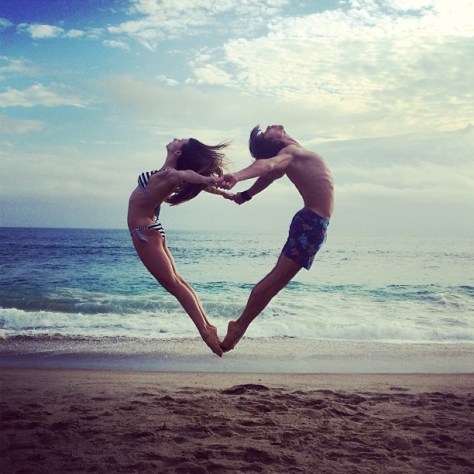
Ballet Photo of the Year!!!! Anna Tikhomirova and Artem Ovcharenko


Photographer: Maria Tikhomirova

Anna Tikhomirova and Artem Ovcharenko.

Laguna Beach, CA 2014 ❤


Anna Tikhomirova and Artem Ovcharenko. Laguna Beach, CA, 2014. Photographer: Maria Tikhomirova

Eric Underwood-A Dancer to Follow from London to Indianapolis! And Back!; my favorite hookahier….


Eric Underwood opens Alice In Wonderland at The Royal Ballet

17 Ballet Icons Who Are Changing The Face Of Dance Today


17 Ballet Icons Who Are Changing The Face Of Dance Today.

Children of the school of the Paris Opera


children of the paris opera school

The light is still very Degas!

Happy Birthday Alina Somova only 29!


alina-somova-392.jpg JPEG Image, 591 × 740 pixels – Scaled 81%.

Foot and Ankle Injury Prevention Tips for Dancers


Dance Injury Diagram-The Foot

About now dancers in pre-professional programs, those starting back from a lazy Summer, or those simply not accustomed to the new level of pointe or technique they are experiencing will begin to feel pain in different places when dancing. It is no fun sitting out, but the wise dancer checks herself to see what is wrong and tries various remedies to heal the pain. It is human nature to do so, and those who ignore it could be in for some less than trifling troubles later. An unchecked injury, whether from overuse or a real problem, rarely gets better on its own if you dance through it. Anything to stop you is enough to verify the cause of. Who wants to wince with pain during a classical variation?

Foot/Ankle Injury Prevention Tips for Dancers

1) Proper training and teaching are essential to allow dancers of all ages to develop their skills without injury. If your school is having you overdo it then you have to watch out for yourself. That means make sure you are doing the exercises correctly, not repeating combinations twice or more a day because of duplicate classes, even if it means talking to the teachers and explaining to them this is all new for you and you need a little time to work up to full throttle. Proper training and teaching would encompass this rapport with your teachers-who else knows more about it than they? Talk to them. It is your instrument and they cannot replace it breaks and it is up to you. There is no warranty with your equipment-no customer service either!

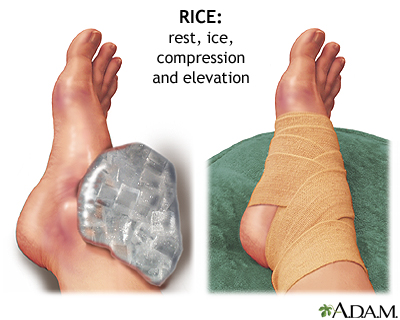
Rest Ice Compression Elevation= PRICE (Precaution)$$$


2) Take adequate rest to allow the body to heal itself from daily wear and tear. If yours is a particularly rigorous schedule, rest often, do nothing in between, ice, soak, massage, apply cremes, take ibuprofen, use epsom salts, pamper yourself. No one else is going to. It gives your hands and fingers a workout. Try heat and ice, or hot water (as warm as you can stand it), then as cold to increase circulation and healing to the area. Obviously don’t do that which hurts you. Take it easy if you have a second portion of the day as rigorous as the first. Build up slowly and bring issues to the attention of some people who care so they can be thinking, researching and trying to find ways to help you, too. Don’t stay quiet about it. Cry if it helps. Dancing is not easy. You deserve to be pampered. The squeaky wheel gets the oil.

3) Maintain energy levels by eating and drinking adequately. No nourishment, or little nourishment, in dancers is a common cause of injury. Lack of nutrients causes the lessening of the production of Estrogen in the body and can lead to injuries. Better eat right! Take your daily vitamins (at least) and don’t forget to eat MEALS. Drink plenty of water.

This feels good-do it!

4) Conditioning and strengthening of the leg muscles that support the arch are crucial. Yes, on top of dance, you need to ask your teachers for exercises that will increase the strength and flexibility of the muscles you are using everyday, so as to try to keep up with what will be expected of you. Ask your teachers for foot strengthening exercises. If they hurt, it is probably a sign that you are weak and need to strengthen. Flexibility and strength in the foot of a dancer is critical, wouldn’t you say? I mean you can’t dance without them-that would look funny. Use a tennis ball, rotate them, point and flex them, put them under the bed, sit on them-DONT’ BE LAZY.

5) Try to avoid dancing on hard or uneven surfaces, which could cause injury. What surfaces are you dancing on everyday? walking on? Where is the impact being absorbed? This is pretty hard to prevent, but perhaps classes should be held in the studios with raised flooring, but those are often not available. Wearing pointe shoes and even tightly fitting ballet shoes all day takes its toll. Shoes that are too tight, too narrow, or do not have proper arch support can also lead to increased problems, swelling and even fractures. Try to reassess all you are doing before you blame the floors. Chances are something will cause improvement, if you try. Are your straps or ribbons too tight? Are you releveing properly? Are you sickling? are you using your plie in your jumps? Landing properly? Check everything. Keep track-keep notes, dates and times, so you can look back and say, “during this class this happened and after class I felt this way.” Then you begin to see a pattern of activity, or action, which cause pain, or relieves it.

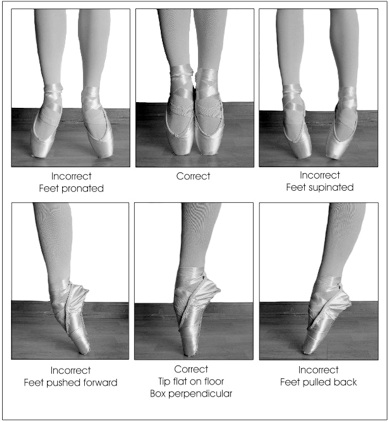
Naughty no-nos and Dancing-DOS!

6) Take care of your shoes! Wet and worn out shoes are not supportive, and without support and on pointe for long periods of time, any dancer will experience pain. Stress moves to other soft tissues when a dancer compensates, causing injury to those areas as well. Keep them clean and dry, adding alternating pairs to your collection as needed for rotation. Always put your feet first! Skip the new leotard-better get shoes! Try different shoes for different classes. Sometime a higher vamp might be necessary for extended dancing as the foot can strain with overuse. Support, support, support!

7) Dancers should adopt new training schedules slowly. This is the number one ignored reason for overuse injuries by students because they AND teachers press forward, into maxed out training schedules, failing to accommodate for rehearsals, competitions, etc. Too much, too soon, can result in an injury and especially when taking even one day off, but especially a few, take it easy when you return, stretch as opposed to dancing hard even if you risk insults, it is better than injuring yourself just to keep up. How are you going to have a career in dance if you injure yourself permanently???? I never think returning to pointe on Monday is a good idea, but after a week off no pointe should be taken for a few days. You have to build up again. after a Summer, WELL! what do you think? Get plenty of rest at home. Even if that means going directly to bed after supper. Feet up. Soak, Massage, Eight hours. Why do you think professional dancers like to sleep late? And they DO!!!

8) Not everyone can have custom-made dance shoes. Although not always possible when dancing, but more so off stage or out of class, wear supportive footwear, and if you need to wear orthotics, wear them as often as possible. I recommend a wide variety of gel arch/foot supports, shoes and ZUMIES (AT CVS) for walking around the house. As important as the surfaces in the studio, are the street, sidewalks and concrete flooring found everywhere. A dancer lives on their feet and especially sore, they feel everything! Put your feet up. Try wrapping your feet to see if that stops or relieves the pain. But always, wear special and comfortably supportive footwear out of class. NO PAYLESS GARBAGE. Good shoes. Not always sneakers either because they do not have enough support on the sides. Finding good shoes should be a number one priority and just another example of how you should treat your feet. Would you put a baby in those shoes? Your mothers did not and how dare you treat yourself less well and carefully than they would!

Pronation and fallen arch foot pads. All dancers have impact to their feet. Fact.


9) Although I have already expounded on this in other articles, I will say it again: If dancers perform excessive pointe or demi-pointe work one day, they should focus on other types of work during the next workout. Try skipping the second technique class. Move your schedule around to try not repeating movements or overusing certain muscle groups. If you are doing variations, repertoire, privates and rehearsals-you do not need a second technique class everyday. Try jazz and modern, yoga, pilates, anything but a repeat of the same exercises you already did once in the morning. I have heard some dancers attribute their superior technique to 2 technique classes per day. On some level this might be okay, such as during Summer, or when other classes are not available, or when the opportunity arises (such as master classes), but one has to be very careful not to overdo it everyday. Repeating exercises with the hips, tendus, feet and other movements can cause overuse injuries in dancers that have not built up the stamina and strength to do this. at any rate, we are all just like the Duracell Bunny-at some point, there is a limit. Don’t let that happen when you are so young! Make an effort to work on different muscle groups and not repeat the same exercises.

Don't wait for a f.l.y. guy or your MOM-massage your OWN feet!
Don’t wait for a f.l.y. guy or your MOM-massage your OWN feet!

10) Most importantly, early recognition of symptoms is key to understanding the cause. Stop activity if pain or swelling occurs. If the pain persists after a few days rest, consult a sports-medicine physician or preferably a dance therapist or doctor. It is sometimes worth traveling to see one as opposed to getting the wrong advice. Work to break bad habits: leaning in one’s hips, poor posture, not pulling up on point, sickling. Left to chance, these might throw off all of your good training, creating areas of weakness and poor alignment which can literally stop a performance career. Fix these things now, and never look back on them, don’t keep nursing them. They are easier to correct than the one million ways they can cause you more problems in the future left unattended. Keep on Dancing!

▶ Les Ballets Russes de Nijinsky – YouTube


▶ Les Ballets Russes de Nijinsky – YouTube.

Language of dance speaks at London’s Russian Institute | Russia Beyond The Headlines


Language of dance speaks at London’s Russian Institute | Russia Beyond The Headlines.

Serge Diaghilev: the Tarantino of Ballet in his times | Russia Beyond The Headlines


Serge Diaghilev: the Tarantino of Ballet in his times | Russia Beyond The Headlines.

Titian Metamorphosis Art Music Dance A collaboration between The Royal Ballet and The National Gallery Hardcover


Titian Metamorphosis Art Music Dance A collaboration between The Royal Ballet and The National Gallery Hardcover.

Looking For the Perfect Ballet Summer Intensive? A Visual Viewfinder for you….


//www.googletagmanager.com/ns.html?id=GTM-5DBTHW
(function(w,d,s,l,i){w[l]=w[l]||[];w[l].push({‘gtm.start’:
new Date().getTime(),event:’gtm.js’});var f=d.getElementsByTagName(s)[0],
j=d.createElement(s),dl=l!=’dataLayer’?’&l=’+l:”;j.async=true;j.src=
‘//www.googletagmanager.com/gtm.js?id=’+i+dl;f.parentNode.insertBefore(j,f);
})(window,document,’script’,’dataLayer’,’GTM-5DBTHW’);

pinterest interest: summer intensives…….

Here is my profile

My new favorite pin appears in the right sidebar of the homepage….click on that image in future for updates information on Summer Intensives. Thank you.

TEXT MERGED FROM “LOOKING FOR THE PERFECT SUMMER INTENSIVE”

For the next bit of time, I will respond to many readers interests by comparing and contrasting unique, trendy, off-the-beaten path, professional and learned (as well as the visually stimulating) summer intensives that might otherwise be forgotten in the dancers mad rush to prepare portfolios, pictures, resumes and now dvds for the usual Summer Intensives. VISUALLY.

Where do I go??? (Should be one of the considerations for any dancer professional or not) And spend the least amount of money for the most improvement, fun and holiday? Dance can be fun. Should be. Must be.

Too often, it is the triad of schools for the American dancer (SAB, ABT, SFB). Internationally, but not international, we think of Paris, Kirov, Bolshoi, Royal, NYCB, which are not just a destination, but are also most frequently observed as a method of teaching by those in the know. There are other pathways-perhaps more realistic, less expensive and as good-maybe better. Well, let me say, unless you have merited a full scholarship to one of the above institutions, this might be useful for YOU! Even if you have….

Before posting, I have tried to make them affordable, doable, and possible for the serious, well-trained dancer who has professional aspirations and maybe a few flaws (which you of course ARE WORKING ON). They are programs ANY professional dancer would attend (and DO!). I will also try to address the budget worthy, stressing emphasis on technique, performance, classes, and environment-cultural photos are gratis because you will not have very much time anyway, but it is is nice to smell the roses, so to speak, when you do wander.

No one ever talks about what they do at these programs-it is all part of getting your dollar-they all try to keep that a secret, but a lot of the smaller or out-of-the-way programs make very significant attempts at having you WANT to return. They want you to enjoy yourself, relax, and take in the sights. They want to enrich you (makes you and your dancing better!) as well as help your dancing. These are all rather straightforward curriculums and programs with absolutely NO hidden agendas, propaganda, and all of these are well-intentioned programs, revered, and staffed with fine teachers. They do not just take your money! Well, they do, but they do it with panache. Many of them are looking for serious dancers and not poorly trained ones, others are willing to coach privately those who might be looking for a little bit more. Some move around….They are all interesting!

Besides, Summer Programs might also be an excellent way to EXPAND even for the most serious of academic dancers and at any rate I have provided those with a more worldly view to ballet……and timely! None of these are mills.

Read More….https://mysylph.com/2013/01/24/the-summer-intensive-ballet-scholarship-quest-2013/

Isadora Duncan’s influence on Pavlova, Diaghilev, Nijinsky and Balanchine Among Others


//www.googletagmanager.com/ns.html?id=GTM-5DBTHW
(function(w,d,s,l,i){w[l]=w[l]||[];w[l].push({‘gtm.start’:
new Date().getTime(),event:’gtm.js’});var f=d.getElementsByTagName(s)[0],
j=d.createElement(s),dl=l!=’dataLayer’?’&l=’+l:”;j.async=true;j.src=
‘//www.googletagmanager.com/gtm.js?id=’+i+dl;f.parentNode.insertBefore(j,f);
})(window,document,’script’,’dataLayer’,’GTM-5DBTHW’);

http://ia700704.us.archive.org/BookReader/BookReaderImages.php?zip=/8/items/bookofdance1920gent/bookofdance1920gent_jp2.zip&file=bookofdance1920gent_jp2/bookofdance1920gent_0187.jp2&scale=4&rotate=0


A photo from the U.S. Archives which demonstrates very clearly Isadora Duncan’s, and other modern dancers, influence on ballet. You can’t say “choreography” without saying “dancers” or “ballet” as they converge, effect each other, and dancers dance, to some extent, what they want to or what the can.

This is a pretty rare photo, but now, we can see that perhaps Anna Pavlova did not really hate Isadora Duncan after-all, but instead was influenced by her, tried to channel or feel what Isadora felt, what modern dance was, or her choreographer was interested in it for this piece. We see it finally because she danced it. She agreed to do it. That makes it important to ballet. What a dancer agrees to do (and does not agree to do) ultimately defines them to their audience, defines their art, and history, especially when you are discussing Anna Pavlova.

But in relation to any dancer, they will be seen to be a certain kind of dancer, expected to perform certain roles, become skilled at those and roles like them. Obviously Pavlova went back to classical roles and swore off modern dance. At least for her life, this was not what she was good at, excelled at. One needs to know oneself and one’s limitations, but that comes with experience. Expansion can mean growing into an acceptance of what your roles could and should be in dance, or it can come to mean limiting yourself to perfection of one type of dancing. Being an expert at one thing certainly raises the level of expertise required for that genre. It increases your ability to dance those roles.

Most importantly, if you are determined to dance certain roles, certain ballets, certain parts, then you need to learn those parts, become expert at them, so that no matter your deficiencies, people will say, “but she/he dances those parts better, even if she/he is not this or that. But if you do not specialize, then perhaps you will never be good enough at one thing to qualify even for that. If Pavlova had not been skilled in ballet, had that not been her passion, we would not have been fortunate to have come to understand her legacy a little better, and while she had the option to become more skilled, at a later age, in other forms of dance, she did not do a 180 and perform modern, or try to find herself in it.

Even with poorer choreography than Diaghilev could provide, she continued to astound audiences with her versatility and drama, as a ballet dancer. She truly was an ambassador of ballet. Something must also be said about modern dance here, the characteristics of it, the difference between it and ballet, are wide. Isadora Duncan could have suddenly said, I want to be a ballet dancer. But she did not. There was unquestionable an attitude and freedom in her approach to dancing, her naturalness, her languor and beauty (she was a very beautiful woman), her form and development in modern dance, which gave her an advantage in performing her roles, her choreography, and she danced to a different drummer, literally, different music.

She was right and Pavlova was right. Two experts, a long time ago, who felt that you had to make up your mind, pick a side, choose, two purists. I do not think choreographers today understand dance very well, for they are not able to separate or merge the two dance styles (usually). They are greedy, and dancers are too, so no one is perfect today in ballet, because they try to do too much. Be the star on every stage. And yet, even with the most sought after choreographers, some dancers just do not enjoy that success. Great ballet dancers fail at exploring new styles, new techniques, and they are simply not the best.

But, by taking on roles that minimize, instead of maximize, their abilities as ballet dancers, instead of having new ballet roles made for them, their performances are not what they could be. At thirty to forty years of age, these dancers should be reaching a point where they are true artists, and yet the barre for true artistry is lowered. There are some artists, such as Natalia Osipova, Darcy Bussell, Tamara Rojas, etc., who have remained dedicated to their art and may possibly reach a point, historically, where their body of work is respected and exceeds more publicized dancers, simply because they knew their limitations and they stayed within the parameters of their expertise longer, trying to reach a point where they were consummate in their art. It is not today that they will be judged, but tomorrow, and in the annals of history, where we are not yet and cannot say whom will leave what.

How will they all be credited? More is needed for women to make a mark, when before them is opportunity to travel, to reach out, to grow, to direct, choreograph, produce. What will their choices be? Will they stray from the path of their strength, give up, or will they take the torch, the flame and finally bring something monumental back to ballet, the genre that gave them their careers, their fame? Or will they dabble in other forms of dance, leaving mediocrity in their wake, when they could have developed classical ballet, and ballet, a big step further in order to safeguard it as Vaganova did.

So when you are in class, or studying ballet, pick a side, and win or lose, cling to that vision. For is you are true to your vision, you are working not only toward what you believe in, and love, but you are setting a precedence for what will be your strongest form of dance in the future. What do you want that to be? Don’t let rejection, or all of the opinions of others set your path. For the path you choose will probably be the one that survives with you, the one you will know best, and will propagate. If there is one you prefer, no matter what others say, follow the choice you will be able to live with and embrace.