Category Archives: Dance Education

Hip, Lock and Key or Sylph Perception


I always liked  to do this:

Hip wave

There are many ways of doing it, not just the pose in the picture which may be wrong or right. What always seemed important to me about doing it, and many other modern dance positions-I’ll call this one the “hip wave”, is that they “align you.”  You will find this (probably better explained in many modern dance technique books.” I recommend two (2)-On The Count of One and The Dancer Prepares (I am always recommending these-there are many more), just two classics. I am classic-that is another way of saying older.

The exercise: It is sort of like wearing a blindfold and smelling, tasting, hearing and feeling stimuli, without the use of sight-let’s us not forget that sixth sense of (sylph) perception. Lying on the floor can help you with many problems-immediately note the amount of curvature in the spine, translated into not feeling the lower back (or any other part of the back!) resting on the floor. Breathing will help with this-another post. Feel the part of the back that receives more pressure (and is doing more work) which will be tighter and uncompromising-this is what you need to focus on relaxing into the floor. Part of any dance technique, ballet included is communicating with your own body-before you can communicate to others, you have to have control of the self. If your body is not doing what you tell it to, order or demand it to, then it is time to start some serious investigation into your sylph, and find a way to reach your body, just the way you might try to reach someone else. Why try less hard when the stubborn party is you! More reason to be able to teach it….be successful.

In this position (above pictured), as in other positions of modern dance, at first you will possibly feel completely disoriented. I am not talking about gymnasts, handstands or other “set” movements that may be a part of your everyday routine or circumspect. I am talking about isolating what makes you feel uncomfortable and why, then reworking it, or controlling it, to get it to work for you-find out what is so great about it/not so great, by experimentation. I could steal other writers and bloggers and websites information and give this information to you in boring technical terms, sports terms, but it would not really reach most dancers. Dancers are visual and sensitive creatures frequently who learn best by delving into self exploration, diagnosis and psychology-and they are right. I am asking you to assume this position and let it control you, in a way. The dancer above is in control of this position, but in being so controlled, she is losing out on the many possibilities of the position and assuming just the one rather tense/practiced one we see. It looks alright, maybe too perfect, to some teachers, absolutely incorrect modern. The purpose of this position for say Isadora Duncan or Doris Humphrey might have been freedom, letting go, discovering one’s range of movement. In isolating this aspect, we simply increase the tension in order to control the pose-not what will be helpful, in short-more harm, useless.

What about letting the leg go where it wants initially, playing with it, and then possibly, letting the leg fall naturally in a 360 degree circle, bringing it back up each time after it falls to its maximum ability to do so? What is wrong with falling, letting go? The muscles of the rest of the body will act to protect you, let them. See how they do this. Trust them. Don’t think so much about thinking so much! Raising and lowering the leg in a relaxed fashion, is much more difficult in this position than it seems because you are fighting the natural use and range of your muscles. It’s funny how gravity pulls the leg “up” and our instinct is to pull it back down (up). It feels very unnatural and there couldn’t be anything more natural about it. Imagine being in space-anti-gravity.

Watch a child do it-there will always be one who spends a lot of time in this position-dancer. For whatever reason, this child knows this is funny and will often laugh to himself because you (adults) do not get it. They immediately understand why this is not “normal” as if they have discovered something no one else has, giving them power over their elders. They will try various things in this position, trying to emulate an “upside-down person”, a “backwards” person. They will try to walk and run backwards after this, and do other things the opposite way, realizing that not only are unexplored ranges of movement challenging, they are the antithesis of moving forward, possible, interesting. Life moves you forward, the coach yells “go” and you do not move backward-this would be seen as retarded to middle-school students, dumb. It is the joke in many Disney and related children’s movies, slowly reaffirming silently to children acceptable and unacceptable behaviors and it is the slow progression of “speeding up,” industrialization, which prevents many people taking the time to sit through a ballet or dance program. What child or any human, left alone, does not find the movement of motion pictures fascinating in reverse? This era knows the dvd, but what of the vcr, microfiche-or the pages of a book read backwards?  Of course, once we explore this range we forget its initial curiosity, take it for granted, and continue to move forward the rest of our lives, but the truth is you can get to the same destination by turning around and walking backwards-but we lose the sense of where we are going, because we are not trained, so dependent are we on our eyes, to proceed without them leading us. If our other senses are engaged more frequently, they become better honed and more useful. Doing it “with your eyes closed” is losing meaning in today’s society. But life is busy and hurried and we do not take the time to “look back,” so even more oftentimes, it is hard to see beyond….

When in this position for the first time, do not use a mirror to check your progress or how you look. Try to adjust yourself to your surroundings-yourself and the planes of space. The ceiling is now the floor-or is it? Actual dancers spend much of their time in the air, being suspended by a partner, and diving or jumping-all leaps of faith and it is very important to get used to having  to realign yourself without two feet planted on the floor. Close your eyes if necessary to block out external stimuli and find your center of balance. Then raise your leg as high as you can comfortably. Comfortably is the key word here. Do not lock your hip. Use your toes and back and arms. Forget what you have learned in ballet or dance class-it does not help you here. Move your leg around in a complete circle-not all at once, and slowly. Floor-range, at every conceivable angle and degree. Then try the other leg. It may be necessary to “come up for air” as this is fatiguing and when fatigued, we grip, we try to hold on, keep it up. Not yet. let it fall! Don’t grip your hips. Once you start to feel the movement within your hip, you will also begin to notice the muscles that naturally are in use. These are the muscles that will be strengthened with this exercise. and your mind. You are letting your body teach you where your range is, and this is it, really, naturally. You begin to see the strength of gravity and how much a leg actually weighs! Quit a lot. You see how you have trained those muscles to teach that leg to do everything from an upright position. How you are not uniformly strong-how naturally weak those muscles are in reverse. Interesting.

You can strengthen back muscles from this position, too. It is a natural trait for the muscles to try to lift the leg and you will find this is what is most fatiguing this exercise or position is, as apparently we all have really weak backs in different positions. It is rare to find a person unilaterally trained. As you adjust to your new range, you can increase strength and turnout from this position, too. You can gradually rehabilitate your hips and isolate problems with your usual alignment from this and other unusual positions. This tricks your body into “starting over” putting your body and your sylph back into control one step at a time, one exercise at a time, one day at a time. You can learn to “tilt” into and out of this position and to increase your range of movement front to back, side to side, and all places in between. You will find muscles in your sides that are not strong, not being spoken to, not trained. Forgotten. its possibilities seem almost endless if you are willing to discover them. You can attempt it on releve. It is just one point of discovery, but it is a good place to start learning where your actual turnout is, how you can gently improve it, and whether you are forcing turnout all around. Since there is no place for you to lean, or rest against, although you can try that too, one is relying on one’s own body for support and one’s mind and tendencies for instinctual directions or fixes. Try to do this bending one leg, or both, turn, scoop, and a whole new plateau of movement will appear, a level, literally, not experienced by most classically trained dancers or grown-ups. I think this might have been how modern dance technique was discovered. What are we not doing???There are six strings on a guitar, 12 on a classical. A dancer should have use of all 12 strings of his/her instrument, not half or a third, or one. Right? I have known guitarists who can get nearly all of the same notes out of a six-string guitar, but it quite a bit harder on the instrument and the guitarist. It is more work.

Although the common issue of hip pain when forcing turnout can lead to other injuries, particularly fractures of the femoral neck, bursitis, tendonitis, etc….even actual displacement of the hip (yup), finding your correct turnout is like a key and a lock. Every mechanism is different. You cannot put your key into the grooves of your lock like everyone else-you have to find the groove that will allow your leg to rise comfortably, turnout comfortably. It is not the dancer with the perfect flat turnout it is the dancer with the comfortable turnout, beautiful turnout, that catches our eye. If your key will not turn in the lock, chances are, you are trying to move your leg against the cup-shaped acetabulum, hitting it against the mechanism, just like a key in a lock. If you train the muscles and ligaments around that area to “force” the leg through unnatural poses, it trains the muscles to repeat this exercise even when you tell it to do the right thing-muscle memory. It is akin to walking into a wall-you will either directly hit it like a bird on a sliding glass door, or you will scrape and careen off it, damaging the bursa and the cartilage in the joint. It should be a smooth transition with no bumps or scraping. If you notice these feelings when doing this exercise, the best thing to do is to see a doctor. If you are still in the preliminary or early stages of experiencing this problem no permanent damage might have occurred, at least not irreversible damage (possibly), and id instructed by your doctor, you could then see a physical therapist for exercises to do for increasing the correct usage of the surrounding muscles and ligaments as well as for strengthening the leg in the socket and increasing mobility in the hips.

Repeated forceful attempts at trying to put the key into the lock the wrong way will damage the hip, lock and key. Remember a key always should move easily in the lock. If it doesn’t, that is a possible congenital disorder of too little lubrication, or a sign that bursa are already damaged, engorged or inflamed. I do not recommend the use of cortisone injections to decrease size of swollen bursa-the best medicine are anti-inflammatories, such as ibuprofen (taken once or twice), and then complete rest. Other medical symptoms and explanations of bursitis are available here:

http://www.onhealth.com/bursitis/page2.htm#what_are_bursitis_symptoms_and_signs


Another symptom of gripping the hips is that your derriere will get bigger, or appear to, because the muscles are tight. There is a stretch called “the triangle” to help remedy this condition.

Probably stemming from yoga exercises, this will help loosen your gluteous maximus muscles after a workout. As long as you are warm, this exercise can be done often, but try not to sit in it too long (15-30 second holds, building up from 2-5 times per leg).

Strong, supple gluteal muscles keep the legs, pelvis and torso properly aligned. When your glutes are too tight — from excessive working or over-training, your alignment can be affected, leaving you with pain in the sciatic nerve, knee or lower back. A curved back is one indication of the need for this exercise. Forced turnout is also a possible culprit. Use a triangle stretch to retain or regain gluteous flexibility and counter soreness, stiffness and pain in your lower half and the aforementioned caboose enhancement. Do this stretch daily, and after each class, if your butt muscles are particularly tight.Advice before doing:

Warm up for 5 to ten minutes at least to increase circulation in the areas you are going to stretch do that the exercise has a maximum benefit to those targeted spots-you will feel it if it is working and it will not feel as keyed in if you do not-you will learn the difference. A brisk walk will suffice if you are not dancing. It works best after a class, especially one in which you lift your legs a lot and this works well after pointework.

First pose:

Sit on the floor facing a “front” with your spine perfectly straight, shoulders down (correctly) and slightly back. Extend your legs extended in front of you. Keeping your legs together (ankle bones touching preferably), start to bring your knees up to point toward the ceiling, sliding the flat feet toward you buttocks a few inches off the ground-not up by your chest-you are going to put the left leg over the right-stacking it so to speak. When knees are pointing directly at the ceiling, feet flat on the floor and back straight (shoulders down)….Second Pose:

Begin to slide your right foot more toward your buttocks (and up toward your chest), keeping your position aligned as before (spine, flat feet, ankles together, shoulders down). If you need to, use your hand to put your leg into a position closer to your body-after practice, you will not need to “assist”. Your right leg will be forming a “comfortable” triangle with the floor. Picture the next pose, which is to bring the left leg up and over the right, when preparing to position yourself.

You will be aligned with the right knee directly in front of or “square,” with your pelvis.

Pose Third:

Now, pull in or “retract” you left leg, until it is also in a triangle and put it over your right leg. Slide your left foot along the floor, resting it alongside your right hip and forming a triangle with your left leg. Make whatever adjustments are necessary to “stack” your left knee directly over your right. Press your inner thighs together gently. You should feel a little tension in your outer left hip. Also, there is a tendency for the left hip to raise, the right hip to press into the floor and the alignment to go awry. take a moment and find a comfortable but correct position with the hips “square,” both as much on the floor as possible, back straight and shoulders down.-this is a continual battle and part of the “fun.” This natural and correct alignment will do wonders for your stretch and your pose-almost no one doesn’t have stretching going on somewhere in this and those especially “out of shape” or incorrectly trained, will have much to grapple before becoming fluent in this pose and able to control it for the best stretch.One problem with people who believe they have control of this stretch is the tendency to grip with their hips, the floor and use the stomach muscles to “scoop” the leg into position. It is the back, straight, which gives the support necessary to relax the leg and for “crossing over” the other leg.

4th Pose:
Keep your back long and extend forward from your hips, placing your fingertips on the floor in front of you for support. When you feel moderate tension along your left buttock, hold the position for up to 30 seconds, breathing normally. Return the torso to an upright position and then repeat the forward hinge up to four times, then reverse.
Keep on dancing!
This link has some of the information here and a “training program” available online, although all of this information is generally available elsewhere.

http://www.theballetblog.com/article/improving-technique/training-turnout-part-2-isolating-your-true-turnout/

If you live in NYC-OUT THIS NUMBER IN YOUR CELL PHONE NOW!

212-598-6022-Harkness Dancer Clinic

They have a One-on-One Injury Prevention Assessment Program ~FREE~

The Harkness Center offers one-hour, free-of-charge injury prevention assessments for dancers. During the injury prevention assessment session each dancer is seen individually for an hour by a therapist who reviews the dancer’s complaints, medical and nutrition histories and performance during a battery of tests. The screening is designed to evaluate the risk the dancer is exposed to and to discuss the dancer’s concerns before an injury occurs. At the conclusion of the assessment the dancer is given an individually tailored injury prevention exercise regime with recommendations for modification of their technique, training strategies, footwear and/or dance environment. The aim of the screening is to maximize each dancer’s potential for wellness. Thousands of dancers have participated in this program and have rated it 3.9 out of a perfect 4.0 for its relevance and helpfulness. Harkness has educational programs for dancers!

For additional information and to download an individual assessment form:

http://hjd.med.nyu.edu/harkness/patient-services/injury-prevention-assessments-and-workshops

If you have specific question email: harkness@nyumc.org


Keep On Dancing!!!

My Life, by Isadora Duncan


My LifeMy Life by Isadora Duncan

My rating: 5 of 5 stars

There are a lot of books about people, but I always feel that autobiographical works are interesting to read. Once read, you can be moved to read everything else you can get you hands on about the author; this book inspired me to both read and write about Isadora. You can read part of what I wrote here https://mysylph.wordpress.com/2013/02/…

If you have danced, have connections to dance, are a woman, an artist, or are another creative type, you would probably find this book interesting , too. I think it would appeal on many levels, and it has also been (loosely) used as the basis for a movie. If I told you why I liked the book, it would spoil the book for you, but I will say that the time period in which the book is set provides a good historical backdrop for the story, it can be funny, as well as highly informative, sad, witty and is filled with anecdotes, including antics by illustrious characters of the day.

View all my reviews


Ballet Test | Quizlet


Fun little test and several ways to do it!

Ballet Test | Quizlet.


WOMEN CHOREOGRAPHERS GET A GOOD SHAKE AT CINCINNATI BALLET


valinkat's avatarValinkat

woman choreograhers

Recently, I wrote a Fall Arts Preview in dance for Cincinnati CityBeat (the alternative paper here in town). It’s worth noting that for 2013-14, the company’s first production, “The Kaplan New Works” series again has featured three women choreographers (Jodi Gates, Heather Britt and Gina Patterson).  For the 2012-13 season, Cincinnati ranked first on the list, with seven women against sixteen total for the entire remainder of the list.  Just do the math!

For the rest of 2013-14, Victoria Morgan’s “Frisch’s presents The Nutcracker,” and the world premiere “King Arthur’s Camelot,” join Cincinnati Ballet & Over the Rhine (Jodi Gates again).  Only four women total, but two of them have work presented twice!

View original post

Two NYC Dance Landmarks Poised to Close from Dance Magazine


Amsterdam Ballet and New York Ballet Theatre on verge of closing, read on…

Dance Magazine – If it’s happening in the world of dance, it’s happening in Dance Magazine..

Study Guides | New York Theatre Ballet: Study guides concerning some ballets by Diana Byer


These are revised histories of great ballets as published in a supplemental education newsletter for students and practitioners, or those interested in the history of the ballets-useful as a starting point.

Study Guides | New York Theatre Ballet.

Pointe Magazine Online Audition Calendar


Bookmark this!

http://www.pointemagazine.com/ballet-auditions

If David Howard said it…


Reposted from The Dancer’s Toolkit http://centeredstage.com

Success Coach & Wellness Mentor for Dancers's avatar

…it must be true.

I am a strong advocate for dancers developing more internal feedback based on what they feel rather than what they see in the mirror. (In part because a lot of dancers use the mirror as a crutch or enemy, rather than a tool…) It was wonderful to see the same sentiments in print from the master teacher himself (from the New York Times obituary published on August 18, 2013):

““Out of the feeling comes the form…Ninety percent of the time students are taught the form first. And then they’re expected, through some act of God, to get the feeling.”

Mr. Howard’s pedagogy, unorthodox in its day, entailed a kinesthetic approach, in which dancers were taught to rely less on external feedback from the mirror and more on the minute internal signals that telegraph the position of the head, limbs and torso in space.”

In a culture that…

View original post 109 more words

Love’s Limbo Lost


//www.googletagmanager.com/ns.html?id=GTM-5DBTHW
(function(w,d,s,l,i){w[l]=w[l]||[];w[l].push({‘gtm.start’:
new Date().getTime(),event:’gtm.js’});var f=d.getElementsByTagName(s)[0],
j=d.createElement(s),dl=l!=’dataLayer’?’&l=’+l:”;j.async=true;j.src=
‘//www.googletagmanager.com/gtm.js?id=’+i+dl;f.parentNode.insertBefore(j,f);
})(window,document,’script’,’dataLayer’,’GTM-5DBTHW’);

Picturing Shakespear. Mnsr. Vestris in  Les amans surpris / J. Roberts, del. ; Thornthwaite, sc. A favorite ballet of the time.
Picturing Shakespear. Mnsr. Vestris in Les amans surpris / J. Roberts, del. ; Thornthwaite, sc. A favorite ballet of the time.

http://www.opensourceshakespeare.org/views/plays/play_view.php?WorkID=henry8&Act=5&Scene=3&Scope=scene           (Shakespeare, “Henry VIII,” act v, sc. 3)

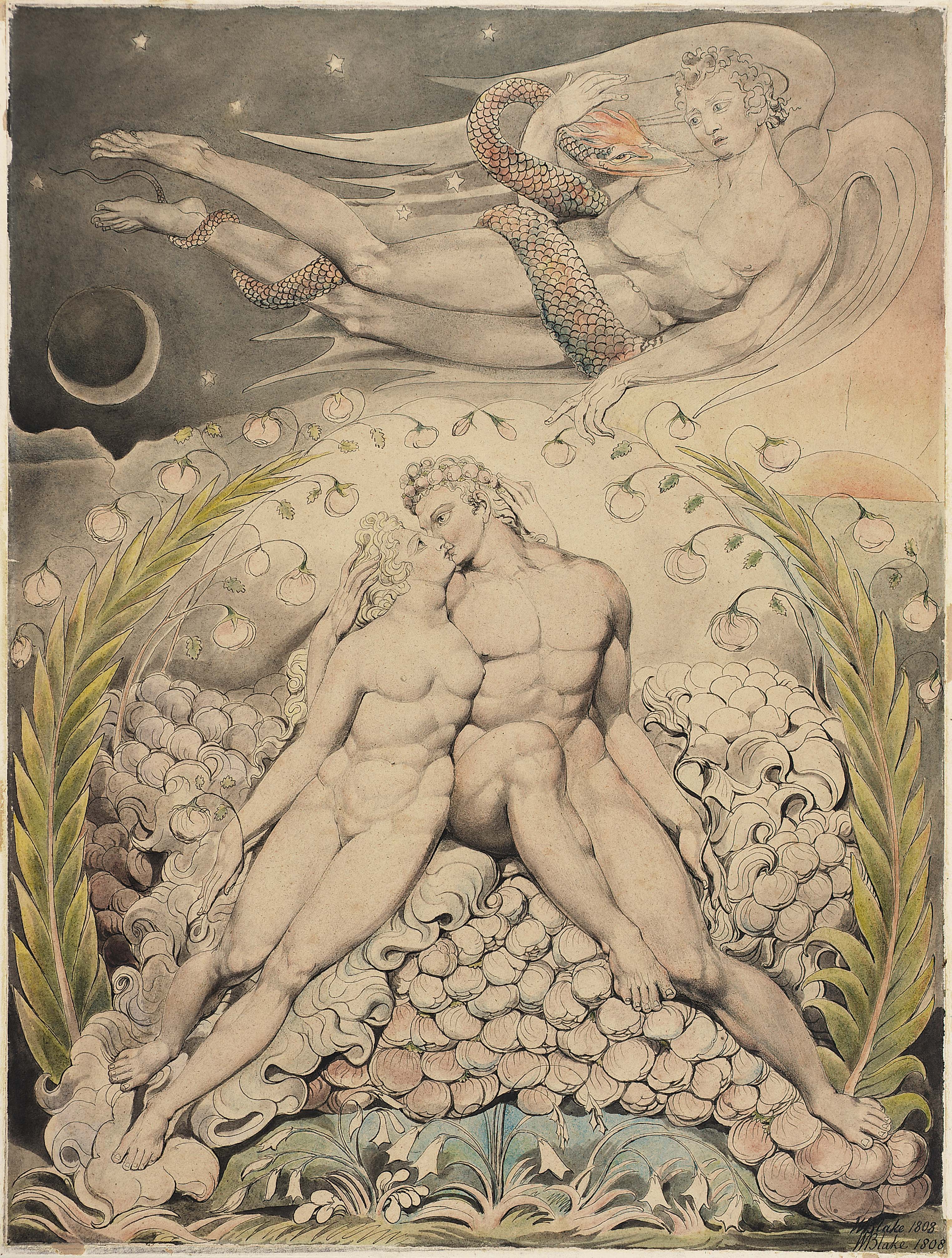
http://www.sparknotes.com/poetry/paradiselost/section11.rhtml   (Milton, “Paradise Lost,” III, 495)

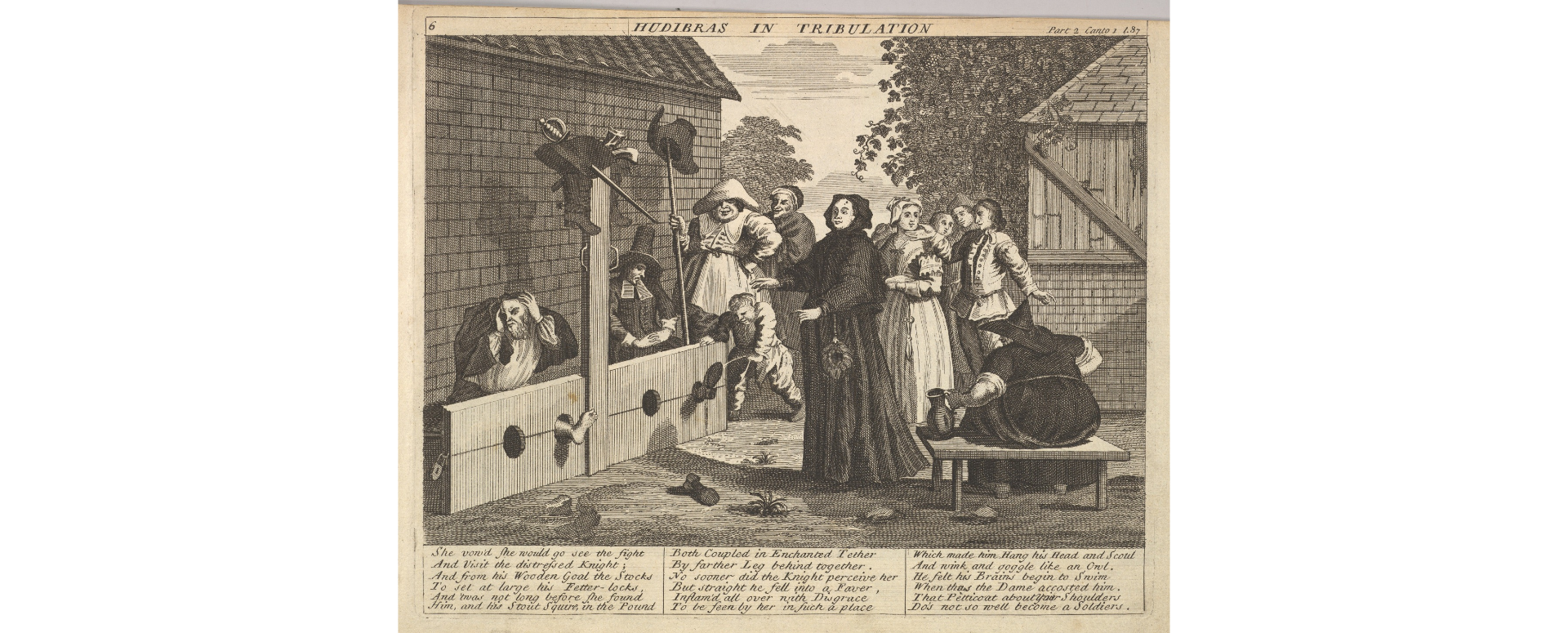
http://www.poemhunter.com/poem/hudibras-part-2-canto-i/    (Butler, “Hudibras,” part II, canto i)

(Late Latin limbus) a word of Teutonic derivation, meaning literally “hem” or “border,” as of a garment, or anything joined on (cf. Italian lembo or English limb).

Natural limbus infantium

In theological usage the name is applied to (a) the temporary place or state of the souls of the just who, although purified from sin, were excluded from the beatific vision until Christ’s triumphant ascension into Heaven  (the “limbus patrum“); or (b) to the permanent place or state of those unbaptized children and others who, dying without grievous personal sin, are excluded from the beatific vision on account of original sin alone (the “limbus infantium” or “puerorum”).

In literary usage the name is sometimes applied in a wider and more general sense to any place or state of restraint, confinement, or exclusion, and is practically equivalent to “prison” (see, e.g., Milton, “Paradise Lost,” III, 495; Butler, “Hudibras,” part II, canto i, and other English classics). The not unnatural transition from the theological to the literary usage is exemplified in Shakespeare, “Henry VIII,” act v, sc. 3.

Blake‘s epic poem tells the story of Sir Hudibras, a knight errant who is described dramatically and with laudatory praise that is so thickly applied as to be absurd, and the conceited and arrogant person is visible beneath. He is praised for his knowledge of logic despite appearing stupid throughout, but it is his religious fervor which is mainly attacked. Blake undoubtedly drew from Don Quixote for his witty satire about a man who thought he knew too much and gets repeatedly beaten for his views and interfering with the rest of the world’s vices. Unlike Don Quixote, who is humorous and draws our sympathy, Hudibras gets none. It was very popular in its time (1700’s), but was not a beloved story, for it spurred no ballets. However, many stories and art are descended from it. It’s main argument stems from political views and religious theorists at the time, sometimes combined into one group, and the public found this pairing amusing and ludicrous. Some writers and reviewers of the times felt Blake was too hard on certain puritan factions, so it did not please those everyone important.

My purpose in dredging up these hyperbolic entrails is that they serve to explain and accentuate my point the about idiocy of ballet politics, dance politics overall, and some characters of the world in general. It also underlines the fact that the attitude held by some teachers of ballet (certain people are destined for success and others aren’t) is fascist and not particularly conducive to the making of good dancers or art, at all. These people hold that they are the judge of the times. This self-appointed “hell” that parents pay for their children to be entombed in is called a competition studio, and not a ballet or (art) studio where expression and all great art is derived. Were it not for imperfection, there would be no art, as true art is not necessarily perfect. This is history repeated though, and nothing new occurs. It is part of the reason why it is impossible to achieve art in a school for young dancers and in many cases in a ballet theater, and probably some companies. Mothers and fathers, wooing administrators with money and work, fund raising efforts, and their own strings-attached beneficence result in the many studios I know of, which have some good elements, running a muck. At least in a ballet company these souls are excluded for the most part and the business of art may take place-and in most good ballet schools as well as in other types of other schools. At the studio my daughter was recently at, the operator had her own unique ideas about the dancers, their abilities and what sort she advanced into new levels. Each year she would change the levels around to accommodate her future plans without consideration for the families involved and especially the children whom she was hurting. If a parent was paying for more children, they got more attention, moved up, more and better roles, etc. If they contributed large sums of cash, those students could be expected to get privates and a lot of pushing even if they weren’t very good dancers, had poor technique, bad habits, arrogance, etc. A very few children, literally one or two out of each level, received her full attention and she would work with them for years, giving privates and coaching, lead roles, until she managed to get them something. She wouldn’t even give corrections (strike one) in class (especially my daughter) except to her very favorite few and she manipulated the entire class to evoke harder attempts from these few by using the others as comparisons. It was a very backward method, resulting in those few getting all the attention, etc., while the others continued to pay for the scraps leftover-even dancers who were quite good!

My daughter has spent the last several months in limbo, from an effort by this director to get her to leave. Her others students resented my daughter due to the attention she was getting from her Russian teacher, who no doubt was rewarding her hard work and effort. She also had privates with him, and in under a year was up to and in some cases better than her classmates. After six more months and more privates, she was better than her very best dancers-so she prevented her from doing YAGP- a punishment (strike 2)! Also, the other female teachers there would not giver her privates for fear she would compete with their prize students. They all held this attitude that each student belonged to a teacher-only one. It just happened that we had the best one and they ALL resented this. He also had the hardest working students and some of the younger ones and boys did competitions and they won. His won. But my daughter was not allowed by her. I did not realize it was the director controlling him, telling him to help other students who were willing to pay more money-who had more money, but it was. She would come out and not allow him to give my daughter privates when she was waiting, instead directing him to take someone else first/instead (Strike 3). Prison. Confinement, or so this mistress hoped, and by these actions she expected my daughter to be discouraged and repeatedly kept back and slowed down (2nd chance). Finally, I realized what was going on and we finished out the year-end performance and left. I did not pay her the last two of 12 equal payments for the year. Would you?

She may now yet again have a fair opportunity to enter the beatific vision of ballet Heaven. A school where she can dance hopefully unencumbered by these people who believe they hold the carrot and the key to her success. If the key is money and not art, not teaching, not learning, and performing is not possible without patronage at so early a level of training, then art sits in confinement, and talent is imprisoned, learning is sanctioned, and futures are undeveloped. There is no chance of my daughter growing into a beautiful dancer there, for the environment is evil and the hatred and jealousy running beneath the surface permeate the spirit of the dance. It was important to her to make these other students feel superior to my daughter and certain other students in an effort to keep the money coming in. My daughter was incredulous to find that she had been demoted (LAST STRAW) to a level with dancers who were ungainly (also ridiculed by her and humiliated in front of everyone else as an example-not to be overweight (seriously, in a little local ballet school????-yes, she actually calls herself a dance educator), did not even bother or try to learn (who could blame them?), and who showed zero interest in ballet (no wonder!), and whose families were not financially important (bingo). My daughter was age-level and training level appropriate for the higher level, but was being highly encouraged to leave, I would say…. I do not want to say much about the girls who were promoted, the previous takes into account their possible faults (false self-confidence, and their parents stupidity) being ignored in favor of monetary support, so I need not impune them further-wouldn’t be nice. Over time, we were able to see that each parent of each of these children held some advantage over the director, was useful, or was paying at least for two children. But my daughter was to be made miserable, to be cast down, by the director of the studio, whose arrogance rivaled Hudibras’, as if to say, “no matter how hard you try, you can never be better than my worst higher-paying student. it is a hard lesson for a teenager to learn-to see someone so cruel, and I can assure you, she was one of the best dancers in the class upon leaving. She was convinced it was a mistake, a cruel joke played by one of the parents who sent out the certificates and promotions, but when I realized it and called, I was told the director would “re-evaluate her” after the summer. The summer program there is usually pretty good, but for two years we have been unable to afford it. However, when we come back, my daughter is still more advanced than others, because she works very hard and continues her privates with her Russian teacher-who refused to teach anyone else who asked. I knew there was no evaluation or training issue, as some of the other girls in class are well behind my daughter in all areas, but I knew it had to do with money and politics. A child does not usually understand this, but my daughter readily saw the reasons for it, so it was not very hard to dispense with. She refused to go back.

This Summer that would have resulted in our being pretty much cut-off from her Russian teacher, but that dependence needed to be discouraged anyway for some other reasons. After about two weeks of this, she began to be led dancing into different directions. There were an inordinate amount of accessible master classes in the area-I wonder who was teaching at the intensives! Her vision must be pure as her luck was good! God never closes a door….

The mean Hudibras in the stocks.

This kind of imposed limbo by the director was averted by the number of available classes to take. Quickly, she perked up, finding plenty of support from other teachers. The other aspect of this is that she is the kind of able, ready and polite student that everyone else wants to teach. Once they see her seriousness and rapid improvement and other good qualities they usually (not always) help her, encourage her and eventually become attached to her. Each school she went to and auditioned for this Summer she was accepted to, and she was placed in a suitably advanced level in. In each master class, the teachers praised her and helped her. She wanted to go to New York and audition for SAB, and I almost doubted her. I thought perhaps she was trying to overcome those bad qualities projected onto her by that director and frankly, I was worried that she would not be accepted. She needed to erase the self-doubt that this woman had placed in her mind deliberately. The baby in limbo infantium, innocent of real sin or error, but far away from the beatific vision sought by dancers everywhere, but I was wrong to doubt her and she has a lot more mettle than I had anticipated (as usual). You’d think I’d learn and have more faith. She did it everywhere she went. She got better seemingly without even trying-she stepped up a level, a notch in her professionalism and self-confidence. The nervous, shy young girl is mostly gone, but in her place is a beautiful, confident young lady of just 15 years old who knows all of her hard work has not been in vain, shaking the dust off of the bottom of her feet as she goes. She was happy to see the girls there and was truly pleased that most of them were happy to see her when she went back for a few classes at the end of the Summer with her Russian teacher. She is convinced once again that she is happiest while dancing, more competition is better, and she was able, while at these other studios to compare herself to their best dancers and to see where she was in comparison. She found herself close to or better than their best, different, better in ways they were not, learning more and new things, getting new corrections and insights, different stretches and work, new combinations, and working just as hard, and getting much better, being more relaxed and open, despite a shorter schedule and fewer classes. She is finally working smarter! It is as though she finally sees in herself-herself and not a victim, but a fighter (the best kind) and a catalyst. She is a dancer!

Perhaps I did not make her appear chastised enough and down-trodden, from the perspective that those mothers felt sorry for her-some of those students felt sorry for her too. It did seem as though a very few of them actually took solace from this, feeling that they were better, but some others sought me out and were very kind and understanding. None of them felt we would come back, and the director sought her out in one class to dwell upon her expression and to watch her to see whether she had improved or not over the Summer, and to witness her unhappiness. But broken spirit was not what they beheld. She was better and improved! One teacher literally glared at me when she drove up. But enough of that. The good that came from the experience, for one, outweighed the bad. In fact, she won, for she has been accepted into a very exclusive school in a large city! I would like to blame them, but I am having to be thankful for all of their actions and roles played in this would-be tragedy, except for the indomitable will, spirit and grace of my child, who is a far better person than I have ever been or probably will ever be. She met Jacques D’Amboise and then took a nearly three-hour class with him, a lifelong memory and inspiration from someone whose heart has always been in the right place-I think this inspired her to go do the Fall auditions. She decided she was interested in Balanchine and Cecchetti and she was inspired to read and research, herself, where these opportunities lay.

We were prepared to enroll her in classes with another Russian teacher who wanted to train her, and we had enrolled her into public high school, when the unavoidable happened to thwart those plans. We have had mold in our house due to some repairs from several leaks that the landlord has not made over the past several months. She was finding it difficult to breathe and I moved her into the living-room to sleep over the Summer. She complained of stomach pain, nausea and headaches as well which caused me to confront the landlord and seek to force the repairs. I have been sick, but no one else in the house has been and I did not think it was due to the mold until she was affected. So at the end of August, awaiting repairs, I sent her to a big city with family. She was already inspired to take classes and do auditions. I set them up, we took photos provided by a good friend for free and they were beautiful to see! She was accepted to a school of some prestige, but most importantly with a very good program including all of the things those here lack, and an environment and philosophy which might work out perfectly for her, AND she was placed in the advanced level, second from the top-the top being an actual company-of company-ready level performers, which she is not yet (at 15, seriously-who really is? But advanced! I just hope she can handle all of what she is about to undertake. There will be quite a learning curve considering the deficiencies at the school she has been attending. At this school, the students do get placed into companies and have numerous opportunities to dance! The faculty is really amazing and it is reportedly “not so cutthroat” as some others schools. She will have classes six days per week and one or two with the company-level dancers. She will have pilates, character, yoga, pointe everyday, partnering, technique everyday, and variations. She will learn choreography, the students have choreography done on them for performances and workshops regularly, and there are many master classes, guest teachers, workshops, rehearsals and performances. It was like God just said, there. How can I say no?  She (hopefully) can practice there, study and do her schoolwork. She has family there who also will support her and encourage her, but she will have to be a little more independent of me. No more limbo. You must keep on dancing!

Hubidbras vanquished and protected by Trulla-text supplied-in his confinement

Miko Fogarty, 16, Moscow IBC 2013 Gold Medalist Final Round – Giselle – – YouTube


Miko Fogarty, 16, Moscow IBC 2013 Gold Medalist Final Round – Giselle – – YouTube. This performance got Bronze.


Proprioception – Wikipedia, the free encyclopedia


Proprioception – Wikipedia, the free encyclopedia.

Ballets Russes: the company that changed dance for good


http://m.guardiannews.com/stage/2013/jul/18/ballets-russes-dance-movetube

Behind the ‘ballet is like porn’ headlines is a serious point about women in dance | Judith Mackrell


http://m.guardiannews.com/commentisfree/2013/jul/18/ballet-porn-tamara-rojo-headlines-women


For Ballet Lovers Only :: Interviews :: Altynai Asylmuratova, Artistic Director of the Vaganova Ballet Academy


For Ballet Lovers Only :: Interviews :: Altynai Asylmuratova, Artistic Director of the Vaganova Ballet Academy.

Point Shoes For Sale


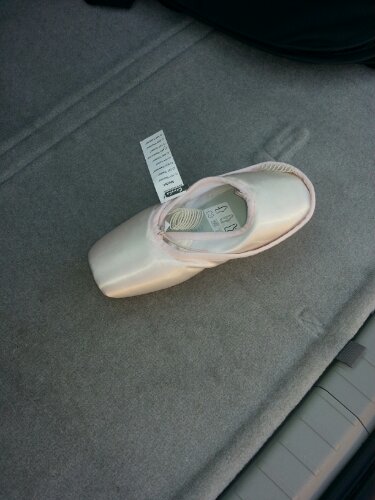
image                                                     FOR SALE-5 PAIRS OF POINT SHOES BY SANSHA-

SIZE 6M- OVATION/#603 (FROM RUSSIAN BALLERINA)-I WILL TELL YOU WHOSE THEY ARE IF YOU BUY THEM. THE WRITING ON THE SHOES IS IN RUSSIAN. THEY ARE ONLY $30 EACH. IF YOU ARE INTERESTED, I WILL MAIL THEM TO YOU!