Category Archives: Ballet Choreography and Pedagogy

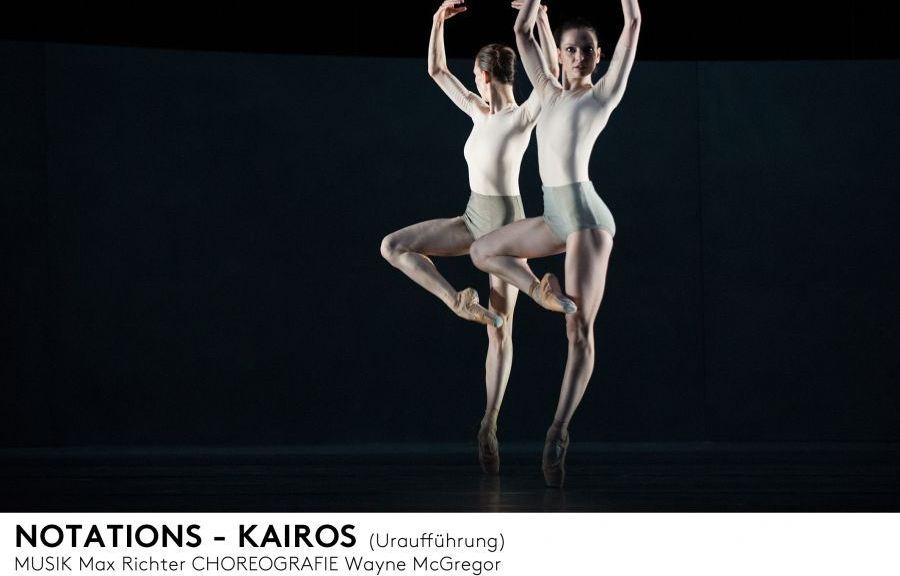
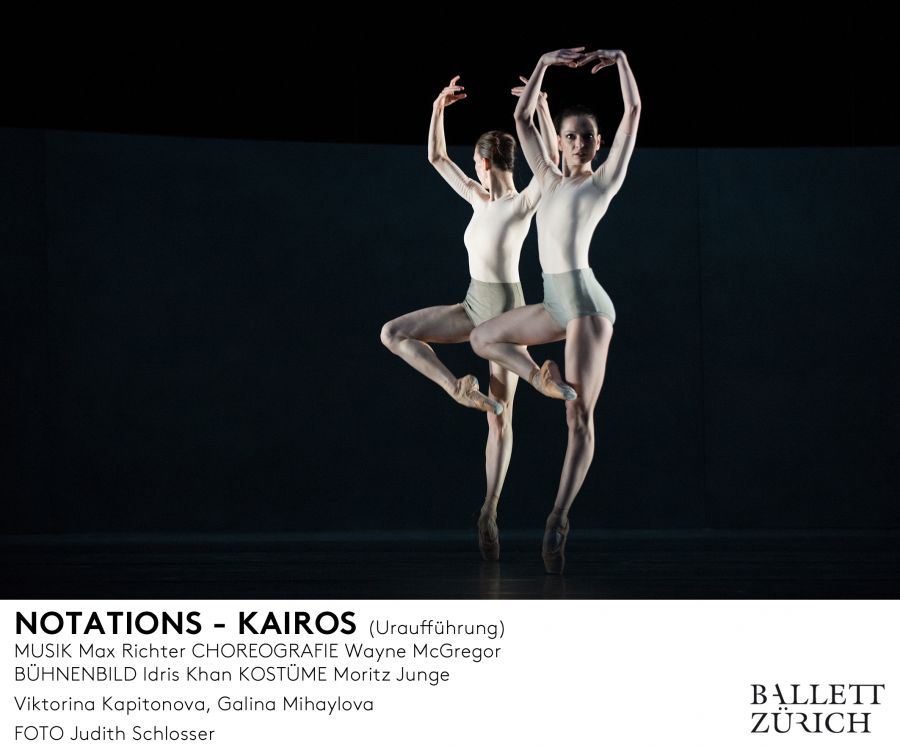
World Premiere Kairos: Wayne McGregor | Viktorina Kapitonova


kairosWorld Premiere Kairos: Wayne McGregor | Viktorina Kapitonova.

Hofesh Shechter’s Sun Trailer – YouTube


via Hofesh Shechter’s Sun Trailer – YouTube.

Like this choreographer: Hofesh Shechter rehearses his debut Royal Ballet work


via Hofesh Shechter rehearses his debut Royal Ballet work – YouTube.

Save the Date!!!Dance Against Cancer 2015 Trailer-Erin Fogarty and Daniel Ulbricht, producers


<p><a href=”https://vimeo.com/118718377″>Dance Against Cancer 2015 Trailer</a> from <a href=”https://vimeo.com/user9362802″>Jetpacks Go!</a> on <a href=”https://vimeo.com”>Vimeo</a&gt;.</p>

via Dance Against Cancer 2015 Trailer on Vimeo.

beat that! Millepied’s plans for the Paris Opéra


REPOSTED FROM DANCING TIMES

Millepied’s plans for the Paris Opéra : Wednesday, 04 February 2015

Benjamin Millepied has announced plans for the 2015–16 season of the Paris Opéra Ballet, the first he has programmed as director. It’s an ambitious season, with many new works, including one by new associate choreographer William Forsythe and a new production of The Nutcracker, to be choreographed by Arthur Pita, Sidi Larbi Cherkaoui, Liam Scarlett, Edouard Lock and Millepied.

Millepied announced his season alongside Stéphane Lissner, who has been general director of the Opéra since July 2014: the two leaders promise a new level of cooperation between the ballet and opera companies. The new Nutcracker will be performed as a double bill with Tchaikovsky’s opera Iolanta – as these works were performed together at their premiere in 1892. The five choreographers will create separate scenes for the new production.

Millepied has also commissioned new works from Justin Peck, Wayne McGregor, Jérôme Bel and himself. Peck’s work will be danced to Poulenc’s Concerto for Two Pianos and Orchestra, with designs by artist John Baldassari. McGregor’s piece will be set to Pierre Boulez’s Anthème II as part of an evening celebrating the composer.

Millepied, who danced at New York City Ballet (NYCB) from 1995 to 2011, brings an American slant with some of his programming. The season will include Balanchine’s Theme and Variations, Duo Concertant and Brahms-Schönberg Quartet, Jerome Robbins’ Opus 19/The Dreamer, Goldberg Variations and Other Dances. Justin Peck, the resident choreographer at NYCB, is represented by In Creases as well as his new commission; Christopher Wheeldon’s Polyphonia, created for NYCB, also joins the repertoire. The season will also include company premieres by Anne Teresa De Keersmaeker, Alexei Ratmansky and Maguy Marin.

There are just three evening-length revivals: Giselle and Rudolf Nureyev’s productions of Romeo and Juliet and La Bayadère. There will also be works staged in the foyer of the Opéra Garnier. Choreographer Boris Charmatz will stage a new event to open the season, with 20 dancers performing solos from the 20th-century repertoire in the public spaces of the Opéra Garnier.

Millepied and Lissner also announced a new digital platform, “3e Scene”, or “Third Stage”. Hosted on the Paris Opéra website, this will present new work by composers, choreographers, directors, visual artists, filmmakers and writers. There will also be a new Paris Opéra Academy, which will offer residencies to young choreographers from inside and outside the company. The choreographers will be mentored by William Forsythe. Millepied told the New York Times that the academy aimed to teach dance-making as a craft. “We won’t necessarily discover more geniuses, but there will be more competence,” he said. “Composers learn the principles of harmony, counterpoint, technique, and choreography is no different.”

Millepied has also announced touring plans, and works scheduled for later seasons. The company will visit one French city each season, touring to Brest in the 2015–16 season. Major tours to the US are being planned. Guest companies at the Paris Opéra will include Anne Teresa De Keersmaeker’s Rosas, Batsheva Dance Company and English National Ballet, who dance Le Corsaire at the Opéra Garnier in June 2016.

Looking ahead, Millepied has commissioned an evening-length work from Alexei Ratmansky for the 2016–17 season. He also expects to schedule some work by the iconic modern dance choreographer Merce Cunningham. At the press conference, critic Laura Capelle reports, Millepied explained that he had almost left NYCB to dance for the Cunningham company.

Performances for the Paris Opéra Ballet’s 2015-16 season are now on sale.

Picture: Benjamin Millepied at the Opéra Garnier. Photograph: Julien Benhamou

via Millepied’s plans for the Paris Opéra.

Sidi Larbi Cherkaoui to direct Royal Ballet Flanders


REPOSTED FROM DANCING TIMES Sidi Larbi Cherkaoui to direct Royal Ballet Flanders: Wednesday, 04 February 2015

Choreographer Sidi Larbi Cherkaoui is to be the new artistic director of Royal Ballet Flanders, it was announced on February 4. Cherkaoui will take up his post on September 1, 2015, with Tamas Moricz as his associate artistic director.

Cherakaoui joins the company after a series of upheavals. In 2012, director Kathryn Bennetts left Royal Ballet Flanders after clashing with Flemish culture minister Joke Scahuviliege; her successor, Assis Carreiro, left abruptly in 2014.

As a contemporary choreographer taking over a classical ballet company, Cherkaoui has said that “The course I will be seeking to pursue with the company is one of reconciliation”. Tamas Moricz said: “We want to take Royal Ballet Flanders to a new and inspiring place in the world of dance. We both share the aim of allowing dancers to maintain their firm classical background by continuing classical training and repertoire, while also bringing the company into a contemporary space. Classical ballet and contemporary dance can exist alongside each other, and that is the situation at present. Our aim is to draw both these worlds into a creative hub within this company.”

Cherkaoui praised the company’s achievements: “As a contemporary choreographer who was born in Antwerp, I have been following the development of Royal Ballet Flanders for 20 years now. The talent, technical virtuosity, sensitivity and musicality of its dancers have always inspired me, so it was an honour for me to share a piece from my own repertoire with the company last season. Faun [as part of Diaghilev Unbound, 2013–2014 season] was a first step towards an exchange of repertoire with the ballet company.

“For the past ten years, as well as developing my contemporary choreography work I have also worked with foreign ballet companies every year… Through all these experiences I have gained the confidence and energy that I will need in the role of artistic director at Royal Ballet Flanders…

“For a number of years there has been a constantly growing exchange between the different dance disciplines, as classical ballet and contemporary dance increasingly complement each other. Although there is always a key idea running through the content of my work, what I am able to achieve with ballet dancers in terms of form and technique is very different from my work with contemporary dancers. I am therefore looking forward to seeing these differences evolve further in future.

“At Eastman I open up specific themes that allow contemporary dancers to translate them into earthbound gestures with strong contrasts and an animalistic flexibility, but in ballet I can develop feather-light pointe movements to draw outlines in space in a more calligraphic way. In time, I also want to be able to reverse those ‘differences’; I find it exciting to let the two worlds flow into one another without losing any of their fascinating differences or nuances.

“I am not making this move to Royal Ballet Flanders alone. I am bringing with me Tamas Moricz as my right hand man: a highly talented dancer and dance teacher who has himself danced for many years in performances created by William Forsythe. Together with him I will be working out the future direction for the ballet. That direction will respect its history while also cherishing the ambition to open up new paths. Eastman will still be my contemporary company. Organic exchanges with Royal Ballet Flanders will of course develop, but I am definitely not going to force that.”

Picture: Sidi Larbi Cherkaou. Photograph: Koen Broos

via Sidi Larbi Cherkaoui to direct Royal Ballet Flanders.

▶ (The Little Humpbacked Horse: Ocean and Pearls) Трио Океана и Жемчужин из балета «Конёк-горбунок» – YouTube


Grand Prix Final of Mikhailovsky theatre (November, 21, 2012)

Vaganova Ballet Academy

Trio of Ocean and Pearls from ‘The Little Humpbacked Horse’ ballet

via ▶ Трио Океана и Жемчужин из балета «Конёк-горбунок» – YouTube.

▶ From The Humpbacked Horse: Ocean and Pearls (Almayeva)


▶ Katia Almayeva, 12 and Gillian Fitz, 11 perform Ocean and Pearls – YouTube.

Patricia McBride-Still Living the Dancer’s Dream (Protege of George Balanchine)


Patricia McBride lived a dancer’s dream: Her mentor was George Balanchine

2   Patricia McBride and George Balanchine

Patricia McBride rehearsing with choreographer George Balanchine.

This was normal for McBride, then the New York City Ballet’s principal dancer (now the associate artistic director at the Charlotte Ballet), but working with Balanchine would have been a dream come true for aspiring ballerinas around the world.

He is known as an artistic genius in the ballet world. A gifted choreographer responsible for changing the face of dance and famous for the New York City Ballet’s ” Coppélia” and “The Nutcracker.” And this man personally invited McBride to join his company when she was just 16 years old.

Balanchine and McBride would work alone in a studio, not speaking much. Balanchine would cue the music and dance in front of McBride. A pianist himself, musicality was of the utmost importance to Balanchine. He wanted the dances to flow naturally, so he let the music do the speaking. McBride followed along behind him, learning the steps. Forty-five minutes later, McBride would have a new solo in her repertoire.

“He worked so quickly and he didn’t have to experiment with you. He knew exactly what you could do,” McBride said in a phone interview. “Once something was made to you, you had to remember it forever. You were the guardian of the choreography.”

Balanchine trained McBride for a 30-year career with the New York City Ballet. She danced over 100 ballets in that time, including 30 choreographed just for her. When she performed her final ballet in 1989, McBride was showered with 13,000 roses and a standing ovation.

But McBride did not leave dance behind. She went on to teach at Indiana University and then took over the Charlotte Ballet in North Carolina with her husband and dance partner, Jean-Pierre Bonnefoux in 1998. She’s now 72 and still teaches eight ballet classes at a time, on top of running rehearsals for performances like The Nutcracker.

This lifelong dedication to dance has been noticed by the outside world, too.

Earlier this month, McBride walked down a red carpet in Washington, D.C., to be honored for her commitment to the performing arts. She mingled with Tom Hanks and Sting, had dinner with John Kerry and met the Obamas. She was given a rainbow-colored Kennedy Center Honors ribbon and listened to actress Christine Baranski praise her accomplishments.

It was a celebratory weekend all about honoring the ballerina (among other honorees), but McBride was quick to thank others in our interview. Especially Balanchine, her mentor.

Theirs was an intimate setting to work in, but Balanchine was more than a teacher to McBride. She looked up to him as a role model and desperately wanted to please him. McBride‘s own father left her family when she was just 3 years old, so Balanchine stepped in to fill that role.

“I grew up without a father so he was everything to me — the man I most admired and just the most wonderful role model anyone could have,” McBride said.

And their relationship was not lost on the outside world.

“A true muse for George Balanchine, he created many ballets especially for her,” said Larry Attaway, executive director of ballet at Butler University. “She was one of the most remarkable ballerinas of the 20th century.”

McBride still remembers leaping for joy when Balanchine invited her to join the New York City Ballet Company all those years ago — and did not hesitate to give up a normal teenage life for one of endless rehearsals, travel and intense dedication.

Balanchine took McBride under his wing and trained her to dance his ballets, many of which are still performed around the world today. She traveled to Tokyo, Italy, Germany, London, Paris, South America and Russia to dance, including five performances for U.S. presidents. Leading roles in her repertoire include the Sugarplum Fairy in “The Nutcracker” and Colombine in ”Harlequinade.”

“I cherish the ballets made for myself by Mr. Balanchine,” McBride said in a phone interview. “He never lost his temper. He was quiet, humble, the genius of the 20th century. He changed the face of what dance is today.”

Balanchine was her teacher, her mentor and inspiration during her long-lived dancing career. He pushed her and drove her to perform at the highest possible level, but he was also kind and patient — a notable trait in the perfectionism-driven world of ballet.

“In the beginning, he taught you how to hold your fingers, use your head, hold your shoulders, how you glissade, bourre — the exact way he wanted you to do the steps,” McBride said. “It was relearning the whole Balanchine technique.”

He was not a man of many words, but when he did offer praise, it stayed with McBride for years to come.

“After performances he would say, ‘Good, good.’ He never really gave a harsh word. I don’t ever remember him saying, ‘That was awful,’ ever. He didn’t praise that much, but when he did, it was wonderful. He would say, ‘I loved how you used your eyes, you were mysterious.’ It would make you feel like a million dollars.”

Balanchine passed away in 1983, but McBride carries on his legacy by teaching her students his ballets with patience and kindness. She gives her students at the Charlotte Ballet Academy praise and talks highly of her “beautiful dancers.” She believes in nurturing her students and making them feel secure in themselves.

“Mr. Balanchine wanted me to be myself. He didn’t want me to look like anyone else,” McBride said. “I love teaching our company dancers the Balanchine ballets. I try to give them what was passed down to me and what I learned from him. They dance it so beautifully. It also keeps me close to Mr. Balanchine. He’s with me every single day.”
South Coast Ballet Conservatory, The Nutcracker: December 20-21st, 2014


The Nutcracker Cap Perf Arts Cntr

Feature Film, ‘Getting to the Nutcracker’, Illuminates Process of Production of Annual Event


getting_to_the_nutcracker_poster

‘Getting to the Nutcracker’ on screen in Jamestown

Published: December 02, 2014 01:00 AM

Comments 0

“Getting to the Nutcracker” is a feature-length, behind-the-scenes documentary focusing on a ballet school preparing for their production.

18 0 +10 0 0 0

Film meets ballet in a holiday offering from Flickers and the Rhode Island International Film Festival Thursday at 7 p.m.

The ballet is the Christmas classic “The Nutcracker,” and the film, Serene Meshel-Dillman’s “Getting to the Nutcracker.” The feature-length, behind-the-scenes documentary focuses on the Marat Daukayev School of Ballet in Los Angeles from auditions to rehearsal with the young dancers (boys and girls ages 3 to 18) and their families profiled.

Celebrate the season with this family holiday treat at the Jamestown Arts Center, 18 Valley St. Tickets are $10, $7 for kids up to age 12. (Special group rates are available by calling the Festival office in advance of the screening.) Additionally, all attendees will be entered in a free drawing for a full Festival pass worth $350. Online ticketing: http://www.RIFilmFest.org or call (401) 861-4445.

Lynne Chaput

via ‘Getting to the Nutcracker’ on screen in Jamestown | Entertainment – Music, Theater, TV & more | Providence Journal.

▶ Anna Pavlova – ‘Invitation to the Dance’ aka ‘Invitation to the Valse’ – YouTube


▶ Anna Pavlova – ‘Invitation to the Dance’ aka ‘Invitation to the Valse’ – YouTube.

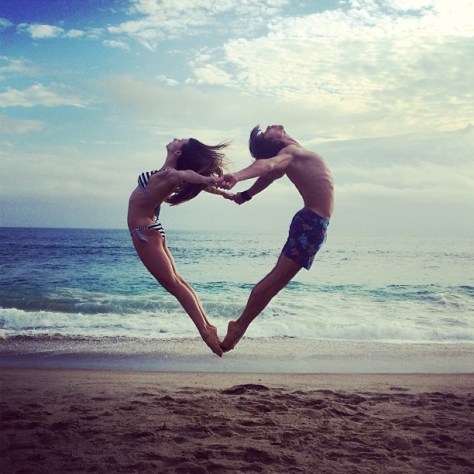
Ballet Photo of the Year!!!! Anna Tikhomirova and Artem Ovcharenko


Photographer: Maria Tikhomirova

Anna Tikhomirova and Artem Ovcharenko.

Laguna Beach, CA 2014 ❤


Anna Tikhomirova and Artem Ovcharenko. Laguna Beach, CA, 2014. Photographer: Maria Tikhomirova

Toledo Ballet – The Longest, Annual, Continually-running Nutcracker in the U.S.


WGTE Public Media: Toledo Ballet – Founding, History & the Nutcracker.

Alla Sizova, Star Kirov Ballerina, Dies at 75 – NYTimes Dance


Photo

The ballerina Alla Sizova in costume for “The Sleeping Beauty” with the Kirov Ballet Credit The Leningrad Kirov Ballet


Alla Sizova, one of the leading ballerinas of the Kirov Ballet during the 1960s and ’70s and an early partner of Rudolf Nureyev, died on Nov. 23 in St. Petersburg. She was 75.

A friend, Marina Gendel, said the cause was cancer.

Ms. Sizova’s outsize talent was apparent even before she joined the Kirov (now the Maryinsky) in 1958. When she was still a student at the Vaganova Ballet Academy in Leningrad (as St. Petersburg was then known), her extraordinarily high jump and astounding technical prowess as the Queen of the Dryads in a school performance of “Don Quixote” won raves from the Leningrad critics and a nickname, Flying Sizova.

Her graduation performance was the pas de deux from “Le Corsaire,” in which she was partnered by the young Nureyev. He challenged her to substitute the more difficult Dryads variation for the usual one, and to further increase its difficulty by adding double pirouettes to a series of virtuosic steps known as Italian fouett?s. Few ballerinas, if any, have since repeated that feat.

Ms. Sizova was part of an exceptional generation of Kirov stars that, besides Nureyev, included Irina Kolpakova, Alla Osipenko, Yuri Soloviev and Natalia Makarova. Ms. Sizova was paired regularly with Nureyev in their first years with the Kirov, and the Soviet authorities gave them an apartment to share.

(In her 2007 biography of Nureyev, Julie Kavanagh quotes the ballerina Ninel Kurgapina recalling Nureyev’s reaction: “They’re giving me a flat! With Sizova! They think by doing so I’ll eventually marry her! Never!!”)

This group of dancers caused a sensation when they were seen on tour in the West in the early 1960s, Ms. Sizova not least among them. Reviewing a Kirov performance of “The Sleeping Beauty” at the Metropolitan Opera House in September 1961 for The New York Times, an enthralled John Martin began by writing, “If Alla Sizova of the Leningrad Kirov Ballet would like to have the City of New York, all she has to do this morning is ask for it.”

Alla Ivanova Sizova was born on Sept. 23, 1939, in Moscow, only weeks after Germany invaded Poland and started World War II. Her family moved to Leningrad soon after, but in 1941, Alla and her only sibling, a sister, were evacuated with their mother to the Ural region in the east. Her father remained in Leningrad, which by then was under siege by German forces, to work as a driver delivering bread.

The family was reunited in Leningrad toward the end of war, and Ms. Sizova began to attend an after-school dance program. Her talent was noticed. She was accepted at the prestigious Leningrad Choreographic School (later to be named after Agrippina Vaganova), where she was taught by Natalia Kamkova.

Unusually, she was taken into the Kirov Ballet with the rank of soloist, and promoted to principal soon after. During her first three years with the company, she performed at least 14 principal roles, including Masha in “The Nutcracker,” Princess Florine and Aurora in “The Sleeping Beauty,” Myrtha in “Giselle” and Katerina in “The Stone Flower.”


A back injury kept Ms. Sizova offstage for two years in the mid-1960s, but her career continued to flourish well into the ’70s, with particular acclaim for her performances in “Giselle” and “Cinderella” and her spirited Kitri in “Don Quixote.”

Ms. Sizova also created roles in a number of ballets, including Igor Belsky‘s “Leningrad Symphony,” Konstantin Sergeyev’s “Hamlet,” and Oleg Vinogradov’s “The Enchanted Prince” and “The Fairy of the Round Mountains.”

After Nureyev defected to the West in 1961, Soloviev, another brilliant young dancer, became her regular partner; in later years she also danced with the young Mikhail Baryshnikov.

Ms. Sizova married Mikhail Serebrennikov, a television producer and director, in the early ’70s. They had a son, Ilya, who was 6 when Mr. Serebrennikov died of an aneurysm in 1980. Ms. Sizova retired from the Kirov in 1988 and accepted a teaching position at the Vaganova Academy.

By 1991 Mr. Vinogradov was running the Kirov-affiliated Universal Ballet Academy in Washington and invited Ms. Sizova to join the faculty. The Soviet Union was dissolving, and Ms. Sizova was able to move with her son to Washington.

There she became a much-loved teacher, noted for her emphasis on musicality above technical proficiency and for her kindness to her pupils.

Her son had meanwhile returned to live in St. Petersburg, and when he died in a drowning accident in 2004, Ms. Sizova, too, went back to Russia. Mr. Vinogradov tried to persuade her to come back to the United States, or to rejoin the Vaganova Academy, but she refused and became a recluse, rarely seeing former colleagues or pupils while living with her sister, Nina Ivanova, who survives her, along with a niece.

Ms. Sizova developed Alzheimer’s disease in the late 2000s and received a diagnosis of cancer four months before her death.


Sophia Kishkovsky contributed reporting from Moscow.

Alla Sizova, Star Kirov Ballerina, Dies at 75 – NYTimes.com.