Category Archives: Ballet Chicanery

ENB Dancer Does Class to Contemporary Music Selections


Live in Cinemas May 5th, 2015 La Fille mal Gardée Trailer (The Wayward Daughter) The Royal Ballet


La Fille mal gardée trailer (The Wayward Daughter) | The Royal Ballet – YouTube.


Find out more here: http://www.roh.org.uk/showings/la-fille-mal-gardee-live-2015

Celebrity Invention: Bill Nye’s Ballet Slipper — The Atlantic


Celebrity Invention: Bill Nye’s Ballet Slipper — The Atlantic.

Tamara Rojo: Axing dance in schools will restrict ballet to wealthy – Telegraph


Tamara Rojo: Axing dance in schools will restrict ballet to wealthy - Telegraph
Artistic Director and principle dancer Tamara Rojo & Fabian Reimair from English National Ballet rehearse Akram Khan ‘s new work: Dust, as part of a program entitled ‘Lest We Forget’ in commemoration of the start of World War I, at The Barbican Centre in London Photo: Araud Stephenson

Tamara Rojo: Axing dance in schools will restrict ballet to wealthy

Tamara Rojo, the artistic director of the English National Ballet criticised the decision of former education secretary Michael Gove to cut dance from the school curriculum

Artistic Director and principle dancer Tamara Rojo & Fabian Reimair from English National Ballet rehearse Akram Khan ‘s new work: Dust, as part of a program entitled ‘Lest We Forget’ in commemoration of the start of World War I, at The Barbican Centre in London Photo: Araud Stephenson

By Keith Perry 11:47PM GMT 05 Dec 2014

Tamara Rojo, the artistic director of the English National Ballet has criticised the decision of former education secretary Michael Gove to cut dance from the school curriculum, saying it risks making dance a preserve of the better off.

Ms Rojo said it was unfair as it meant “those that don’t have the means won’t have access to dance”.

She told the Evening Standard that is was particularly unwise to take dance out of schools as there was evidence of overwhelmingly improved results in maths taught through movement and 100 per cent increase in confidence.

The ENB itself offers tickets for as little as £10 to enable people to enjoy live dance. “We try to ensure that it is an art form that is accessible to everybody,” she said.

The Spanish dance star and her company are preparing to open their traditional Christmas production of Nutcracker followed by a run of Swan Lake.

Rojo said Nutcracker was important because the company had been performing it for more than 60 years. She added: There are two dozen Nutcrackers going round the United States. it is a very important tradition because for so many people it’s the first time they come to see ballet at all or to see a live performance in an orchestra.

“It’s a family tradition that goes from generation to generation and serves as an introduction to the art form.”

The challenge, she said, was to keep those first-time visitors – but audiences for dance have been growing. She praised both Billy Elliott, which overturned many prejudices about boys doing ballet, and Strictly Come Dancing for helping to foster a new passion.

But she rejected any notion she might follow Darcey Bussell in becoming a judge on the BBC show saying: “I think Darcey does a wonderful job.”

Rojo, 40, boosted the ENB’s fortunes when she returned as principal and boss two years ago but she said the pressure was shared with the arrival of major dancers such as Alina Cojocaru and guests including and guests including Ivan Vasiliev.

But she warned she would not be able to dance for as long as Sylvie Guillem who will retire next year at 50.

“She has an incredible physicality that I sadly don’t have. My end will come much earlier than that.

The Nutcracker runs at the London Coliseum from Thursday to January 4.

via Tamara Rojo: Axing dance in schools will restrict ballet to wealthy – Telegraph.

They were careless people, Tom and Daisy- they smashed up things and creatures and then retreated back into their money or their vast carelessness or whatever it was that kept them together, and let other people clean up the mess they had made.” ― F. Scott Fitzgerald, The Great Gatsby


fitzgerald15_1

beat that! Millepied’s plans for the Paris Opéra


REPOSTED FROM DANCING TIMES

Millepied’s plans for the Paris Opéra : Wednesday, 04 February 2015

Benjamin Millepied has announced plans for the 2015–16 season of the Paris Opéra Ballet, the first he has programmed as director. It’s an ambitious season, with many new works, including one by new associate choreographer William Forsythe and a new production of The Nutcracker, to be choreographed by Arthur Pita, Sidi Larbi Cherkaoui, Liam Scarlett, Edouard Lock and Millepied.

Millepied announced his season alongside Stéphane Lissner, who has been general director of the Opéra since July 2014: the two leaders promise a new level of cooperation between the ballet and opera companies. The new Nutcracker will be performed as a double bill with Tchaikovsky’s opera Iolanta – as these works were performed together at their premiere in 1892. The five choreographers will create separate scenes for the new production.

Millepied has also commissioned new works from Justin Peck, Wayne McGregor, Jérôme Bel and himself. Peck’s work will be danced to Poulenc’s Concerto for Two Pianos and Orchestra, with designs by artist John Baldassari. McGregor’s piece will be set to Pierre Boulez’s Anthème II as part of an evening celebrating the composer.

Millepied, who danced at New York City Ballet (NYCB) from 1995 to 2011, brings an American slant with some of his programming. The season will include Balanchine’s Theme and Variations, Duo Concertant and Brahms-Schönberg Quartet, Jerome Robbins’ Opus 19/The Dreamer, Goldberg Variations and Other Dances. Justin Peck, the resident choreographer at NYCB, is represented by In Creases as well as his new commission; Christopher Wheeldon’s Polyphonia, created for NYCB, also joins the repertoire. The season will also include company premieres by Anne Teresa De Keersmaeker, Alexei Ratmansky and Maguy Marin.

There are just three evening-length revivals: Giselle and Rudolf Nureyev’s productions of Romeo and Juliet and La Bayadère. There will also be works staged in the foyer of the Opéra Garnier. Choreographer Boris Charmatz will stage a new event to open the season, with 20 dancers performing solos from the 20th-century repertoire in the public spaces of the Opéra Garnier.

Millepied and Lissner also announced a new digital platform, “3e Scene”, or “Third Stage”. Hosted on the Paris Opéra website, this will present new work by composers, choreographers, directors, visual artists, filmmakers and writers. There will also be a new Paris Opéra Academy, which will offer residencies to young choreographers from inside and outside the company. The choreographers will be mentored by William Forsythe. Millepied told the New York Times that the academy aimed to teach dance-making as a craft. “We won’t necessarily discover more geniuses, but there will be more competence,” he said. “Composers learn the principles of harmony, counterpoint, technique, and choreography is no different.”

Millepied has also announced touring plans, and works scheduled for later seasons. The company will visit one French city each season, touring to Brest in the 2015–16 season. Major tours to the US are being planned. Guest companies at the Paris Opéra will include Anne Teresa De Keersmaeker’s Rosas, Batsheva Dance Company and English National Ballet, who dance Le Corsaire at the Opéra Garnier in June 2016.

Looking ahead, Millepied has commissioned an evening-length work from Alexei Ratmansky for the 2016–17 season. He also expects to schedule some work by the iconic modern dance choreographer Merce Cunningham. At the press conference, critic Laura Capelle reports, Millepied explained that he had almost left NYCB to dance for the Cunningham company.

Performances for the Paris Opéra Ballet’s 2015-16 season are now on sale.

Picture: Benjamin Millepied at the Opéra Garnier. Photograph: Julien Benhamou

via Millepied’s plans for the Paris Opéra.

Sidi Larbi Cherkaoui to direct Royal Ballet Flanders


REPOSTED FROM DANCING TIMES Sidi Larbi Cherkaoui to direct Royal Ballet Flanders: Wednesday, 04 February 2015

Choreographer Sidi Larbi Cherkaoui is to be the new artistic director of Royal Ballet Flanders, it was announced on February 4. Cherkaoui will take up his post on September 1, 2015, with Tamas Moricz as his associate artistic director.

Cherakaoui joins the company after a series of upheavals. In 2012, director Kathryn Bennetts left Royal Ballet Flanders after clashing with Flemish culture minister Joke Scahuviliege; her successor, Assis Carreiro, left abruptly in 2014.

As a contemporary choreographer taking over a classical ballet company, Cherkaoui has said that “The course I will be seeking to pursue with the company is one of reconciliation”. Tamas Moricz said: “We want to take Royal Ballet Flanders to a new and inspiring place in the world of dance. We both share the aim of allowing dancers to maintain their firm classical background by continuing classical training and repertoire, while also bringing the company into a contemporary space. Classical ballet and contemporary dance can exist alongside each other, and that is the situation at present. Our aim is to draw both these worlds into a creative hub within this company.”

Cherkaoui praised the company’s achievements: “As a contemporary choreographer who was born in Antwerp, I have been following the development of Royal Ballet Flanders for 20 years now. The talent, technical virtuosity, sensitivity and musicality of its dancers have always inspired me, so it was an honour for me to share a piece from my own repertoire with the company last season. Faun [as part of Diaghilev Unbound, 2013–2014 season] was a first step towards an exchange of repertoire with the ballet company.

“For the past ten years, as well as developing my contemporary choreography work I have also worked with foreign ballet companies every year… Through all these experiences I have gained the confidence and energy that I will need in the role of artistic director at Royal Ballet Flanders…

“For a number of years there has been a constantly growing exchange between the different dance disciplines, as classical ballet and contemporary dance increasingly complement each other. Although there is always a key idea running through the content of my work, what I am able to achieve with ballet dancers in terms of form and technique is very different from my work with contemporary dancers. I am therefore looking forward to seeing these differences evolve further in future.

“At Eastman I open up specific themes that allow contemporary dancers to translate them into earthbound gestures with strong contrasts and an animalistic flexibility, but in ballet I can develop feather-light pointe movements to draw outlines in space in a more calligraphic way. In time, I also want to be able to reverse those ‘differences’; I find it exciting to let the two worlds flow into one another without losing any of their fascinating differences or nuances.

“I am not making this move to Royal Ballet Flanders alone. I am bringing with me Tamas Moricz as my right hand man: a highly talented dancer and dance teacher who has himself danced for many years in performances created by William Forsythe. Together with him I will be working out the future direction for the ballet. That direction will respect its history while also cherishing the ambition to open up new paths. Eastman will still be my contemporary company. Organic exchanges with Royal Ballet Flanders will of course develop, but I am definitely not going to force that.”

Picture: Sidi Larbi Cherkaou. Photograph: Koen Broos

via Sidi Larbi Cherkaoui to direct Royal Ballet Flanders.

2015


2015.

Darcey Bussell dazzles in elegant Audrey Hepburn documentary – and gets Twitter in a spin – Mirror Online


Darcey Bussell dazzles in elegant Audrey Hepburn documentary – and gets Twitter in a spin

Dec 30, 2014 11:47

By Kara O’Neill

The Strictly Come Dancing judge proved to be a hit as she delved into the glamorous actress’s life and the secrets of her past.

Darcey Bussell is already a firm favourite on primetime telly, and her latest venture in the land of showbiz has made her even more popular.

The former ballerina, who is also known as a Strictly Come Dancing judge, was a hit on Monday night with her documentary Looking For Audrey.

Delving into the past of glamorous film star Audrey Hepburn, Darcey stepped back in time to uncover the truth about the actress behind the glitz of a Hollywood smokescreen.

Paying visits to locations all around the globe that played an important part of Audrey’s life and career, Darcey discovered how she started as a dancer, risked her life in the war, and was often a lonely individual looking for true love.

But while Audrey’s past swept enthralled viewers along quite nicely, it seems that Darcey’s softly softly presenting style and her clear passion for her idol really shone through.

Twitter users were suitably impressed with her performance with one writing: “Brilliant, Darcey. Do more. You both sparkled!”

This could be just the beginning for Darcey, who also made her name as a dancer.

The 45-year-old trained at the Royal Ballet School before going on to have a long career in The Royal Ballet.

She is most widely know now as a judge on BBC One show Strictly Come Dancing, when she joined the panel in 2012.

Speaking to the Telegraph about her idol, Darcey admitted she had been obsessed with Audrey and her life from a very young age.

“She has inspired and intrigued me since I was about 10.

“She was always very real, one of those natural stars who never tried to be anything other than who she was. It’s hard to stay true to yourself and it’s rare, especially today.”

*Catch up on Darcey Bussell’s Looking For Audrey on BBC iPlayer

Patricia McBride-Still Living the Dancer’s Dream (Protege of George Balanchine)


Patricia McBride lived a dancer’s dream: Her mentor was George Balanchine

2   Patricia McBride and George Balanchine

Patricia McBride rehearsing with choreographer George Balanchine.

This was normal for McBride, then the New York City Ballet’s principal dancer (now the associate artistic director at the Charlotte Ballet), but working with Balanchine would have been a dream come true for aspiring ballerinas around the world.

He is known as an artistic genius in the ballet world. A gifted choreographer responsible for changing the face of dance and famous for the New York City Ballet’s ” Coppélia” and “The Nutcracker.” And this man personally invited McBride to join his company when she was just 16 years old.

Balanchine and McBride would work alone in a studio, not speaking much. Balanchine would cue the music and dance in front of McBride. A pianist himself, musicality was of the utmost importance to Balanchine. He wanted the dances to flow naturally, so he let the music do the speaking. McBride followed along behind him, learning the steps. Forty-five minutes later, McBride would have a new solo in her repertoire.

“He worked so quickly and he didn’t have to experiment with you. He knew exactly what you could do,” McBride said in a phone interview. “Once something was made to you, you had to remember it forever. You were the guardian of the choreography.”

Balanchine trained McBride for a 30-year career with the New York City Ballet. She danced over 100 ballets in that time, including 30 choreographed just for her. When she performed her final ballet in 1989, McBride was showered with 13,000 roses and a standing ovation.

But McBride did not leave dance behind. She went on to teach at Indiana University and then took over the Charlotte Ballet in North Carolina with her husband and dance partner, Jean-Pierre Bonnefoux in 1998. She’s now 72 and still teaches eight ballet classes at a time, on top of running rehearsals for performances like The Nutcracker.

This lifelong dedication to dance has been noticed by the outside world, too.

Earlier this month, McBride walked down a red carpet in Washington, D.C., to be honored for her commitment to the performing arts. She mingled with Tom Hanks and Sting, had dinner with John Kerry and met the Obamas. She was given a rainbow-colored Kennedy Center Honors ribbon and listened to actress Christine Baranski praise her accomplishments.

It was a celebratory weekend all about honoring the ballerina (among other honorees), but McBride was quick to thank others in our interview. Especially Balanchine, her mentor.

Theirs was an intimate setting to work in, but Balanchine was more than a teacher to McBride. She looked up to him as a role model and desperately wanted to please him. McBride‘s own father left her family when she was just 3 years old, so Balanchine stepped in to fill that role.

“I grew up without a father so he was everything to me — the man I most admired and just the most wonderful role model anyone could have,” McBride said.

And their relationship was not lost on the outside world.

“A true muse for George Balanchine, he created many ballets especially for her,” said Larry Attaway, executive director of ballet at Butler University. “She was one of the most remarkable ballerinas of the 20th century.”

McBride still remembers leaping for joy when Balanchine invited her to join the New York City Ballet Company all those years ago — and did not hesitate to give up a normal teenage life for one of endless rehearsals, travel and intense dedication.

Balanchine took McBride under his wing and trained her to dance his ballets, many of which are still performed around the world today. She traveled to Tokyo, Italy, Germany, London, Paris, South America and Russia to dance, including five performances for U.S. presidents. Leading roles in her repertoire include the Sugarplum Fairy in “The Nutcracker” and Colombine in ”Harlequinade.”

“I cherish the ballets made for myself by Mr. Balanchine,” McBride said in a phone interview. “He never lost his temper. He was quiet, humble, the genius of the 20th century. He changed the face of what dance is today.”

Balanchine was her teacher, her mentor and inspiration during her long-lived dancing career. He pushed her and drove her to perform at the highest possible level, but he was also kind and patient — a notable trait in the perfectionism-driven world of ballet.

“In the beginning, he taught you how to hold your fingers, use your head, hold your shoulders, how you glissade, bourre — the exact way he wanted you to do the steps,” McBride said. “It was relearning the whole Balanchine technique.”

He was not a man of many words, but when he did offer praise, it stayed with McBride for years to come.

“After performances he would say, ‘Good, good.’ He never really gave a harsh word. I don’t ever remember him saying, ‘That was awful,’ ever. He didn’t praise that much, but when he did, it was wonderful. He would say, ‘I loved how you used your eyes, you were mysterious.’ It would make you feel like a million dollars.”

Balanchine passed away in 1983, but McBride carries on his legacy by teaching her students his ballets with patience and kindness. She gives her students at the Charlotte Ballet Academy praise and talks highly of her “beautiful dancers.” She believes in nurturing her students and making them feel secure in themselves.

“Mr. Balanchine wanted me to be myself. He didn’t want me to look like anyone else,” McBride said. “I love teaching our company dancers the Balanchine ballets. I try to give them what was passed down to me and what I learned from him. They dance it so beautifully. It also keeps me close to Mr. Balanchine. He’s with me every single day.”

Repetto Suppliers U.S. 2015


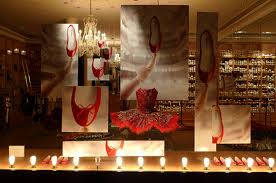
Repetto Paris Store Window Holiday theme. La!

Hello Mysylph readers and Repetto aficionados!

It’s a new year 2016 and there is some wonderful news stateside about Repetto-they have seen the light and opened a flagship store in Manhattan at 400 West Broadway in Soho. It is not some tiny little store, but an homage to the paris Repetto store in every conceivable light. Please stay tuned for more information regarding this store (I will try to keep you up to date on sales, events, etc). In the meantime, please see their website for more information on the U.S. location. I will be publishing an updated post on their store, selection and other info as it becomes available. Currently they are overstocked. A pair of pointe shoes with ribbons, and a pair of leather flats came to just $124. Persistence pays off….

[Welcome to the new updated list of US Repetto Suppliers for 2015! Sadly, many of the previous year’s suppliers have gone off Repetto, but several have also been added. It seems there is some activity with regard to promoting new accounts, or there has been an increased demand for the shoes (which I have heard) and I hope in some small way we are a part of that evolution.]

We have since switched to Grishko’s due to their availability, however-not because we do not LOVE Repettoes, but because when we have the Repettoes custom made we have to buy five pairs and this is often too expensive for me, and when we need additional pairs we got off track. We have no where near us to buy them currently and no one is usually able to fit properly when we do find them. I am planning a trip to the actual Repetto store for this purpose (some day). Hopefully, I will bring back things for you all and I will post them up for sale on this website (if I do). Little baubles, especially tutus……:)

Repetto’s distributor in New York has a storefront and they were very snooty when my daughter went in, while she was in school in New York. I think somehow I got charged twice for the same pair of shoes, too. Nevertheless, she still loves the shoes. They are solely a distributor and have in all, been very accommodating to us, on a whole. Additionally, some of these people have been replaced. The current contact is more helpful than some others in the past, but has completely no information about our previous custom order (they have no problem finding the bills and credit card payments though, usually). Not this time.

This underlines the need for Repetto to improve their stateside operations which are virtually nonexistent. That is probably why this list is so important, because it is these fine stores (listed below) which act as a go-between for you, so that you may have the best experience possible and enjoy your new Repetto items without constraint or reprisal. Repetto still has an almost iron-clad no return policy, especially on pointe shoes.

Some may wonder why I continue to post the list if I have these grievances with Repetto, and that is simply because the shoe, once obtained is one of the most incredible shoes on the planet (I love Repetto pointe shoes). Also, their other products are very well-made and beautiful, too; if you can get them. I would probably recommend wearing Repetto EVERYTHING if I could get them~ The only issue I have with their ballet product line is that their ballet bags are rather small, so if you buy one (as a keepsake) remember this and do not expect the cavernous yaw that American ballet dancers are used to.

Last year, about this time, I was informed by my rep at Repetto, who was very nice, that they were excited to tell me that in the new year (this past year) they would be receiving additional ballet items stateside, and planned a launch in January of 2014. Subsequently, as we no longer had contact with them after March 2014, I gave up hope as I heard nothing more about this.

However, in 2014, Repetto FR opened many retail boutiques all over Europe, and in most other countries you visit, but their main focus is on the ready-to-wear items. Opening Ceremony had for a limited time, as part of a display, romantic length tutus, which sold out astronomically quickly, and no more were planned to be ordered (I checked).

I do plan to renew my pestering of Repetto, when I have time to do so, in an effort to make more of their products available here, but so far my past complaints have not proved very helpful. I am just one voice. So, when you get the chance, you should also write to Repetto (in FRANCE) and complain, per your own motives. I do think a lot of voices are effective. Eventually.

Please contact these suppliers for your needs. Most of them are very willing to go to war for you-otherwise they would not deal with Repetto at all-so you must assume they LOVE their products (and their customers) very much, too! I do not envy them their positions, but I admire them…..Keep on Dancing!

Per the usual, please post comments or info and I will be glad to pass it on.

After Post Comment- Do not become overly excited about the numerous Discount Dance entries. Two of these may not be actual stores or may have a reason they are on the list at all, i.e., Repetto is confused about their warehouse operation versus their store, i.e. Repetto posts mailing addresses. The Anaheim store does not carry Repetto at all, only the Gamba, and this is the same through the catalogue. Their policy is to order for you, but that would require a fitting….and some knowledge of the product, which to date they have not obtained-

New York City Flagship Store

400 West Broadway

New York, NY

Telephone: (917) 999-0501

Hours: M-Sa 11:00-7:00
Sunday 12:00-6:00

Google Map Directions: http://bit.ly/1JIuctr
Website location information http://www.repetto.com/en/boutiques/united_states/new_york
 

DISCOUNT DANCE SUPPLY

1501 N.Raymond Ave, E

Anaheim CA  92801

714-970-0462


DANCE

225 E College Avenue

Appleton WI  54911

M-F 10-6

Sa 10-4

920-749-0305


BACKBAY DANCEWEAR

185 Cambridge St

Burlington MA  01803

781-273-3089

online catalogue available-check sizes in stock before ordering


CHICAGO DANCE SUPPLY

5301 N. Clark St. Fl.2

Chicago IL  60640

773-728-5344 (Karen/Bryan)

3/4 and full

batches 97 and 93 currently

*Had the G11 in stock in my size, but 2 WEEK RESUPPLY WOULD BE APPLICABLE FOR NEW ORDERs*

DIANA’S DANCEWEAR

8958 Blue Ash Road

Cincinnati OH  45242

513-792-0970


SYLVIA’S POINTE SHOES

101 North Main Street, Suite 16D

Crystal Lake IL  60014

By Appointment

815-477-8450

Sylvia’s Pointe Shoes (actually a master fitter who wore Repetto’s for 20 years) beware the Gamba afficionado who sells Repettos-not the same at all, even though both are now made by Repetto. She was able to provide some information, but still claimed the shoes (letters) were not relevant. (False.)* If you are ever out that way, does a three hour fitting session, and she has good relationship with Repetto!

*[I have later discovered the reason for this issue-they are not supposed to matter. Repetto actually changed the lasts at the time of that writing, so the shoes were actually significantly different. A new fitting would be required as Repetto does not like to make custom orders.]

ALLEGRO DANCE BOUTIQUE

2114 Central Street

Evanston IL  60201

847- 733-8460

only sells Gamba


DISCOUNT DANCE SUPPLY

180 Welles St. Ste 500

Forty Fort PA  18704

no phone listed


CAROLINA DANCEWEAR

1627 New Gardner Rd

Greensboro NC  27410-2001

M-F 10-7

Sa 10-4

Closed Su

336-856-9983


DANCER’S CLOSET

253 E Pittsburgh St

Greensburg PA  15601

M-Th 10-8

F-Sa 10-5

Closed Sunday

724-832-1501


BEAM + BARRE

352 Greenwich Av

Greenwich CT  06830

No hours obtained

203-622-0591

Spoke-carries 205, 207, NOT La Carlotta


ENCORE DANCEWEAR

364 Old Country Road

Hicksville NY  11801

M-W, F 10-6

Tu, Th 10-7

Sa 10-5

Closed Sundays

516-712-2567


BOYS DANCE TOO LLC

248 York St, Floor 1

Jersey City NJ  07302

732-648-6757


THE DANCE STORE

2509 S Robertson Blvd

Los Angeles CA  90034

310-271-3664


CARMEL DANCEWEAR

3004 Cleary Avenue

Metairie LA  70002

504-457-0101


DANCE SHOP

517 Holcombe Ave

Mobile AL  36606

251-473-3623


DANCE BAG

2221 McHenry Ave, Suite G

Modesto CA  95350

209-571-0369


PAS DE DEUX

328 East 11th Street

NY NY  10003

Closed Sunday

212-966-0026

??????


THE LEOTARD

2432 NE MLK Blvd

Portland OR  97212

No hours obtained

503-284-9244

@ weeks order time

very good follow-up/willing, friendly

discount

DANCE WORKS

3228 N University Ave

Provo UT  84604

801-375-4622


SAN FRANCISCO DANCEWEAR

659 Mission Street

San Francisco CA  94102

415-882-7087

Most well stocked provisioner of Repetto Pointe Shoes I have encountered. The staff is very helpful, but not entirely anxious to accommodate special requests. The owner, however, is a gem. If one can obtain the correct point shoe here, they have no problem in supplying it. They are prompt, courteous and there is a discount program for which you may register. Their Oakland store does not supply Repettoes.The shipping was cheap and they arrived in normal mail time by UPS.

The only difficulty I faced was again with the distributor and the point shoe itself. They still claim, despite my proof, that the shoes are identical except for slight variations. They still claim the letter is a date and will not accede to the fact that the B’s fit my daughter and the other letters do not. We have also found that the I’s fit well enough. But the B is the perfect shoe, in the 11’s and the 12’s.

REPERTOIRE DANCE

65 Garth Road

Scarsdale NY  10582

914-722-2440


BARRY’S CAPEZIO

2240 N. Scottsdale Road

Scottsdale AZ  85257

480-946-3651


DISCOUNT DANCE SUPPLY

213 Scranton Carbondale Hwy

Scranton PA  18508

570-558-9042


CENTER STAGE LTD

5012 University Way NE

Seattle WA  98105-4342

M-W, F 10-5

Th 10-7

Sa 10-5

Sun 12-4

206-527-4697


LABRIE SHOES & DANCE

375 Putnam Pike, Suite 6

Smithfield RI  02917

401-232-2266


JAZZ RAGS DANCEWEAR

25701 North Fwy

Spring TX  77380

281-364-1600


DANZAR CORP

590 Market Street

St. Augustine FL  32095

904-473-7401

danzarcorp@gmail.com

www.danzar.com

Carries full line, though some items are provided in limited quantities. Full service boutique and some items are online only-They carry, as a rule, in point shoes: La Carlotta, Julietta and Bayadere, also demi-pointes, tights, technique socks, leotards, sweater wraps, ballet bags, etc. I spoke with Colleen and she seemed ready, willing and able to assist in locating or procuring items. They will drop ship-)


BEE’S COSTUME’S CREATION/BALLET TO BLADES

6025 N. Wayne Rd

Westland MI  48185

734-728-7596


LINES FOR THE BODY

2035 Essex Road

Williston VT  05495

802-878-8988

?????

Guide to Ballet Training, Part 1 (for novices)


//www.googletagmanager.com/ns.html?id=GTM-5DBTHW
(function(w,d,s,l,i){w[l]=w[l]||[];w[l].push({‘gtm.start’:
new Date().getTime(),event:’gtm.js’});var f=d.getElementsByTagName(s)[0],
j=d.createElement(s),dl=l!=’dataLayer’?’&l=’+l:”;j.async=true;j.src=
‘//www.googletagmanager.com/gtm.js?id=’+i+dl;f.parentNode.insertBefore(j,f);
})(window,document,’script’,’dataLayer’,’GTM-5DBTHW’);

Part I

I think useful information on ballet schools is a bit hard to find on the Internet. Information about the process, what to do, expect, avoid. It’s not truthful when you do find it. You just jump in. But there is a process if your child wants a career in dance. There are many factors, but if you are starting out as we did, there are some things you should know, and if you ever need someone to talk to, you can always ask me what to do. I’ll try to help. That may not be the best recommendation, as I am certainly no expert-no one can be-but at least I am not politicking for anyone. Yes, my daughter is in ballet. I think this is her sixth year, maybe going on seven, I may have lost track.

According to my teachers eleven was a fine age to start then (9 or 10 being the youngest to begin seriously), but you are always hearing professional dancers (and non) stating they started nearer their birth. In my opinion, it is wrong for dancers to tell other dancers that, because they should know better. I think the Russian methodology is the best, for one thing, most of their dancers can concede to the age of around 10, because that is the earliest those schools take them and they begin, seriously, to study ballet. You have to wonder about the truth of other statements when the serious study of anything cannot begin much earlier, and certainly not ballet. They do say, and correctly, too, that they studied or took other dancing, gymnastics, etc., and this is probably true, but even they know it is not like ballet and is different. It might have helped them, but they do not feel the need to relate that usually because the training at those schools is so formidable as to put into the shadows any previous lesser instruction. There is really no comparison. Why? This will become apparent in a later section of the article.

I think there is a truly correct and comprehensive method to the study of ballet. I am always searching for that in schools, teachers, pictures, videos, performances. It is what you have to learn to look at first. I do not think my daughter would have known, starting out, what was good for her, and I am aggressive about what I desire and look for in any educational situation which affects my children. I have 3, and I went to my first audition, with my son, at SAB, about twenty-one years ago. He was not accepted, but continued to dance in Russian schools in NY until he was about 12 years old. He lost interest in it and the outside pressures of being a boy in ballet just became too much for him. He did learn some things about ballet, and sitting down to watch a ballet performance now, brings all of that back to him. He has always been a dancer, though, and never shies from performing. He is a ham. I have followed ballet for about 40 years.

I know how to go about looking, though I was not a professional dancer, I danced, and the choices were easier when I was growing up, and I was lucky to get good instruction. I had opportunities to dance professionally, but I finally realized in college that I did not want to become a dancer exclusively. In all ways, that decision is very personal to the dancer. Proper instruction, correct instruction is probably the most important piece of the ballet, or dancing, puzzle. I do not know how I was so lucky to have had the teachers I did, when I did, and where I did. Part of the reason this occurred, because although my mother did not accompany me at all, she had schooled me in the basics of ballet and dance knowledge, cautioning me extensively, prior to my going out and signing up for classes and because she bought me books, or gave them to me, and I read them. I was not averse to reading or listening. She also researched and made suggestions where I could go, and I went there and she turned out, and they turned out, to be right for me. After that, I found things on my own. It is cyclical. Things change in ballet schools sometimes as often as they do in public schools, and programs-one year it is good, the next, not so. It depends on who is teaching there at the time, the program, mission or philosophy, and some other factors. More variables affect parent and student over time, but initially, it should not be too difficult to find good training, despite the vast differences between schools. I think this constant “polishing” of the process, program, and elevator effect does not benefit every generation or level of dancers at the same school, for usually, in this country, in most cities and towns, there is nowhere to go for top ballet training you find. The problem is continuity, but it is also cost, change, greed, and outside influences. But when it gets to a point, you have to take it into your own hands and find what you are looking for-what your child needs.

You can go to the horse’s mouth in New York City, but what if you are not accepted at ABT or SAB? Well, because it is New York City, there are other good teachers and schools to go to. It is an international and cosmopolitan city and there is no dearth of dancers there.You can also find good ballet teachers in other places, but it is a crapshoot sometimes. You do not necessarily know. They can be in the strangest and most unlikely places, or they can be right around the corner-for the time being, anyway. That is why I look for Russian now. It is just so much easier. I do not have to look at French, American, or British systems, because my daughter now makes the decision on where she wants to study and what. As a parent, Russian just makes more sense, because Russia has a system of ballet training- the Vaganova method. It focuses on correct placement, the correct technique and levels, but most importantly, probably, to me, as a parent, it also is designed to reduce the possibility of injury in what is a very difficult art. I said art. Not sport. It is not athletic. It is discipline. It is part science of movement, part muscle training and part art, then mostly art.

Some parents do not always care about injury enough. Some parents do not realize the risk of injury. Some parents will not accept that their child might not have the facility required for the correct and plausible performance of ballet, or have children who have not had good training or training in time. Some parents were dancers and know exactly what to do! I think a lot of Russians have come to the U.S. and other places to teach ballet in the Vaganova style and for whatever reasons, it is a wonderful opportunity to learn ballet with them as they truly know more about it, are passionate about training, and knowledgeable. They have to start somewhere, and sometimes their options are not always the options extended to those teachers at the actual Vaganova schools where the children are handpicked, out of hundreds or thousands, for the opportunity to study ballet at a state funded school. Here, we bring our (often) faulty children, without any gymnastics, bad feet, poor attitude, inflexible backs or legs, poor posture, and even more frequently, our money, to ballet schools, without having had even a physical, or x-rays, to determine their capability for such a regimen, and demand them to make stars out of them. This is NOT how it is in Europe, and worse we bring our sense of  entitlement.

In America, it is about the students you get whose parents can afford (or not) ballet training, the mentality is different, and until recently, due to so much promotion, and competitions, such as YAGP, ballet was not in the headlines. Only by promoting it, has it become more popular, for boys and for girls, or considered a career option. Respectable. A sport (to make it acceptable to some Americans). And a sense of it being far less demanding, complicated and fickle, than it really is. In America, until people become more aware of its difficult requirements, many people will continue to frown upon it, as they are basically uncultured and working-class people, who have considered for several decades, ballet as a starving art form, or dance as being “gay,” or not an intellectual pursuit, nor as having the prospect of wealth. In some cases, it is a middle class parent who aspires to have their child succeed as a team dancer, or competition dancer, who enrolls their child in ballet, gymnastics, and theatre, modelling, etc., and for ballet, this focus is not correct. It is not a good formula, not one based on knowledge of the art of ballet, what is required, the prospects, but only the early physical success and a trophy as proof. A ballet dancer’s career spans a lot longer time than most professional athletes, actually, and unlike sports, but as in theatre, maturity is required, and artistry. Artistry is not acquired in early stages of youth, such as the understanding of the emotions and stories involved in some mature ballets, or the sense of freedom required, by many years of practice, to express oneself uniquely in performance of mature subject matter, and to do so fluidly. It is this part of ballet, I believe, where most dancers with physical potential actually fail in ballet. They are not artists and perhaps never will be.

Ballet is competitive, but first it is discipline. As it was designed, it was discipline for the longest time and then possibly, much later, some success might be possible. Maybe. It is easy to forget, in the little ballet studio, that there are a world of other dancers out there, and that they might have several distinct advantages over Americans, in general. Training is number one. Ballet, of course, had its starting point, too, like all dancers, but then a Golden Age (occurring almost 200 years later), and more structure (another 100 years), then becoming almost scientific (50 years), and again a resurgence (50 years), again (20 years) and again now (20 years). There is a phenomenal (and interesting) history to the art of ballet, but it was never Shun Yen, or gymnastics, or jazz, or a sport- at anytime in its development. It never should be or will be really viewed as an art and a sport, or it will truly cease to be ballet. The movement to even discuss this is one to capitalize on the financial opportunities and promotion of it as a commodity and everyone seems to getting into that game, but the step to make it an Olympic sport, like discus throwing is absurd.  This might improve everyone’s physical health, increase advertising demand, create paycaps for “artists” or make it acceptable overall to men, and others, but it will do absolutely nothing for the art of ballet. Ballet like that is without art. It is without stories, music, entrepreneurs, shows,E and in that arena, no true art is possible. Just gladiators and lions.

Everybody dances (if you go to New York), but in many places in between the coastal cities, the only dancing done is at weddings or a folk ensemble at school, or not at all, depending on your sex, religion, persuasion and coolness factor. It was not until I went to New York, in college, that I had occasion to go to clubs in the city where all the men (almost) got up and danced. Where I grew up, all of the above applied. The only professional or aspiring dancers you saw were in local companies or at weddings. It was a physical impairment of men, that they “could not dance,” would claim they “had no rhythm,” and no one made an effort to persuade them. NO one challenged any of these false hoods. Even now, it is extreme to label a child as “trans” when it is normal to go through questions of individual sexuality. Dancing has nothing to do with that, except it is still seen, in the US, and other places, to be largely “feminine” to express oneself, and there is still a morbid (private) fear, in this country at least, to be considered feminine, or unmanly, in any regard, with young men. So ballet will probably always suffer due to the few boys who manage to find their way into it. It is no less athletic for girls, but in ballet, boys can excel more obviously in many areas where other boys, outside of ballet, just do not and cannot ever hope to reap the benefits from. So in one sense, I see a practicality of noting that ballet is the most athletic, and totally physically demanding of any physical activity they can do, in a sense. Only to encourage boys to try it because there are a lot of really bad male dancers out there, and people are always saying they are “really good” and they are not, and I think this leads to resentment by some females, who are, much better, really, and have to work much harder to get noticed. They have to be perfect, but a boy can definitely “have a career” if he is mediocre. A girl has to be beyond perfect.

In my time, or slightly before it, one dancer, Jaques D’Amboise, made the attempt, and temporarily succeeded, in making ballet a course option in New York City public schools, but that was not successful, unfortunately. He started a foundation, however, to educate inner-city (and all) children and their parents, the public, and everyone else, about how positively dance had helped him off the streets, gave him options to pursue a career in ballet, and the theatre, and how he learned to dance. He has tried, chiefly, all of his life, to share that information and knowledge about dance, and he has been somewhat successful in spreading the word, but mostly he has been successful at providing an afterschool environment that gives children the chance to try dance and to see if they like it. That’s all you can do. If they are successful, he helps them pursue it further. Lost momentum. NO. It was the beginning of change, which takes time. He is correct in all that he says about dance, and for this reason, if no other, dance should be available to study to anyone who wants to pursue it, free of charge, just like sports in most schools, but it is not.

In most countries, there is the respect for ballet that there is in Russia, and not just ballet, but arts. There is great funding to the arts in other countries, but as in so many other ways, we are behind in many of these areas. They are just more cultured and differently structured. Most foreign countries at were once aristocratic political systems. As such, the monarchies investiture in the arts, or their countries people, was to educate and make available to them entertainment, education and culture that otherwise they would not have the ability to underwrite-in fact his was one of the very large platforms of government, besides, security. It is a matter now of patriotism and history, especially as it relates to countries which had a formidable part in the creation or perpetuation of ballet. it is part of their iconoclasty-they cannot give it up, or be seen to, as people then say, “Why do we continue to have a monarchy?” And there is also a gradual uncovering of that, or change, such as in Russia, where the ballet has increasingly, or at least more purposefully, taken the backing of the highest bidder. But as a result of it having being made available to everyone, at least in the past, or the effort to continue its conference, everyone there at least understands its importance, artistic significance, or has some underlying understanding of it and accepts it, etc…and many more people pursue culture, are actually cultured, attend shows and are involved in the making of art on many different levels, not for the money, but for the art. It is seen as part of a good education, education at all and is underwritten or subsidized. It is getting increasingly harder for those countries to even afford to keep ballet companies together in this economy.

In this country, frequently, it is the private contributions which make the performance of it or viewing of it possible to people without a lot of money, and it is nearly always a political nightmare to get funding or to make new art. The states do not support artists, art or the training up of artists. I think one of the reasons we have government is to decide what is good for everyone and necessary and if art is not, then very little else matters. Art is like the hyacinth for the soul. All work and no play makes Jack a dull boy and philistines. How can the parents of these people know where to take their child for ballet, when in today’s culture, what they want is a cheap afterschool program for its babysitting possibilities. It does not mean that if the child is exposed to dance, somehow, that they will not become enamored with it. Most likely they would respond to some form of art, and along with humanities, reading, other forms of culture, such as the making of other kinds of art, this exposure cause us to search within ourselves for deeper feelings and emotions, answers and humanity. These are requirements for people, and in art, all of the shared commonalities of people exist. It is a higher plane of functioning, not on an intellectual level, but on an emotional and expressive one. That is why, in our country, these independently run ballet schools are so very important. All together, whether they act accordingly, they are responsible for the education of our children, edifying them about the importance of art in society and life. They do a big part of the job with no subsidies, no review boards, networks, administration, doctors, child psychologists, theatres, funding or even newspapers or promotion. With no one willing to champion them. Some of them are frauds, some of them provide healthful physical activity and a needed outlet in a community, and some of them provide a basis from which to pursue art, but we cannot make those schools Sports Authorities in an effort to create a funding tunnel, because in the history of ballet, when the technique and art suffers, the ballet loses historical importance, great artists, and attendees. People come to expect more in viewing ballet-more acrobatics, more violence, more intensity, more stimuli, and this is not art.

But most of all, you take your daughters or sons to ballet to learn character, discipline, and whether you know it or not, etiquette, respect, music, following directions, beauty, grace, strength, work ethic, survival, and working as a group. Many of the same things you learn in karate or sports, school or church, theatre or art, you learn in ballet. It is important to know why you take them, to know what they need to learn, and when, and most importantly, it is important to know whom is doing the teaching, and if you do not know that you do not really know anything at all. I have heard of more than one famous dancer who was taken to ballet to use muscles after a debilitating illness or injury, and who became devotee. A brother who accompanied sisters, a YMCA after school programmer who got the bug, the late starter, the street dancer or troubled youth, and most times the student of the little local school whom has been accepted to a top program (frequently in another country) which ought to , in itself, exhibit the problem in a nutshell. It offers something you do not find in any other place. I do not mean teamwork or competitions, or glamour. In fact, ballet is not glamorous at all, particularly, unless you consider a sweaty, calloused, haggard, starving, and beat-up artist, glamorous. I feel it is mostly a discipline, first, and an art second, and possibly a profession, and somewhat glamorous, third. In the end, no one will probably remember you and most likely you will not ever be a household name, unless you are on Instagram, or model, are self-promoting, and then you are not really a dancer, are you?

Not all dancers become artists, but all dancers become more disciplined, somewhat. I think this depends largely on the training because part of it is ballet etiquette and philosophy, part of it is physiology, and another part is perseverance, determination, hunger, hard work, reaching the sublime art of ballet and mastering that, and it continually learning, working and training. It just never stops. It is frought with injury, if you start out wrong, and just gets worse as you try to correct those things that should have been nipped in the bud, all the time with the studio turning a blind eye and just continuing to take money, pushing and over training at a very early age. It starts out as non-competitive, though in many countries, I could not say that, because there, they expect it to lead to greatness, or not. But again, they have a system and if you are accepted into it, there are reasons that you were, and according to them you have the facility for ballet, and then they provide the training. As you get older, it is much harder to get a consensus, and in some ways, to professionals, more obvious to see who is possibly talented and who is not. Competitions, in a way, make this worse.

But no matter when you come away from ballet, as an aspiring professional or not, you keep what you learned for the rest of your life, whether you continue to dance or not. You will always be a dancer. If you have been dancing for at least a few years, you are already a dancer, no matter whether you are famous or not, and more and more people pursue dance, or parts of it, for exercise, and movement, as adults and as non-dancers, than before and in some ways this is good, some ways not so good, or misleading. Perhaps this is okay if you understand what it is not, but it also takes away from the whole purpose of ballet training, if only part of the form of it is followed, or part of the technique, such as in Barre classes is done (badly), but it is not proper ballet training, is bound to cause injury through repetition, so it is ballet, but without any or all of the safeguards involved, without experienced or knowledgeable teachers, taught en masse, like gym class. That is not ballet. NOT ballet. NOT BALLET. Why not go to one of the MANY adult ballet classes offered at studios for that purpose. There is nothing wrong with barre exercises, but it is a component of other parts which are important. It is dangerous to give it credence, even a foothold in the world of a fitness craze mentality. These people will have children and will say, “I know something”-a little knowledge is sometimes very dangerous.

I do not believe that doing barre makes you a dancer and to an actual ballet dancer it is hard to separate it, explain it, impossible to rationalize, or to even acknowledge it at all because it should go against everything they have ever learned or will learn. Ballet dancers are snobs, sometimes. This is good and part of ballet, but it is also a discredit to the world of people who could be supportive of ballet and whom for that very reason sometimes, are not. Ballet should be for everyone, to a point. These types of activities also send the false message to average people, “You, too, can look like a ballet dancer, have a “ballet” body, be a part of that, do pointe, etc.,” and they are selling an image, a club, as false a claim as any claim could be, marketed as a sport, unintentionally or not, and untruthfully, that barre makes you as good as a dancer, and worse that anyone can dance, any part of dance, and that they will be accepted (eventually) into a dance class and be able to do all of the movements required. I do not have a problem with saying “they can obtain a good body,” but I do have a problem with them saying “a ballet body.” They are just exploiting the word “ballet.”

In that sense, dance training needs to be begun properly, with the correct outlook and perspective. This is really true no matter the age it is started. Often students who have “danced” for many years find they are not right for ballet or not accepted into a serious ballet training environment or company. This happens for a few reasons. 1) The training for ballet has not been correct or prolonged 2) Other training has taken place which you cannot easily get rid of the effects or muscle memory of, without great effort, and 3) great effort is required for serious study of ballet, focus, observations and correction, over time, 4) Enough money is not available, and 5) Companies have many dancers applying and they can only take one, or a few. But, with that goal in mind, if that is the plan, private or not, it cannot be accomplished any other way than as above stated, for only then will you even be in the running, and very few people will succeed among the very best. Only a literal few have come from other backgrounds entirely and been successful in ballet. In that sense, alone, it is viewed as an art. If you cannot get past the guardians-you cannot get past them. So, what, at a local school, or primary school do you need to look for so as not to further reduce your chances? Good teachers and guardians, or choreographers.

End of Part 1

Q&A with Patrick Armand 2014|Indiana City Ballet


Q&A with Patrick Armand 2014 from Indianapolisperforming arts

City Ballet on Vimeo.

via Q&A with Patrick Armand 2014 on Vimeo.

Part 4 of Winning the Fight Against Fat: The Emergent Sylph


//www.googletagmanager.com/ns.html?id=GTM-5DBTHW
(function(w,d,s,l,i){w[l]=w[l]||[];w[l].push({‘gtm.start’:
new Date().getTime(),event:’gtm.js’});var f=d.getElementsByTagName(s)[0],
j=d.createElement(s),dl=l!=’dataLayer’?’&l=’+l:”;j.async=true;j.src=
‘//www.googletagmanager.com/gtm.js?id=’+i+dl;f.parentNode.insertBefore(j,f);
})(window,document,’script’,’dataLayer’,’GTM-5DBTHW’);

sweaty swan

Many children are dancing now. By child, I mean, anyone who has not reached adulthood, their final (ever-changing) post-adolescent body proportions, has not reached their full height, width, girth, started or regularly encountered their period, and anyone who is changing or growing constantly. These people need to be doubly cautious when it comes to providing enough and varied nutrients in their diets, and enough cannot be said here about this. It is a parent’s responsibility, and not only the child’s to make sure food is eaten, what and when. Weaning is gradual and in dance may need to be watched and continued until much later on because there is little time for student, dancer, teenager to make or prepare, shop for and eat all of the right things. Some people continue to grow into into their twenties, and men and women can fill-out later in life, and the body is always changing, going through new life cycles so there are adjustments to be expected aside from actual dancing regimens.

1) don’t cut calories drastically. instead, eat slightly smaller portions and better foods. you need your energy, otherwise you could injure yourself or just be too tired to work at your peak level while dieting. females should not cut calories more than 200-300 per day. that is, if you are eating 1500-1600 per day, you can safely go down to 1300-1400 to begin with. at the same level of exercise this will reduce you fat gradually, and

2) aim for many meals per day 5-6 at least over the course of a 10-12 hour day. you can lose more fat because more meals burn more calories [by increasing thermogenesis, the production of heat, in the body]. divide how many calories you expect to consume during the day by the number of meals you can schedule in and try to spread them out evenly.

Some things we are born with a certain amount of and we lose, and these things need to be nourished to continue to grow in our bodies and starving our bodies can result in their premature loss or depletion, such as protein and estrogen-one is short term and one long. Example, proteins which are eaten should frequently be “complete, and hormone replacement therapy is one option to low-estrogen. It is almost impossible to replenish certain things with food, just as wheat germ cannot really be “organic.” In the case of dancers, estrogen, and minerals may be on the decline or are lost with vigorous dancing. Water. Sugar. Fat. We need it, or some, to survive. We do want to try to choose our fats as often as possible, so I do not recommend eating prepared foods. it is one sure way to make a promising diet attempt a flat failure.

3) drink lots of water during the day. make sure you are thoroughly hydrated by consuming about 4 16 oz bottle of water per day or 2 32 oz ones. Take a vitamin supplement regularly and make sure to get your vitamin C, especially during cold months or at the onset of symptoms of a cold.

4) Some people swear by whey protein powder which is consumed in small amounts mixed with water and shaken in a tumbler or other cup. One after heavy exercise does reduce pain and speeds up muscle healing time. One would replace a protein portion, say in the afternoon snack period. Some food products naturally contain whey protein, so be careful not to overdo your protein: ricotta cheese, milk, yogurt (Greek of course), all cheeses (especially the cheap American variety). Sweet whey comes from the process that makes cheeses like cheddar, mozzarella, swiss and other cheeses made with rennet enzymes that coagulate casein. Most cheese-makers consider whey a waste product, according to “Whey to Go” by Liz Campbell. She says that the Norwegians and Greeks continue to process whey further to make brown or Mysost “whey cheeses” like Gjetost.  http://www.livestrong.com/article/254097-which-foods-contain-whey-protein/

Many foods and meal plans or choices exist which provide the needed essentials, tasty food choices and lots of options for different types of bodies, different or changing regimens, but which ones are suitable for dancers? What do dancers actually eat?  They will (almost) never divulge their dieting secrets or truths. What about the dancer who tours or performs part of the year and then is off? What about the dancer who performs more of the time, but different parts, such as a corp dancer compared to a soloist? What about the young dancer who is building her body to the desired form, or the dancer newly wedded with grueling performance and rehearsal schedules, student by increasing level, change of program, type, or dancer returning to classes and performance after injury or time off? What about the competition dancer? The varied genre dancer? The athletic dancer who runs and does cross-training to mold or sculpt? The student or university dancer? What about a new mother who gives birth and then returns to dancing? What about the older dancer or non-dancer who returns to dance or begins to take classes? All of these different people, different bodies, different genres, ages and styles or situations are different mainly because of their levels or types of activities, and many other variables.

lean muscled man

5) creatine is a naturally occurring fat burner, and is usually obtained via supplement because of the amount of food one would have to eat per day to get optimal levels of it for fat burning purposes, i.e., 500 g raw meat or fish every day. Since this is not realistic, supplementation with creatine is both prudent and advisable. Vegetarians and vegans do not get any creatine from food sources. Creatine levels in blood plasma are very low in these populations and it is one of the issues with vegetarian diets. How much is enough is debatable since you can’t get enough anyway. What is is most important about creatine is that athletes and dancers bleed it out. Whether you take a creatine supplement or not, is up to you, gauging whether it assists you is often the best way to find out. For those interested in reading more about it http://www.myfit.ca/foods_high_in_creatine.asp   . You decide.

6) increase you vegetable consumption-i did not say “fruit.” Vegetables are nutrient-dense, meaning they pack maximum nutrition value with minimal calories, leaving you more full on fewer calories. Consume five servings a day of veggies, whether as a snack, on a sandwich or on the side of a chicken breast. Order your next grass fed beef, lean chicken or turkey burger with fresh vegetables instead of french fries. Vary the vegetables you eat for maximum nutritional whollop. Check a chart if you have questions about what vegetables are sources of which vitamins, minerals and other things that are good for you.

In varying degrees some of these situations run to the similar, but each one and everyone is unique for many different reasons, and it isvery difficult to not group people into similar categories, without making specific allowances for each. But to start with there are obvious differences which can be accounted for. Good foods and bad foods for a start, but face it, when you are starving, there is not really any bad food choice. So, don’t starve yourself! These other varying differences between dancers are, in accountable for in ballet specifically, and in those persons desiring to be professional dancers, certain distinct differences which can be used for comparison are abundant, but do not really change the diet composition much, or what it should be. They may need more of some things or less of others, but the food stores should be basically the same, failing personal taste. Age, to me is important. A child needs more to grow into healthy adulthood, and I will say, “womanhood.” Our bodies need to have stores of certain things to grow into fertile and healthy women. We need to mature and pass through adolescence and puberty, and at this time, when our bodies are doing many natural things they need to do, it is unwise to alter the needs of the body without being an expert and especially starve it.

7) Don’t use commercial fat burners without exercising, and don’t rely on them to burn fat without following a healthy eating plan.  They are  more likely to cause or add to harm, as they, like all vitamins, too are supplements and do not replace actually nutritional value.

8) Consuming fiber makes you feel full, provides slow-burning carbs and lowers insulin to aid in lean muscle creation. Try to have 20-30 grams of fiber in your diet per day. refer to nutritional details for information. Bran cereals, oatmeal and beans are good sources of fiber.

Further, unless there is an unusual set of ethnic or economic conditions which exist to limit these dancers diets, or ability to lose or gain weight, the circumstances or food may remain fairly static and is determinable. Habits which begin to develop in adolescence may take part of a life to change or control or omit without assistance. In some foreign countries rickets, and many other diet deficiencies are present (gradually less so) and deformities have occurred over centuries of malnutrition. Until about 30 years ago, no one looked at ballet activity and even thought that it varied from any other activity, researched dancer stress, strain or diet, or compared it to that of other semi-professional or professional athletes, or considered that the needs or habits of dancers were entirely different, and truthfully there is a paucity of well-thought out or researched information that is up-to-date or readily available to help dancers, specifically.

9) Eliminate ALL junkfood. Pizza and hamburgers have some nutritional value and can be consumed once in a while. This includes SWEETS-if you want that form!

10) Eat the right amount of protein. Protein will be converted to fat if overconsumed. About 1 gram of protein per pound of your weight (not the desired weight) is adequate. Keep track. If you do overeat protein, do not be terribly concerned, just lower it to the correct level if possible the following day. 1.5 grams of protein per pound is not going to hurt you or cause you to put on weight unless it is consumed over a long period of time. This provides sufficient amino acids to maintain muscle mass, while keeping your total calorie count under control. A lot of dancers do not ingest enough protein, making them have less muscle definition. Others might consume too much and be bulky or muscle-bound. It is definitely a visual thing.

In later life, aside from the dangers of messing with the above-mentioned and more obvious issues, are old age, and as women, what we begin to lose as we get older, how we remain healthy and prepared for those inevitable changes and losses, and even in early age many things can occur, but get worse or become more obvious as other hormones are depleted, so it is extra important for female dancers to educate and demand information about these concerns, but also to plan ahead. Those accumulated losses can accrue and devastate the female body well before old age. Some very healthy people exist out there who would belie this fact, and there are others whom are prone to certain diseases. Brittle bones, lost teeth, cancer, haggard appearances, etc. it is all based on how we treat ourselves over time and genetics, so we need to be good to ourselves because as women, teenagers, and children. We need to be prepared to withstand a lot.

11) Remember those healthy fats? Eat more. They are underutilized by people trying to shed fat. You have to reduce calories to get rid of body fat but you cannot cut out healthy fats completely. They take longer to break down in your stomach and help control blood sugar levels leaving you feeling more satisfied and reducing food cravings. Again, avocados, fatty fish, like salmon and tilapia, olives, nuts, and oils such as olive, flaxseed and canola are good heathy fats to introduce into your diet. I recommend mixing one-half serving of butter to one tspn or more of olive oil until you become accustomed to reducing the level of butter in your diet. it is great for cooking, you know you are cooking with half the good fat and it practically never smokes! This works in recipes as well (most). Also, Wildwood brand vegenaise is absolutely delicious and as it comes in several flavors there is no need to risk adding ingredients for your sandwiches, dips or salads. Ask your grocery store to carry it or look for it at Sprouts retailers. They usually order it by the case and it is in the cold section. I do not recommend replacement of mayo, for those diehards like me, but this is a delicious alternative.

12) Share your cheat foods, but eat some, too. That way you do not feel cheated and you get some of the flavor while not consuming the whole pie. You are doing everyone a favor.

The history of each body is important, and its age, in determining proper needs and nutrition, but also important and calculable is its activity level, patterns of use, and wear and tear. I have said before how important it is to treat your dancer body well, pamper it as often as possible, use good care, hygiene, and do not overwork it. Work smart. In short, do not add stress to it where enough stress is already occurring. Good diet should relieve stress not contribute to it. Adequate rest is very important and most dancers at a pre-professional or professional level do not get enough rest. Proper nutrition, I mean really good nutrition, for each dancer, is often not evident in many dancers, particularly young ones, and this is disturbing to me. Why is more attention not paid to dancer health in schools? Why do any children in this country not have access to good medical care and planning when so many diseases can later be attributed to the lack of it? With all of our advances, we are not able to measure each persons general health adequately. Most people only begin to be concerned about their health when they are older and we worry, kind of like the old finding God or being repentant just before death and not before. It is not how we lived, but how we live, that is important. Each day, each choice, each change.

13) Eat breakfast! Balanced. Full. It is the most important meal of the day for a dancer and one who is dieting because it contains everything you need (a good start) and will most likely be burned off. Your body, whether you know it or not, has been starving all night long and it deserves to eat. Not eating breakfast will negatively impact everything you do all day, including your technique and dancing. Eat a goodly amount of protein for breakfast, too, about 1/4 to 1/3 of your daily intake-spread the rest over the other meals and snacks. Eat a complex (slow-burning) carb, like otameal or a whole grain waffle or pancake, and start with a piece of fruit (right when you wake up), even before breakfast to get your metabolism revving and provide that much needed surge of energy, before your day has begun. Start off right! Since this is the best time to consume sugars, maple syrup (real) or other sugar incorporated into your breakfast occasionally is fine, as they will most likely burn off. Remember to keep your portions normally sized. Larger portions (hoarding) will only cause your body to store fat. This is where discipline comes in-it does. But you can have an extra egg white or yolk, and don’t forget the option of having additional egg whites during the early part of the day, or at breakfast. You can actually have a lot of eggs at lunch and as snacks. Spinach and kale in your omelette are also good for you as well as throughout the day! Mushrooms and other breakfasty type veggies can be eaten now as well, safely. try to consume one potato in its skin per week instead of other types of potatoes. Yams provide completely different nutrients and are not really necessary during the dieting phase, but can be consumed after your optimal weight/shape is reached. 🙂 You will normally burn off most of this by mid-morning snack, except the slow-burning carbs which will continue to be used until well into the afternoon.

14) Dancers and people in general, should avoid any food that lists corn syrup in the ingredients.

A teenager has different diet requirements than a young adult or an older, mature woman, or an elderly person. Having dealt with the elderly, those dying of cancer and other illnesses, middle-aged women, younger women, teenagers, children, babies, athletes and dancers, I have had the experience of knowing they are all very DIFFERENT but all respond to good diet. We would all be in a better position, later, to watch sodium, sugar and fat, now. But comes the thought that you cannot worry all the time about food and you cannot necessarily afford the best choices or everything that would benefit you. Psychology of the woman, teenager, adult or child, is also a very big factor impacting personal eating styles, tastes and goals. Bad habits excluded, we all develop eating patterns that appear simple but can be quite complicated just the same. Just as the person who fails on a diet and gets fatter, suffers a blow to their ego, blames themselves for a fad diet not working, the person who never appears to have diet issues can be seriously malnourished and fall prey to eating disorders later if they gain an ounce, or they may have to eat to build strength or gain weight. People’s motivations and experiences, vanity, and self-loathing and love of ourselves all play a part on our diet and eating habits, right or wrong and you need to account for them, too. Most importantly, be kind to yourself and demand that others are respectful of your body differences and eating requirements. No one is going to do this for you-you have to be your own best advocate and discipline comes from yourself.

15) Sugar consumption. Taking in simple carbs (which is sugar) should be limited, especially the first week you are dieting. They should be eaten in a very limited quantity after that as they are stored as fat. Right after you exercise, or as stated above, before breakfast, they provide quick energy, replace depleted glycogen stores in the liver and replenish muscle. Since they are much abused and anticipated, it is important to give yourself some. Satisfy your sweet tooth occasionally with a piece of fruit, chocolate less often and soda NEVER! You can have tea, coffee, waters or diet soda (if you must, but it is really bad for you). Once your desired weight is reached, and lean muscle is overwhelming flab, you can safely have the occasional hot chocolate, mixed drink (1), or beer, as well as the occasional random dessert. But for now, give yourself a week, and then keep track of them ALL. They are your culprits along with breads-you know the crusty kind….

16) Rotate your carbs. What does this mean? It means, for dancers, that some days are not as exhausting as others. It means on lower energy days it is best to reduce the number of slow-burning/carbs you eat, because you don’t use as much energy, therefore what is not used will be stored as fat. If you consume 100 carbs per day (100 pounds) on some days you might eat 120-140 and on others you might only eat 80-100. You still need energy, but not as much, and mental activity (homework) requires carbs, and energy, too. You cannot starve your body, but try to reduce protion size, eating as many meals per day with perhaps lower serving levels, or cut out that handful of nuts at snacktime, or yogurt in the afternoon-maybe the whole afternoon snack, because on slow days, meal times may be longer, meaning your meals are better enjoyed, definitely have room, and may be enjoyed. No dash and run snacks, but make sure your spread you meals out over the same number of times if possible. that way when your body comes to expect the snack, it gets something, just half, etc….or only the protein. Also, don’t carb-load, for any reason without following the guidelines of carb-loading, particularly. http://m.runnersworld.com/nutrition-runners/carbo%E2%80%93loading-rules-run  It is not highly recommended for dancers. Another rule is to try to stop eating all carbs (if possible) after 4pm. THis does not include veggies with dinner or your usual bedtime snack, just slow-burning carbs, like most grains.

Besides psychology and age is activity level and this can varies in all dancers. Are you lethargic, energetic or do you conserve your energy or expend it all very quickly? Do you give 110% to your regimen, barre, allegro, variation, or performance. Do you go the extra mile or leave off after the first combination. Do you mark the exercises, sit-out? What are your habits? Good or bad, they account for calories and may be the difference between burning fat or other carbs, never getting to the fat. What is your level of consistency each day in the number of or type of dancing classes/performances or exercises that you do? When do you expend the most energy? At what point do you become tired, peek, or have to stop and why? What did you eat today? What is your level of activity, cross-training or aerobic exercise out of class? Are you prone to putting on weight or do you have to eat just to keep it on? Are you recently losing or gaining weight due to increased/decreased activity levels? Are you battling with other health issues, poor thyroid, cholesterol or salt? Are you diabetic? What time of the month is it? All of these factors combine to make your body chemistry or system completely unique and also affect how it loses or gains weight and builds muscle or mass, uses fat, carbs or glucose, etc., and how rapidly it tires or becomes apparently or not, worn out. It is possible to improve other areas of your dancing or techniques regardless of diet, for a better, more focused workout-try this-http://www.pointemagazine.com/issues/augustseptember-2011/your-best-body-defy-your-dna

17) If you like caffeine, drink one cup of coffee before your classes and another later in the day, say before rehearsals or a performance. It is known to enhance a workout. It causes the body to rely on more fat for fuel, rather than glucose. The effect of it, however is lessened when you consume it with, or on top of a high-carb meal. Try to consume it well after breakfast, but before class and eat it with healthy fats or protein if you are eating with or near it. Skip cream and sugar with it always and do not overdo it or drink it at other times of the day as you will develop a resistance to its fat-burning qualities.

18) Reduce or omit starchy carbs. Potatoes, rice, pasta and breads (especially consumed at the same time or meal) provides your body with more than it needs for energy and glycogen stores so what is leftover will be stored as fat. You do not have to eliminate them completely, and whatver your consumption of them, it should be spread over the life of your diet, and not omitted just for the diet. It is eating with purpose and good sense which results in permanent weightloss and not binge eating. You should, however, really omit or cut back on them while trying to reach your desired weight and shed body fat. They are the main problem with mismanaged carbs (sugars). Whether dietin gor not, limit their intake to 3-5 servings a day where most needed and as I said before, none after 4pm. A serving size is 1/2 cup to 1 cup per rice, pasta or sliced potatoes. Obviously, the rice is closer to a cup and not a cup of potatoes! Pasta servings should be fairly small when eaten and I do not recommend it if you want to see immediate results. You are what you eat.

I will attempt to post additional meal plans and advice as I come across it, adding additional parts to this article, so that some people can have a goto menu plan perhaps when they are too busy to plan or lose interest or imagination. Also, I would greatly appreciate comments and feedback on this as it is for dancers and any little bit of practical advice really helps people as long as it is related and in keeping with the idea of the piece. The best sources of diets for dancers are dancers themselves and though no one wants to interfere with their money-making, a little advice goes a long way from a professional  or a novice, and it is just mean to keep it to oneself. Mean and shallow. Why hold on to something that is useful knowledge, hurting lost people in the process, and then writing a book or doing a paid interview, expecting them to then buy it? I would more likely buy the book of someone I liked who helped me previously than I would someone who jealously guarded it until someone offered them money for it. So, don’t be stingy with the knowledge, not every idea or meal plan merits a book.

So, due to their complex nature, I am not going to deal with many more of these medical and scientific (but related) issues because the article content and my knowledge would have to be far above my ability or qualifications to guide or assist those affected in their thinking, and is not intended as a practicum or rulebook for those with any other issues such as the ones listed. These are factors to consider when dieting, how much, portion size and that after 6 meal or snack, whether you need additional carbs or not, and to make you start thinking about what and when you eat. We even use energy when we are sleeping but are you choosing what energy and components you use while sleeping? Or is your body just depleting stores of energy and nutrients you need.

Obviously, any issues need to be taken into account and treated by a professional medical practitioner and/or nutritionist. Instead, I am approaching this from the point of view of any dancer who is basically healthy and eats clean and simple, but who wants to turn their fat into lean muscle, wants to make their body the best asset it can be and this is not about exercise, this is about eating foods which give energy, provide options and flexibility, and protect you from injuring yourself, while trying to obtain your best body appearance as a dancer.

If you have been told that you should wear a long skirt until your are “ready,” struggle with areas of resistance, would like to have leaner legs, arms or abdomen, you might be very close to your goals, but you will have to have a leaner diet with slow-burning carbs, less sugar and likely more protein, so be careful not to mismanage your carbs. Understand simple and complex. If you have lost a lot of weight recently, or are still losing it, gradually, but have so far not been able to discern much muscle, want to control how you lose it or appear, and despite continued efforts at dancing, then you might also want to add cardio to one of your workouts daily, and manage your carbs and protein better, this article might be useful for you, but I would be more concerned with eating enough, healing and making sure I got those extra vitamins and minerals and didn’t lose too much weight than changing my diet completely. Chances are you are doing some things right! If you are weak, skinny and no muscle tissue is discernible, than you have to build muscle and strength, this diet probably might help you to learn what you can add safely, though your purpose would not be to lose weight.

If you want to begin discovering yourself underneath a very small layer of fat, seeing your muscles, as they are naturally, with a rigorous program of ballet in place, then this method might help if you have the discipline to stick with the meal ideas, make small goals and stick to your guns, follow the advice and stay constantly on the lookout for better foods for you which meet roughly the same criteria.  It might be safe to say that after one year has passed since reading this article, you come back and share your experiences and knowledge and story.

This article is not about dieting, it is about eating. If you want to see slow but perceptible change and begin a path to an improved image in front of the mirror, then there is going to be change which is visible, but not plenty here to motivate, inspire or sustain that journey as it is about a life of commitment and not a fad diet-but may it especially be a continued one for a long and healthy life of self-love and self-accomplishment. It is your body and is never going to look like someone else’s body no matter what you do! No diet is ever going to reveal another body-just yours, but you might be surprised of what you are capable of….and the body you can reveal by eating right. This article also assumes you dance at least 10 hours per week in a serious ballet or dance program, but it is written for someone who is newly dancing everyday for 6-8 hours or more per day every day. And, oh-take one day OFF.

Keep on Dancing!

Part 3 of Winning the War Against Fat: The Emergent Sylph


//www.googletagmanager.com/ns.html?id=GTM-5DBTHW
(function(w,d,s,l,i){w[l]=w[l]||[];w[l].push({‘gtm.start’:
new Date().getTime(),event:’gtm.js’});var f=d.getElementsByTagName(s)[0],
j=d.createElement(s),dl=l!=’dataLayer’?’&l=’+l:”;j.async=true;j.src=
‘//www.googletagmanager.com/gtm.js?id=’+i+dl;f.parentNode.insertBefore(j,f);
})(window,document,’script’,’dataLayer’,’GTM-5DBTHW’);
When I was growing up, people did not say that dancers were disciplined, but it was true. You could see it in their form. Also, it was much harder and more expensive to obtain organic foods, locally grown foods, or to find food without dextrose, sucrose, or corn syrup. Packaging was not very helpful and we did not have the Internet. Dancers were still seen somewhat as freaks, and so were yogis, health ‘nuts’, etc…. and now they are acceptable, but dancers still are, to some extent, still seen as freaks, trading a normal lifestyle for one of sacrifice, discipline and commitment, whether in a studio, on a stage, as a general fast, cleanse, eating regimen or health nut. At best we are acceptable as athletes, but this is not really what we are, is it? But when a dancer is judged, they are judged on the body, on the line, on what they can do on stage, in under 2 minutes, to a much greater degree than any other athlete. It behooves a dancer to have a healthy outlook and a positive one on the benefits of good food and a healthy lifestyle, because you have to be strong and resolute. It’s a matter of doing the best you can with what you’ve got. If you are starving your instrument, your art will suffer, eventually, because YOU will. The audience, judging public, professional or otherwise, has already decided what level of discipline you are based on how you look that quickly, too. I know many a very lazy dancer who is very slim and some very hard working ones who are not, but they will generally cast the slim ones-not always. Competition is fierce.

But, it is definitely how you appear, as a performer, and also what you do, so it is not uncommon for a choreographer or company to cast on body type, then teach teach teach the work or variation to a less accomplished dancer because they want a certain look. Artist has a much different connotation than dancer. It also implies age , maturity and wisdom, but you do not have to wait to eat smart. To begin with, size even determines what roles you get or don’t get and what you are permitted to or encouraged to wear, and this is largely based on how the choreographer or director or public perceives you or will perceive you (and how many costumes they want to keep on hand of various sizes) or how much sewing they reasonably want to do. As many factors as they can control, they do attempt to control and if you are a ballet dancer, you will have to control what you eat for longevity, health and appearance. No one has bought a ticket yet to see Sumo wrestlers perform ballet, but they have (regrettably) bought tickets to see a fashion show, where a skeletal body is the norm for hanging ballet clothes, and then these bodies typify what we as dancers, expect to see at a performance of actual dancing or in ourselves. Not fair? Who cares if they can’t dance, or can’t dance as well? Sometimes we are surprised that dancers are never like supermodels and when you see a real company of dancers, they are all muscular and few are starving. Well, some are very thin, but they do exercise more than average dancers and their calorie intake can be higher, also their basic metabolisms might run hotter more often. The first step is to reach that plateau, and then deal with adding calories, changing or inspiring your metabolism to work faster, and dancing all day and all night. La!

Sometimes we are even more surprised at the amount of actual energy required (and food) to perform variations, a full-length ballet, and support the work that goes into it, or more understandably how tired we are after a private, rehearsal or performance. The week after performances a lot of people are out. To remain healthy is a big job and the most important one. Sometimes time must be taken off to let the body heal, restore and replenish-rest. Sometimes that is just not possible and we have to be as fit and prepared for that inevitability, as dancers, as possible. Fit for dancing. Individual dance performances and exercise are short bursts of energy repeated after resting, usually, but any dancer who has just walked out from her half-hour private, will have the look of exhaustion and she is just working on a 2 minute piece. It takes some getting used to, building up for, and effort to sustain dancing for that long and you just do not get that at the barre. Even greater stamina is required for actual full-length performances, tours, seasons, and professional ballet in general. It is a constant juggling act, so I think food and dancers must be sympatico, because there is just too much on their plates already.

So, importantly, there are all exercise levels in ballet, but some must be obtained regularly to lose FAT. At your level of dancing this may not be possible, so you might have to crosstrain or get on the elliptical or spin or whatever to lose weight, just so the calories you are eating to work as hard as you must, do not exceed the calories you need, and are ingesting (fats, carbs and protein). Mostly you want to reduce your store. Be efficient, clean house. That has to be balanced against going home, sleeping, time off, illness, sabbaticals, and school, largely sedentary activities for a dancer. Dancers do not like to sit. Rather, you prepare the muscles at barre for the way they will be used in dancing and that is simply not fat burning exercise! So you have to eat less of certain things for now.

Slow-burning carbs are good choices for dancers, especially early in the day http://healthyeating.sfgate.com/list-slow-carbs-lose-weight-12116.html  These would also include oatmeal (steel cut), and quinoa. For other kinds of energy, such as a pick-me-up or morning activity, and lets not forget the other kind of fast burning sugars/carbs for energy after sleep for instance, when your body is depleted of it. http://www.muscleandbodymag.com/10-carb-commandments/     of which canteloupe, an apple, orange or pear might do the trick, given time to work, and then followed by a normal breakfast of protein and slow-burning carbs for your classes. Many meals in the day provide constant energy and nutrients, which a dancer needs, and sustains them for long days of varying kinds of movement intensity. The idea is to keep fueling your body when you need it, and then to heal, regenerate and continue to burn fat and use energy you provide, even when it sleeps. Late night snacks are not verboten, just controlled-the same as dinner after 6. A midmorning and afternoon snack are just that, not meals, and anything from a piece of small bagel and water or yogurt and blueberries to some lentils and quinoa (pre-made) with tomatoes and chicken broth can do the trick, or cottage cheese, milk and a small serving of peanut butter, or meat. Just make sure your food is clean and wholesome with no added fats or sugars. Healthy fats are numerous and should account for about 20% of your daily intake of fats: avocado, olive oil, even butter can be healthy fats, but there are many to choose from. a characteristic of healthy fat is that its polyunsaturated fats fat count is much higher than either its trans or saturated fat levels, discernible from-reading the package or from a nutrition source. Also, avoid deli meats if at all possible, or within the “fat” rule, as most deli meats contain things you do not want and “oven-roasted is always better than any other kind as the meat is probably just rubbed as opposed to soaked in brine etc., before it is baked. But make sure. Cured or uncured does not necessarily connote this.

krave snack


As performances for the novice, pre-professional or recreational dancer, just do not last that long, or come that frequently, there would seem to be little if any change necessary in diet, but as you go you do increase your caloric intake because you need more energy, such as for that variation, not less, and there is gap with regard to dancers who are new to this and virtually no help in understanding or dealing with it available. There is almost no mercy for students, because that is going to be displayed and no matter the age, they look at the package-how well you dance, pose, and what you look like. Sometimes there is device and trickery, but there is almost always a moment of truth for a dancer, when all is exposed and the fat shows or lack of lean muscle shows. The result of working so hard everyday should be visible, the labor, the effort, the pain, but it does not always meet our expectations and you cannot fathom why or what is causing it. Sometimes there are only minor things about ourselves that we want to change and as dancers we know that requires work-another small part of our attention focused on that trouble area to fix-no matter what we do, it is always going to be a juggling act. Learning to eat healthier is the first step to controlling the weight and to seeing a leaner you.

It might be our backs, the space right at the top of our thighs where there is a little bit of fat (legs rub together), it might be calves, arms, bosom, or torso, but it is usually there and looking right back at us when we look in the mirror, or noticeable to people onstage. Chances are, when we put on our clothes, or take them all off, everything fits, looks beautiful and is fine, and we love ourselves, so we say, “I am just fine.” We work on other things and we cave in to hunger cravings, and that is an important word, c-r-a-v-i-n-g-s, when we get a break. That is why we do not want to get caught out not having edible food, which we have prepared, or accounted for, handy. We eat whatever is available or easy or we have prepared to eat, but is this what we need to build the body we want? We have to teach ourselves what is right and acceptable for our own body chemistry and activity level and for every woman, this is a job, it is habits and discipline, and knowledge of ourselves, and time to develop. We have to work on it, sometimes inch by inch, because as dancers, our bodies are observed very closely, judged and they are our tools. Dancers later into life deal with other issues. So this project sometimes never stops, particularly if we have been unsuccessful in our dieting attempts, suffer from low self esteem, believe we come from FAT people, have big bones, are large, are flabby, and in fact, some of these diets can result in extra fat stores being accumulated just in case we decide to diet again, compounding our problems. Or if something is working, we often don’t change at all, but our bodies DO, making that diet ultimately wrong later on. The truth is, the body fights back!

The body is a survivor. It is the perfect example of the survival of the fittest. Fat people or people’s bodies who respond normally to having food taken away are healthier, stronger, fitter, champion bodies, because they have come across this before and determined to survive and keep your health, keep you alive, they fight back in a warrior-like and genius way. Bodies that disintegrate and lose weight, starve easily, or as a way of life, are probably not all that healthy-they don’t have a safety switch that turns off when they have depleted their bodies important store of nutrients. So take some comfort in your body working perfectly. They take what they need to survive, and they sort out the contents, nutrients, and various chemicals later, as their first mission is to inspire you, urge you, to eat. They might overeat to protect you, to prepare you, they are greedy. They are a force to be reckoned with. You cannot win that way.

http://www.livestrong.com/article/162703-healthy-diets-for-dancers/     If this is a fairly good diet for dancers who are not working on toning and making leaner muscle, then the diet has to be modified slightly. Very slightly, because the thinking is sound. Some actual dancer meals from Ballet Austin http://www.balletaustin.org/blog/?p=2810  (again, they do not specify DIETing), but good so far and these I focus on as lunch. A dieting dance needs to eat just the right foods after her dancing day is done or after 4pm and 6pm and 8pm (if she eats at all-and she will). High energy snacks include http://www.danceinforma.com/USA_magazine/2014/06/03/high-energy-snacks-young-dancer/    and http://pointemagazine.com/issues/augustseptember-2012/dance-bag-diet   Remember to keep portions of snack very small. Dinners typically include protein and veggies, no grains for dieters or fruit (sugar) and certainly not past about 4pm. A late snack before bed can include some healing carbs and protein, preferably casein such as found in milk and cottage cheese and other snacks which might promote healing and energy creation during the night of the leftovers and chosen. I refer to this very cautious article for dancers attempting the sylphlike body of a ballet dancer, as it addresses and precipitates eating disorders which are caused generally by this attempt. http://www.contemporary-dance.org/dancer-diet.html

Depending on your level of activity, you need to balance your caloric intake with a healthy diet, and most importantly one that provides energy, builds muscle, and enables you to carry on the endurance activities that professional or semi-professional dancing requires. Also, it needs to be palatable food, nutritious food, and you need to replace vitamins and minerals that you lose while dancing or exercising rigorously. Any student that takes a break from dancing can put on weight. Expect it. First, it is water weight and then it is fat. When you return to dancing the process starts all over again. The body re-adapts. Unless you have come off a starvation or carb or other diet where your body has been denied what it normally uses for energy, and it is in a recovery mode, hence storing up more glucose and fat for later use (and it will redouble its efforts each time), you are in a pretty good place to get to where you want to be, eventually, at that point in time. You may not think so, but you are. Any diet should start from a baseline approach, meaning eat what you eat normally beforehand for a few weeks. If your body is in shock and working to replenish those lost supplies, then you had better approach your diet in a more patient and less demanding way, anyway, because it will win if you try to trick it, starve it or control it too aggressively-that is a built in response. The real trick is to give your body exactly what it needs in terms of nutrition, water, fats and sugars, so that it doesn’t try to compete with your sylph. That way you both win.