No one can seem to find my book. It is posted in the drop-down section on the top of the Home Page, under Book. But even my daughter said she could not “find” it because the tweets that went out were titled “private”. That is because I used those links to tag the pages only. The fact is you cannot promote a PAGE on WordPress. Yes, it’s true. I am thinking about whether to bind it and sell it, sell digitalized sections, like on itunes, or just give it away and ask for donations. It is a pretty good little book for all that. I wrote it for my daughter. I am sorry about that, as it appears to confuse people, but WordPress is not perfect. It is a little history of ballet (to be followed by more), but it is encapsulated into a small number of pages of information for the busy reader, and not one who has time to devour a 700 page books on the shadings of the history of ballet.
I am very wary of one source that everyone can go to for a thing anyway. It never works out, as it is all one person’s perspective of the thing and you could read several perspectives and get a more objective opinion by picking and choosing your authors. For years there was one book of art history, for example, Horst W. Jansen’s ART HISTORY. When I went to NYU, it was read in two parts in two semesters by every student: art history, art, or as an elective by just about anyone. My art teacher told me this before going to college, so I bought the book (I was always buying up books-which all of my mates have found to be a nuisance when moving) in a nearly demolished condition and read it. I could have taken the AP test at the time, but avoided art history after that assiduously, and took other art history course with more relish, fin de siecle, architecture, Japanese, John Berger, perspective and other antiquated texts by famous and not-so famous Italian artists-my own perspective and not one shared by a group, after which you all know the same thing, make comparisons using the same jumping off point, like evolution, or the bible. Perhaps there is another explanation, if only we pause to think.
I went to galleries, and made art, and as I had already read my mother’s college textbooks on art history as a child, these images were all familiar to me. There is another way of having information drummed into you, like falling asleep during infomercials, when you are married to someone who will not turn off the tv! Even today, I find myself suddenly saying “Oh, Diane!”, doing various aerobic exercises suddenly and having a strange fascination and compulsion for ordering anything As Seen On TV. Some things stay with you, and no matter how you may try to shake them, they will not go away. This, is a very dangerous thing in art and religion. It causes people to make art just like other people, and to repeat things nonsensically, even wars.
In art, seeing the art, reading the details, and making the art are the only requirements. One definitely does not have to have knowledge of art history to make art. One can just do it. Literature is nearly the same. In fact, if one reads too much, I am of the opinion, that their art will take on naturally acquired elements of other masterpieces, other voices, and who is not guilty of looking at another person on the dance floor, whether to compare oneself to them or to copy their moves? Who says they are right? Inspired, original? Being inspired by the painter next to you is different, as the expressionists, impressionists, and other masters inspired each other, they stole, and that is occurring all the time in music as well. It may only be copied because it is popular/is selling. But every period of great art is preceded by an artist who sets or leads that genre or faction. In a sense, he (because it was always a he) was the true initiator of the style, and even so, no one often has considered that until history is put down. So there are some things you have to find in books. It makes the understanding of development easier and you know who did what, unless they argue, such as with Morse and his code, or the Italian gentleman (what’s his name?), or a dictionary-to get the word right.
And people were so busy arguing about that, at the time, that they forgot completely that Morse was a painter of some renown, an academician, and many other things, but a painter first. Although his painting were not very painterly, he used art as a means of communication, like words, diagrams. He caught an essence of something that would otherwise have been missed. He taught at NYU and painted many paintings before developing that code. His painting of the Louvre sold for about $2,000,000, I think, and was exhibited at the gallery I worked at at NYU. Grey. We had to post a guard so nobody touched it. Of course everyone wants to touch things, to connect with the artist….who was dead. But nevertheless, people reached out and boop! another fingerprint on the masterpiece (?). But without people, even dumb ones, being disposed to connect with art, there would not be any, no need for it. The fact that even ignorant people want to connect with art should say something. A picture is worth a thousand words.
So music and the other arts would seem to follow, I learned in this way, and to find the progenitor of a style of music might be easy at the time, but quickly is lost again in the many productions that follow in an effort to capitalize on the success of that thing. This is business-not to be confused with art. It is archivists and djs, mostly, who are able to tell us which came first and make that an interesting tableau for their programs, books and lecture tours. But there is such a thing as a bad dj, producer, etc. Usually they tend to put things in the wrong order. We want to be led along, told a story, shown a tableau, experience a symphony, be moved by the moving and spoken to by the articulate. We want to be dumb. That is a source of business. A demand?What is it with people who call themselves something and fail to move us to the adjudicated point? It is rarely worth it to pay the price of admission to find out and only be disappointed again. I know a lot of dancers but would pay only to see certain ones perform, because I feel they have no statement to make, and I want to be entertained-forget. Be dumb. I am the woman in the mint commercial, being blown by a minty wind. carried away by Calgon, and Yule Gibbons, munching on that branch. Things I cannot do, like politics, I want done for me. That is why I am paying X amount of dollars to be carried away.
What would we do without them? Listen to the music. Look at the art. Watch the dancing. Life goes on and in it we have a few moments, sometimes more in which we are extremely lucky to be part of something bigger than ourselves, a herald of a new event, a new vision, something fresh, inspirational, memorable. Monumental. Big. I have seen a few big things and knew they would be big, remembered, permanent. But not many, a few. I keep looking for new things. In ballet, as in music, and art, it is the public opinion that counts. It is the listening to the music that other people have often put before us, making themselves a necessary evil, in order to get a percentage of that product going out the door, take some responsibility for its success and demands rewards, or a part of the pie. Whether anyone involved in the selling of these products admits it or not, theirs is a percentage-based endeavor and has nothing whatsoever to do with the art. It has to do with their greed usually, their ego always, and their own motives without a doubt. Almost never! has it to do with just being a part of something historically important, useful or necessary to carry on art.
A presenter is important to artists, who so often fail at business tasks, as they are busy becoming good at their art, learning to play their instruments, draw and paint, make films, dance, choreograph. Whatever they do, if they are good enough at it, they must totally devote themselves to the perfection of it and virtually nothing else. How else could they become great artists? Sometimes it is because of the presenter only that we too see these events, witness this spectacle or brush this greatness. Usually, this is lost in the the minds of the individuals rapt in awe at their opportunity, their self-importance, their luck. They never see the presenter, or think of him/her, they remember the art, but not the reason they saw it, why they had that opportunity, ot how it all came together. That is magic then, sort of, isn’t it? Like the great oz behind the scenes, but not really doing it for his own gratification, but rather creating something bigger out of smaller parts, a show, something to remember in life that was truly amazing, a standout, history.
Well, these days I do not think a lot of them are.
Merry Christmas and Happy New Year! Perfect little cherub mine! What was important about this year? Ooh, too much to really go into detail about completely. A thinking year, rather than a writing one. What am I thankful for? Me. I am thankful for me. I am sitting at my desk, really a makeshift bingo table, surrounded by a mound of paperwork and receipts that I have to pile through, and too soon the holiday will be over and I will have to get down to business. But right this minute as I look at the reflection of the Christmas-treeless house in my toaster (which is on my desk), I am thankful for the people in my life. I am thankful to be able to accept celebrating Christmas without the fru-fru which is associated with it, and instead of looking at the meaning, finding the meaning. I have three pine cones and just two of them are on the tree currently, but the other has not fallen far away from it as it turns out. Pine cones are usually near the pine tree, but sometimes I have found one well away from any pine tree, but I always notice a pine cone-I know what it is. It stands out. I never really understood what other parents went through when a child left home, even to go to a boarding school-same thing really. In fact I have never approved of boarding schools. Once they are gone, there is always another program, another school, another reason, until they are truly gone. Don’t want to think about that! My daughter is finally home on her winter break.
I am trying to get as much out of her as I can and it is not enough information, not enough cuddling, not enough of all that is her-like a lemon that you just cannot keep squeezing because it only has so much juice. I am waited to see if she had it in her to go back, on her own. What she would do. So many questions-NO answers, only action to keep on track, keep moving forward. Sometimes sadly, one can never go back. Only in our minds. That process of looking back is a dangerous one in a way, signalling no new action ahead.
Sometimes it would be hard for a teenager to ever think that one day, they might want to go back to those days when they were with their siblings, their parents, grandparents, pets, their friends, their first loves, their naivete and innocence, but I see it very clearly (almost) now, and rushing over the rocks and coals at 15 becomes sitting on them and looking around at 100. You want to hold everyone, every moment, every nuance, look around, enjoy the tapestry that has been your real-life, cherish those memories. Right now you are busy making those memories. Maybe it is not too wise to look back too soon, for we might get into the habit of it, slowing down, thinking before we act. BAH!!!
She came home for only about 10 days and was fully encased in a stage of adolescence which I remember well-the one where you think the worst of yourself, the best of yourself, you complain, you cheer, you whine, you laugh, you are sick with a cold and things could not seem to be good at all, now or ever, and the next minute is the best time of your life-and she left not even four months ago as my baby girl. She still is though and she wants to say so, she instead says, “Mom, stop babying me.” I do not know what to say to her. I have changed, too. Sort of. But in this particular stage of adolescence you might feel miserable and you feel as if everyone sees the changes too, but they don’t. Your body is changing, you have matured suddenly, as if you just came out of a cocoon, and you are not sure the world is trustworthy or going to let you be what you want to be more than anything no matter how hard you try. Some of the things you have banked on carrying you through, fail the test of time, and you realize you are judged on more grown-up, serious merits, like whether you can deliver, and then, later, with aplomb. Other facets of yourself you have not even discovered yet, let alone polished, and it is often difficult to see those even as they appear day by day. Sometimes you feel you have wings to fly, other days you a a grounded bird.
I remember her speech when she was little, and Barney, the cat, little tiny toys and dolls, the dress-up and dancing-there was a song she sang all the time with a little lisp-“butterfee, butterfee, fee fee aweeee!!!!” and it literally brings tears to my eyes. I am a softy and ridiculous! And now right before my very eyes, as it probably should be, she has to become a young woman-there, while I am here. I do not want to miss any of it, for my own reasons. Entitlement-need I say more? While she has been gone I have let myself go-hair tousled and put hurriedly into a clip, the same shirt for sometimes two days before I notice anything, the same old clothes, food, dinners, shoes, and sights and sounds. Sometimes I do not even look at my nails. Depression, but I have been here before, and occasionally when I do think about it, I am surprised at myself, it not being worse than it is (pat pat pat), and just feeling sorry for myself and enjoying it-and that is okay-to a point. But my job isn’t really done yet, is it? I did say I was an artist, and crazy, for lack of funds does not make me an “eccentric.” It is though I am in mourning or just want to be-now if I could put that to good use. I want to be happy for her, want to encourage her, but a selfish little part of me just stands there stubbornly wanting her to melt down, admit she was wrong and needs me by her side. Quit. I am kidding myself. I find I don’t really want her to do that after all, so it becomes selfish again, and I realize that to be there for her, I have to be there for myself. Like myself, if I truly want her to succeed. The truth is she didn’t even notice. Maybe I was too officious, too smothering, too coddling, too close. Maybe she just knows I love her and feels basically secure !!!! I am sure that is it actually.
I think her mind was on more practical matters. She didn’t even admit to herself she missed us until well into the Fall semester, and then, she said, one day she just realized that she did. She missed her teachers, and me and her brothers, and her father and her cat. Even great-grandma, but she is stable and confident. So we all just miss her, really. She has moved on a little bit. But we are all part of her fabric, intrinsically. But right now, and that is the important point, is that moments should be treasured. All of them, good and bad. They all count for something later and they are all important, I think. Don’t be a would of/could of person. Do it all, if at all possible. Do everything you want to, can dream of. Don’t be shy. Open the door of opportunity.
She wanted to be here, but she didn’t want lectured or prodded or poked and she didn’t want to take ballet class! Her foot was swollen, hurt, she had calluses on the bottom of her feet which she would not let me treat, so I had to sneak lotion on them in the middle of the night (which worked wonders). Every muscle of her body hurt and she was waiting for her achilles and her knee to stop hurting (they did). Sometimes you HAVE to show them that the medicine WORKS. Proof, or they just will not cooperate….She did not last a cup of coffee in the mornings with me, to pump her for information=would not be pumped, and refused to chit-chat about what I wanted to. She was seemingly up before the crack of dawn and busy well into her day by the time the rest of us awoke. She wrote, she watched tv, she cuddled. She needed to do a million of things-nothing at all to my eyes, but little rituals to ground her, so she knew where she stood. She took what she needed from us. She brought up subjects to talk about on her own and finally I got the rhythm and the drift of her a little better. She is light years ahead of me as usual, planning, thinking, doing, busy all the time, growing. I took her to see a few friends and she was different, more mature, more confident-still sweet and nice as usual, but more ladylike. She had a far off look in her eyes sometimes. What was that???
Nothing I said to her was correct once we got past the niceties of missing one another and not having a chance to see each other for almost four months. I could say nothing right. She waved her arms and flew back onto her perch if I mentioned the wrong thing, led the conversation away from where she was willing to go, and cut me off if I persisted by flying off thusly to her sanctuary. So, I was forced to entice the little birdie with something to make her stay, keep her close as possible, and I simply gave in-my life to hers, as always, life is too short to argue. It does not have to always be my way, my answers, my questions. I just handed her the lead and said, “ok, you drive.” She is ready. At fifteen. Now I can just watch and put in a word here and there, but I do have to try to be careful what I say. It went much better after that.It was just a matter of who was to be boss, that’s all. I was content to be the neck that turns the head. But, she does have the lead and she knows it.
I told her it was all a phase, which it is, and I somehow think she already knew, but this is for her to know I knew she knew and what little advice I can give on certain subjects-to mothers/fathers or daughters.
She has decided on things, like her height is only going to be 5′ 4″, whether it gets to be taller or not, and her weight is going to be less than 115 pounds. She did really want two leotards and I got them for her. Very pretty ones on her. She bought two pairs of point shoes (not Repettoes!), and she refused everything else-choosing dental floss over the Bun Heads stock sewing kit, which she pronounced a “waste of money.” She said she didn’t think she would do the Winter Workshop at her school because she got back late, wouldn’t be cast in any good roles with those teachers, and because she needed time to work on her schoolwork, money, and she wanted to do auditions for Summer programs. Sometimes she just likes to be accepted, she doesn’t really want to go. She likes the experience, too. She prefers a one-on-one relationship with a good teacher over the three weeks of variety-it’s like a tease sometimes she thinks. Variety. She has certainly had that this year! Oh, and she was very sick when she came home. Flu, fever, tired and stayed in bed (mostly) the first few days.
Christmas Day she got a text from her aunt, whom she has been staying with. It said,”Please call your cousin today and wish her Merry Christmas or something. She is expecting you to.” She slept. Then, about 5pm another text read,” Don’t bother now, she is in bed. I am extremely disappointed in you.” This missive put her into a nearly hysterical spin, and tears, and she said she thought it was entirely thoughtless, cruel even and typically inconsiderate of the fact that she was sick, at home with her family, and apparently she felt safe in her cubbyhole, resenting the interference, the fact that even here, they could get to her. Even now. It almost resulted in her not being asked back and all that implies, but she took control of the situation after vetting and it worked out quite well, thankfully. I think she even missed them a little bit and they her. But she needed a place to go, to be alone, be with those who she felt really loved her and just be alone. Of course she wants us all there. She wanted someone entirely on her side. Me. She said so. What choice did I have????That she wasn’t a full-time politician? Just to be left alone-pretend they didn’t exist for TEN DAYS!!!!. Well…. yes, and no, I thought. It would only take her 10 minutes to make her “political” phone calls and be done with it. But that wasn’t the point, was it? By watching I was learning. No where to go and be alone. Important. But they in turn, are doing her a HUGE favor, taking responsibility for her, and I am grateful, even if she is not (thoughtfully) so.
She is no saint, but she is my baby. She did not have time to win them over, make them a priority and she was realizing that she could not make everything okay, make everyone like her the way she wanted to be liked-she didn’t have time, and even if she did, there were probably one hundred things she would do first, and she doesn’t care if everyone likes her.
I realize they will all take those values with them everywhere they go, that I must have done something right because they really are all terrific people, not just kids anymore. They are not dullards. Some adults or will be soon, and I have to shift gears. But I am not a sports car and I do not hit 60 in under 3 seconds anymore-or maybe I can. Maybe I can hit 60 if I give myself a chance. Maybe I just thought I was a sports car all along-it’s all perspective. Maybe this is the time for me to think of me and I am getting a window of opportunity of my own.
My daughter was having these little fits all over the place and when I told her that she could just be herself, a brat, and do all the things she could not do at her aunt and uncle’s, she just seemed to relax. She didn’t want to talk about ballet, school, nothing that I wanted to hear about-she said she had told me already. She really had, I just wanted to hear it all again. She is 15. 15, and needed to come home and let down for a little bit. Now my mother would have known that-gotten that, much more quickly than I did, or maybe not. Maybe I just don’t think I am a sports car. I might even be more like a toyota-low maintenance, but just goes, even without the oil changes. I am not a car at all! But sometimes I feel like one.
We should all be able to let our hair down at home, be who we are. It is very hard living somewhere else, under a different set of house rules, and surely everyone else to us seems more crazy than we are-there is that. Our normalcy- and it goes to who we really are, where we come from and all that. If we can laugh at it, have some good times, make some friends, take a joke, tell a joke. It’s all part of a topical patois that infects everyone. You can’t help looking around at everyone else, comparing yourselves…. She has had no one to nurture her, kiss her booboos, stretch her, nag her, and encourage her. There is jealousy at home and there, everywhere and she is tough. Support her, even minimally, and she does very well. Quite well. She has been doing it all herself and she is proving quite capable. She can’t be different, but hopefully she won’t read this yet and by the time she does, she will be. That is just the way it is, a little bit of this, of that, all goes into the melting pot, and out comes: “VOILA!” an independent person.
She came home a little lost, messy, tomboyish, rough on the edges and very tired (and sick), but she left like the queen! New coif, shoes, new boots, health and beauty supplies, shmancy leos, new point shoes and a proper wool coat. We broke the suitcase! So she had to take two of mine-and a new bookbag, so that weight can be distributed more evenly (in the future). It seems the next step is to give her a little more control over her own schedule, life and priorities. Help her help herself even further. If only I had a volunteer-but no one takes the place of a mother, really.
She went back in good condition, feeling that the thorough rest to her muscles (completely) would put her in good stead once classes started back. People were truly disappointed she did not come to class. No doubt anxious to compare themselves to her. Yet, that is not a bad thing. She just would not be budged and then it was also the money. She needed things. Considering the abilities of all the other dancers she sees everyday, their experience with performance, the requirements of learning new technique, a new mode of thinking, new teachers, new expectations, especially of learning and performing contemporary ballet, partnering, new choreography, and a totally new environment all around, as well as the continued conditioning and strengthening to improve upon the particular attributes and physical qualities of a classical ballet dancer which she deeply aspires to have down pat, and which she does not see in herself (all of the time), she is doing pretty well, well enough to go back for another semester! I think that in itself is incredible! Back into the ring! It is my daughter I am speaking of and not someone else-I need to remember sometimes who she is after all and there is nothing to indicate she would be someone else even after four months. She is a trooper.She is a true fighter. Ahem.
So to round off the old year, I bring a new concept to my blog-the ballet haiku! More haiku should be written about ballet. I am going to get busy, but it is hard to write a meaningful haiku……
Once there was a baby
her arm was broken at birth
she has made progress!
Technically-this is correct haiku form, but prettier as
I am a strong advocate for dancers developing more internal feedback based on what they feel rather than what they see in the mirror. (In part because a lot of dancers use the mirror as a crutch or enemy, rather than a tool…) It was wonderful to see the same sentiments in print from the master teacher himself (from the New York Times obituary published on August 18, 2013):
““Out of the feeling comes the form…Ninety percent of the time students are taught the form first. And then they’re expected, through some act of God, to get the feeling.”
Mr. Howard’s pedagogy, unorthodox in its day, entailed a kinesthetic approach, in which dancers were taught to rely less on external feedback from the mirror and more on the minute internal signals that telegraph the position of the head, limbs and torso in space.”
(Late Latinlimbus) a word of Teutonic derivation, meaning literally “hem” or “border,” as of a garment, or anything joined on (cf. Italianlembo or Englishlimb).
Natural limbus infantium
In theological usage the name is applied to (a) the temporary place or state of the souls of the just who, although purified from sin, were excluded from the beatific vision until Christ’s triumphant ascension into Heaven (the “limbus patrum“); or (b) to the permanent place or state of those unbaptized children and others who, dying without grievous personal sin, are excluded from the beatific vision on account of original sin alone (the “limbus infantium” or “puerorum”).
In literary usage the name is sometimes applied in a wider and more general sense to any place or state of restraint, confinement, or exclusion, and is practically equivalent to “prison” (see, e.g., Milton, “Paradise Lost,” III, 495; Butler, “Hudibras,” part II, canto i, and other English classics). The not unnatural transition from the theological to the literary usage is exemplified in Shakespeare, “Henry VIII,” act v, sc. 3.
Blake‘s epic poem tells the story of Sir Hudibras, a knight errant who is described dramatically and with laudatory praise that is so thickly applied as to be absurd, and the conceited and arrogant person is visible beneath. He is praised for his knowledge of logic despite appearing stupid throughout, but it is his religious fervor which is mainly attacked. Blake undoubtedly drew from Don Quixote for his witty satire about a man who thought he knew too much and gets repeatedly beaten for his views and interfering with the rest of the world’s vices. Unlike Don Quixote, who is humorous and draws our sympathy, Hudibras gets none. It was very popular in its time (1700’s), but was not a beloved story, for it spurred no ballets. However, many stories and art are descended from it. It’s main argument stems from political views and religious theorists at the time, sometimes combined into one group, and the public found this pairing amusing and ludicrous. Some writers and reviewers of the times felt Blake was too hard on certain puritan factions, so it did not please those everyone important.
My purpose in dredging up these hyperbolic entrails is that they serve to explain and accentuate my point the about idiocy of ballet politics, dance politics overall, and some characters of the world in general. It also underlines the fact that the attitude held by some teachers of ballet (certain people are destined for success and others aren’t) is fascist and not particularly conducive to the making of good dancers or art, at all. These people hold that they are the judge of the times. This self-appointed “hell” that parents pay for their children to be entombed in is called a competition studio, and not a ballet or (art) studio where expression and all great art is derived. Were it not for imperfection, there would be no art, as true art is not necessarily perfect. This is history repeated though, and nothing new occurs. It is part of the reason why it is impossible to achieve art in a school for young dancers and in many cases in a ballet theater, and probably some companies. Mothers and fathers, wooing administrators with money and work, fund raising efforts, and their own strings-attached beneficence result in the many studios I know of, which have some good elements, running a muck. At least in a ballet company these souls are excluded for the most part and the business of art may take place-and in most good ballet schools as well as in other types of other schools. At the studio my daughter was recently at, the operator had her own unique ideas about the dancers, their abilities and what sort she advanced into new levels. Each year she would change the levels around to accommodate her future plans without consideration for the families involved and especially the children whom she was hurting. If a parent was paying for more children, they got more attention, moved up, more and better roles, etc. If they contributed large sums of cash, those students could be expected to get privates and a lot of pushing even if they weren’t very good dancers, had poor technique, bad habits, arrogance, etc. A very few children, literally one or two out of each level, received her full attention and she would work with them for years, giving privates and coaching, lead roles, until she managed to get them something. She wouldn’t even give corrections (strike one) in class (especially my daughter) except to her very favorite few and she manipulated the entire class to evoke harder attempts from these few by using the others as comparisons. It was a very backward method, resulting in those few getting all the attention, etc., while the others continued to pay for the scraps leftover-even dancers who were quite good!
My daughter has spent the last several months in limbo, from an effort by this director to get her to leave. Her others students resented my daughter due to the attention she was getting from her Russian teacher, who no doubt was rewarding her hard work and effort. She also had privates with him, and in under a year was up to and in some cases better than her classmates. After six more months and more privates, she was better than her very best dancers-so she prevented her from doing YAGP- a punishment (strike 2)! Also, the other female teachers there would not giver her privates for fear she would compete with their prize students. They all held this attitude that each student belonged to a teacher-only one. It just happened that we had the best one and they ALL resented this. He also had the hardest working students and some of the younger ones and boys did competitions and they won. His won. But my daughter was not allowed by her. I did not realize it was the director controlling him, telling him to help other students who were willing to pay more money-who had more money, but it was. She would come out and not allow him to give my daughter privates when she was waiting, instead directing him to take someone else first/instead (Strike 3). Prison. Confinement, or so this mistress hoped, and by these actions she expected my daughter to be discouraged and repeatedly kept back and slowed down (2nd chance). Finally, I realized what was going on and we finished out the year-end performance and left. I did not pay her the last two of 12 equal payments for the year. Would you?
She may now yet again have a fair opportunity to enter the beatific vision of ballet Heaven. A school where she can dance hopefully unencumbered by these people who believe they hold the carrot and the key to her success. If the key is money and not art, not teaching, not learning, and performing is not possible without patronage at so early a level of training, then art sits in confinement, and talent is imprisoned, learning is sanctioned, and futures are undeveloped. There is no chance of my daughter growing into a beautiful dancer there, for the environment is evil and the hatred and jealousy running beneath the surface permeate the spirit of the dance. It was important to her to make these other students feel superior to my daughter and certain other students in an effort to keep the money coming in. My daughter was incredulous to find that she had been demoted (LAST STRAW) to a level with dancers who were ungainly (also ridiculed by her and humiliated in front of everyone else as an example-not to be overweight (seriously, in a little local ballet school????-yes, she actually calls herself a dance educator), did not even bother or try to learn (who could blame them?), and who showed zero interest in ballet (no wonder!), and whose families were not financially important (bingo). My daughter was age-level and training level appropriate for the higher level, but was being highly encouraged to leave, I would say…. I do not want to say much about the girls who were promoted, the previous takes into account their possible faults (false self-confidence, and their parents stupidity) being ignored in favor of monetary support, so I need not impune them further-wouldn’t be nice. Over time, we were able to see that each parent of each of these children held some advantage over the director, was useful, or was paying at least for two children. But my daughter was to be made miserable, to be cast down, by the director of the studio, whose arrogance rivaled Hudibras’, as if to say, “no matter how hard you try, you can never be better than my worst higher-paying student. it is a hard lesson for a teenager to learn-to see someone so cruel, and I can assure you, she was one of the best dancers in the class upon leaving. She was convinced it was a mistake, a cruel joke played by one of the parents who sent out the certificates and promotions, but when I realized it and called, I was told the director would “re-evaluate her” after the summer. The summer program there is usually pretty good, but for two years we have been unable to afford it. However, when we come back, my daughter is still more advanced than others, because she works very hard and continues her privates with her Russian teacher-who refused to teach anyone else who asked. I knew there was no evaluation or training issue, as some of the other girls in class are well behind my daughter in all areas, but I knew it had to do with money and politics. A child does not usually understand this, but my daughter readily saw the reasons for it, so it was not very hard to dispense with. She refused to go back.
This Summer that would have resulted in our being pretty much cut-off from her Russian teacher, but that dependence needed to be discouraged anyway for some other reasons. After about two weeks of this, she began to be led dancing into different directions. There were an inordinate amount of accessible master classes in the area-I wonder who was teaching at the intensives! Her vision must be pure as her luck was good! God never closes a door….
The mean Hudibras in the stocks.
This kind of imposed limbo by the director was averted by the number of available classes to take. Quickly, she perked up, finding plenty of support from other teachers. The other aspect of this is that she is the kind of able, ready and polite student that everyone else wants to teach. Once they see her seriousness and rapid improvement and other good qualities they usually (not always) help her, encourage her and eventually become attached to her. Each school she went to and auditioned for this Summer she was accepted to, and she was placed in a suitably advanced level in. In each master class, the teachers praised her and helped her. She wanted to go to New York and audition for SAB, and I almost doubted her. I thought perhaps she was trying to overcome those bad qualities projected onto her by that director and frankly, I was worried that she would not be accepted. She needed to erase the self-doubt that this woman had placed in her mind deliberately. The baby in limbo infantium, innocent of real sin or error, but far away from the beatific vision sought by dancers everywhere, but I was wrong to doubt her and she has a lot more mettle than I had anticipated (as usual). You’d think I’d learn and have more faith. She did it everywhere she went. She got better seemingly without even trying-she stepped up a level, a notch in her professionalism and self-confidence. The nervous, shy young girl is mostly gone, but in her place is a beautiful, confident young lady of just 15 years old who knows all of her hard work has not been in vain, shaking the dust off of the bottom of her feet as she goes. She was happy to see the girls there and was truly pleased that most of them were happy to see her when she went back for a few classes at the end of the Summer with her Russian teacher. She is convinced once again that she is happiest while dancing, more competition is better, and she was able, while at these other studios to compare herself to their best dancers and to see where she was in comparison. She found herself close to or better than their best, different, better in ways they were not, learning more and new things, getting new corrections and insights, different stretches and work, new combinations, and working just as hard, and getting much better, being more relaxed and open, despite a shorter schedule and fewer classes. She is finally working smarter! It is as though she finally sees in herself-herself and not a victim, but a fighter (the best kind) and a catalyst. She is a dancer!
Perhaps I did not make her appear chastised enough and down-trodden, from the perspective that those mothers felt sorry for her-some of those students felt sorry for her too. It did seem as though a very few of them actually took solace from this, feeling that they were better, but some others sought me out and were very kind and understanding. None of them felt we would come back, and the director sought her out in one class to dwell upon her expression and to watch her to see whether she had improved or not over the Summer, and to witness her unhappiness. But broken spirit was not what they beheld. She was better and improved! One teacher literally glared at me when she drove up. But enough of that. The good that came from the experience, for one, outweighed the bad. In fact, she won, for she has been accepted into a very exclusive school in a large city! I would like to blame them, but I am having to be thankful for all of their actions and roles played in this would-be tragedy, except for the indomitable will, spirit and grace of my child, who is a far better person than I have ever been or probably will ever be. She met Jacques D’Amboise and then took a nearly three-hour class with him, a lifelong memory and inspiration from someone whose heart has always been in the right place-I think this inspired her to go do the Fall auditions. She decided she was interested in Balanchine and Cecchetti and she was inspired to read and research, herself, where these opportunities lay.
We were prepared to enroll her in classes with another Russian teacher who wanted to train her, and we had enrolled her into public high school, when the unavoidable happened to thwart those plans. We have had mold in our house due to some repairs from several leaks that the landlord has not made over the past several months. She was finding it difficult to breathe and I moved her into the living-room to sleep over the Summer. She complained of stomach pain, nausea and headaches as well which caused me to confront the landlord and seek to force the repairs. I have been sick, but no one else in the house has been and I did not think it was due to the mold until she was affected. So at the end of August, awaiting repairs, I sent her to a big city with family. She was already inspired to take classes and do auditions. I set them up, we took photos provided by a good friend for free and they were beautiful to see! She was accepted to a school of some prestige, but most importantly with a very good program including all of the things those here lack, and an environment and philosophy which might work out perfectly for her, AND she was placed in the advanced level, second from the top-the top being an actual company-of company-ready level performers, which she is not yet (at 15, seriously-who really is? But advanced! I just hope she can handle all of what she is about to undertake. There will be quite a learning curve considering the deficiencies at the school she has been attending. At this school, the students do get placed into companies and have numerous opportunities to dance! The faculty is really amazing and it is reportedly “not so cutthroat” as some others schools. She will have classes six days per week and one or two with the company-level dancers. She will have pilates, character, yoga, pointe everyday, partnering, technique everyday, and variations. She will learn choreography, the students have choreography done on them for performances and workshops regularly, and there are many master classes, guest teachers, workshops, rehearsals and performances. It was like God just said, there. How can I say no? She (hopefully) can practice there, study and do her schoolwork. She has family there who also will support her and encourage her, but she will have to be a little more independent of me. No more limbo. You must keep on dancing!
Hubidbras vanquished and protected by Trulla-text supplied-in his confinement
//www.googletagmanager.com/ns.html?id=GTM-5DBTHW
(function(w,d,s,l,i){w[l]=w[l]||[];w[l].push({‘gtm.start’:
new Date().getTime(),event:’gtm.js’});var f=d.getElementsByTagName(s)[0],
j=d.createElement(s),dl=l!=’dataLayer’?’&l=’+l:”;j.async=true;j.src=
‘//www.googletagmanager.com/gtm.js?id=’+i+dl;f.parentNode.insertBefore(j,f);
})(window,document,’script’,’dataLayer’,’GTM-5DBTHW’);
A photo from the U.S. Archives which demonstrates very clearly Isadora Duncan’s, and other modern dancers, influence on ballet. You can’t say “choreography” without saying “dancers” or “ballet” as they converge, effect each other, and dancers dance, to some extent, what they want to or what the can.
This is a pretty rare photo, but now, we can see that perhaps Anna Pavlova did not really hate Isadora Duncan after-all, but instead was influenced by her, tried to channel or feel what Isadora felt, what modern dance was, or her choreographer was interested in it for this piece. We see it finally because she danced it. She agreed to do it. That makes it important to ballet. What a dancer agrees to do (and does not agree to do) ultimately defines them to their audience, defines their art, and history, especially when you are discussing Anna Pavlova.
But in relation to any dancer, they will be seen to be a certain kind of dancer, expected to perform certain roles, become skilled at those and roles like them. Obviously Pavlova went back to classical roles and swore off modern dance. At least for her life, this was not what she was good at, excelled at. One needs to know oneself and one’s limitations, but that comes with experience. Expansion can mean growing into an acceptance of what your roles could and should be in dance, or it can come to mean limiting yourself to perfection of one type of dancing. Being an expert at one thing certainly raises the level of expertise required for that genre. It increases your ability to dance those roles.
Most importantly, if you are determined to dance certain roles, certain ballets, certain parts, then you need to learn those parts, become expert at them, so that no matter your deficiencies, people will say, “but she/he dances those parts better, even if she/he is not this or that. But if you do not specialize, then perhaps you will never be good enough at one thing to qualify even for that. If Pavlova had not been skilled in ballet, had that not been her passion, we would not have been fortunate to have come to understand her legacy a little better, and while she had the option to become more skilled, at a later age, in other forms of dance, she did not do a 180 and perform modern, or try to find herself in it.
Even with poorer choreography than Diaghilev could provide, she continued to astound audiences with her versatility and drama, as a ballet dancer. She truly was an ambassador of ballet. Something must also be said about modern dance here, the characteristics of it, the difference between it and ballet, are wide. Isadora Duncan could have suddenly said, I want to be a ballet dancer. But she did not. There was unquestionable an attitude and freedom in her approach to dancing, her naturalness, her languor and beauty (she was a very beautiful woman), her form and development in modern dance, which gave her an advantage in performing her roles, her choreography, and she danced to a different drummer, literally, different music.
She was right and Pavlova was right. Two experts, a long time ago, who felt that you had to make up your mind, pick a side, choose, two purists. I do not think choreographers today understand dance very well, for they are not able to separate or merge the two dance styles (usually). They are greedy, and dancers are too, so no one is perfect today in ballet, because they try to do too much. Be the star on every stage. And yet, even with the most sought after choreographers, some dancers just do not enjoy that success. Great ballet dancers fail at exploring new styles, new techniques, and they are simply not the best.
But, by taking on roles that minimize, instead of maximize, their abilities as ballet dancers, instead of having new ballet roles made for them, their performances are not what they could be. At thirty to forty years of age, these dancers should be reaching a point where they are true artists, and yet the barre for true artistry is lowered. There are some artists, such as Natalia Osipova, Darcy Bussell, Tamara Rojas, etc., who have remained dedicated to their art and may possibly reach a point, historically, where their body of work is respected and exceeds more publicized dancers, simply because they knew their limitations and they stayed within the parameters of their expertise longer, trying to reach a point where they were consummate in their art. It is not today that they will be judged, but tomorrow, and in the annals of history, where we are not yet and cannot say whom will leave what.
How will they all be credited? More is needed for women to make a mark, when before them is opportunity to travel, to reach out, to grow, to direct, choreograph, produce. What will their choices be? Will they stray from the path of their strength, give up, or will they take the torch, the flame and finally bring something monumental back to ballet, the genre that gave them their careers, their fame? Or will they dabble in other forms of dance, leaving mediocrity in their wake, when they could have developed classical ballet, and ballet, a big step further in order to safeguard it as Vaganova did.
So when you are in class, or studying ballet, pick a side, and win or lose, cling to that vision. For is you are true to your vision, you are working not only toward what you believe in, and love, but you are setting a precedence for what will be your strongest form of dance in the future. What do you want that to be? Don’t let rejection, or all of the opinions of others set your path. For the path you choose will probably be the one that survives with you, the one you will know best, and will propagate. If there is one you prefer, no matter what others say, follow the choice you will be able to live with and embrace.
We have all probably heard that Catherine de Medici, brought culture upon the French people (whether they liked paying for it or not), and that she, with her husband Henri II of France, their nine children (one of whom was affianced to Mary Stewart-Queen of Scots from before 10 years of age and died, shortly after their marriage), and his mistress (Diane de Poitiers), their three(?) children, were harbingers of the period of enlightenment and of a trendy form of government called (royal) Absolutism -“One King, One Law, One God”, an expression epitomized in the 17th century by Louis XVI, though not even a direct descendant of Catherine’s; his wife, Marie Antoinette, was. All of Catherine’s children married into prominent royal families of their own and in turn (copying their mother) spent a great deal of the public largess staging outrageous splendors including victuals, parties, a personal zoo, triumphs, and fêtes unlike any of us have really seen the magnificence of except through tapestries and artworks. Though Catherine’s heirs (probably hundreds even though many of her own children died or had no issue) promulgated culture, I do not think their diversity, significance, or largess ever exceeded or met their mother’s, at the time (they tried). People really do not understand to what degree or how ostentatiously the French, or royalty in general for that matter, in those days, lived, and that as a result of these opulent expenditures how fortunate we are to have benefited from these grandiose festivals, or from them came what salon arts-among other things, ballet.
Diane de Poitiers-Painter unknown, but learn more about her by clicking the photo.
Catherine brought, and repeatedly sent for, chefs, tailors, artists, poets, writers, musicians, personal dancing masters, and any number of other coaches, teachers and “servants”-not just from the Italian court where she was a scion as well, but from around the globe; they instructed not only her own children, but the entire court, on various arts, as well. Many great performances were planned by her for the enjoyment of her guests, and later the public. These spectacles, I have read, involved not only the ladies and gentleman of the court dancing in normal surroundings, but imagine great and opulent sets featuring rides and forests, whole elaborate gardens brought in to recreate lavish and fantastical environments to excite the senses, enveloping viewers (and participants) in delights and repasts, and performances the like of which we could not possibly recreate due to their cost alone, and not possible at all to replicate the magnificence of not just the gesture, but the potential of the world as seen by their complexity, technology, and imagination at the time of enlightenment-oh, were we to enjoy life from the vantage point of a 14th century participant! Not only were these designed to be highly interactive, each one was deemed better than the last, and so on, but also unique, and in no way like the last. Original.
Antoine Caron, c. 1568; Triumph of Winter.
Queen Catherine was a great promoter and through these events managed to keep the court (and the world) poised and waiting for what she would do next. Additionally, she used these soirees to entice illustrious counterparts from other kingdoms to France, to her salons in order to exact her due; this was deliberately done to iterate her family’s political force, and to strategically keep her friends close and her enemies closer, for there were many who aspired to the seat of France. By this, and other methods, she married her sons and daughters to royalty, calling in the obligations for favors as she needed them. You were “in” if she liked you and “out” when she no longer had any use for you. Mary, Queen of Scots, despite having been a part of that royal family for over 10 years, considering herself a Frenchwoman, hastened out of France by a circuitous back route after the death of her young husband, Francis II, King of France, and Catherine’s oldest son. Despite their oft demonstrated closeness (Mary was reared by Catherine as one of her own), Mary somewhat feared her mother-in-law just the same and knew when it was time to tuck tail and leave.
François Clouet, painted three generations of the Valois line (1510-1572). Henri II, Rois de France (1519-1559). Musée Condé, Chantilly.
Mary, next in line to the English throne, after Henry the VIII’s children, was originally affianced to Henry VIII’s only son, Edward VI (Jane Seymour). But, as political intrigue of the day would have it, and the time-honored feud between the Scots and the English (for their autonomy), the Scots broke the match and scuttled Mary off to France, preferring to maintain the alliance via the Valois house, as her mother was a member of the Guise family (a compatriot of Henri II, King of France). A political move to put a French Queen and King into the Scottish realm, also Catholic (Catherine would probably not have allowed her son to ever go unprotected to England anyway), but tricky. Catherine’s rise was accidental, more or less, and this was early on, but she was busy finding royalty for her offspring to marry, and betrothals were a guarantee (of sorts), but she might not have been as clever then as she was later. At any rate, it was Mary’s life at stake there and while in France, Mary was still a Guise. Catherine, like many royals, here and there, had come to France to marry the 2nd son, not the heir apparent (who died, as they did then, suddenly), but she seemingly took up where her predecessor had left off, swimmingly in most regards. Henri II was not known to share affairs of state with Catherine in any way at all; but he did support her in her wifely duties which she appeared to take very seriously. It must have been a different life than Catherine hoped for, married to a sullen and gloomy Prince taken by bouts of depression and who, having been held hostage for four years in Spain, purportedly, was difficult to please and unpredictable-he also had a very famous mistress, Diane de Poitier. Catherine worked hard to make a success of her life and legacy, and also surprisingly, to make her King happy, and it appeared that entertainments were the chief employ she used (also food). Henri II, King of France, like later Kings of the Bourbon line, enjoyed dancing and the company of certain people.
Painter of the French School, approximate date 1574-1623 (Musée des Beaux-Arts. A Ball during the reign of Henri III.
His affair with Diane de Poitiers began then, and lasted his lifetime (not that long). It is said she had greater influence, not only on policy, but on development and the budget, than Catherine did, so it was not until his death that Catherine really gained more control over matters of state, and then, mainly through her children or rather, because of them. Perhaps France was better for Mary to grow up in, as she gained more popularity as an “escaped” ruler living in decadent France-the glorious France Catherine was promoting, than she would have, without any romantic excursions, living in rustic Scotland. Francis I, King of France, died shortly after their marriage, at age 15, of tuberculosis (some said ear infection) in 1560. France afforded Mary a life of excitement and wonder, and, if nothing else, the privilege and dynasty of the French court, and untold luxury and surroundings-truly a fairy tale lifestyle. The entire “situation” infuriated Henry VIII, King of England, and his wrath was witnessed in a series of attacks on Scotland, known as the ‘Rough Wooing.” Mary and her new fiance, the Dauphin (Henri II’s heir), Francis (1544-1560), were wed on 24 April, 1558, and Mary, briefly, became Queen of France (1559-1560) as a result. Mary’s was not a happy life, or a long one, but it was a more typical life of that period than we would be prepared to believe. Catherine’s own story is not dissimilar, and Mary was possibly comforted by the thought that her fate might end as well as Catherine’s, and followed the advice of her betters; this was not to be. But, had Catherine married Henri VIII’s son, it is very possible that Elizabeth I, still would have had her head. So, Mary, Queen of France, became Bloody Mary, though it is said. much loved by her people.
Unknown artist. Allegedly Marie de Guise, Corneille de Lyon, c. 1537. National Galleries of Scotland.
In the same year as Francis’ death (1560), Mary’s mother, Mary of Guise (a Bourbon, married to Henry V, King of Scotland), died also; Henry V was her second marriage). Her daughter, Mary, longed to return to Scotland (supposedly), particularly after her mother’s death (and wise, too), since the French were anxious to rightfully establish “their Queen” as the monarch of Scotland-apparently to serve dual political purposes, she was given the boot, permission to leave. The French had the young Queen (Mary) sign documents, prior to this “release,” which they sent to (Henry VIII) England ahead of her, naming her as the rightful heir to the Scottish throne. This arrogant claim by a Queen, upset the English, and undoubtedly set off the chain of events which led to her own execution there in 1567, a mere 7 years after the loss of both her husband and her mother, but this was not the grand design planned for her, and it might be said that what she had learned in her life, prepared her for that eventuality in some respects. Mary was a political pawn, and may have done well to stay in France, or was this was a power move keeping with Mary’s own desires, after all? It is never mentioned that Mary had a desire to rule, but we can assume she was prepared to do, and had done, what was expected of her, despite any other longings. If death was a possibility, then she had clearly already chosen this path to avoid that end already in France -maybe seen as the lesser of two evils by her, and also one of at least, hope.
Many masks of Mary exist today (and of other notables). Unknown date and origin.
While this may seem a long way away from ballet, it is not, and had Mary stayed in France, had Catherine de Medici not been vigilant in her ambitions to remove threats to the throne, promote her court, or had her own hold not been so tenuous ballet might not have played the part it did, repeatedly, to evoke the results Catherine desired. Afterall, endorphins make people happy, and somehow, Catherine managed to make “non-sporting” courtiers and the public happy with this fete. It is important to also compare and contrast the power of women, felt by some to be less than natural and overflowing, so here was a women par example who exercised that power cleverly, if not ruthlessly-and as a man, she would not have taken any criticism for it. This might be the first example also of using ballet for power as a tool. Seen as a transparency today, the political goings on of ballet companies, choreographers, schools and governments, or with other women (or persons) with whom we compete daily, and for what reasons and ultimately to what end-it almost seems par for the course, child’s play, compared to the lives drawn from it, movements created by it, and occurred throughout the history of ballet, in the halls of the great Kings, not merely in the studio today. I think this is what Shakespeare (1554-1616) meant in As You Like It, Act II, Scene VII, to preserve art faithfully, when he spoke
"All the world’s a stage,
And all the men and women merely players;
They have their exits and their entrances,
And one man in his time plays many parts,
His acts being seven ages."
Far less is at stake today, and despite issues of governance, Catherine dutifully upheld her position as Queen, in providing diversions and costly entertainments to persuade her adversaries; it is said that words are far more important than weapons, and in this case, it might have been her choice of entertainments which actually carried her family as far as they went. Ballet has played an integral part in the political and financial processes of many countries, and this was just the first. So, it is also important to note that history contests the Queen’s concern for Mary, and poses some life or death reasons for her rapid departure from France, not only for Catherine’s political interests in England and France, but resolved what best to do with her, as she was Queen, and seen as a threat to Catherine’s offspring, and a possible pawn by outside parties. It is hard to imagine that Catherine had no idea how far alee that wind actually blew. She was still of very marriageable age (purportedly very beautiful), fiery (no doubt due to her Scottish background), and also considered reckless and passionate, and not very cautious–which some attribute to her liberal French upbringing), and might have been the natural choice for another claimant to the throne of France. Perhaps it was not said by Catherine, and instead these words sonorant in history instead:
“Many of us saw in the place where we are now assembled to deplore her, the Queen on the day of her bridals, so covered with jewels that the sun himself shone not more brightly, so beautiful, so charming in all as never woman was. The walls were then hung with cloth of gold and precious tapestry, every space was filled with thrones and seats, crowded with princes and princesses who came from all parts to share in the rejoicing. The palace was overflowing with magnificence, fêtes and masques, the streets with tourney.
“A little time, and it has all vanished like a cloud. The marble, the bronze and the iron are decomposed in the air or corroded by dust, but the remembrance of her brightness shall live eternally.”
~The Archbishop of Bourges
Or, in the words of Elizabeth I,
“The Daughter of Debate,
that eke discord doth sow.”
(~Ascribed to Queen Elizabeth)
So much is perhaps written about her, compared to Catherine, that it is possible to feel more intimately the realities of the time, dark contrasts, possibly fates, and opinions of others through her, when we might look at what was PR by Catherine, and believe that this was indeed a fairy tale existence. This is, in reverse, the path which Catherine herself so arduously avoided. Mary might also have not favored the political process of Catherine, including, ballet. It is however, also interesting to note that has Mary brought these spectacles to Scotland, England’s own influence on the craft might have commenced much, much earlier than it did.
William Segar (fl. 1585-1633). Possibly mary Queen of Scots (1542-87).
Possibly one of three paintings of Elizabeth I, Queen of England, by George Gower, termed the Armada Portrait-any of three surviving versions of an allegorical oak panel painted c. 1588. Woburn Abbey.
Catherine’s husband, the King, Henri II, who jousted and performed many feats for her, including dancing, had died less than two years prior to these events, by an errant splinter to the eye (during a joust), yielding to an infectious fever. This diversion of the new Queen to Scotland, also left France to Catherine’s will (and Recency) until Charles IX (about her 5th child) was old enough to become King himself. Catherine never ruled herself, but was probably one of the most powerful influences behind any throne in the 16th century (or any other-truth be known). Reigning as Regent (governor) over 30 years, and including, during her youngest son’s (Henri III) reign (last male of the Valois line), where she was said to be his most potent advisor until very shortly before his own murder in 1589. Without Catherine, who only reigned as “consort” alongside her own husband (Henri II, King of France) from 1547 until 1559, it is very doubtful whether her sons would have remained in power at all; they were all seen as weak. In her own way, Catherine had many disappointments in life, but as an orphan, a follower of Machiavelli, it was not what Catherine understood about ruling which limited her power, but what she failed to grasp or have patience to understand which did, at the end, seem to be her and her family’s undoing. She seemed to be vulnerable only due to her great love for her children, unable to counter their whims, transfer her greatness to them, rule for them, so she did the next best thing by actively protecting them, guarding their interests, and influencing their decisions.
Unknown artist. Portrait of Henri III, King of France.
By this measure, Catherine was a good mother, and a careful ruler, if unable to see/correct her own children’s flaws, she did her best in spite of them. Her ruthlessness is popularly underestimated. Poor Mary, therefore, was doomed from the start due to events completely out her control, a cog in the wheel of a vastly complex coup d’é·tat, and a real tragedy in a game of thrones. Perhaps, had she lived, Scotland might have been a seeding ground of culture, ballet, and arts, as she had not the chance to rule, but she and Catherine, and many great “outsiders” and “black sheep” have come into their own by sheer determination and persistence, have survived due to not luck, but by circumstances, grit, and indomitable strength of will-perhaps mere stubbornness, none of which could be known in advance, predicted, or changed, except by death, and only history shows us possibly where they might have erred. The fact that it was the imagination, intrigue, and manipulation of women, who created something as interesting as ballet, as beautiful, and as full of the possibilities of art as it could be, does not surprise me. Catherine had to think, she had to be smart, and because of the plight, deaths, and resourcefulness of women, and mothers, in many senses, there is ballet. One can readily see why Catherine had concern for Mary’s charms, which besides unparalleled beauty (at the time), including known kindness.
Little remains of real information for this period of French rule, and despite Catherine’s patronage of the arts, very few paintings exist of the events and festivities which characterized her court. One painter, Antoine Caron, did win her favor, but perhaps his paintings are not as realistic as many people would like. Either that, or the probable fact that his subjects are fantastical and allegorical, elevating the surroundings to heights partially within Catherine’s imagination [sic, this is what it was supposed to look like] and therefore found her support. Catherine was not ugly by any means, but she may have suffered from rickets, however slightly, and other deformities, such as slight sexual ones, but this was commonplace among royalty (See, Hapsburgs), etc. he did have somewhat protruding eyes and a larger mouth, which were not considered beautiful traits of the day, but was, accredited with beautiful hands, a fine figure, and lovely skin-it is no wonder that these features are exemplified in approved paintings of her, and her faults are minimized, without appearing patronizing.
At Henry III’s death in 1589, her realm collapsed, religious wars were ongoing, both within and without France, and with no male heirs left, Catherine probably looked for her daughter Margaret’s match to Henri, King of Navarre (of mixed Catholic and Protestant background), to extend the rule, preserving the control of at least her immediate heirs-he had, after all, promised to convert to Catholicism, and did during her lifetime, anyway, thus gaining her favor by his loyalty. It was not until later that his army defeated her son’s in favor of more tolerance to the Huguenots, his reasoning being that the country was divided. He won overwhelmingly, but continued on, with Henry, in this way, and this was when, no doubt, Henry III contradicted the will of his mother, to come out in more liberal position toward the Huguenots, and at which time he was killed, whether to insure Henri of Navarre’s ascension to the throne, or due to its inevitability due to birthright, and the fact that Henry III had no heirs.
Henry, became Henry IV, King of France, in 1859. It is notable that at the festivities of Henri and Margaret’s arranged marriage, nearly 20 years earlier, on August 24, 1572, Catholics and Huguenots were brought together. The killings and slaughter of Huguenots, some said at Catherine’s own order, are ever after referred to as the St. Bartholomew’s Day Massacre. Henri escaped with his life, with the help of his new wife, promising to convert. Later they would divorce, and Henry would issue the Decree of Nantes, becoming briefly one of France’s more humane and democratic rulers, offering “tolerance” to Huguenots, as well as tax concessions, which made him popular during his reign, and before the reversion of the line to the House of Bourbon, where continued rules, absolutism, and Catholicism by the devout Catholics and the line of Louis XIII would again find a foothold. Catherine had no way to foresee all of this, and at her death probably rested permanently with the thought that the arranged marriage for her daughter with this direct descendant to the throne of France was insured, but unstable, as Margaret and Henri had no issue by that time, so it is probable that when she died, she died knowing of the likelihood of the reversion, and more than anything, perhaps, all of her life, Catherine had feared failure of that- loss of the throne by the House of Valois to the House of Bourbon-probably praying for some interception of fate, desperately. But no one could ever say that Catherine de Medici had not done her very best by her family, or that she had not been strong, or true to her purpose.
Though historians often credit Catherine with various decisive and history-changing, terrible actions, actions such as the massacre of the Huguenots, it is pretty clear that the length of time she was able to keep the Valois line on the throne, had much to do with memory and perpetuity, if not the final and permanent adoption by France of the Catholic faith, and she did not know another way of dealing with this problem. Without all of these publicity and political attempts to entertain the population, establishing what she was to be remembered for, it makes clear this great woman did that, and did not put more strain on the purse that her successors did, and that she and her children were at least able to govern ostensibly, if not equitably. Often called “the rival queens”, Catherine had her own trouble with her daughter, Marguerite de Valois, who married the future Henry IV, and changed the path of france, was in many a historian’s view, the ultimate betrayal, of a daughter to her mother. Clashes of religion, not culture, were Catherine’s undoing, and so much was made of the Valois’ contributions to France (collectively), that it is no wonder Louis XIV took nearly a century to catch up to her or best her.
However, without this turmoil, this strife, and these innovations, ballet might never have been the success that it was, so the concentrated efforts of Catherine de Medici to ignite her House of Valois, make it memorable, cannot be too much inflated. At last, it was Henri IV (Henri of Navarre), who had married her daughter, Margaret, who was radical to that end, selfish in other ways, and who was the cause of the destabilization of the House of Valois, and not Catherine, probably due to his more liberal religious views (and his ambitious wife). The zig-zag course of Catherine’s life, the loss of her parents as a newborn, her commoner status, her luck, the decisions she made, that she was able to bear so many offspring following medical corrections, the loss and death of her children, betrayal, overcoming of certain odds, such as her husband’s lifelong affair with Diane De Poitiers, the selected marriages for her children, her promotion and ingenuity, all bear testimony to the fact that she was perhaps the last and most ambitious of France’s great rulers, and a determined warrior queen, and whom, in the future, France has had no equal. Aside from Cleopatra, whom even less is known about, Catherine de Medici, remains an object of controversy in many more arenas than any other Queen, and the most fascinating subject of films, books, and diatribes-however scant the text and proofs-the imagination runs wild, and her interests spanned everything.
Dancing was one of Catherine’s many passions and she knew it pleased others greatly. Many dancing fetes were held at her many palaces and there was always music, theater and poetry. All of the arts were represented in her court, but not all at the same time, or at once. There were those who wrote and directed ballets with their household members and as early as 1530, and there is a reference of the Count of Savoy preparing and acting in ballets with the princes and princesses of his court, but the most remembered and copied ballets d’action were those of Catherine de Medici who brought an Italian dance master by the name of Baltazarini to teach her children. Everyone knows (probably) that Queen Catherine brought many fashion experiments to the French court as well, making popular the high heel. This shoe was designed, especially for her, to give her the look of a more pointed (and therefore) more attractive line. A bit chubby and ungainly, she felt that this extended, made more graceful her legs and feet, and looked prettier while dancing. Soon the whole court was wearing them! The gesture of presenting the foot was made more popular and of course the ankle was turned out, facing the partner, and presentation for her was everything!
So not only did she feature the first choreographed dances, usually the polonaise (but enough information is not available to discern the truth completely), with costumes, sets, music and scenery, but she also fed the idea that “turnout”, grace and a focus on footwork was necessary for a most appealing presentation of the spectacle of dance. These rules and refinements were the minimum set forth in her court and passed along to other courts as “the thing to do,” and how to do them properly. Through word of mouth, art work and in-person eye-witness accounts these facts remain.There is a lot of speculation regarding Catherine’s planning and motives for the Ballet Comique de la Reine, as nothing she ever did was not for a political purpose (or several), but this, which was to become precedent for ballet, started the form of the cour, and was possibly motivated by personal reasons as well. In her own way, perhaps Catherine threw herself into the creation of spectacle and entertainment to cast a different light on the Royal family, enduring his affair, and most of all to insure the popularity of her court and therefore her children. It is said Henry III, her fourth son, maybe/maybe not gay, was encouraged to (actually) celebrate his favorite’s marriage, Duke de Joyeuse, to Margaret of Lorraine. In order to give this sacrament its most noble and elevated appearance, it is said Catherine planned a most elaborate performance for her son’s benefit, and for her court and admirers, entitled The “Ballet Comique de la Reine.” It is is said to have been the most costly performance of hers to date, coming in at over one-million ecu. Although these tidbits are widely argued and disagreed with by historians, it does seem important to mention them, as in a lot of gossip, sometimes there is truth.
This extravagant entertainment (Ballet Comique de la Reine) cost more than a million ecue (a la couronne). Money was rather unstable in this period of history, and monarchs tended to play around with the value of coinage, but merchants did not, so it is fairly certain the cost of the affair was remembered accurately. Although the ecu did not rise in value comparatively and stabilize until 100 years later, the French sovereign’s coin was undoubtedly solid gold, and having the same approximate value as an English or Spanish sovereigns coin would have had (for they desired to best each other), thus the expression, “worth your weight in gold.” Henry of England’s gold coin, in British culture, was worth more to its people (and to Henry), but in France, the Queen paid in her gold, probably never in silver, so a commission from the Queen would have been in gold, at the going rate universally, but worth much more (in gold) as coming from the Queen, whose “weight” was greater than anyone else’s. So when these costs are bandied about, and uncertain, the only absolute certainty was that there was status in being paid by the Queen, this payment was the best and highest monetary payment one could receive, even if its value on the common market was roughly equal (gold did not go up more than 10x silver which is still a little low), until later in the next century, and the affair was by principal the most costly. In grams, the ecu was 3.399 weight of gold, and imagine one-million of them for this triumphant spectacle!
“Beau Sancy” is one of the world’s oldest known diamonds and weighs 34.98 carats once belonged to Catherine de Medici
One-million! From gram to Troy pounds this is approximately 2,700 pounds of gold-a ton is 2000 pounds-more than 1 ton of gold. Possibly the weight of her entire immediate family. A lot of gold. It’s fineness was 96.35, and the composite of fine gold to trash gold was 3.275:3.399-a very high ratio of fine gold (the Queen’s). In comparison, however, Henry’s English coins were much heavier-and contained more actual pure gold, and were therefore worth more, side by side, had gold been valued or measured intelligently at a common market rate, but it wasn’t, and the gold sovereign sets the standard for gold weighing in at 15.552 grams in 1489. With 15.471 grams of that being fine gold. But Henry would never have spent his gold on this folly. He liked dancing, but he was more occupied with the costs of war, so reserved his fortunes for security purposes. France knew the what money could buy and they bought what they could if only for promotional purposes. For us, this was the moment ballet was sold to the highest bidder, established as an important art and entertainment form, used for a political purpose, and thank goodness, Catherine wanted to buy it instead of opera or acting!
The Queen’s gold had high value in France, but not so much in England, where there was growing hostility for the Catholic French, but perchance in Italy, her gold had more value even because although of French, and even English descent, Catherine had originally come from the Italian court. This may have been the reason she sent so frequently for things from Italy, and her gold might have had even more value there; she was able to spend less of it, bring what was exotic, cultural, and pleasing to her-it underlines that Catherine knew about Italian culture, understood what was missing from the French culture, and with this knowledge, she planned to make her empire great and unique. She did, and whether the Italians worked on credit, sale prices, or obligation, they came and brought their skills where they were paid for and could be perpetuated and appreciated, for if the Queen would introduce them-how could they fail? Had Henry the Eighth felt that ballet and dancing won compatriots, defined civility, or counted for more than war efforts, in other words, competed, ballet might never have become what it was and has been, for through the influence of Henry we would have seen a much different form of danse. But England was always frugal. France extravagant, and Catherine could see that things other than war could make a civilisation memorable-she ruled from her seat, not from her horse.
Balthasar (also known as Baltazarini) de Beaujoyeux’s most important work, was the “Ballet Comique de la Reine” in 1581, considered the first ballet de cour. Of course sets, costume and dialogue were all coordinated as before, but what set this apart as different was that the ballet told the whole story-it was the central theme-the dancing. Catherine recognized this difference, and had a libretto scripted from it due to its success-sort of a princely gamble, setting it down in history as a fete remarkable. As such, the libretto still exists. The event was memorialized with drawings, which were sent in remembrance to all the courts of Europe, sort of like a photo or belated party favor. In this way, they have been passed down in memoriam. She publicized it. As a result, it was copied. Instead of Italian ballet masters, the courts now looked to the French for their dancing examples. In one fell swoop, she did what Nureyev did for ballet, in the 1960’s, she popularized it, stole it, vanquished her artistic foes, and took ballet, the art form, away from the rest of the world and made it French! Italy was so far behind, they focused on opera, and England’s art became the theater. Such a coup has not been seen before or since, and Nureyev merely stole a stage for a generation, Queen Catherine stole the stage for 200 hundred or more years. She made ballet public.
On October 15, 1581, Queen Catherine’s household would showcase this first staged public ballet. Due to Catherine’s influence, and after the succession of her son Henri III, his wife, the reigning queen, Louise de Lorraine-Vaudémont, would formally host the event. The Ballet Comique de la Reine was a four-hour spectacle commissioned by her for the wedding of her sister Marguerite, to Anne de Batarnay de Joyeuse, who was not only a a royal favorite, but also an active participant in the French Wars of Religion. It was probably not by accident that each of Catherine’s grandly staged events was also a testimony to the power and authority of her House, but also were Catholic events, staged by the Catholics, much like the events in Rome, and miracles, to magnify the power of the Catholic Church and its chosen royal family. No doubt Catherine had seen this done, and the success of it. Though this was a new way of promoting her line and her heritage in France, it cannot be ignored that these carnivals and fêtes were often the site and cause of tension and uprising, even violent, with the Huguenots, such as the one in 1572, referenced above.
A Gate of the Louvre, after St. Bartholomew’s Day
A complete and utter favorite of Henry, The Duc de Joyeuse, as he was thereafter called, was not to have this soiree, as his only elevation. King Henry III used the marriage as a pretext for raising his rank to the dignity of ‘Duc de Joyeuse’. He was given number one standing over all other dukes of France, with the exception of ‘Princes of the Blood’. His dowry, in consequence, was over 300 000 écus, and he was given the sovereignty of Limours. This is called ‘keeping it in the family and the gift of significant lands and title were to bestow upon him, by royal privilege, parlements above and beyond any other noble.’
In this, we can see the French crown’s ambition and path toward absolutism really beginning, which would see its end in the revolution over 200 years later. So, with ballet, and unprecedented honors, festivities, and celebrations, came politics-always. Today’ antics can hardly be called unique or unusual, but pale famously in comparison, so matter how dastardly they might seem. Beaujoyeux , or Baltarizini, originally a violinist and tutor, headed the direction, staging and designing this Ballet, with a group of writers, musicians, actors, dancers, architects, and designers of many talents and copious skills. Beaujoyeux also was the court dance master and choreographer as well as valet de chambre to herself and the King. This marriage called for a larger-than-usual celebration and consisted of no less than seventeen events including horse ballets, allegorical feats, a triumph, a water fete, fireworks, and masquerades. One of these was also “Le Balet Comique de la Royne,” described in great detail in various accounts of the period, in artwork and poems. So memorable a festival it was, and lasted for nearly two weeks. The performance took place in the Salle de Bourbon, near the Louvre Museum (which is described as a large rectangular space) which was festooned with flowers and other decorations placed at strategic points around the perimeter of the room. Later, a sort of park, memorialized in some paintings, with a carriage circle, it was a common venue for such entertainments by the royalty at the time. There were few spaces, even in France large enough for such spectacles and frequently they were carried on out-of-doors, so we can assume this venue was of such a size and demeanor that it qualified for such an event.
The story itself concerns the sorceress, Circe, who captures men, turns them into beasts and keeps them in her garden. The performance is stated to have lasted over four hours, and the ballet opened with loud music. One victim escapes the enchanted garden and asks the King for help. A huge fountain is drawn into the hall containing the Queen and her ladies in waiting. The Queens praises are sung and here begins a large battle of good and evil. The Queen and her ladies dance as naiads until the sorceress casts a evil spell over them. Mercury descends from the clouds and dissolves the spell. They begin dancing again and the sorceress casts another spell upon them, forcing them to stop again. Wood deities enter and begin dancing and Pan is summoned to help the naiads but he refuses. The four virtues enter and sing about the King and they call Minerva. She enters and sings with them and herself summons Jupiter. He descends among thunder and music from forty musicians in a golden grove. A brief battle ensues between the sorceress and Jupiter, which she of course, loses. A long and complex variation follows consisting of dancing geometric figures. When the ballet is over, gifts were given to prominent audience members; it is said a dolphin, from his mother, to King Henry III, to signify that a son (Dauphin) be born to continue their rule (which did not happen), though it appears that Henry was in love with his wife, made many efforts, and had been in love deeply before with another woman, Marie de Clèves, whom had died prior to his becoming King (or he would have married her).
The music , singing and dancing continue throughout the performance. Music is the main theme-a lute, a small ensemble, and pieces for up to a whole orchestra, but it is varied and constant. Written accounts stated that the music was “unlike anything ever heard!” Apparently, there were so many diversified performances in costly programs, that no prevailing kind of dancing arose from any of them, as they seemed mostly to be unique and highly experimental. The Balet Comique, a rarefied example, was seen to be the beginning of the ballet de cour-in essence, a clear and dramatic story-line with a structured development and a cohesive theme replete with many art forms. What we do know is that each of these spectacles ends with a grand ballet which is long and complex. Those ballets, up to 1610, were not very well documented and none seemed to be as detailed or elaborate as Circe, although there are histories of many copies. The general public, as well, seems to have been influenced and impressed by them. Their history stemmed from the Italian Commedia dell’arte which was a traveling comedy show in which their characters wore masks. There were a lot of ballet de cours subsequently, but the genre seems to have disappeared by about 1673.
Beaujoyeux’s choice of music was that type composed by Lull, Bach and even Mozart,
and had a very distinct rhythm much like a sixteenth-note polska. Despite the fact that these singing, dancing, poetry-laden independent productions, ending in a ballet, were started in France, they were not formed into a permanent unison by the French. Until much later there was not apparent what we now recognize and exhibit as the art form, but it is Catherine de Medici, and her family and descendants who are the forbears of such noteworthy entertainment and who we can thank for the history of these continued divertissements. What is particularly significant about the ballet de cour itself is the strong position of dancing as well as the theatricality of the dancing productions. Plates exist to detail some of the creative hyperbole, which the French were known for, and the allegorical references in the productions did become the theme for classical ballets, such as those by Fokine, again popularizing their form in what was not strictly original but a neoclassical revival of that bygone era. In other words they became the subject of history of ballet and therefore fodder for later choreographers to develop onto.
I started very late (15) and had a very successful and uneventful dance career for about seven years-that is, no injuries. I was fortunate to have excellent dance teachers in my hometown of Dayton, Ohio. Dayton had a pretty good regional ballet company with proprietors in the form of two elderly women (the Schwartz sisters). They were Josephine and Hermene Schwartz, and so enthusiastic they were about ballet, that at a very young age they began a dance school in their living room in order to afford their own classes which were taken once per week in Cincinnati. I quote from their manuscripts, housed at Wright State University:
Hannah Schwarz took her daughters to see Anna Pavlova dance at Memorial Hall in Dayton, Ohio, when they were very young. Miss Jo, as her friends, students, and colleagues have affectionately known her throughout her life, began her dance career in the Botts Dance Academy, a local school of dance. Her mother enrolled her in dance class to regain her strength after being bedridden with a severe case of the mumps. When her skill and desire outgrew her local teacher, she studied in Cincinnati, Ohio each Saturday. This proved to be expensive so Miss Jo opened a school of dance in her living room at the age of 14. Her sister Hermene played the piano. There were ten students and the lessons cost 10 cents each. This was how Jo earned the money for her own lessons. More at: http://www.libraries.wright.edu/special/collection_guides/guide_files/ms218.pdf
They were somewhat of a local institution, the way ballet mistresses become, when a school is in existence for a long time and they had both danced professionally and so had a celebrity status as well. The sisters used this slight advantage to train dancers seriously from all walks, and I have seen no better school:
Hermene’s interest in learning how to dance grew and, after high school, she worked in a doctor’s office earning money for both Jo and her to go to Chicago. The sisters spent three summers in Chicago, studying and performing with Russian dancer Adolph Bolm, from the Russian Imperial Ballet, at the Bolm School of Dance. They became members of the Ravinia Opera Ballet Company.
Both Miss Jo and Hermene traveled to Europe in the 1930’s to study at the Hellerau-Laxenberg School in Vienna, Austria. The sisters also studied with modern dance pioneer Mary Wigman. Jo performed in the Burg Theater in Vienna and also toured with Bolm’s “Ballet Intime” while in Europe.
Josephine and Hermene founded the Schwarz School of Dance in Dayton in 1927.
I began taking with Miss Jo in the Fall of my fifteenth year. She had an adult beginner class (and I had only had a summer of ballet and modern-4 days per week), so was accordingly nervous about taking a class with Josephine Schwartz. Those who knew her loved her and sent their daughters to her (and their sons). Her classes were full and she had a junior company as well as a ballet company. Thanks to Miss Joe’s connections, worthy dance companies came to the Theater and tickets were always available to students at a discount. Workshops were usually given and we could watch rehearsals, too. In the summers, they always had dance luminaries from large ballet companies and sometimes VIPs. Hermene was around, but she didn’t teach often. They still made appearances together and attended ballet performances at the Victory Theater below the studios.
My mother had looked them up, read about them for years in the local papers, and told me where to go. There are no pictures online of Miss Jo or Hermene, that I can find, but I remember her long black dress (1978, not 1908), and her long silver streaked hair was pulled back into a bun and she said nice things to me occasionally. She complimented my bun and my balance! She made us work very hard and her studios were very warm in the Summer. Winter or Summer, you could look out of the window and see people hustled down main street, or into the Rike’s Department store across the street, buses surging past, horns honking, for this was one of the crosswords of the busting community of Dayton, Ohio. There was a bridge access to cross one of the four rivers of Dayton-the Great Miami River (Little Miami), the Mad River, Wolf Creek and the Stillwater river. Originally Dayton was built along this Riverfront despite local natives warnings about the recurring flooding. Subsequently dams and local reserves were created to ward off substantial recurrences, but this year was the 100th anniversary of the Dayton Flood (March, 1913) in which 20 feet of water covered the central business district. It is said that the amount of water running through the rivers was equal to one month’s worth of water cascading off Niagara Falls.
The large building would have been the Biltmore Hotel, and in front and below, the Victory Theatre. In 1978, the major differences included bridges and dams to which this roadway led, dividing the many sides of Dayton. Today, Dayton is named one of the top 10 places for college graduates to find a job, the Dayton Ballet Company and the Dayton Contemporary Dance Company are flourishing and a new Five Rivers Entertainment Complex boasts live events, concerts, sports teams-there is even an ice skating rink! Not much has changed otherwise. The Dayton Ballet Company continues to be a major regional ballet company and sometimes stepping stone for aspiring dancers.
There was really nothing in my life that compared to that 7pm ballet class on Friday nights. It started in September, and the odor of the sweat permeating the wood floors, the smell of the iron bars, the lights rising up through the sounds of the streetlife as you stood along the sides of the studio with the over-ten-foot high glazed windows, the streetlights reflecting on the mirrors, the exhilaration felt after class, swinging down the bannister and stairwell to the street below, covered in a fine mist of sweat to head for the bus home. dayton was a city with mass transit, long before similar larger towns had figured out less efficiently how to move people from one place to another, directing their attention to certain areas. Having a large German population, people actually argue about public engineering there, and it is no wonder that the University of Dayton is reknowned for that department. I guess if I had to compare it to any other city, I couldn’t, but Dublin would remind me of it for some reason. Perhaps the Irish put their mark on it as well.
Miss Jo stood in front of the class and talked to you. She did not show you how to do anything-she communicated to you. You watched her foot slide along the floor, explanations with gestures, and you learned. Her incessant corrections and walking from student to student during class, making nearly inaudible corrections, touching, pointing, only demonstrating occasionally what she meant, and yet she produced more dancers, calmly, in a genteel almost retiring way-by elegance and suggestion. She might start or step in a direction, or show a foot position, but she gave corrections orally, and there were no impulsive movements or strident tones. She was a forerunner of modern dance in this country, too, because she had a modern troupe and taught experimental dance. She was also teacher to Jeraldyne Blunden, founder of The Dayton Contemporary Dance Company, an all-black (at that time) professional (and touring) company of modern dancers which she kept in existence for over 30 years. She died at only 58. I think these were two of the really great women of ballet/dance in the midwest and their dancers and students dot the country and the world today.
Mrs. Blunden developed a number of leading American modern dance performers, among them the former Alvin Ailey star Donna Wood. The November 24, 1999 issue of Dance Magazine announced-“The 1998 Dance Magazine Awards for lifetime service to the field of dance were given yesterday at the Asia Society (in New York). The winners are Jeraldyne Blunden, the founder and artistic director of the Dayton Contemporary Dance Company; Julio Bocca, an international ballet star and a guest artist with American Ballet Theater; Dame Ninette de Valois, the founder of Britain’s Royal Ballet, and Suki Schorer, both a longtime faculty member at the School of American Ballet.” I am sure the Miss Schwartzes’ were very proud of their legacy of dancers and movement we learn from and watch today. For more about Ms. Blunden visit the PBS Timeline of Dance at http://www.pbs.org/wnet/freetodance/timeline/timeline7.html. You will see Ms. Blunden’s entry in 1968 at the advent of opening her school which taught Horton technique and the styles of Truitte, et al. I mention Ms. Blunden with awe and great respect as a few of the teachers who inspired and taught me. She taught classes herself also. I remember taking her classes. They were HARD.
The Victory Theater was a lovely place to watch ballet. It was even more exciting to take classes above it every week, climbing up the stairs, walking into the old dressing rooms and walking out into that grand empty studio whose very floors evoked feelings of grandeur and majesty of dancers who sweat upon them (and they did!), point classes and rehearsals, for so many years. The floors showed these scars. The sisters practically lived there and there was almost never a time when some dancer was not practicing in these large studios, only the light from the large windows illuminating their path, as they slowly refined their artistry in shadows. The light was an amazing dramatic enhancement to these movements and served to emphasize the concentration going on. No wonder I have such a passion for theater and dance!
Of course they claim it’s haunted!
But this is where it all really all began with Pat fox, Director of the Dance Department at Sinclair Community College, where I took my classes that first summer. She had graduated from the Cincinnati Conservatory of Dance and was an excellent teacher. Her background was modern dance and she had us buy books! She felt that you had to read about dance, know its history and approached her teaching methodically, from the ground up. Basics first. There was no cheating and no escaping her watchful and cautious eyes, where from behind large glasses they seemed to stare right through you and she did not miss anything! I bought all of the books she recommended for my daughter also. She was amazing. All of my natural instincts about dance, I attribute to her abilities as a teacher in the precise cultivation of the body as an instrument, to developing, waking up, building, and taught to use. Even now I can remember her classes and regimen, so methodically did she go through the movements and so perfect was her example. She was so particular about it that you did it in your sleep. She was tough! She stopped a bad action immediately before you went on reinforcing it. She literally kicked out sicklers and other offenders who would repeatedly perform exercises incorrectly, then she would go after them and make them fix it-sometimes running down the hall and dragging them back. Some were daunted and she never caught them, but generally, they came back. You had to listen. You had to watch. You had to do. You wanted to know everything she did, and you had to read!
Patricia Burke came on after that summer to teach ballet, and had it not been for her, I might have not learned ballet the way that I did. It is hard to explain my relationship with her. I was certainly the youngest student in the college class, having gotten permission from my high school to take classes there (to overcome the obstacle of “no previous dance training”) in order to be able to study at the Dayton Ballet School, but I was still considered too old for serious training. Pat must not have thought so and we had a good relationship. She worked me harder than anyone ever did again. It was Pat Burke who gave me my definition of a hard work ethic in ballet, and reinforced the natural ability to focus I had. I have not seen any teachers here in the US who come close to her indoctrination methods (with respect to my daughter) although there are a lot of good teachers. She was trained in Pennsylvania and then went on to dance with the Royal Ballet. A perfect technician and teacher, who explained the meaning, then definition (in French and English) and used mnemonics to help you remember. She taught with a Montessori-type drill replete with correct emotion and such clarity of movement that you could never question the right way to do something. She never made a mistake-ever! The class for her was a class, she always appeared dressed-out in leotard, tights, short hair in a tight little bun-she taught by demonstrations, example and you had to do what she did, have her stamina, and she never chided me for getting lost or doing it wrong-you just caught up. It was like following Margot Fonteyn around for an hour and a half-a dynamo and virtually indefatigable. She was about strength and she started with the feet working up. She did jumps, adagio and port de bras. She put a lot of emphasis on beats, grande batteries, petite batteries, jumps. I was very very lucky. You always had a marker and a guide with her example, rapidity and brilliant execution. Sweat was pouring off me after two or three exercises in the center and we did 8-16-32-64, whatever she felt you could conceivably handle, working up. I began taking her private class on Saturdays when she opened a little school in Kettering, Ohio. She eventually closed it and I believe married. But she used to explain her devotion to her craft at a young age-doing dishes while stretching her leg on the sink, picking up things with her feet. She told me after a while, maybe one year, that she felt I was too old to start at first, but then after getting to know me, she thought I could do anything I set my mind to. She even came to NY to see me when I went off to college and visited me in new York with her new boyfriend. I loved her like a sister.
I was blessed to have these people teach me, notice me, correct me, and to have feel the way I do about dance is really because of all of them. They were truly inspiring. Literally, by doing what they said, and by hearkening to their advice, I was brought to viewing dance from a new perspective and joy, a feeling hitherto not experienced in my young life and really never surpassed by anything else. There are so many techniques and things to learn about ballet!


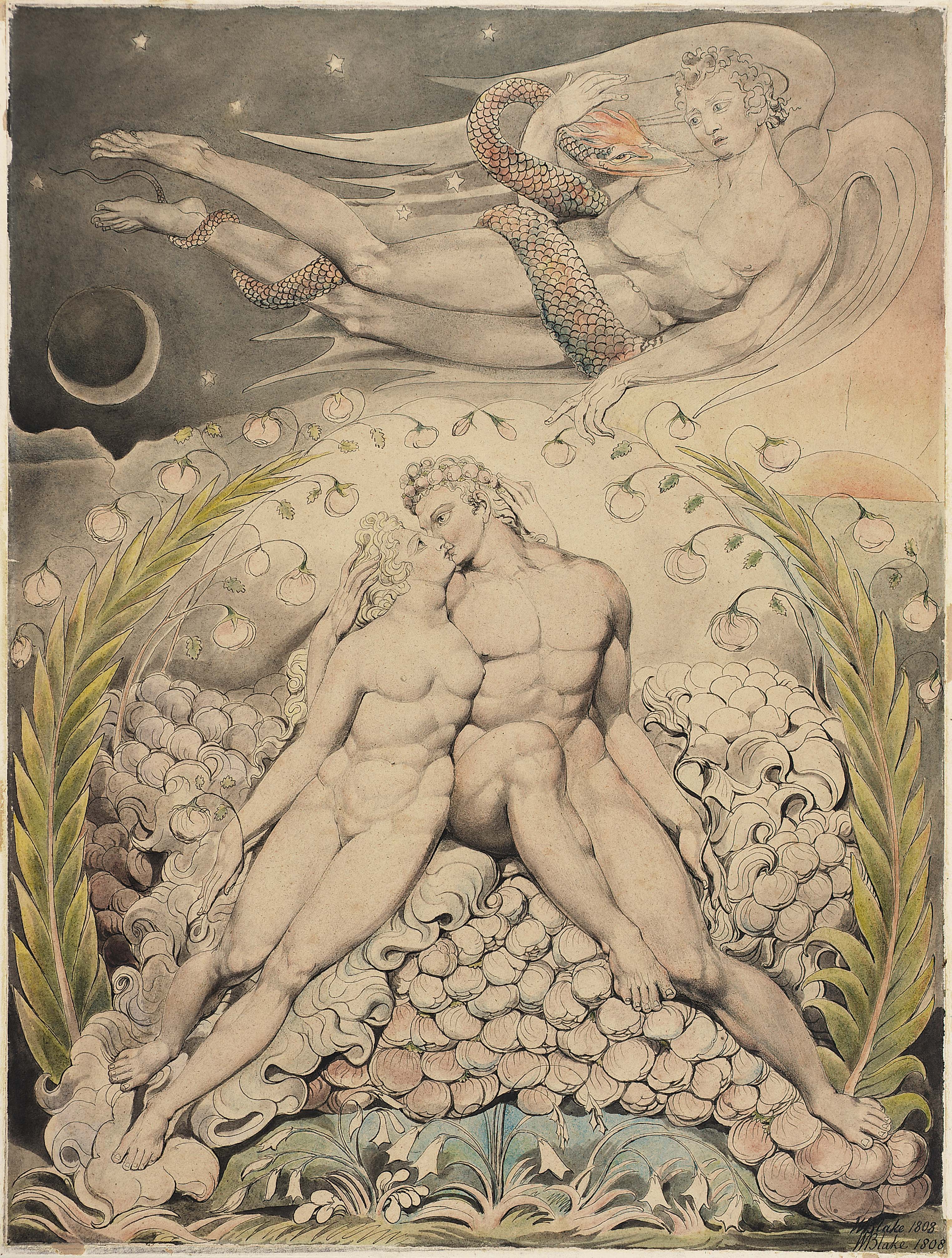
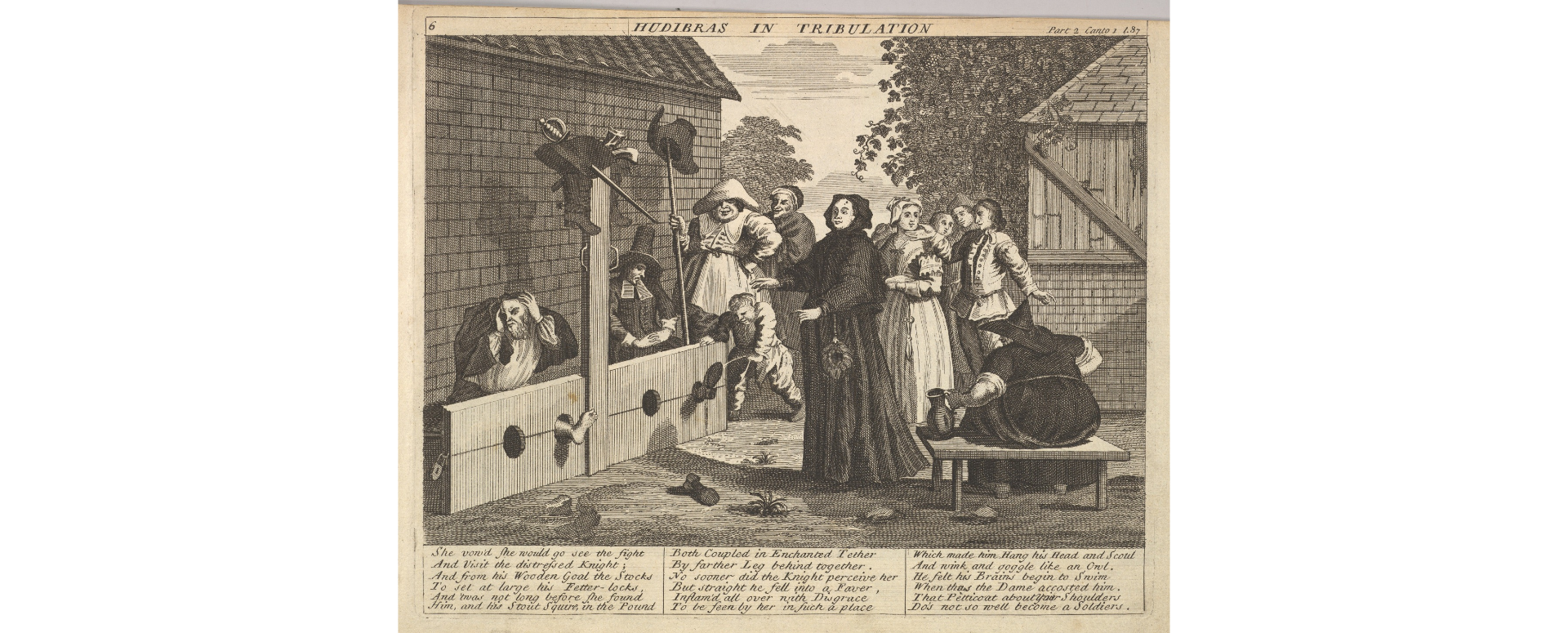


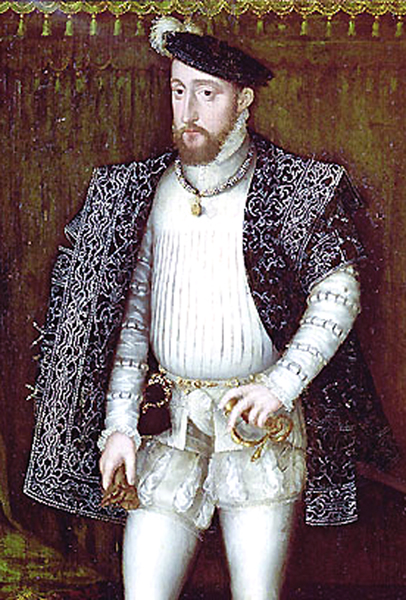


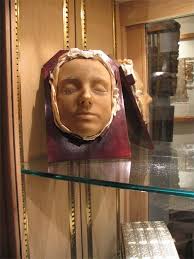

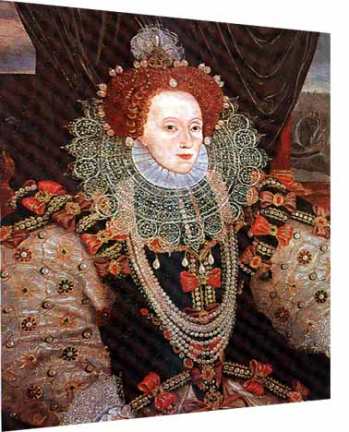


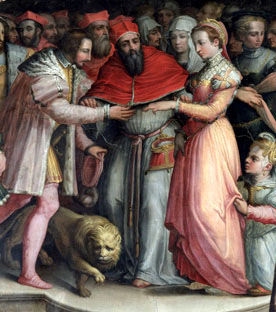



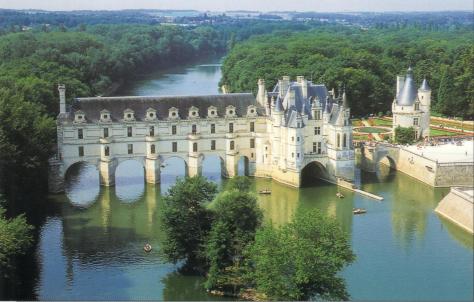




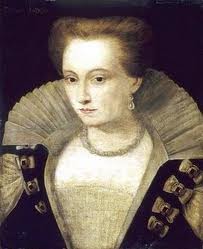
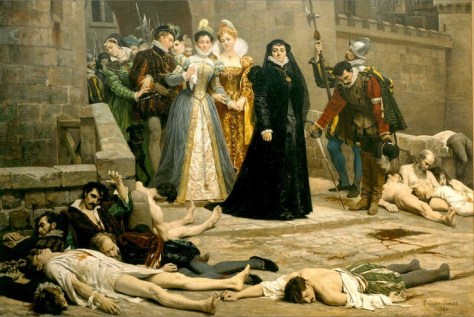
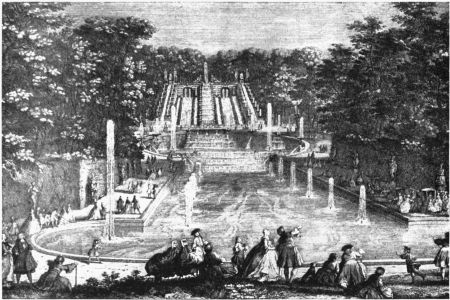

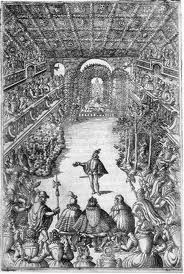

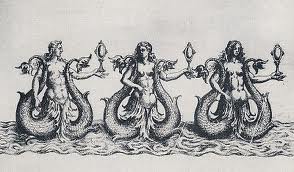








 mysylph