Tag Archives: parenting and dance education

Easy Peazy DIY SAB Skirt! | BalletScoop by the ClassicalBalletTeacher


Easy Peazy DIY SAB Skirt! | BalletScoop by the ClassicalBalletTeacher.

Why Do You Want To Dance?


by Ava Brown
copyright © 2012 by Ava Brown

Boris LermontovThe Red Shoes: My dear Livy, even the best magician in the world cannot produce a rabbit out of a hat if there is not already a rabbit in the hat.

I love to look at old film of Pavlova. Perhaps it is the shadow effect in the film, the way she appears to flit around the space allotted to her in the film-she seems to push to the edges of the celluloid and back again, up and down-the cameraman has to be fast to catch her! She jumps, she runs, she darts, she flutters, she falls and oops, she’s back up again and dancing away, but she can never get out of your sight. She is on film. I imagine that dancers were more mobile then, freer, less confined to the stage. The screen can barely contain her. Her energy. I feel I can watch her again and again because she has so much to say! Like a butterfly, I have the urge to release her from her celluloid cage. Surely, there will always be something new. Her black hair gleamed in the films; her dresses had a silvery, iridescent quality and sparkled. Her dark eyes looked at you occasionally, so intensely.

Remember The Red Shoes-Moira Shearer and her red dresses, red hair, yes, but she moved! Not static, not posing for her picture in the camera. Movement! The film era had changed since Pavlovas time. The use of color, music and acting in the film was much heralded. To me, the thing that is different from all other films of then, is the main character’s  long dancing sequences. Her desire to dance is tied to the storyline, we know. Since that time, I am not sure any film has come even close to depicting as much dance, as many places, so furiously. The message is: Life is short if you dance, or for that matter make any art-it is never long enough to create enough masterpieces for everyone. Life is also viewed in the context of being an artist if you are one. No art without life, no life without art. In the film, when Lermontov meets Moira Shearer (Vicky), the dialogue goes like this:

“Lermontov: When we first met … you asked me a question to which I gave a stupid answer, you asked me whether I wanted to live and I said “Yes“. Actually, Miss Page, I want more, much more. I want to create, to make something big out of something little – to make a great dancer out of you. But first, I must ask you the same question, what do you want from life? To live?

Vicky: To dance.

It is the fact that Vicky was possessed by the red shoes which made her dance, in Hans Christian Anderson‘s story, upon which the movie was based. Most children read this story, or did. The Red Shoes has recently been restored and premiered in its revised glory at Cannes and can be found on Youtube. Certainly, directors such as Martin Scorcese have been influenced by The Red Shoes due to the use of vivid red color as a focal point in the film.  It is also a fact that the dramatization of the story, while containing the story, is far more interesting than the original story. The death of Vicky is shocking when it happens because you are so caught up in the new story and the dancing in that story that even as a fact in the book, you cannot accept it, and feel she must keep on dancing forever. It is my contention that The Black Swan is in fact the same story, without the red shoes. It is this obsession and Van Gogh-like insanity (by the way supposedly caused by absinthe, and not dancing), that would cause her to do anything  to be the object of this choreographer’s interest initially, her naivete, her hopes and dreams, and the fact that she just cannot stop dancing!

Though patrons did not believe cinema would keep the ending in The Red Shoes, they did, and Vicky dies, tragically. The many pithy one-liners delivered by actors in the film, the depiction of the tribulations experienced by dancers, the pain, compulsion and experience of living your life in the theater are all eloquently relayed in this little film. At the time, this was not really what patrons wanted to see, so the film had little fanfare and initially no money for major distribution. I read that it was in one theater only, and released on a larger scale much later. Nearly, 100 years later, it is being referred to as one of the most important pictures ever made. I agree, it is an artwork, but what else has there been to compare it to artistically? Not much. It is not that we need more films about dance, it is that we need more films with dancers in them. Everyone knows one-talk to them.

In The Red Shoes – your eyes are drawn to the living color moving across the screen, forcing you to watch her dance-it’s like blood flowing-life being lived as it was meant to be, in movement. It is that movement to which our eyes are drawn and the color accentuates that which we are already, as predators,  bound to follow – very Hitchcockian. Like Vicky, we can’t get away! Moira Shearer danced and moved, more liberated than the dancers of older films. In The Red Shoes, at least, the cameraman did not have to chase after her, as he did Pavlova, probably due to the dolly, which had by then been invented and the moving background. Of course there was also editing and Pavlova did not have that option, either. I feel if she did have those tools, she would have used them! The red shoes know no boundaries and they dance her into the streets, they dance her over the mountains- they dance her everywhere, not just in a ballet studio, on a stage, or in front of a mirror. We feel we are there, seeing something impossible, no one in the audience could keep up with her if it were not for the film and the cinematographer. We need the film to go on seeing her. In order to make sure everyone sees the ballet, apparently, we need to view it on the screen or on a stage-and choreographers do construct their pieces with the view to them being danced on the stage and frequently videotaped, even if only for reference. This limits dance, causes it to be created, modified in practice, for performance on the stage and within a box. But still so few pieces are actually filmed and film does not really seem to cross the dancer’s mind-it would interfere with dancing! Dances and choreography were not originally done on stages, but were done in court and socially. It seems to have become more formal as we become less so. Choreographers used to add natural backgrounds, costumes and scenery to their pieces in an effort to create the feeling of landscape settings. Many of Pavlovas films were done outside! Not one contemporary film uses nature as a background when filming dance. Why not film Don Quixote in the streets of Seville, or Sleeping Beauty in the mountains of Hungary or, well, you know what I mean.

In yesterday, theater was an informal thing, performed in front of the masses, for religious purposes and the churches were great promoters. They knew if you wanted to reach people, you had to bring the theater or the message to the people. In the streets, squares, open air, dancing is life, and should be danced everywhere. Although the church was not above device-I like to think of them as the founder of the special effect, think Shroud of Turin, bleeding fountains, bleeding statues. Criticized for their “pop” mentality and devoid of any classical references, music videos have catapulted the careers of many dancers into the six-figure range, but we can not seem to make ballet a nourishing feast for the masses or the senses on film. Perhaps choreographers should use film more often. If  ballets were not so “flat,” and dancers were more three-dimensional, perhaps ballet would enjoy a wider appeal. Dancers are looking for films on the Internet, and on Youtube, and there are relatively no(?) contemporary films featuring ballet or modern dancers in real-life scenarios or in dramatic pieces.

When you read many novels, such as The Hunchback of Notre Dame, a character will be described as a dancer, such as Esmeralda. We imagine her skillful dancing abilities, and then we see a film of Salma Hayek dancing, and Walt Disney’s animated version, and it is just not what we imagined possible-a real letdown. Those performances would inspire no one to dance, let alone steal hearts or cause heads to be severed! I have heard people state that seeing The Red Shoes (1) made them want to dance, but I have not heard one person cite The Huntchback of Notre Dame (any version). The director wants her to beguile us with her beauty not her dancing, it is not believable. These women must be the personal obsession of the director alone. Many dancers claim that it was a certain performance of ballet that created in them the desire to be a dancer. However, Gina Lollobrigida, despite not being a professional dancer, is able to give a credible performance as one, the public (at least) feels, that she is a siren. I do not feel she danced, but she moved well and from appearances the filmmakers were persuaded that Quasimodo was not enraptured by her dancing, but rather her sexuality. One can’t help feeling that more dance films would have been made if there were more women making films.

Salome, upon which these later gypsy/exotic heroines are loosely based, is totally within our own imaginations to create, and I have as yet seen nothing that compares with what I conjured-and based on how my mother described her Dance of the Seven Veils to me. It took me a bit of time to separate those words, from a young age I believed it was The Dance Oftheseven Vales , then The Dance of the Seven Vales, and then years later and more mature, I finally realized that the removing of these veils one at a time, to reveal the body, was a seduction. A child in my day be confused about what could be so great about  dancing around in or removing the veils. So What? It takes a lifetime, perhaps to understand the statement that less is more -perhaps this was the first written description of a striptease and due to film, its meaning is universal at once. But in all the portrayals I can find in film, only Rita Hayworth’s is considered memorable and take it from me, it is not. It is a let down, frankly, and no one cares to pick up the gauntlet of challenge and recreate this tempestuous display in a faithful manner. On the stage or in film there is no memorable production I can find. Rita Hayworth had many qualities and dancing is one of them, at times. But, she is not able to depict Salome credibly.

Moira Shearer was not boring, and she was really dancing, unlike some stars contracted to portray dancers. We are tricked into watching body doubles and misled into believing that the scene is comprised of real dancing and real ballet dancers. I would prefer to know this before I went to the theater as it is an important consideration for my laying out my $10-15 to see a film. I really feel cheated and duped. I expect device and special effects in Star Wars, but surely not dancing. Similar to the the control employed in virtual animation, such as in Tin Tin, is the manipulation of the senses by the director of Swan Lake. The more convinced film makers are of our the complete betrayal, the more the Screen Actor’s Guild wants to reward them for it. If actors were convinced, entirely, of Ms. Portman’s efforts to imitate a dancer, then they must not have had very much knowledge about dancing or ballet! Without artists in films, actors, dancers, writers, costumes and lighting, any connection with reality is cut, and so is the connection to art. Life is reduced to cartoons.

“What art offers is space – a certain breathing room for the spirit.”  John Updike

Every time a major production that could use real dancers does not, it harms the dance community, by separating us from what dance is today and pushing it further back in our consciousness to an indefinite place called history. Dance is alive today! If dancer’s cease to pass this art form down, then the complete record of it will be lost, only to be studied from films and archives, as it practically is already-argh!

Those who dance, who take it seriously, do feel a bit of qualm in stating we are “dancers.” Are we? Does the artist not question himself in the presence of the masters as their works, and sometimes they, look down upon us, from the walls of museums or galleries, on high, and on the stage, and if we have thought of ourselves as artists, do we not reconsider (even a little) as we put the question to ourselves? Are we? Are we dancers, artists, musicians? Do we call ourselves that at first, or do we call ourselves that finally, because there is no other word which describes us? It is at last that we must say so and not at first if we are true artists, no matter what our particular calling. A film maker is not necessarily an artist, anymore than anyone else, nor is an actor, but film is a powerful tool for or against an ideal. Dancers may be the last artists standing! The human spirit is alive in children, who move. For them, at least, dancing comes naturally, just watch them!

Dance films are interactive-they should make you feel like dancing! If a “mere” actor can trigger this reflex, then it could be said one goal has been achieved in the film.  Think of Gene Kelly, Fred Astaire, Shirley McLaine. Whether comedic, romantic, or lusty, dancing can be beautiful and exemplifies the human form, and our natural emotions, no matter the perception. I do not think The Black Swan accomplishes this. After waiting for so long to see dance in film again, or a film about dancers, that is all we got? Hollywood studios taught dance to their stars but then there was a switch from the major studios and actors were no longer taught to dance unless, like fencing or boxing, a role required it. Actors have sometimes received kudos for attempting to assume the role of a fighter, country singer, or other notable, bringing a popular icon back to life, successfully. Salma Hayek’s portrayal of the artist Frida Kahlo, was less than stunning, but there are scores of dramatizations in English and in other languages which are triumphant. I worked at the opening of Frida’s first major retrospective of her work which was scheduled to coincide with the release of the biography by Caroline Herrera, and having immersed myself in both her art and her life history, I felt very connected to her. The film was extremely self-indulgent none of the feeling from her work or her life were conveyed.  I had similar feelings of disappointment in The Black Swan. Right away, I sensed-this is not a dancer, this is artifice. The film had tons of meaning and innuendo, but i felt as the selection of a non-dancer was part of the trickery. As that it was successful, and there was passion, but it was not the passion of dancing. Ballet was the film’s score-it was set to the music of ballet, but was not.

There is “hoofing”- or getting the job done, compared with classical or modern dance, and hardly an artist was required for that, but “Broadway” dancers who were dancing “extras,” made their living, like Vegas dancers in these chorus lines. A few dancers would rise to stardom from the chorus lines, but even these are few and far between, and more importantly, they became famous, or were noticed for other reasons than their dancing. These dancers are pawns of the director’s vision for a film, always secondary to the story-line, almost never the stars. Sadly, dancers have come to the point where this is acceptable to them as a way of life and they do not fight for more more recognition, rights or artistic control. If dancer’s are not dance “experts” then who is?

In a real dancer’s life almost everything is secondary to the dancing! And it is shocking to me, that a film, such as The Black Swan, whose main purpose is to portray this would use non-dancers at all. Perhaps dancers are okay with taking the crumbs proferred by the writers and director and producers of this film, but I believe artists should have more to say about it than they have. When Little Saigon was on Broadway, the producers were required to use Asians in the parts. Why should film makers not be required to use dancers in the parts? Well, dancers are not a protected minority but I think this might be a good time to fight for that status. I will not buy the video! I think parents, ill-informed about the realities of the entertainment industry, make a grave error by forcing their children to study dance, based upon a fantasy they have derived from looking at the media. Due to the way that dancers overall, are treated in the media, and due to the fact that no opportunities exist for them beyond the classroom and small stage, parents should not mislead their children into believing that false hopes exist and the pursuit of ballet should only continue seriously if the dancer herself, is aware of the remote chance of any success. There should be an International Dancers Forum to address these matters and I would like to be involved! Why torture them, learn the discipline that is dance, pay for coaching and do competitions, and then turn them loose on the world – to do what – hoof for pennies? At least a sports player has the opportunity to make some money!

If parents and teachers and children find dance important to be the best at-why do film makers not consider their audience and their standards? Their expectations? Part of the excuse for not using live dancers in roles would be that dancers are not taught (anymore) to show emotion, to dance with feeling, pieces are usually all about line, music and the choreographer, and very often, abstract. It is no wonder so many dancers cannot really act, they have too many other requirements to get to the top of their field to add another one-even an important one! They must have the feet or they are discouraged. They must have the body or they are discouraged, They must have the flexibility and control of an Olympic gymnast or they are discouraged. They must balance. They must listen to the music. They must dance on point. If they fail in any one of a number of other areas they are also discouraged. They are seldom encouraged unless they have all of the above and money. If it were not for misfits and oddballs, this country would have virtually no entertainment! I for one, am glad that Audrey Hepburn was too poor to continue ballet and opted for films, otherwise we might have never seen her again!

Balanchine was not a great dancer. He was a great publicist and choreographer and he gave the people what they wanted. That is why he rose to such prominence and fame. He taught dancers to dance what the public wanted to see, and he made jokes about it, teaching elephants to dance! He did not find the public very picky, but he did realize that the public wanted to be entertained. Later, he became more entranced with bodies, the art, or the “refinement” of the spectacle, but this related to his work as a choreographer and in no way disavowed those previous works any more than Picasso’s last painting was his best one. Those who witnessed this passion for dance were drawn in and convinced, that ballet was formidable. But, such is the public fervor-on and off. To date, no other dance benefactor, choreographer or artist has brought ballet to us in so many ways and from so many different perspectives.  Many potential stars, who might have astounded us, probably did not get a chance to, so little attention is paid to the art. Perhaps it would have been better to turn over the reins to someone who was more of a publicist or a manager than another dancer. Perhaps dancers do not know how to promote their art because they are too busy learning it. The market is still there, but it is different and even more sophisticated than it was, and more particular. It is ready to be tapped. If shows like “So You Think You Can Dance” can succeed, then it must be time for ballet!

Why not make movies using real dancers, write stories for dancing films, and not just use dance as a device for another story within a story within a story or as the profession of a character? The Black Swan said, “we all love ballet- if the dancer is a psycho, there are lesbian love scenes, gratuitous sex, murder, gore and violence.” It did not say, “we should all appreciate ballet,” but instead, the dancers depicted in the film are characterized as sweaty and pathetic victims who are tied to ballet until they get a chance to shine. I liked the film, too, it really shook me up-it took something sacred and stately and gave it all the drama of 90210. I believe there is a place for everything in art, but in dance films there should be real dancers used. That’s all, no matter the supporting story, I think there are dancers who can act it and it should be a rule for them to find them.

Some of this responsibility also rests with the dancers. The ability of a dancer to convey the temperament and feeling of a piece should be required and taught, otherwise we will always see vapid actresses mimicking serious dancers and vice versa. There is no law that says a dancer cannot be both and they should be! Why not create new roles, push forward to collaborating in great films using real dancers? Why spend any time at all in this life, publicly practicing? Why redo the same old tired pieces and not freshen the pot, bringing new works with new dancers, creating new films and memorable dancing moments.

Compare and contrast Maya Plisetskaya and Sylvie Guillem in the short film of the piece Bolero by Maurice Bejart.  Sylvie Guillem unwittingly (or not) allows the comparison to be made of herself with Plisetskaya.  With her choice of opportunities, Sylvie Guillem is surely always looking to dance that master role in which she finds herself perfectly formed to dance. Any other new piece would have fostered her own creativity and would not rehash, almost exactly, what was already done by Plisetskaya, and I think better. Self-indulgence should not ever, and theory should not always, be taken to the stage-it sets us, whether we like it or not. It shows a lack of creativity. Film and video give us the opportunity to see what we are producing before we let others see it, so art can be better for films existence as a visual correction tool. why copy, even from the filming angles and the set design, what has already been done before?

These are two completely different dancers, in different times, and with the technology available, naked of tricks,  I do not feel as though, oh well, Sylvie Guillem has picked up where  Plisetskaya left off, so forget Plisetskaya! No more are these classic modern pieces or ancient ballets set for the present? If one film maker, or one dancer, could imbue into those old relics, the relevance of those performances today, then I would be impressed, but making dance no better off by their production, harms the cause. Instead, Sylvie should use her power in dance to make something entirely new (preferably film as it can popularize the art form) and spread that all over the media channels. Why not use that power to promote ballet, cement its importance and relevance in this new century, right away. Perhaps other dancers to come should think about this, and their fellow dancers, when they become famous-do originals! Dance and theater and music, unlike art begs you to recreate a piece, to live in it, yourself and to bring it to an audience desirous of seeing it performed again, but theater is different, even an art of its own, lends itself and can connect to other forms of media, including film, although their are adaptations that are failures, there are more numerous examples. Some people have said, they find it unbelievable that a character suddenly begins to dance. Why not dance if that is how you express emotions. Too many people are ignorant about dance, unaware of the artform, and equate it with popular musicals and farce. Yes, it is in those, too, but not exclusively.

A dancer has to have respect for the choreographer-they are taught to-one has to adhere to the work, be true to it. But they are not. We would all be less impressed with annual Nutcracker performances, if we had to watch children and amateur dancers perform the original parts of the ballet as they were designed for dancers of consummate skill. They are revised, shortened and changed at the discretion of the teacher, so that the students can dance them and so that uneducated audiences can sit through them. The purpose of art is not always to please, but to touch the viewer and to cause in that person some emotion. Like sitcoms and blockbusters, pop music and romantic comedies, when we attend shallow performances,we are not moved deeply, we are being entertained shallowly usually using the most basic forms of humor and predictable situations. But we are wrong if we think this is art, maybe bravado and canned laughs, the same devices in film after film, pushing the same emotion buttons, but not art. This is understandable, but to superimpose Natalie Portman over any professional (and beautiful) dancer is just artistic suicide by the director and every person of intelligence out there, with an appreciation of ballet, had to ask themselves at first, is this going to be a comedy? Well, it is considered to be acting,  at least in Natalie Portman’s case, bar far too much was made of her tortured performance. Shot in the style it was, her acting was cut off (fortunately) and scenes changed so quickly that you were again in the director’s control, but you couldn’t have helped but notice the limit of her emotions in the film, which, if the editing had not been so adept more people would have observed. We again have to ask ourselves, when she did not actually dance the parts, if her awards were truly earned? I definitely believe the editor deserved an Oscar and it was an important film because nothing else has come out in so many years. But those who were anticipating it, for the dancing, or to be entertained, were disappointed. Does the film industry even understand ballet? And this brings the whole question around again to, is integrity of ART totally forgotten, lost? Compared to The Red Shoes, whose producers had not just knowledge of ballet, apparently, but also a storyline, it was just a better film.

If I were Natalie Portman, I would give the mantel ornament to the dancer who spent her life learning to dance, faceless and unnamed in the film. Paid for her work in the film, like an extra, this dancer fell prey to the oldest tin pan alley trick in the book. Dancers also need to be a little more savvy about entertainment law. That dancer never should have signed that contract without being aware of what it meant. But it is a big issue nonetheless. If you were to imitate a piece of art, you would be called a forger, but dance, like theater, has at least two variables in every work-the dancer, the choreographer and the public; the artist, unless working under a benefactor, has only two, himself and the public. When you add in a film, it gets much more complicated. In other words, she could be expected not to fully understand the impact of her performance, how the film would be edited or the public opinion. Is mimicry in film or acting any better than forging an artist if the artist’s medium is dance?

In Bolero, I see the subtle differences in the movement of their feet and hands at first (watch the videos), Sylvie Guillem, being more staccato on the movement, and her hands being held more rigidly, angularly if you will, as if she were trying to do something right, like cheerleading. When you are free to dance, you don’t worry so much about so much, you just dance. It’s not only that I think Maya is more sinuous, but she seems to me to just have less fear of doing something wrong-she feels it, originally-no fear. Sylvie points her feet sharply, with every step, as she has been taught to do, but Maya does not seem to be thinking about it at all, although we know her foot points. She is more concerned about the subtle expression created, and intended by the slight releve, and not a pique (what is the viewer supposed to notice? That is the question Bejart might have asked the dancer). It is also what is going on in Maya’s torso that we are watching and I think this is what Bejart intended-a the seduction-of the senses. Dance should force you to watch. Maya becomes more beautiful as the piece progresses. In The Black Swan, precisley where we would be watching the dancing, the scenes are cut and there is just a great flapping of wings! It is very funny actually. Maya is happy, smiling, inviting. Look at her. It is her piece. Natalie Portman as the The Black Swan, a fraud. Who could dislike Sissy Spacek for playing Loretta Lynn-what did we really know about her? Well, we could ask Dolly Parton. But somehow, I have no doubt of Sissy Spacek’s ability to portray Loretta Lynn and she did a good job-the film was really carried by the story and the acting abilities of the stars alone. A dancer or an actress need to look for those pieces that they can make their own. Why not something new? A new ballet? Only new ballets? I can understand a film maker wanting to capture Maya’s performance-it was original, but I do not see the same necessity for capturing a second version of the same thing. Remakes, rarely as good as the original and made because the artists have no repertoire of their own. The idea that one must make something do something prevails.  After viewing The Black Swan, it does not seem as though there was a rabbit in the hat at all. But it does remind us subject can be the basis for a horror story and that there is turmoil offstage.

Pavlova, being gone, can have no objection to all these ballerinas portraying her work and trying to emulate her, but she would probably note the lack of understanding and passion, maybe even enthusiasm for dance performance, and probably be very disappointed in the failure of ballet to move to the big screen with the same intensity it was then beginning to do, and I feel dancers might disappoint her too, she clearly used every part of her body and mind for the seduction of her audience, nothing was left to chance. Had she lived, I have a feeling we would have had scores of real films of ballet, as it is she alone seems to have left the most history of dances on film! I think she would have left the theater laughing. She would also have demanded to be in the film! She could have. Imagining what the film could have been, with a real dancer, a real artist, causes me to go back to those old films of Pavlova and try to figure her out, see what made her tick. Film makers wanted to capture dance on film at that time, why not now? pavlova was not intimidated by film, but seemed to relish it, as a way to communicate her message to more people. Was she more provocative, passionate, determined than dancers today? Was she more talented, if you mean by the use of every device within her reach to herald herself and dance? I believe so, and if ballet performers encompassed more of those characteristics today, perhaps film makers would feel that they must capture this spirit on film.

Maybe it is indoctrination which compels dancers to dance the old ballets and now the old modern dances? But we should learn from this and work to give the public what they want-in a ballet and then perhaps film makers will be inspired to make films about dance once again. Maybe we have forgotten that dance to Pavlova, to Shearer, to Plisetskaya, and to Guillem – was not just art but life. With greatness not only comes the opportunity to perform ones art, whatever it is, but also the opportunity to inspire others to dance, to choreograph and to write. So I guess, even in that sense a dance film about anything is a film about dance which may inspire writing, choreography and maybe even dancing!

Dancers from the American Ballet Theater dancing La Bayadere went on television to say: “We do not know what this ballet means, we just show up and dance it-it is too confusing to explain.” How can I ever watch those dancers  again? I am no idiot. I have read 101 Stories of the Great Ballets! Is it all right to just be a dancer and not an artist? Does dancing imply only a body capable of gymnastics, but not artistry? Fire those dancers and they were principals! An artist attempting a master’s style used to write “in the manner of” Cezanne or Da Vinci, so that a “study” would not be mistaken for the real thing. Is it really different for dancers or actors? Should we re-think dance ethics before entrusting those choreographers works or ideals to mirlitons to influence whole generations of other dancers? Does any dance performance require believability to be great? Or authenticity? Originality? Do all ballets or dances have meaning and is it important that the meaning  be adhered to? These are questions which are not dealt with in most dance schools. Dancers have the obligation to educate others about dance. Otherwise and eventually, these decisions will be left to the aspiring 14-17 year-old want-to-be-dancers who feel that they have the right body type or ability to copy other great artists movements-that is all. “Mommy, I want to grow up to be a replica.” We have to pass on, not just the ballets, but the art of dance.

An appreciation for great art may be a higher ideal than to be an artist. I worry about what masterpieces the next generation will leave out in their so-called estimable appreciation of great art.  I hope history does not stop here for too long because there isn’t much worth keeping. Anyone who has been to the bookstore looking for dance books, even magazines, can attest to the one book they have on the dance shelf, Apollo’s Angels. In the biography section, there are at least 1000 books. If anyone wants to submit a dance manuscript to me, I will act as their agent and try to get it published. It is as much in our tolerance we promote this apathy, not bothering to learn much about it and yet shelling out for classes, privates, toe shoes, the works. For what? If there is nothing in the hat?

A point is made to preserve the works of ballet as though in anticipation of its demise. Of the moment, briefly publicized, dance performances or works do need to have an archive, like films, or museums like art. Why are there no museums of dance artifacts? It is things like this that really get across the lack of protection for the art. If dance is not protected, it will become extinct, like the emu. But, instead of putting so much focus on what dance was, energy would be better spent in creating new works, promoting new dancers, promoting dance! Maybe, part of the problem is, the dancers themselves. I must be perfect, thin and sylph-like (what is a sylph?), have hyperextended feet, be beautiful, be like other dancers, be a gymnast and an acrobat,” rather than being creative, having a voice as well as a body, anything to communicate and not just a vehicle for choreographers or directors to use. In the words of Jane Austen in “Pride and Prejudice,” If a woman must possess so many traits to be considered accomplished, I am no longer surprised at your knowing so few, I am surprised at your knowing any!” If a dancer must be all of the things the schools intimate they have to be, then how can they be artists, too? Where is the opportunity for education, and why are only some children exposed to the prestigious education dancers receive at some schools. What about the feeling, the stories, the self? With so many insipid posers standing about, I have more desire to see the male dancers, who have the best time of it, except for the lifting-there are so few of them, they can do whatever they want and bad or good, they are cheered. They can be funny and entertaining, a little short or fat and still be successful. They appear more relaxed, you almost never hear about their anorexia. I am surprised that the double standard which exists for women in ballet is not challenged as being grossly discriminating and unconstitutional, because it is no better than Nazism. If so many things come to the mind of every artist or composer or writer, before we put a word on the page, a rendering, a song, then, as we all know-nothing gets made! Therefore, I am not surprised that few new ballets come into being, I am surprised that ANY do!

I believe we spend too much time in dance copying the great masters instead of getting on with the art of dancing. If art comes from life, and drama and greatness from torment, then all of these young dancers should have plenty of it-and they don’t. It becomes posing and not dancing. I think real torment is not being able to tour with your Russian company abroad because you are Jewish and other natural disasters which life affords you. In other words, there is no point putting obstacles in your own path, or in the path of children who just want to dance, because there will be lots of real trouble along the way. And they can truly have nothing worthwhile to say at such a young age, so why torment them and force them to do The Nutcracker every year which draws away from their work in classes? It is to the detriment of the art that these traditions are reinforced, as if to say, just keep doing it and you will be great, when in reality, it is what puts money in the pockets of the studio for sure! More money should be spent on training, acting and music if studios really want to turn out dancers who can earn their keep in adulthood. Dancers need to think, be educated and be smart!

So how do films reinforce this? They don’t, but they are just as devoid of creative talent as ballet studios and companies are. Our country used to sponsor the arts and encourage thinking and creativity. It was not Russia or even France that put modern dance on the map, it was Americans who understood it, supported it and made it our own, and yet, we have no link in the chain between Merce Cunningham and today. When the greats die off, there are no new and rising stars or choreographers to take their places. There is less about dance now with all the  technology available to communicate it. There is a lot of buzzing and talk, but no fruit. There are some great choreographers around today, and there would be more if more children were encouraged to dance. It might be relatively easy to begin a dance company, invent new forms of dance and works, make films, but we have to educate them first. If filmmakers used the technology available to them and collaborated with dancers, some amazing achievements could be made.

I enjoyed the Black Swan for what it was, a film. It was no more about real dancers than its lead was played by one. With all of it came Natalie Portman, with her usual self and that colored the film for me.  Instead of feeling that the film was about dance or dancing, it managed to reduce dance if possible to even more of a cliche than it already is becoming. All actors-no dancers, like all Caucasions playing Asians on Broadway. Zero believability. Not believable in any way and not anymore related to dance than McDonalds is to “health food.”  I took my daughter, not realizing that the movie was r-rated, and her response to it (of course I covered her eyes-for most of the movie), was that she did not like it at all. Did I mention I was not going to buy the dvd? Why? Because the movie was cliche. It had all of the predictable twists, turns and scenarios that a viewers poll would dictate it to if those polled were blase about the film, and were stoked for Rocky III or Twilight. At least Rocky III viewers did see some real fight scenes! It was simply: let’s put all of these devices in the story in case the public finds it boring. I think it could have stood on its own, and with real dancers, would have been a much better (and believable) film.

I was surprised, when I thought about it, about how little we have progressed in not being able to do anything more with real dancers, in fact less, than was done by even Pavlova in those films, The Red Shoes, or in The Hunchback and in other films of those days, with all the creative minds and technology available. 100 years have passed since Pavlova made her little black and white films, dancing wildly in the light viewer-and NOTHING has come close to capturing her essence, or almost any other dancer (Hines and Barishnikov did cross-over in White Knights and that was an excellent film), but there has been no succession of good films involving ballet or dance. If the Black Swan had used a real dancer in the role and not just been the vehicle for the glorification of a certain actress, I would have liked the film better, and obviously a lot of people disagree with me. It captured emotions, but not those felt by dancers, really. I do not believe dancers to be maniacal at all-in the words of Elle in Legally Blond, “exercise makes endorphins and endorphine make people happy.” Not entirely, but nearly true.

Non-dancers and the public will say, what is the point, why does it matter? It does. I fear what is being lost is any integrity in art put to film. Pretty soon, writers won’t even bother to verify their sources! Dancers should work on acting skills, mime and learn more about dance. Perhaps if dance topics are popular, more books on dance will appear on the bookshelves of stores and libraries. Perhaps more focus on arts education is necessary, because if more people were taking ballet classes, and more emphasis was placed on dance as a career, and more parents could afford ballet, more students would emerge, becoming choreographers and writers, as well as more dancers and more dance teachers, and more schools and more dancing. When the final curtain is drawn it will be dancers who make these changes, demands, and innovations and lovers of dance. But there must be a rabbit in the hat.

Keep on dancing!

Ballet-Dance Magazine – Suki Schorer on Balanchine Technique by Suki Schorer, Russell Lee, and Carol Rosegg – Book Review by Cecly Placenti


Ballet-Dance Magazine – Suki Schorer on Balanchine Technique by Suki Schorer, Russell Lee, and Carol Rosegg – Book Review by Cecly Placenti.

Lateral Ankle Sprain Rehabilitation


Lateral Ankle Sprain Rehabilitation.

londondance.com – Dance news, features and event listings for London


londondance.com – Dance news, features and event listings for London.

Dancer Transition Resource Centre


Dancer Transition Resource Centre.

American Ballet Theatre – Ballet Dictionary


American Ballet Theatre – Ballet Dictionary.

My Writer Sylph


by Ava Brown
copyright © 2012 by Ava Brown

Leo Rosten said, “the only reason for being a professional writer is that you can’t help it.” I think that is true of any art. Someone else said, if you get up in the morning and you have to make music, dance, paint, draw, sing, dance or act, then you should. Why is this? We are best by an urge to express ourselves, physically and mentally, whether as an outlet for our experiences, feelings or just to do it. Can this become habit because it is rewarding, or even if not rewarding, or painful, or expensive, fraught with difficulties, learning experiences, dues, turmoil and other obstacles, something we MUST do? I am not what I would call a writer. I am a human with a drive to have questions answered, and I often ask myself, why???I continue to do certain things, what is personally gratifying about these experiences and I wonder why I continue to do some things, or love them, and why I do not continue to do them. I am afraid of not finishing, quitting, not living up to possibilities, not having those answers and dancing in the dark, so to speak. But of the many things I have started or given up, dance has continued to be the one that was most memorable to me. I felt that by not doing it I was being less than I could be. Even as I take my own daughter to dance, it is for her own good and nothing else, as in the end I know, that is all that matters. I give her the gift and the opportunity to grow and to have the basis of dance on which to measure herself all of her life and to thank not me, but it, for giving her so much that is within herself to accomplish. To be, to be healthy is everything, and dance is a path, not just to health, but to so many other positive feelings, states of mind, experiences, and memories, it just cannot be compared to any other outlet I have known or path to one’s own worth and ability. It is truly possible in dance to become the best that you can be. In writing, art, music or any other form of expression, I am not sure the positive aspects are so overwhelming or obvious and it occurs to me that for other people to be able to read and share those experiences, it might inspire people to take dance to find out what is so great about it. I feel that almost everyone who takes it will be hooked. Having so many answers from so many people might also answer, finally, some of the many questions dancers have about dance, themselves, and what makes dancers tick, common experiences, solutions to problems, similarities and differences. There is always the history of dance, but never a history of dancers and in the end, too few books about the subject and on the shelves at your local bookstore. I think this is a shame. For something so great and for so many people to have so little access or information on the wonders of dance, the issues, nutrition, medical advice, studios, teachers and other people who have been instruments of spreading this happy disease seems to tell the world it is not important and it is.

A Little About Mysylph March 2012


I started very late (15) and had a very successful and uneventful dance career for about seven years-that is, no injuries. I was fortunate to have excellent dance teachers in my hometown of Dayton, Ohio. Dayton had a pretty good regional ballet company with proprietors in the form of two elderly women (the Schwartz sisters). They were Josephine and Hermene Schwartz, and so enthusiastic they were about ballet, that at a very young age they began a dance school in their living room in order to afford their own classes which were taken once per week in Cincinnati. I quote from their manuscripts, housed at Wright State University:

Hannah Schwarz took her daughters to see Anna Pavlova dance at Memorial Hall in Dayton, Ohio, when they were very young. Miss Jo, as her friends, students, and colleagues have affectionately known her throughout her life, began her dance career in the Botts Dance Academy, a local school of dance. Her mother enrolled her in dance class to regain her strength after being bedridden with a severe case of the mumps. When her skill and desire outgrew her local teacher, she studied in Cincinnati, Ohio each Saturday. This proved to be expensive so Miss Jo opened a school of dance in her living room at the age of 14. Her sister Hermene played the piano. There were ten students and the lessons cost 10 cents each. This was how Jo earned the money for her own lessons. More at: http://www.libraries.wright.edu/special/collection_guides/guide_files/ms218.pdf

Image

They were somewhat of a local institution, the way ballet mistresses become, when a school is in existence for a long time and they had both danced professionally and so had a celebrity status as well. The sisters used this slight advantage to train dancers seriously from all walks, and I have seen no better school:

Hermene’s interest in learning how to dance grew and, after high school, she worked in a doctor’s office earning money for both Jo and her to go to Chicago. The sisters spent three summers in Chicago, studying and performing with Russian dancer Adolph Bolm, from the Russian Imperial Ballet, at the Bolm School of Dance. They became members of the Ravinia Opera Ballet Company.
Both Miss Jo and Hermene traveled to Europe in the 1930’s to study at the Hellerau-Laxenberg School in Vienna, Austria. The sisters also studied with modern dance pioneer Mary Wigman. Jo performed in the Burg Theater in Vienna and also toured with Bolm’s “Ballet Intime” while in Europe.
Josephine and Hermene founded the Schwarz School of Dance in Dayton in 1927.

I began taking with Miss Jo in the Fall of my fifteenth year. She had an adult beginner class (and I had only had a summer of ballet and modern-4 days per week), so was accordingly nervous about taking a class with Josephine Schwartz. Those who knew her loved her and sent their daughters to her (and their sons). Her classes were full and she had a junior company as well as a ballet company. Thanks to Miss Joe’s connections, worthy dance companies came to the Theater and tickets were always available to students at a discount. Workshops were usually given and we could watch rehearsals, too. In the summers, they always had dance luminaries from large ballet companies and sometimes VIPs. Hermene was around, but she didn’t teach often. They still made appearances together and attended ballet performances at the Victory Theater below the studios.

Image

Image

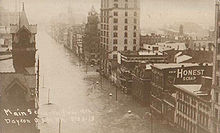
My mother had looked them up, read about them for years in the local papers, and told me where to go. There are no pictures online of Miss Jo or Hermene, that I can find, but I remember her long black dress (1978, not 1908), and her long silver streaked hair was pulled back into a bun and she said nice things to me occasionally. She complimented my bun and my balance! She made us work very hard and her studios were very warm in the Summer. Winter or Summer, you could look out of the window and see people hustled down main street, or into the Rike’s Department store across the street, buses surging past, horns honking, for this was one of the crosswords of the busting community of Dayton, Ohio. There was a bridge access to cross one of the four rivers of Dayton-the Great Miami River (Little Miami), the Mad River, Wolf Creek and the Stillwater river. Originally Dayton was built along this Riverfront despite local natives warnings about the recurring flooding. Subsequently dams and local reserves were created to ward off substantial recurrences, but this year was the 100th anniversary of the Dayton Flood (March, 1913) in which 20 feet of water covered the central business district. It is said that the amount of water running through the rivers was equal to one month’s worth of water cascading off Niagara Falls.

Dayton Flood

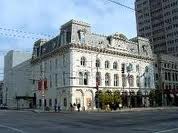
The large building would have been the Biltmore Hotel, and in front and below, the Victory Theatre. In 1978, the major differences included bridges and dams to which this roadway led, dividing the many sides of Dayton. Today, Dayton is named one of the top 10 places for college graduates to find a job, the Dayton Ballet Company and the Dayton Contemporary Dance Company are flourishing and a new Five Rivers Entertainment Complex boasts live events, concerts, sports teams-there is even an ice skating rink! Not much has changed otherwise. The Dayton Ballet Company continues to be a major regional ballet company and sometimes stepping stone for aspiring dancers.

There was really nothing in my life that compared to that 7pm ballet class on Friday nights. It started in September, and the odor of the sweat permeating the wood floors, the smell of the iron bars, the lights rising up through the sounds of the streetlife as you stood along the sides of the studio with the over-ten-foot high glazed windows, the streetlights reflecting on the mirrors, the exhilaration felt after class, swinging down the bannister and stairwell to the street below, covered in a fine mist of sweat to head for the bus home. dayton was a city with mass transit, long before similar larger towns had figured out less efficiently how to move people from one place to another, directing their attention to certain areas. Having a large German population, people actually argue about public engineering there, and it is no wonder that the University of Dayton is reknowned for that department. I guess if I had to compare it to any other city, I couldn’t, but Dublin would remind me of it for some reason. Perhaps the Irish put their mark on it as well.

Miss Jo stood in front of the class and talked to you. She did not show you how to do anything-she communicated to you. You watched her foot slide along the floor, explanations with gestures, and you learned. Her incessant corrections and walking from student to student during class, making nearly inaudible corrections, touching, pointing, only demonstrating occasionally what she meant, and yet she produced more dancers, calmly, in a genteel almost retiring way-by elegance and suggestion. She might start or step in a direction, or show a foot position, but she gave corrections orally, and there were no impulsive movements or strident tones. She was a forerunner of modern dance in this country, too, because she had a modern troupe and taught experimental dance. She was also  teacher to Jeraldyne Blunden, founder of The Dayton Contemporary Dance Company, an all-black (at that time) professional (and touring) company of modern dancers which she kept in existence for over 30 years. She died at only 58. I think these were two of the really great women of ballet/dance in the midwest and their dancers and students dot the country and the world today.

Image

Image

Mrs. Blunden developed a number of leading American modern dance performers, among them the former Alvin Ailey star Donna Wood. The November 24, 1999 issue of Dance Magazine announced-“The 1998 Dance Magazine Awards for lifetime service to the field of dance were given yesterday at the Asia Society (in New York). The winners are Jeraldyne Blunden, the founder and artistic director of the Dayton Contemporary Dance Company; Julio Bocca, an international ballet star and a guest artist with American Ballet Theater; Dame Ninette de Valois, the founder of Britain’s Royal Ballet, and Suki Schorer, both a longtime faculty member at the School of American Ballet.” I am sure the Miss Schwartzes’ were very proud of their legacy of dancers and movement we learn from and watch today. For more about Ms. Blunden visit the PBS Timeline of Dance at http://www.pbs.org/wnet/freetodance/timeline/timeline7.html. You will see Ms. Blunden’s entry in 1968 at the advent of opening her school which taught Horton technique and the styles of Truitte, et al. I mention Ms. Blunden with awe and great respect as a few of the teachers who inspired and taught me. She taught classes herself also. I remember taking her classes. They were HARD.

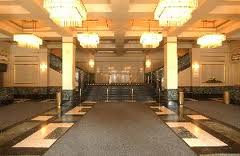
The Victory Theater was a lovely place to watch ballet. It was even more exciting to take classes above it every week, climbing up the stairs, walking into the old dressing rooms and walking out into that grand empty studio whose very floors evoked feelings of grandeur and majesty of dancers who sweat upon them (and they did!), point classes and rehearsals, for so many years. The floors showed these scars. The sisters practically lived there and there was almost never a time when some dancer was not practicing in these large studios, only the light from the large windows illuminating their path, as they slowly refined their artistry in shadows. The light was an amazing dramatic enhancement to these movements and served to emphasize the concentration going on. No wonder I have such a passion for theater and dance!

Image

Of course they claim it’s haunted!

Image

Image

Image

But this is where it all really all began with Pat fox, Director of the Dance Department at Sinclair Community College, where I took my classes that first summer. She had graduated from the Cincinnati Conservatory of Dance and was an excellent teacher. Her background was modern dance and she had us buy books! She felt that you had to read about dance, know its history and approached her teaching methodically, from the ground up. Basics first. There was no cheating and no escaping her watchful and cautious eyes, where from behind large glasses they seemed to stare right through you and she did not miss anything! I bought all of the books she recommended for my daughter also. She was amazing. All of my natural instincts about dance, I attribute to her abilities as a teacher in the precise cultivation of the body as an instrument, to developing, waking up, building, and taught to use. Even now I can remember her classes and regimen, so methodically did she go through the movements and so perfect was her example. She was so particular about it that you did it in your sleep. She was tough! She stopped a bad action immediately before you went on reinforcing it. She literally kicked out sicklers and other offenders who would repeatedly perform exercises incorrectly, then she would go after them and make them fix it-sometimes running down the hall and dragging them back. Some were daunted and she never caught them, but generally, they came back. You had to listen. You had to watch. You had to do. You wanted to know everything she did, and you had to read!

Patricia Burke came on after that summer to teach ballet, and had it not been for her, I might have not learned ballet the way that I did. It is hard to explain my relationship with her. I was certainly the youngest student in the college class, having gotten permission from my high school to take classes there (to overcome the obstacle of “no previous dance training”) in order to be able to study at the Dayton Ballet School, but I was still considered too old for serious training. Pat must not have thought so and we had a good relationship. She worked me harder than anyone ever did again. It was Pat Burke who gave me my definition of a hard work ethic in ballet, and reinforced the natural ability to focus I had. I have not seen any teachers here in the US who come close to her indoctrination methods (with respect to my daughter) although there are a lot of good teachers. She was trained in Pennsylvania and then went on to dance with the Royal Ballet. A perfect technician and teacher, who explained the meaning, then definition (in French and English) and used mnemonics to help you remember. She taught with a Montessori-type  drill replete with correct emotion and such clarity of movement that you could never question the right way to do something. She never made a mistake-ever! The class for her was a class, she always appeared dressed-out in leotard, tights, short hair in a tight little bun-she taught by demonstrations, example and you had to do what she did, have her stamina, and she never chided me for getting lost or doing it wrong-you just caught up. It was like following Margot Fonteyn around for an hour and a half-a dynamo and virtually indefatigable. She was about strength and she started with the feet working up. She did jumps, adagio and port de bras. She put a lot of emphasis on beats, grande batteries, petite batteries, jumps. I was very very lucky. You always had a marker and a guide with her example, rapidity and brilliant execution. Sweat was pouring off me after two or three exercises in the center and we did 8-16-32-64, whatever she felt you could conceivably handle, working up. I began taking her private class on Saturdays when she opened a little school in Kettering, Ohio. She eventually closed it and I believe married. But she used to explain her devotion to her craft at a young age-doing dishes while stretching her leg on the sink, picking up things with her feet. She told me after a while, maybe one year, that she felt I was too old to start at first, but then after getting to know me, she thought I could do anything I set my mind to. She even came to NY to see me when I went off to college and visited me in new York with her new boyfriend. I loved her like a sister.

I was blessed to have these people teach me, notice me, correct me, and to have feel the way I do about dance is really because of all of them. They were truly inspiring. Literally, by doing what they said, and by hearkening to their advice, I was brought to viewing dance from a new perspective and joy, a feeling hitherto not experienced in my young life and really never surpassed by anything else. There are so many techniques and things to learn about ballet!

Suffer Thy Little Sylphs


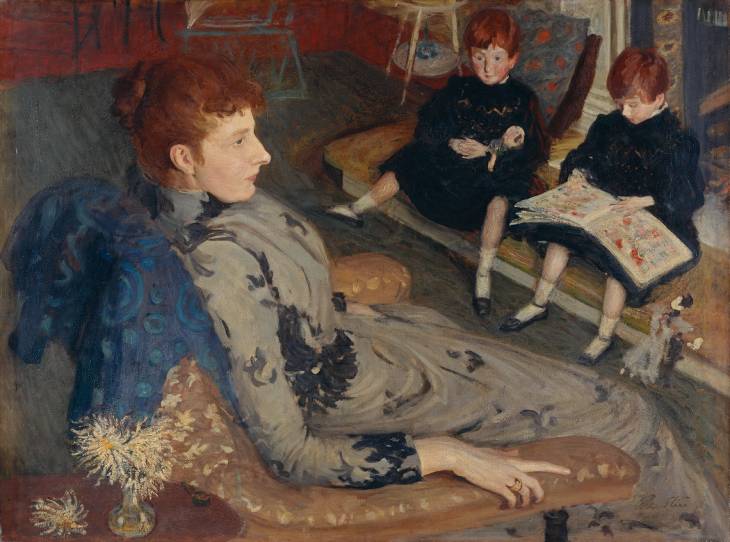
Degas- Could be any other in ballet, but instead depicts a mother of upper middle class, waiting in a drawing room-again, could be Any Mother in Ballet Studio waiting....
Degas- Could be any other in ballet, but instead depicts a mother of upper middle class, waiting in a drawing room-again, could be Any Mother in Ballet Studio waiting….

I remember the first book my mother gave me about ballet. It was already a very old book. The illustrations were of a little girl in a leotard with ballet shoes. She wanted to learn to dance. Her parents took her to a ballet class. After the lesson her new teacher asked her if she would like to come back. Her parents put a mirror her room and a barre to support her first efforts. She practiced what she had learned that day-so did I. I read and re-read this book and committed to memory the first positions explained there long before I was ever able to take a dance class. I didn’t start dancing until much later. My mother was not able to afford ballet-even in those days-but I wanted to learn. It was not until much later that I was able to afford dance classes, but that little book, and those days, came to mind.

I was working in high school and I decided that if I wanted my body to be a temple I should start treating it like one. I needed a plan, an outlet, and a safe place, and suddenly the idea of taking dance classes (probably put into my head by my mother) was born. I went to the local ballet studio in Dayton, Ohio, where they had a company, a junior company and classes and I tried to register for the adult class on Friday evenings. They asked me about any experience I had and I had to admit I had none. They recommended that I take some ballet lessons from the local community college before enrolling in their class, which required some knowledge of ballet, so I did. I registered for modern dance and beginning ballet classes. These were held 4 evenings per week.

It didn’t start with a book with my daughter, although maybe it did, and I don’t remember. I bought a lot of books-books represent about half of me. She started dressing up in costumes with her brother when she was very little and they danced! I would have to thank Daffy’s for that, because I could not have afforded tutus and things like that if it were not for Daffy’s in New York. But, it was much later, when I moved from New York to California, that I actually registered her in ballet classes-just three years ago this month. As she remembers it, she wanted to take tap , then jazz, classes with her friends at the local dance studio in Laguna Beach. She was there for the year, but when she wanted to register for more in the Spring, I informed her that I took dance very seriously and I wanted her to learn ballet as a basis for every other kind of dance she was to learn (and modern). If only I had had this opportunity with my sons, who assiduously avoid anything I formerly did! Her friends were treating dance very cavalierly, as a hobby, something anyone could do, and their expectations were not realistic, but it was fun. She liked it. I thought dance was hard work and required formal training to understand and to be good at, not something you did down at the little local studio, putting on recitals and getting on your pointes too early. I told her that if she wanted to take these classes, I would also insist that she take ballet classes from a good ballet studio three days or four days per week. That was the deal. She agreed to try it, reluctantly.

If I had waited another year, or not had my convictions about ballet and dance, perhaps she would have fought me on it-and won-as my sons did. But she didn’t, so I (hurriedly-I have two older children-you have to strike while the iron is HOT) called the local studios and researched them on the Internet to find a class appropriate for her from a reputable school. I think it is very important to look very hard for a child’s first ballet studio. Their philosophy is crucial for your child’s positive outlook about dance and especially themselves. I did find one studio on the Internet which advertised and upon calling I found that they had a level class that was appropriate for her age. That’s about all that I can say positively about it. The good side was that we possessed this impulse to register, we had some money-my grandmother had given me-and she was willing to try. Beyond that, this world was very foreign to me, and this was a pre-professional school. Admittedly, she (and the other students there) had a lot of flaws, but they had been working on theirs, were approaching it from a level of professional preparation, and whether all of them had the design or facility to become professional dancers, the opportunity was there to try. This was more than a bit intimidating for us. For me. In all fairness my daughter did not have this perspective. She was naive.

When, over the telephone, the co-director from this school said to me, “You don’t expect your daughter to have a professional dance career, do you? She is starting very late”- I should have left it, left perhaps, but she must have gone on to say something else, sometimes words just popped out of her mouth, and I think she was saying that, if I did, and she knew I was, that we would have to work harder than everyone else, and we would have to see. She would have to take more classes, and this became an issue later. This person was very knowledgeable about what it takes (now) to become a ballet dancer, and a professional dancer, but their school typically did not force movement or extra classes on students because they burnt out. This came up in a later discussion, but at this point, I cannot lie, I took her meaning perhaps in the wrong way, or perhaps she stated it somewhat differently than she meant it. But we went anyway.

She enrolled her anyway, and the tuition was much higher than the little dance school in town, but not unimaginable to pay for quality ballet education. I waited to see what the teacher was like, and my daughter went to class. I will say that an unlikely pair, these two directors were actually very professional and delivered a really good dance program for students. Their productions were beautiful, and they provided many opportunities for advancement. There is the studio politics, which they try to keep at a minimum, I suppose. It is probably much more of an issue with families who have more serious intentions for their daughters, where the children may or may not have what is required to become professionals. Parents like that want a guarantee that their children are going to have the best chance, first pick of the roles and plenty of opportunity, before they make an investment or while they are doing it. It did not result in my daughter, at her level being denied prime parts, of course she was not ready. She had parts, she took class, she learned about the ballet studio from the ground up. She had a phenomenally nice and caring first teacher, Ms. _________.

We were definitely not in that market, either, and through sheer differences, are likely never to be. By hook and by crook, we have managed to avoid a lot of those arguments, and pitfalls. We have not become (as so many have wished us) carrion of ballet on the roadside. But, I did have a very difficult time making friends there. It was very cliquey. But the directors were not the ones controlling that, and after a while, the parents (sort of) lightened up and were a tiny bit nicer or at least took the attitude of, “Well, I do not want you here, but if you are staying, then help.” But it is not until much later that you even begin to understand this and can develop a sort of callous against it, or toward it. In many cases, they mean to make you leave, want you to leave, and the children (and parents) will sometimes actually say it. It is a very emotional environment. But still, you can talk, and make friends, watch your children grow, become involved, stay busy, if you can handle the heat. Some parents there were really nice from the start, and some were in a position, or trying very hard to get into a position, to help control their children’s careers and opportunities even further, and some were never around. Even though I like that type best, it is not conducive to running a ballet studio where so much is expected it would take a King’s ransom to afford and most ballet tuition just does not cover it, so putting up with parents, inviting them to volunteer and dealing with them is usually necessary. There is the argument as well, that you need to be there for your child.

I thought, who was she to say at that point what potential my child had, or what path she would take in dance? I literally kept this in my mind, did not tell my daughter until fairly recently, and it went on the list, rightly or wrongly, of reasons to find somewhere else to study, eventually. It was a decision-making factor, however she meant it or well-intentioned she was. In fairness to her, she never brought it up again and does not remember having said it now, so after all this time, I am forced to let it go, as she probably was just having a case of verbal diarrhea, thinking out-loud, and let’s face it, being truthful. We had no idea what we were coming into and she did start very late nowadays. Much has changed since I was a little girl, or even a big one. We were literally NEW. Some people say they are NEW when they come from another studio, switch forms of dance, some even lie about their age or training. Determination is a major factor for learning dance and any limitations taught or observed, in my opinion, are a harbinger for disaster of art and teaching dance education, once in the classroom. And you will find, left alone in the classroom, most of these political issues fall away, so you have to back off. Anyway, that was not the reason for our leaving almost 2 years later.

Perhaps if my daughter did not have the negative experiences that she did she would not have been challenged enough to keep dancing. At least that is how I see it now. She was a natural in many aspects and she loved it! She loved to dance. It was a new world to her. She really wants to be successful in dance, and has her own unfiltered vision of how that is going to be. Even then, she eventually developed her own critique of the school and the teachers-saw whatever they did and judged them. This had somewhat of an influence on me because of course, I was very naive about it, and yet, wanted her to be happy where she was, felt she could be taking more classes, and needed to have more performing experience or attention. If there were things that went wrong, or unfairness (in her mind) towards other people, she judged immediately those in the position to act as adults, keep their silences, and treat children decently and fairly. She made her own decisions about that. I was the driver of the car, but at a certain point you become just that and you guide your children, approve or disapprove, but they fill the sails!

She had just turned eleven at this point and the way I was taught-my mother had been a dancer and her mother before her, going en pointe much before 12 would mishape the feet, damage the bones and muscles, shortening the life of the dancer’s primary tools and career. There is much to learn before going onto pointe, however, and my daughter has had her share of problems. We bought the regulation white demi-skirt, ballet slippers and white leotard. I will always be glad we started there if only for Ms. ______  and the white outfit, but also because when I look back, it wasn’t as bad as all that. Maybe that was the moment of truth. A lot of the inspiration for parents to spend a good part of their lives driving their children to ballet, washing leotards and tights, attaching elastics and ribbons to shoes, buying shoes and the other accoutrement that attend ballet MUST be borne from the vision of our children actually in the dance class on the stage performing. I missed that class. I admittedly was more concerned with what could take place mentally in dance, as it had for me, forgetting that my own daughter was an entirely different animal and I did not have the perspective of say a grandparent, or mature dance practitioner. This is very important in ballet actually, and I believe has a tremendous amount to do with children quitting or not continuing ballet, not putting enough into it to succeed and parents being involved with certain aspects of ballet training that they shouldn’t thus slowing the development process. It took me a long while to adjust-I am still adjusting.

Learning is taking place, and even though it is not traditional learning, it should be traditional ballet discipline and movements. For me, I was in rapture at her in her first class. She could have been Pavlova, Margot Fonteyn or Cynthia Gregory standing there in her first class. She seemed to have their natural deportment and grace. Compare it to when you first lay eyes on your child and that wet baby is the most beautiful treasure you have ever seen in your life. This was right up there, as an experience, for me, and I had not seen or felt that, to that degree, before. I never thought about it much at all. I have a feeling this happens to a lot of mothers-maybe all the hopes of what they can become lie in ballet, discipline and it is though we say, “there,” is where she will be safe, where young ladies belong, the best environment for her growth, development, comportment-as a women-where she will find her strength. It is OUR imagination that sees ballet as their calling and possibly, their savior. We want all the attributes that we fantasize about projected onto our children: the grace, beauty, sylph-like litheness, slender bodies, costumes, roles….it is how we are sucked in, moved. But in the end, although no one else really ever understands us, it is just about the best thing you can do for your child-in my opinion. Whether I am in that league, and there is of course, a lot more to it, it dawned on me, that competition and jealousy are your enemies in ballet, and now I realize they may be your only friends. That is not what I foresaw for my daughter, and I did not see her flaws at first, how much hard work she would need to put in, and how that hard work would have to be held up continually with no breaks, how expensive it would become, or that it was exclusive. In may ways, the co-director should have said more, a lot more, but that only proves that either she wanted my money, or she had hope. Hope, in the end, is all you may be left with.

Although there is nothing at all wrong with this, we often have to ask ourselves if they have it in them to succeed and their pains are our pains, making it, I am finding out very difficult for us to watch as they learn, and yet making us prouder than we have ever been if they do just one thing right. This becomes each and everything as they follow a syllabus, graded or not, for each achievement mirrors the other obstacles in life they have to take down, and day by day, we grow ever more confident of their abilities to be successful in life, if they continue to do so. Ms. ________ was the primary ballet mistress and how kind and wonderfully encouraging she was! We also project onto the teachers the values we espouse, imagining we have a clue as to what makes the dancer tick, binds us with the studio or its directors, the teaching process, or our child for that matter, and I often see parents butting in, trying to tell the teachers what to do, “helping” out, and how often these efforts by the parents anger other parents, and how petty jealousies ebb and flow, how much drama the parents bring into the studio, themselves. This must be very frustrating for the teachers as teaching ballet is no less an art than dancing it, and it requires much more patience, concentration, communication and a special, unbreakable bond between the teacher and the child-one that I warn should not be undermined by the helpful or protective parent. If there is something you cannot tolerate, tell the teacher about it privately and NEVER communicate this with your child unless it is to assist them-and think this over very thoroughly before doing so. Sometimes we pass on to our children our own fears and protectiveness and this can hurt them understandably as they need to form their own opinions and experiences. This, however, in ballet, is pretty much impossible as we are so selfish.

Putting up my daughter’s very long, thick hair was an exercise in itself, but like all the disciplines of dance, this becomes easier and then the dancer takes over, adding this skill to her ballet accomplishments. A good bun is remarked upon even by teachers (I remember mine was pronounced “beautiful” by Ms. Schwartz and I was very proud). A sloppy bun-sloppy dancer! It sounds priggish and judgmental, but this basic discipline serves the dancer well, and to support the teacher in their role as leader does your child no disservice. Command attention and respect for the teacher! Focus. Straighten your seams. Sew your own ribbons. One by one, these “exercises” add to the installation of discipline and direction, taking the young girl and leading her into womanhood, responsibility and grace. They also learn dance etiquette from all of the other students, so I am really for a firm hand by teachers in fraternity and humanity. I really do not like slovenly teachers for beginners, professionals or no. They seem to have no self respect. How can you teach that without it? No matter the parents, the children are what is important. Respect for the teacher, timeliness, cleanliness and a host of other things that you could not teach them at home easily. So why come into the dance studio at all? You have to trust them, right? In all, a dance studio is a very nice home away from home. It becomes like another family for them, and as they grow, they realize, it is a small world, which the outside world has hidden from them, and which if you are not careful, your child feels more comfortable in than the real world. This can be a good place to be these days, though, and it does protect them from some of the experiences associated with youth today, but not all. It is important that they have outside friends and social activities and experiences. They should be encouraged to continue school, no matter how ‘serious’ they become.

There was much made of the brand BunHeads in the stores, so I bought a lot of other little things like pins and sewing kits, etc..that were not available when I was young. I may have spoiled her just a little bit by buying things I wish I had when I was a child-this is probably a mistake, but I enjoyed it much more than she did. She only loved dancing, and accessories decorate her person, but she is just as happy sweating away in her favorite torn leotard, failing to be able to locate a new one like it. I only had two or three leotards the whole time I studied dance and although I recommend a stoic dance ritual, focusing on the technique and not the costumery, there does come a time when “dressing up” is part of the social environment, and preparation as a dancer, a sort of “coming out” which the dancer learns from her peers. Humorously, this might result in periods of awkward hairdoes, too much make-up, and bizarre colors and styles of leotard, but it is a phase and a sign, that the dancer wants to be an individual, a sort of rite of passage for female dancers and get pictures because chances are this elementary phase disappears eventually and there burgeons a young woman, replete in her formality and seriousness, bound for eventual maturity and grownup qualities and the little girl is put far behind her. You will want to remember these days.

I could not resist-but this did result in my daughter asking for many things she did not need. Black is the true color of your beginning dancer’s wardrobe, and until it is deemed that he/she has reached a level to merit some other color (or the studio has designated levels by color), they must get used to it. Usually, some studios relent and give the dancer’s one day a week to wear a colored leotard. You must think of this as you would of uniforms in private school-the emphasis is on the learning, not the wardrobe. As you must also remember it is easier and less distracting for teachers to view the girls in identical wardrobe and clothes for correction of mistakes and proper use and development of muscles. For me, now, important in considering a school, would be the deportment of the other students, the professional attitude of its directors, and knowledge, but perhaps most importantly, that the children are not injured and that there are proper corrections going on constantly.

There is much more flexibility in balletwear than when I or her teachers studied, you can imagine and we cannot help but to compare our own experiences with what is going on around us. I have even had the professional dancer, and even those with children, who are also dancers, expressly tell me that things have changed drastically in formalism, training and the world of dance since they were in school. It has become much  more competitive. There is certainly an emphasis on gymnastic training and innate flexibility. Even of different parts of the body, not just splits, but say, back, and or feet, curvy and not straight. These aspects are hugely controversial, too, and despite these judging points, dancers continue to be successful who do not possess all of these traits, and injuries continue which cause some dancers, who would never have a chance, to be the replacement for one who had all of them. Just life and chance, persistence and dedication, and teachers. Not Descartes, but I dance, therefore I am a dancer even before I began to study the art form known as dance, I was a dancer. Dance to me is the study of ones self, the limits and abilities of the body and the mind. This I reinforce with my daughter daily, so believe me she doesn’t ask for much anymore! Sad in a way. I feel this is very important….really. As she gets older, I realize that perhaps it will come, and perhaps she is a bit of a different kind of dancer, and I am glad, either way, that she takes joy in ballet, whatever her reasons.

Likewise, practicing what they learn in ballet is very important. It is a fact that the more you dance, the better you get. You cannot expect to become something if you take a class and leave. Dancers think about dancing 24 hours per day. Some people work very hard in class and then do nothing in between. Some work more outside class. Some take privates, study other forms of dance, gymnastics and a myriad of other disciplines, too. Some are not sure about ballet. Everything changes all the time and it is common for the parent to be in one mind and the student to be typically of another with respect to their training and wishes. Who knows more is very difficult to say, but you can rarely separate the two ideologies until the dancer matures, comes into her own, progresses. I believe ballet is its own discipline and a strict and jealous master. She believes that, too, perhaps more than I do. Once asked how she prepared for surfing, what exercises she did to strengthen for surfing, a champion surfer said, “surf.”We have discussed what made me dance, why my daughter took a ballet class, but what kept her there? She did, and I did by taking her. But her happiness and zeal for learning drove me to it, forced me to endure it, and then, only begrudgingly, did I take a sort of pride or happiness in it, when I happened to catch an improvement in a step, a jump, an expression or a force-then I was truly pleased.

These two elements are key-and I know a few mothers who take their daughters to dance and the daughters do not apply themselves. They do want to be there, but they do not want to work and they do not want to become professional dancers! You cannot make someone a prima ballerina. They have to do that, they have to have it all, not you, so stop kidding yourself that when they are 14-15 they will not quit, get a boyfriend, do something else, and it can happen anytime, maybe unwittingly. All that work and labor and emotion down the toilet so you say, but it becomes part of them forever, and no matter your broken heart, they may find another career more realistic, or they may just decide that they are not really interested in working against their flaws anymore, or they are moved to do something else. Whatever the case, I think you will find they are improved as a person by the experience of ballet school. You might be best advised to find another pastime and let them do their thing, see what comes of it and not take it so seriously, for you will not matter in their or the world’s final assessment and decision. Letting go is hard, but I recommend it, eventually. I think that my friends are right in bringing their daughters regardless of the outcome, because children test you in so many ways, even threatening to hurt themselves with actions that they are aware will hurt you, too. But, if you hang in there, you send your child more positive messages than negative ones by your example and different kinds of positive reinforcement.

What makes people dance? I mean study dance, be drawn to it everyday, choose it as a way of life, a vocation, an avocation? What is it that calls to so many people on so many levels from so many walks of life and backgrounds, to know more, learn the language of dance? It is the only art I have ever known that encompassed all of me. It is usually because they are good at it. I have never known anyone to like anything that they were doing poorly in: math, sports, music, even socializing-you name it. Students who are good at it always find someone who is better. This is important because we learn, from those better than us, by watching. Also, if we are good at something, we feel rewarded by our efforts in it. If something is continually disappointing, then we lose interest. This is very self-evident in ballet. Perhaps parents getting involved in it and pushing their children into it, keep the rest of us, and our children from finding out that it is , not for them, as we are forced to wait to see if our own children have what it takes, aside from the politics, the same children getting the roles, and we would or they would realize more quickly how hard they need to work and exactly what they DO need to succeed. If you hang around enough though, your child does gets better, those children will sometimes drop out, body types change, interests do, too. So much can happen, just like real life, that you have to see it through,persevere. Much of this is up to teachers who interact with us in class and do not criticize too much, but rather give us things to work on regularly and pay attention to us as in, “You can do better!” and not, “You are hopeless.” But do not expect this to work-sometimes the tough tact is required for certain children to succeed and they like it. Other children do not like to be told they are wrong, cannot bear failure, and must be cajoled into liking it. No child is hopeless, in my opinion, but I am sure a lot of good dance teachers would disagree with me. There are many snobs, but be thankful, in a way, for the schools who take only certain students, protecting you from a too-submerged technique, because they could also be saving you a lot of money, and if your child still continues to dance, one day, they will be in the same classes with many of those students, and finally, they may exceed those students in some abilities or in their career. It’s all about the dancing and Keeping on Dancing! It’s funny, but there is definitely something to not quitting and continually working toward your goal. More about that in another post.

What definition of dance do you want for your children? Do you have a past affinity for dance, or rue lost opportunities or dreams? Do you want them to dance to be the best or to most enjoy the experience of dancing and learning and discipline? Do you want them to compete? Do YOU feel competition is the key to being noticed and being successful in dance or does your CHILD? Or do you feel the expression of dance is most important, the vitality and slow transformation of the body into an instrument capable of responding to directions to express beauty, emotion and strength or are you of the opinion that your child can do anything you MAKE them do? Children aim to please, but to demand too much of them, even if successful can mar them for other things in life, as in “parenting.” It is one thing to believe in your child’s best abilities, but it is another to hound them about things you perhaps want for yourself, as a justification of yourself as a parent, as in having the BEST children, better than anyone else. I believe a lot of people think like this and they send their children to dance, trying to find the perfect place for their children to succeed, but I have also seen the work of ballet take over and transform those parents into believers of ballet in general, and to sort it out. And if you kept the parents completely OUT of the studio, politics and business it would be a possibly better place-usually, but dance and ballet would not rise to level of importance in your community or the world, this way, in the ways that it has. Dance needs communicators and instigators, and activists or advocates. Agitators. There is a useful place for everyone in the art, I believe. Sometimes it comes down to finding your own best use. When we realize that we are all doing the same things it is laughable, really, but some people don’t like to be laughed at either. After all, the children aren’t bothered, why should we be?

This is how I found the dance studio environment, thirty years after giving up dancing, with my then eleven-year-old daughter and the answer is I was (completely) out of it, on the wrong foot, so to speak, and she was in it, trying to get on the right foot.  Shame on anyone hindering her. But, what to do is puzzling, how to help them the best you can, parent etiquette, how many classes to take, what path, what supporting classes, what schools or teachers, what physical issues are there, what injuries, and a lot of other coverable topics that would clearly help parents to refocus some of that energy in a positive way. A no hands policy is just as bad as one of driving the car of your child’s life completely. A balance is sometimes hard to find and maintain. Her experience seems to be very very different than mine as I remember it. Can you separate the two parts of your own effectually? She has come farther than I did in a fewer number of years. She is solely dedicated to dance. I was not. Is this what I want for her, really? Is that, or should that be, my choice? The answer to that might be the key to everything. What about the rest of the family, financial circumstances, time? Could I have been mistaken? Was I in denial about what I needed to do and what is required of me as a parent? Am I still useful? How can you help and not be a hindrance to your child and to everyone else?

In many places ballet has become a competition-based pursuit, like gymnastics and ice skating were and continue to be. Sometimes the competition has become the basis for everything a studio does and that goes to the training as well. But you will be very hard put, in an advanced arena of teaching, to find one that does not do some competitions or tolerate students who have that desire. It has been a way for good teachers with good students to get noticed in the competitive selection process of higher education institutions like the Bolshoi or the Royal Ballet School, and helped to provide their students the consideration of companies and the world at large. A way to help students of ballet. A resort, or last resort. Also a response to parents who have demanded those guarantees, how will my child succeed if no opportunities exist for them in the field of dance without training at one of the elite schools, or from those who do not wish their children to have to leave home, give up education, etc. Jazz dance competitions have always been this way, but what about ballet? Are there two kinds and if so, is one better than the other? Has dancing changed or are dance classes at a lower level school always so political and performance selection focused? Competitions provide a student with an opportunity to show off their particular performance skills.

My mother always warned me against “performance” studios. Why? Are there some bastions left of excellence in the art of dance? Yes, many, in fact, now is probably the best it has ever been in this country, or the world, to find a reputable and caring place to study ballet, to have the best training, and the best possibility of achieving your goals in dance. Whatever may be said about the studios we have been involved with, they took my daughter and began or continued her in her path of excellence in dance, so there I did not err in my judgment or choices. They have all been exemplary in their way. They did care about her, but I may not have handled the situation correctly, or they may have left off communication misinterpreting our departure, etc. It takes work on both sides. Some studios may not be willing to go that far to keep your child, so my motivation, and hers, is to find someone who is willing to work with you. Some parents do not have that problem for many different reasons. You do have to guess and factor and plot and try, for your child.


In this environment, how do I communicate to my daughter the art of dance over scholarships, competition and “winning?” It is possible that this has been futile, because in the end, if she continues, this will inevitably be a required part of her training and to dissuade her entirely would be to her great disadvantage and she might even be missing an important part to her components as a dancer. The point is, I do not believe there is just one way. Successful studios continue to both promote competition and others to deny certain forms of it. These attributes are widely variable, not mutually exclusive and complex-each studio is different, and may change. I think to take a position one way or the other, without regard to waiting until your child’s future in dance is commenced, would be a mistake. Some considerations will not apply to you then and more questions will arise to ponder, make no mistakes! Keep your eyes wide open and your ears. Judge less, do more. Wait and see. Be proactive.

There are many other issues to discuss about ballet and I hope that this first post of our continuing saga in ballet will be helpful to those starting out. I mean to set the environment for an open communication for individuals to comment with their opinions, advice, and to share their own experiences and insight at length. I will not condone and do not mean to expiate against the virtues of one studio over another, for each has their place and merits consideration. While I might say things about the studios my daughter has been involved with, I intend to give no names, and to protect them from unverified slander, even from mysylph. While each of us may have our own experiences, they are personal, highly emotional and there are two sides (at least) to every story. They have helped my daughter on her path in ballet. Hers is not an easy one, for them, for me, or most importantly, for her and our situation is very particular-so is yours. So, let us rest in giving them the benefit of the doubt and let our own experiences and goals be the guide. They are all hard-working and provide good training.

Keep on Dancing!