new choreography always needs to be scene!

Marcelo Gomes’ Paganini danced by both Marcelo Gomes and Misty Copeland. The piece premiered in 21011 at The Joyce Theater.
Music: Paganini’s Caprice in A minor (Op. 1, No. 24)
new choreography always needs to be scene!
Marcelo Gomes’ Paganini danced by both Marcelo Gomes and Misty Copeland. The piece premiered in 21011 at The Joyce Theater.
Music: Paganini’s Caprice in A minor (Op. 1, No. 24)
//www.googletagmanager.com/ns.html?id=GTM-5DBTHW
(function(w,d,s,l,i){w[l]=w[l]||[];w[l].push({‘gtm.start’:
new Date().getTime(),event:’gtm.js’});var f=d.getElementsByTagName(s)[0],
j=d.createElement(s),dl=l!=’dataLayer’?’&l=’+l:”;j.async=true;j.src=
‘//www.googletagmanager.com/gtm.js?id=’+i+dl;f.parentNode.insertBefore(j,f);
})(window,document,’script’,’dataLayer’,’GTM-5DBTHW’);
A photo from the U.S. Archives which demonstrates very clearly Isadora Duncan’s, and other modern dancers, influence on ballet. You can’t say “choreography” without saying “dancers” or “ballet” as they converge, effect each other, and dancers dance, to some extent, what they want to or what the can.
This is a pretty rare photo, but now, we can see that perhaps Anna Pavlova did not really hate Isadora Duncan after-all, but instead was influenced by her, tried to channel or feel what Isadora felt, what modern dance was, or her choreographer was interested in it for this piece. We see it finally because she danced it. She agreed to do it. That makes it important to ballet. What a dancer agrees to do (and does not agree to do) ultimately defines them to their audience, defines their art, and history, especially when you are discussing Anna Pavlova.
But in relation to any dancer, they will be seen to be a certain kind of dancer, expected to perform certain roles, become skilled at those and roles like them. Obviously Pavlova went back to classical roles and swore off modern dance. At least for her life, this was not what she was good at, excelled at. One needs to know oneself and one’s limitations, but that comes with experience. Expansion can mean growing into an acceptance of what your roles could and should be in dance, or it can come to mean limiting yourself to perfection of one type of dancing. Being an expert at one thing certainly raises the level of expertise required for that genre. It increases your ability to dance those roles.
Most importantly, if you are determined to dance certain roles, certain ballets, certain parts, then you need to learn those parts, become expert at them, so that no matter your deficiencies, people will say, “but she/he dances those parts better, even if she/he is not this or that. But if you do not specialize, then perhaps you will never be good enough at one thing to qualify even for that. If Pavlova had not been skilled in ballet, had that not been her passion, we would not have been fortunate to have come to understand her legacy a little better, and while she had the option to become more skilled, at a later age, in other forms of dance, she did not do a 180 and perform modern, or try to find herself in it.
Even with poorer choreography than Diaghilev could provide, she continued to astound audiences with her versatility and drama, as a ballet dancer. She truly was an ambassador of ballet. Something must also be said about modern dance here, the characteristics of it, the difference between it and ballet, are wide. Isadora Duncan could have suddenly said, I want to be a ballet dancer. But she did not. There was unquestionable an attitude and freedom in her approach to dancing, her naturalness, her languor and beauty (she was a very beautiful woman), her form and development in modern dance, which gave her an advantage in performing her roles, her choreography, and she danced to a different drummer, literally, different music.
She was right and Pavlova was right. Two experts, a long time ago, who felt that you had to make up your mind, pick a side, choose, two purists. I do not think choreographers today understand dance very well, for they are not able to separate or merge the two dance styles (usually). They are greedy, and dancers are too, so no one is perfect today in ballet, because they try to do too much. Be the star on every stage. And yet, even with the most sought after choreographers, some dancers just do not enjoy that success. Great ballet dancers fail at exploring new styles, new techniques, and they are simply not the best.
But, by taking on roles that minimize, instead of maximize, their abilities as ballet dancers, instead of having new ballet roles made for them, their performances are not what they could be. At thirty to forty years of age, these dancers should be reaching a point where they are true artists, and yet the barre for true artistry is lowered. There are some artists, such as Natalia Osipova, Darcy Bussell, Tamara Rojas, etc., who have remained dedicated to their art and may possibly reach a point, historically, where their body of work is respected and exceeds more publicized dancers, simply because they knew their limitations and they stayed within the parameters of their expertise longer, trying to reach a point where they were consummate in their art. It is not today that they will be judged, but tomorrow, and in the annals of history, where we are not yet and cannot say whom will leave what.
How will they all be credited? More is needed for women to make a mark, when before them is opportunity to travel, to reach out, to grow, to direct, choreograph, produce. What will their choices be? Will they stray from the path of their strength, give up, or will they take the torch, the flame and finally bring something monumental back to ballet, the genre that gave them their careers, their fame? Or will they dabble in other forms of dance, leaving mediocrity in their wake, when they could have developed classical ballet, and ballet, a big step further in order to safeguard it as Vaganova did.
So when you are in class, or studying ballet, pick a side, and win or lose, cling to that vision. For is you are true to your vision, you are working not only toward what you believe in, and love, but you are setting a precedence for what will be your strongest form of dance in the future. What do you want that to be? Don’t let rejection, or all of the opinions of others set your path. For the path you choose will probably be the one that survives with you, the one you will know best, and will propagate. If there is one you prefer, no matter what others say, follow the choice you will be able to live with and embrace.
I saw this perfectly horrible interview, supposedly with Vivien Leigh-she studied ballet, too! And she is grilled by London Observer and NYT‘s drama critic (young) Kenneth Tynan. I honestly could not watch more than a few minutes-just long enough to hear Mr. Tynan be given the floor in what was supposed to be her interview in which he makes the same (unfortunately) point that I did in my comments about The Red Shoes and Sylvie Guillem‘s recreation of ‘Bolero,’ and in the same post about Natalie Portman‘s portrayal of a dancer.
Before I thought about it, I responded to his position as one insulting Ms. Leigh, and considering the sleights to her acting ability that I had recently read about, I took offense. He insinuated that her parts could have been played better by real southerners in both Gone With the Wind and Streetcar Named Desire-namely her two greatest roles. He was a bit of a 3. Then I was embarrassed to realize this was a similar point to mine! Here was, undeniably, the most famous British actress of her time, if not one of the greatest, being questioned about her choice of roles, and defending her right as an actress to portray whatever characters she felt, and explaining that she had to look for challenges. He mumbled something about Japanese playing Chinese and so on. I really need to go back and force myself to watch the interview, if only as punishment for making a similar point.
To clarify. I do not think Natalie Portman’s portrayal of a dancer violated any rules about non-dancers playing dancers. i am only aggrieved for dancers that she did not give credit where credit was due-anymore than Vivien Leigh gave any credit to southerners for her portrayal. A lot of people think Gone With the Wind is not one of the greatest films in that it stereotypes blacks and makes them appear to be happy in their slavery. I think the film is one of my favorite films of all time, and I have read the book by Margaret Mitchell. Clearly, casting of Vivien Leigh was not a mistake and she probably deserved the Oscar she got. I questioned whether Ms. Portman deserved her Oscar, I am still out on that one. Ms. Leigh was doubled (even before she was hired) in many of the scenes-particularly from the fire scene in Atlanta, but others as well and no credit was given to the extras that I know of, but credit was given to the blacks in the film and they were not played by whites in ‘black face,’ which did advance some of their careers, although many of the players were considered fine actors already. If not for these films, how were blacks to be taken seriously, or taken at all, in films? How were they to make a living? I do not think The Black Swan did less for ballet actually. There is no such thing as bad publicity. Many of the dancers in The Black Swan may one day be noted for their dancing as a result of having very minor parts in the film, but I doubt it. I do not think the film itself was or will be considered as great one day as Gone With the Wind-but who can tell? The fact is, it is a film about dance.
Sylvie Guillem most definitely was challenging herself in the role of Bolero-again, how stupid of me! I should not have commented on her performance, copying, or lack of freedom in the role. Here is a woman at fifty-still dancing! She is an icon. We need icons in ballet, it’s just that we need more. Perhaps. But both of these performances have in common, to me, a greater place in copying the fine art of dance, in one form or another, than in bringing to life a role, whether acting or dancing is involved and I think that where art is concerned, i would rather see the latter than the former in almost any instance. But this ties together quite nicely my points, even if I do have to be categorized with the imbeciles!
Just a quick note to Shah Khan’s insightful Yale Graduation reading and his discussion to the graduating class about success. Is failure the key to success as he (and I) believe? Are people, who are learning from their mistakes, more likely to reap more success in the end? Are people who are generally more afraid of failure more likely to succeed? Is success sometimes accidental, or always? I quote, you always learn more from your failures than you do your successes and to truly appreciate success you have to experience failure-but I am not sure who said these things, so ingrained are they!
The competitive world of ballet | Stage | The Observer.
Great article on the make-up and elimination process of the Royal Ballet Academy. Considers homegrown versus international students, ratios of such in company and impact on British dance. Though thought provoking, what many of us imagined. Unknown to us was that other schools, besides the Bolshoi, are nearly fully comprised of students from their own countries, while the Royal Ballet calls ballet “poaching” good policy and ballet a “global marketplace.”
Well, if it isn’t one thing, it’s another. Injury, pain, something new very often, the more intensely you study or work in ballet. The question is, do you rest with every injury or pain that your child reports to you. For example, one month ago, while landing from a pirouette, and extending her foot in the back, the foot slipped, causing the weight to lean toward the outer side of the foot abruptly. This was a very minor sprain which hurt pretty badly and resulted in the rest of the week OFF. The next week, it was aching hips from stretching. The following week she tripped over her brothers suddenly extended leg and went down at a 90 degree ankle right on the kneecap-hard floor. Last night she said she must have tendonitis because her achilles tendon hurt on point. I was half asleep and dreamed about dancing, sudden and crippling injuries, with these thoughts pooling in my brain. I woke up two hours too early after having slept poorly. Think, think, think. Well, these are just the medium complaints a parent hears, aside from terrible colds, bleeding toes, painful hamstrings and other muscles, peeling feet, stinkfoot, bruised toe nails, falls, popping, back strains, not to mention the constant feeling by your child that perhaps one fall, one debilitating injury and they will not ever be able to dance again. Vitamins, diet, hair-down to which shampoos they cannot use because when they do their hair is too fluffy to put into a bun. It seems when everything is quiet, there is just no catastrophe.
We have had some of these before, and there are pains that last months and pains that last a few days. That is pretty much how you distinguish them. The antenna are meant to go up at the mention. How each dancer handles other pain is down to the dancer. Mine has thrown away her spacers, gel toe pads and other paraphernalia in order to develop calluses and keep a monitor on the changes. She discovered she could dance for certain time periods at one level of activity and another, shorter length of time with more strenuous point work, but pain is a thermometer in ballet. It is just a question of whether it is in the red zone or blue zone. The more experienced dancer knows-or thinks she does-the difference. Thankfully, they tell you just before you fall asleep that they have a possibly crippling condition. They are supposed to, right? Tell you, I mean….
All day, I had to think of a way to work up to say, “by the way, that achilles pain (tension you can cut with a knife emanating from her) you mentioned (casually), is that a sometimes pain, or a constant pain, of the first time (having forgotten about the one associated with point shoes)? “S-o-m-e-t-i-m-e-s…., well, yes.” (Trying not to be pregnant pause), “Well, when does it happen-during a particular exercise? When you go on point, or in other exercises?” “When I am on point-once….” and when I point.” Suddenly “When did it start? You mean you did not tell me the first time?!” “Mom, it just happened once, last night!!!!” (Phew). “How bad was it?” “I don’t know, it just hurt when I went on point.” “I think it is your shoes!” “Me, too.” Truth? I can only guess.
Background and some further research rearding
“You have to strengthen.” “That’s what makes it hurt.” “What?” “When I point and flex-that is what makes it hurt.” “You cannot dance anymore if you have tendonitis-that is serious. You have to rest the tendon, you do not want to make it worse or chronic.” How can I strengthen it if that is when it hurts????” “Do rotations and improve your releve.” “I do. I shouldn’t have told you.”
Information on different kinds of achilles tendon pain can be found here:
http://balletdancing4u.blogspot.com/2010/03/ballet-dancing-and-watching-those.html
I tell you because I cannot tell my daughter. Today I think every year of her age a brick is placed in that wall between us. She would be mortified if she knew that I discussed this openly with anyone-even a stranger. But she “should not have told” me!!!! What can she be feeling or thinking that she would not tell her best friend. And me-not wanting to pry, leaving her be, let her alone to learn, to cry, because she wants to be a ballet dancer. Should we let them? Is it cruel? When is it time to let go? Now? So young. Dancing is supposed to be a happy thing. How sadistic are we that we let them dance, to be an icon of self-victimization? Is it really that rewarding and addictive????Yes.
Some more information, and some good exercises, can be found here:
Click to access achilles_tendon_pain.pdf
Tendus Under A Palm Tree | tendusunderapalmtree.com.
Great interview with Stephen Manes, author of Snowflakes Dance and Swear.

We have all probably heard that Catherine de Medici, brought culture upon the French people (whether they liked paying for it or not), and that she, with her husband Henri II of France, their nine children (one of whom was affianced to Mary Stewart-Queen of Scots from before 10 years of age and died, shortly after their marriage), and his mistress (Diane de Poitiers), their three(?) children, were harbingers of the period of enlightenment and of a trendy form of government called (royal) Absolutism -“One King, One Law, One God”, an expression epitomized in the 17th century by Louis XVI, though not even a direct descendant of Catherine’s; his wife, Marie Antoinette, was. All of Catherine’s children married into prominent royal families of their own and in turn (copying their mother) spent a great deal of the public largess staging outrageous splendors including victuals, parties, a personal zoo, triumphs, and fêtes unlike any of us have really seen the magnificence of except through tapestries and artworks. Though Catherine’s heirs (probably hundreds even though many of her own children died or had no issue) promulgated culture, I do not think their diversity, significance, or largess ever exceeded or met their mother’s, at the time (they tried). People really do not understand to what degree or how ostentatiously the French, or royalty in general for that matter, in those days, lived, and that as a result of these opulent expenditures how fortunate we are to have benefited from these grandiose festivals, or from them came what salon arts-among other things, ballet.

Catherine brought, and repeatedly sent for, chefs, tailors, artists, poets, writers, musicians, personal dancing masters, and any number of other coaches, teachers and “servants”-not just from the Italian court where she was a scion as well, but from around the globe; they instructed not only her own children, but the entire court, on various arts, as well. Many great performances were planned by her for the enjoyment of her guests, and later the public. These spectacles, I have read, involved not only the ladies and gentleman of the court dancing in normal surroundings, but imagine great and opulent sets featuring rides and forests, whole elaborate gardens brought in to recreate lavish and fantastical environments to excite the senses, enveloping viewers (and participants) in delights and repasts, and performances the like of which we could not possibly recreate due to their cost alone, and not possible at all to replicate the magnificence of not just the gesture, but the potential of the world as seen by their complexity, technology, and imagination at the time of enlightenment-oh, were we to enjoy life from the vantage point of a 14th century participant! Not only were these designed to be highly interactive, each one was deemed better than the last, and so on, but also unique, and in no way like the last. Original.
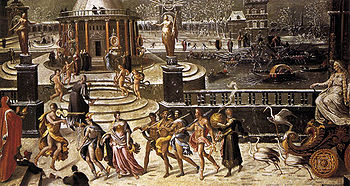
Queen Catherine was a great promoter and through these events managed to keep the court (and the world) poised and waiting for what she would do next. Additionally, she used these soirees to entice illustrious counterparts from other kingdoms to France, to her salons in order to exact her due; this was deliberately done to iterate her family’s political force, and to strategically keep her friends close and her enemies closer, for there were many who aspired to the seat of France. By this, and other methods, she married her sons and daughters to royalty, calling in the obligations for favors as she needed them. You were “in” if she liked you and “out” when she no longer had any use for you. Mary, Queen of Scots, despite having been a part of that royal family for over 10 years, considering herself a Frenchwoman, hastened out of France by a circuitous back route after the death of her young husband, Francis II, King of France, and Catherine’s oldest son. Despite their oft demonstrated closeness (Mary was reared by Catherine as one of her own), Mary somewhat feared her mother-in-law just the same and knew when it was time to tuck tail and leave.
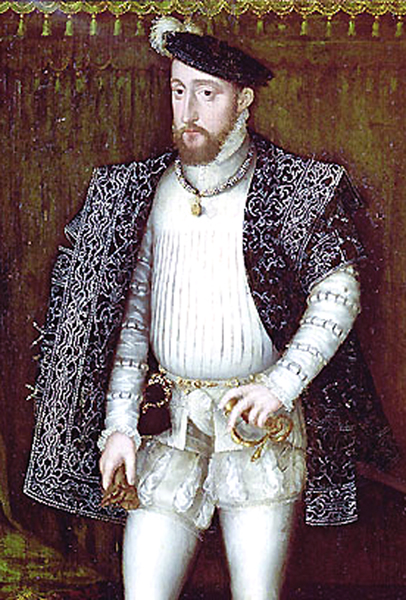
Mary, next in line to the English throne, after Henry the VIII’s children, was originally affianced to Henry VIII’s only son, Edward VI (Jane Seymour). But, as political intrigue of the day would have it, and the time-honored feud between the Scots and the English (for their autonomy), the Scots broke the match and scuttled Mary off to France, preferring to maintain the alliance via the Valois house, as her mother was a member of the Guise family (a compatriot of Henri II, King of France). A political move to put a French Queen and King into the Scottish realm, also Catholic (Catherine would probably not have allowed her son to ever go unprotected to England anyway), but tricky. Catherine’s rise was accidental, more or less, and this was early on, but she was busy finding royalty for her offspring to marry, and betrothals were a guarantee (of sorts), but she might not have been as clever then as she was later. At any rate, it was Mary’s life at stake there and while in France, Mary was still a Guise. Catherine, like many royals, here and there, had come to France to marry the 2nd son, not the heir apparent (who died, as they did then, suddenly), but she seemingly took up where her predecessor had left off, swimmingly in most regards. Henri II was not known to share affairs of state with Catherine in any way at all; but he did support her in her wifely duties which she appeared to take very seriously. It must have been a different life than Catherine hoped for, married to a sullen and gloomy Prince taken by bouts of depression and who, having been held hostage for four years in Spain, purportedly, was difficult to please and unpredictable-he also had a very famous mistress, Diane de Poitier. Catherine worked hard to make a success of her life and legacy, and also surprisingly, to make her King happy, and it appeared that entertainments were the chief employ she used (also food). Henri II, King of France, like later Kings of the Bourbon line, enjoyed dancing and the company of certain people.

His affair with Diane de Poitiers began then, and lasted his lifetime (not that long). It is said she had greater influence, not only on policy, but on development and the budget, than Catherine did, so it was not until his death that Catherine really gained more control over matters of state, and then, mainly through her children or rather, because of them. Perhaps France was better for Mary to grow up in, as she gained more popularity as an “escaped” ruler living in decadent France-the glorious France Catherine was promoting, than she would have, without any romantic excursions, living in rustic Scotland. Francis I, King of France, died shortly after their marriage, at age 15, of tuberculosis (some said ear infection) in 1560. France afforded Mary a life of excitement and wonder, and, if nothing else, the privilege and dynasty of the French court, and untold luxury and surroundings-truly a fairy tale lifestyle. The entire “situation” infuriated Henry VIII, King of England, and his wrath was witnessed in a series of attacks on Scotland, known as the ‘Rough Wooing.” Mary and her new fiance, the Dauphin (Henri II’s heir), Francis (1544-1560), were wed on 24 April, 1558, and Mary, briefly, became Queen of France (1559-1560) as a result. Mary’s was not a happy life, or a long one, but it was a more typical life of that period than we would be prepared to believe. Catherine’s own story is not dissimilar, and Mary was possibly comforted by the thought that her fate might end as well as Catherine’s, and followed the advice of her betters; this was not to be. But, had Catherine married Henri VIII’s son, it is very possible that Elizabeth I, still would have had her head. So, Mary, Queen of France, became Bloody Mary, though it is said. much loved by her people.

In the same year as Francis’ death (1560), Mary’s mother, Mary of Guise (a Bourbon, married to Henry V, King of Scotland), died also; Henry V was her second marriage). Her daughter, Mary, longed to return to Scotland (supposedly), particularly after her mother’s death (and wise, too), since the French were anxious to rightfully establish “their Queen” as the monarch of Scotland-apparently to serve dual political purposes, she was given the boot, permission to leave. The French had the young Queen (Mary) sign documents, prior to this “release,” which they sent to (Henry VIII) England ahead of her, naming her as the rightful heir to the Scottish throne. This arrogant claim by a Queen, upset the English, and undoubtedly set off the chain of events which led to her own execution there in 1567, a mere 7 years after the loss of both her husband and her mother, but this was not the grand design planned for her, and it might be said that what she had learned in her life, prepared her for that eventuality in some respects. Mary was a political pawn, and may have done well to stay in France, or was this was a power move keeping with Mary’s own desires, after all? It is never mentioned that Mary had a desire to rule, but we can assume she was prepared to do, and had done, what was expected of her, despite any other longings. If death was a possibility, then she had clearly already chosen this path to avoid that end already in France -maybe seen as the lesser of two evils by her, and also one of at least, hope.
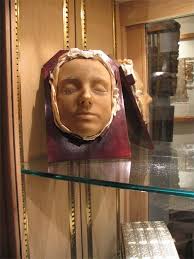
While this may seem a long way away from ballet, it is not, and had Mary stayed in France, had Catherine de Medici not been vigilant in her ambitions to remove threats to the throne, promote her court, or had her own hold not been so tenuous ballet might not have played the part it did, repeatedly, to evoke the results Catherine desired. Afterall, endorphins make people happy, and somehow, Catherine managed to make “non-sporting” courtiers and the public happy with this fete. It is important to also compare and contrast the power of women, felt by some to be less than natural and overflowing, so here was a women par example who exercised that power cleverly, if not ruthlessly-and as a man, she would not have taken any criticism for it. This might be the first example also of using ballet for power as a tool. Seen as a transparency today, the political goings on of ballet companies, choreographers, schools and governments, or with other women (or persons) with whom we compete daily, and for what reasons and ultimately to what end-it almost seems par for the course, child’s play, compared to the lives drawn from it, movements created by it, and occurred throughout the history of ballet, in the halls of the great Kings, not merely in the studio today. I think this is what Shakespeare (1554-1616) meant in As You Like It, Act II, Scene VII, to preserve art faithfully, when he spoke
"All the world’s a stage,
And all the men and women merely players;
They have their exits and their entrances,
And one man in his time plays many parts,
His acts being seven ages."
Far less is at stake today, and despite issues of governance, Catherine dutifully upheld her position as Queen, in providing diversions and costly entertainments to persuade her adversaries; it is said that words are far more important than weapons, and in this case, it might have been her choice of entertainments which actually carried her family as far as they went. Ballet has played an integral part in the political and financial processes of many countries, and this was just the first. So, it is also important to note that history contests the Queen’s concern for Mary, and poses some life or death reasons for her rapid departure from France, not only for Catherine’s political interests in England and France, but resolved what best to do with her, as she was Queen, and seen as a threat to Catherine’s offspring, and a possible pawn by outside parties. It is hard to imagine that Catherine had no idea how far alee that wind actually blew. She was still of very marriageable age (purportedly very beautiful), fiery (no doubt due to her Scottish background), and also considered reckless and passionate, and not very cautious–which some attribute to her liberal French upbringing), and might have been the natural choice for another claimant to the throne of France. Perhaps it was not said by Catherine, and instead these words sonorant in history instead:
“Many of us saw in the place where we are now assembled to deplore her, the Queen on the day of her bridals, so covered with jewels that the sun himself shone not more brightly, so beautiful, so charming in all as never woman was. The walls were then hung with cloth of gold and precious tapestry, every space was filled with thrones and seats, crowded with princes and princesses who came from all parts to share in the rejoicing. The palace was overflowing with magnificence, fêtes and masques, the streets with tourney.
“A little time, and it has all vanished like a cloud. The marble, the bronze and the iron are decomposed in the air or corroded by dust, but the remembrance of her brightness shall live eternally.”
~The Archbishop of Bourges
Or, in the words of Elizabeth I,
“The Daughter of Debate,
that eke discord doth sow.”
(~Ascribed to Queen Elizabeth)
So much is perhaps written about her, compared to Catherine, that it is possible to feel more intimately the realities of the time, dark contrasts, possibly fates, and opinions of others through her, when we might look at what was PR by Catherine, and believe that this was indeed a fairy tale existence. This is, in reverse, the path which Catherine herself so arduously avoided. Mary might also have not favored the political process of Catherine, including, ballet. It is however, also interesting to note that has Mary brought these spectacles to Scotland, England’s own influence on the craft might have commenced much, much earlier than it did.

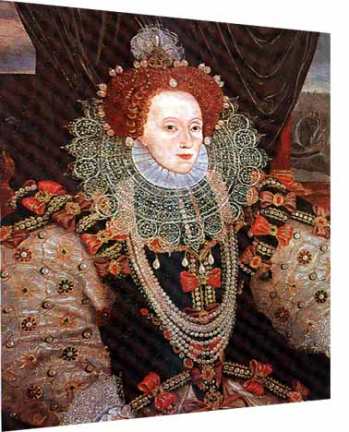
Catherine’s husband, the King, Henri II, who jousted and performed many feats for her, including dancing, had died less than two years prior to these events, by an errant splinter to the eye (during a joust), yielding to an infectious fever. This diversion of the new Queen to Scotland, also left France to Catherine’s will (and Recency) until Charles IX (about her 5th child) was old enough to become King himself. Catherine never ruled herself, but was probably one of the most powerful influences behind any throne in the 16th century (or any other-truth be known). Reigning as Regent (governor) over 30 years, and including, during her youngest son’s (Henri III) reign (last male of the Valois line), where she was said to be his most potent advisor until very shortly before his own murder in 1589. Without Catherine, who only reigned as “consort” alongside her own husband (Henri II, King of France) from 1547 until 1559, it is very doubtful whether her sons would have remained in power at all; they were all seen as weak. In her own way, Catherine had many disappointments in life, but as an orphan, a follower of Machiavelli, it was not what Catherine understood about ruling which limited her power, but what she failed to grasp or have patience to understand which did, at the end, seem to be her and her family’s undoing. She seemed to be vulnerable only due to her great love for her children, unable to counter their whims, transfer her greatness to them, rule for them, so she did the next best thing by actively protecting them, guarding their interests, and influencing their decisions.

By this measure, Catherine was a good mother, and a careful ruler, if unable to see/correct her own children’s flaws, she did her best in spite of them. Her ruthlessness is popularly underestimated. Poor Mary, therefore, was doomed from the start due to events completely out her control, a cog in the wheel of a vastly complex coup d’é·tat, and a real tragedy in a game of thrones. Perhaps, had she lived, Scotland might have been a seeding ground of culture, ballet, and arts, as she had not the chance to rule, but she and Catherine, and many great “outsiders” and “black sheep” have come into their own by sheer determination and persistence, have survived due to not luck, but by circumstances, grit, and indomitable strength of will-perhaps mere stubbornness, none of which could be known in advance, predicted, or changed, except by death, and only history shows us possibly where they might have erred. The fact that it was the imagination, intrigue, and manipulation of women, who created something as interesting as ballet, as beautiful, and as full of the possibilities of art as it could be, does not surprise me. Catherine had to think, she had to be smart, and because of the plight, deaths, and resourcefulness of women, and mothers, in many senses, there is ballet. One can readily see why Catherine had concern for Mary’s charms, which besides unparalleled beauty (at the time), including known kindness.

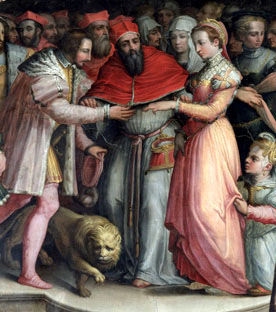
Little remains of real information for this period of French rule, and despite Catherine’s patronage of the arts, very few paintings exist of the events and festivities which characterized her court. One painter, Antoine Caron, did win her favor, but perhaps his paintings are not as realistic as many people would like. Either that, or the probable fact that his subjects are fantastical and allegorical, elevating the surroundings to heights partially within Catherine’s imagination [sic, this is what it was supposed to look like] and therefore found her support. Catherine was not ugly by any means, but she may have suffered from rickets, however slightly, and other deformities, such as slight sexual ones, but this was commonplace among royalty (See, Hapsburgs), etc. he did have somewhat protruding eyes and a larger mouth, which were not considered beautiful traits of the day, but was, accredited with beautiful hands, a fine figure, and lovely skin-it is no wonder that these features are exemplified in approved paintings of her, and her faults are minimized, without appearing patronizing.
At Henry III’s death in 1589, her realm collapsed, religious wars were ongoing, both within and without France, and with no male heirs left, Catherine probably looked for her daughter Margaret’s match to Henri, King of Navarre (of mixed Catholic and Protestant background), to extend the rule, preserving the control of at least her immediate heirs-he had, after all, promised to convert to Catholicism, and did during her lifetime, anyway, thus gaining her favor by his loyalty. It was not until later that his army defeated her son’s in favor of more tolerance to the Huguenots, his reasoning being that the country was divided. He won overwhelmingly, but continued on, with Henry, in this way, and this was when, no doubt, Henry III contradicted the will of his mother, to come out in more liberal position toward the Huguenots, and at which time he was killed, whether to insure Henri of Navarre’s ascension to the throne, or due to its inevitability due to birthright, and the fact that Henry III had no heirs.

Henry, became Henry IV, King of France, in 1859. It is notable that at the festivities of Henri and Margaret’s arranged marriage, nearly 20 years earlier, on August 24, 1572, Catholics and Huguenots were brought together. The killings and slaughter of Huguenots, some said at Catherine’s own order, are ever after referred to as the St. Bartholomew’s Day Massacre. Henri escaped with his life, with the help of his new wife, promising to convert. Later they would divorce, and Henry would issue the Decree of Nantes, becoming briefly one of France’s more humane and democratic rulers, offering “tolerance” to Huguenots, as well as tax concessions, which made him popular during his reign, and before the reversion of the line to the House of Bourbon, where continued rules, absolutism, and Catholicism by the devout Catholics and the line of Louis XIII would again find a foothold. Catherine had no way to foresee all of this, and at her death probably rested permanently with the thought that the arranged marriage for her daughter with this direct descendant to the throne of France was insured, but unstable, as Margaret and Henri had no issue by that time, so it is probable that when she died, she died knowing of the likelihood of the reversion, and more than anything, perhaps, all of her life, Catherine had feared failure of that- loss of the throne by the House of Valois to the House of Bourbon-probably praying for some interception of fate, desperately. But no one could ever say that Catherine de Medici had not done her very best by her family, or that she had not been strong, or true to her purpose.

Though historians often credit Catherine with various decisive and history-changing, terrible actions, actions such as the massacre of the Huguenots, it is pretty clear that the length of time she was able to keep the Valois line on the throne, had much to do with memory and perpetuity, if not the final and permanent adoption by France of the Catholic faith, and she did not know another way of dealing with this problem. Without all of these publicity and political attempts to entertain the population, establishing what she was to be remembered for, it makes clear this great woman did that, and did not put more strain on the purse that her successors did, and that she and her children were at least able to govern ostensibly, if not equitably. Often called “the rival queens”, Catherine had her own trouble with her daughter, Marguerite de Valois, who married the future Henry IV, and changed the path of france, was in many a historian’s view, the ultimate betrayal, of a daughter to her mother. Clashes of religion, not culture, were Catherine’s undoing, and so much was made of the Valois’ contributions to France (collectively), that it is no wonder Louis XIV took nearly a century to catch up to her or best her.

However, without this turmoil, this strife, and these innovations, ballet might never have been the success that it was, so the concentrated efforts of Catherine de Medici to ignite her House of Valois, make it memorable, cannot be too much inflated. At last, it was Henri IV (Henri of Navarre), who had married her daughter, Margaret, who was radical to that end, selfish in other ways, and who was the cause of the destabilization of the House of Valois, and not Catherine, probably due to his more liberal religious views (and his ambitious wife). The zig-zag course of Catherine’s life, the loss of her parents as a newborn, her commoner status, her luck, the decisions she made, that she was able to bear so many offspring following medical corrections, the loss and death of her children, betrayal, overcoming of certain odds, such as her husband’s lifelong affair with Diane De Poitiers, the selected marriages for her children, her promotion and ingenuity, all bear testimony to the fact that she was perhaps the last and most ambitious of France’s great rulers, and a determined warrior queen, and whom, in the future, France has had no equal. Aside from Cleopatra, whom even less is known about, Catherine de Medici, remains an object of controversy in many more arenas than any other Queen, and the most fascinating subject of films, books, and diatribes-however scant the text and proofs-the imagination runs wild, and her interests spanned everything.

Dancing was one of Catherine’s many passions and she knew it pleased others greatly. Many dancing fetes were held at her many palaces and there was always music, theater and poetry. All of the arts were represented in her court, but not all at the same time, or at once. There were those who wrote and directed ballets with their household members and as early as 1530, and there is a reference of the Count of Savoy preparing and acting in ballets with the princes and princesses of his court, but the most remembered and copied ballets d’action were those of Catherine de Medici who brought an Italian dance master by the name of Baltazarini to teach her children. Everyone knows (probably) that Queen Catherine brought many fashion experiments to the French court as well, making popular the high heel. This shoe was designed, especially for her, to give her the look of a more pointed (and therefore) more attractive line. A bit chubby and ungainly, she felt that this extended, made more graceful her legs and feet, and looked prettier while dancing. Soon the whole court was wearing them! The gesture of presenting the foot was made more popular and of course the ankle was turned out, facing the partner, and presentation for her was everything!
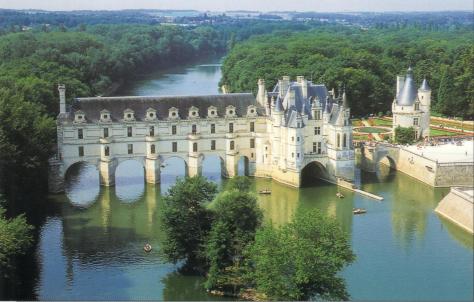
So not only did she feature the first choreographed dances, usually the polonaise (but enough information is not available to discern the truth completely), with costumes, sets, music and scenery, but she also fed the idea that “turnout”, grace and a focus on footwork was necessary for a most appealing presentation of the spectacle of dance. These rules and refinements were the minimum set forth in her court and passed along to other courts as “the thing to do,” and how to do them properly. Through word of mouth, art work and in-person eye-witness accounts these facts remain.There is a lot of speculation regarding Catherine’s planning and motives for the Ballet Comique de la Reine, as nothing she ever did was not for a political purpose (or several), but this, which was to become precedent for ballet, started the form of the cour, and was possibly motivated by personal reasons as well. In her own way, perhaps Catherine threw herself into the creation of spectacle and entertainment to cast a different light on the Royal family, enduring his affair, and most of all to insure the popularity of her court and therefore her children. It is said Henry III, her fourth son, maybe/maybe not gay, was encouraged to (actually) celebrate his favorite’s marriage, Duke de Joyeuse, to Margaret of Lorraine. In order to give this sacrament its most noble and elevated appearance, it is said Catherine planned a most elaborate performance for her son’s benefit, and for her court and admirers, entitled The “Ballet Comique de la Reine.” It is is said to have been the most costly performance of hers to date, coming in at over one-million ecu. Although these tidbits are widely argued and disagreed with by historians, it does seem important to mention them, as in a lot of gossip, sometimes there is truth.

This extravagant entertainment (Ballet Comique de la Reine) cost more than a million ecue (a la couronne). Money was rather unstable in this period of history, and monarchs tended to play around with the value of coinage, but merchants did not, so it is fairly certain the cost of the affair was remembered accurately. Although the ecu did not rise in value comparatively and stabilize until 100 years later, the French sovereign’s coin was undoubtedly solid gold, and having the same approximate value as an English or Spanish sovereigns coin would have had (for they desired to best each other), thus the expression, “worth your weight in gold.” Henry of England’s gold coin, in British culture, was worth more to its people (and to Henry), but in France, the Queen paid in her gold, probably never in silver, so a commission from the Queen would have been in gold, at the going rate universally, but worth much more (in gold) as coming from the Queen, whose “weight” was greater than anyone else’s. So when these costs are bandied about, and uncertain, the only absolute certainty was that there was status in being paid by the Queen, this payment was the best and highest monetary payment one could receive, even if its value on the common market was roughly equal (gold did not go up more than 10x silver which is still a little low), until later in the next century, and the affair was by principal the most costly. In grams, the ecu was 3.399 weight of gold, and imagine one-million of them for this triumphant spectacle!

One-million! From gram to Troy pounds this is approximately 2,700 pounds of gold-a ton is 2000 pounds-more than 1 ton of gold. Possibly the weight of her entire immediate family. A lot of gold. It’s fineness was 96.35, and the composite of fine gold to trash gold was 3.275:3.399-a very high ratio of fine gold (the Queen’s). In comparison, however, Henry’s English coins were much heavier-and contained more actual pure gold, and were therefore worth more, side by side, had gold been valued or measured intelligently at a common market rate, but it wasn’t, and the gold sovereign sets the standard for gold weighing in at 15.552 grams in 1489. With 15.471 grams of that being fine gold. But Henry would never have spent his gold on this folly. He liked dancing, but he was more occupied with the costs of war, so reserved his fortunes for security purposes. France knew the what money could buy and they bought what they could if only for promotional purposes. For us, this was the moment ballet was sold to the highest bidder, established as an important art and entertainment form, used for a political purpose, and thank goodness, Catherine wanted to buy it instead of opera or acting!
The Queen’s gold had high value in France, but not so much in England, where there was growing hostility for the Catholic French, but perchance in Italy, her gold had more value even because although of French, and even English descent, Catherine had originally come from the Italian court. This may have been the reason she sent so frequently for things from Italy, and her gold might have had even more value there; she was able to spend less of it, bring what was exotic, cultural, and pleasing to her-it underlines that Catherine knew about Italian culture, understood what was missing from the French culture, and with this knowledge, she planned to make her empire great and unique. She did, and whether the Italians worked on credit, sale prices, or obligation, they came and brought their skills where they were paid for and could be perpetuated and appreciated, for if the Queen would introduce them-how could they fail? Had Henry the Eighth felt that ballet and dancing won compatriots, defined civility, or counted for more than war efforts, in other words, competed, ballet might never have become what it was and has been, for through the influence of Henry we would have seen a much different form of danse. But England was always frugal. France extravagant, and Catherine could see that things other than war could make a civilisation memorable-she ruled from her seat, not from her horse.

Balthasar (also known as Baltazarini) de Beaujoyeux’s most important work, was the “Ballet Comique de la Reine” in 1581, considered the first ballet de cour. Of course sets, costume and dialogue were all coordinated as before, but what set this apart as different was that the ballet told the whole story-it was the central theme-the dancing. Catherine recognized this difference, and had a libretto scripted from it due to its success-sort of a princely gamble, setting it down in history as a fete remarkable. As such, the libretto still exists. The event was memorialized with drawings, which were sent in remembrance to all the courts of Europe, sort of like a photo or belated party favor. In this way, they have been passed down in memoriam. She publicized it. As a result, it was copied. Instead of Italian ballet masters, the courts now looked to the French for their dancing examples. In one fell swoop, she did what Nureyev did for ballet, in the 1960’s, she popularized it, stole it, vanquished her artistic foes, and took ballet, the art form, away from the rest of the world and made it French! Italy was so far behind, they focused on opera, and England’s art became the theater. Such a coup has not been seen before or since, and Nureyev merely stole a stage for a generation, Queen Catherine stole the stage for 200 hundred or more years. She made ballet public.

On October 15, 1581, Queen Catherine’s household would showcase this first staged public ballet. Due to Catherine’s influence, and after the succession of her son Henri III, his wife, the reigning queen, Louise de Lorraine-Vaudémont, would formally host the event. The Ballet Comique de la Reine was a four-hour spectacle commissioned by her for the wedding of her sister Marguerite, to Anne de Batarnay de Joyeuse, who was not only a a royal favorite, but also an active participant in the French Wars of Religion. It was probably not by accident that each of Catherine’s grandly staged events was also a testimony to the power and authority of her House, but also were Catholic events, staged by the Catholics, much like the events in Rome, and miracles, to magnify the power of the Catholic Church and its chosen royal family. No doubt Catherine had seen this done, and the success of it. Though this was a new way of promoting her line and her heritage in France, it cannot be ignored that these carnivals and fêtes were often the site and cause of tension and uprising, even violent, with the Huguenots, such as the one in 1572, referenced above.
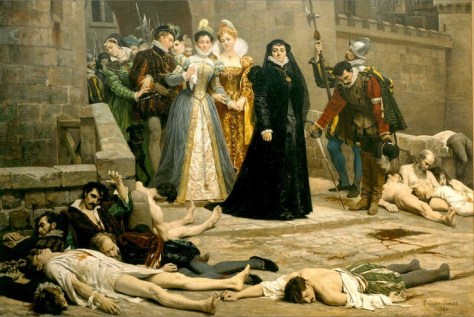
A Gate of the Louvre, after St. Bartholomew’s Day
A complete and utter favorite of Henry, The Duc de Joyeuse, as he was thereafter called, was not to have this soiree, as his only elevation. King Henry III used the marriage as a pretext for raising his rank to the dignity of ‘Duc de Joyeuse’. He was given number one standing over all other dukes of France, with the exception of ‘Princes of the Blood’. His dowry, in consequence, was over 300 000 écus, and he was given the sovereignty of Limours. This is called ‘keeping it in the family and the gift of significant lands and title were to bestow upon him, by royal privilege, parlements above and beyond any other noble.’
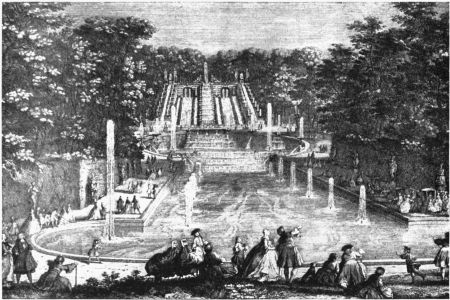
In this, we can see the French crown’s ambition and path toward absolutism really beginning, which would see its end in the revolution over 200 years later. So, with ballet, and unprecedented honors, festivities, and celebrations, came politics-always. Today’ antics can hardly be called unique or unusual, but pale famously in comparison, so matter how dastardly they might seem. Beaujoyeux , or Baltarizini, originally a violinist and tutor, headed the direction, staging and designing this Ballet, with a group of writers, musicians, actors, dancers, architects, and designers of many talents and copious skills. Beaujoyeux also was the court dance master and choreographer as well as valet de chambre to herself and the King. This marriage called for a larger-than-usual celebration and consisted of no less than seventeen events including horse ballets, allegorical feats, a triumph, a water fete, fireworks, and masquerades. One of these was also “Le Balet Comique de la Royne,” described in great detail in various accounts of the period, in artwork and poems. So memorable a festival it was, and lasted for nearly two weeks. The performance took place in the Salle de Bourbon, near the Louvre Museum (which is described as a large rectangular space) which was festooned with flowers and other decorations placed at strategic points around the perimeter of the room. Later, a sort of park, memorialized in some paintings, with a carriage circle, it was a common venue for such entertainments by the royalty at the time. There were few spaces, even in France large enough for such spectacles and frequently they were carried on out-of-doors, so we can assume this venue was of such a size and demeanor that it qualified for such an event.

The story itself concerns the sorceress, Circe, who captures men, turns them into beasts and keeps them in her garden. The performance is stated to have lasted over four hours, and the ballet opened with loud music. One victim escapes the enchanted garden and asks the King for help. A huge fountain is drawn into the hall containing the Queen and her ladies in waiting. The Queens praises are sung and here begins a large battle of good and evil. The Queen and her ladies dance as naiads until the sorceress casts a evil spell over them. Mercury descends from the clouds and dissolves the spell. They begin dancing again and the sorceress casts another spell upon them, forcing them to stop again. Wood deities enter and begin dancing and Pan is summoned to help the naiads but he refuses. The four virtues enter and sing about the King and they call Minerva. She enters and sings with them and herself summons Jupiter. He descends among thunder and music from forty musicians in a golden grove. A brief battle ensues between the sorceress and Jupiter, which she of course, loses. A long and complex variation follows consisting of dancing geometric figures. When the ballet is over, gifts were given to prominent audience members; it is said a dolphin, from his mother, to King Henry III, to signify that a son (Dauphin) be born to continue their rule (which did not happen), though it appears that Henry was in love with his wife, made many efforts, and had been in love deeply before with another woman, Marie de Clèves, whom had died prior to his becoming King (or he would have married her).
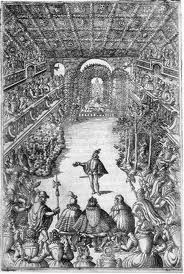
The music , singing and dancing continue throughout the performance. Music is the main theme-a lute, a small ensemble, and pieces for up to a whole orchestra, but it is varied and constant. Written accounts stated that the music was “unlike anything ever heard!” Apparently, there were so many diversified performances in costly programs, that no prevailing kind of dancing arose from any of them, as they seemed mostly to be unique and highly experimental. The Balet Comique, a rarefied example, was seen to be the beginning of the ballet de cour-in essence, a clear and dramatic story-line with a structured development and a cohesive theme replete with many art forms. What we do know is that each of these spectacles ends with a grand ballet which is long and complex. Those ballets, up to 1610, were not very well documented and none seemed to be as detailed or elaborate as Circe, although there are histories of many copies. The general public, as well, seems to have been influenced and impressed by them. Their history stemmed from the Italian Commedia dell’arte which was a traveling comedy show in which their characters wore masks. There were a lot of ballet de cours subsequently, but the genre seems to have disappeared by about 1673.

Beaujoyeux’s choice of music was that type composed by Lull, Bach and even Mozart,
and had a very distinct rhythm much like a sixteenth-note polska. Despite the fact that these singing, dancing, poetry-laden independent productions, ending in a ballet, were started in France, they were not formed into a permanent unison by the French. Until much later there was not apparent what we now recognize and exhibit as the art form, but it is Catherine de Medici, and her family and descendants who are the forbears of such noteworthy entertainment and who we can thank for the history of these continued divertissements. What is particularly significant about the ballet de cour itself is the strong position of dancing as well as the theatricality of the dancing productions. Plates exist to detail some of the creative hyperbole, which the French were known for, and the allegorical references in the productions did become the theme for classical ballets, such as those by Fokine, again popularizing their form in what was not strictly original but a neoclassical revival of that bygone era. In other words they became the subject of history of ballet and therefore fodder for later choreographers to develop onto.
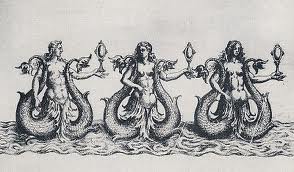
Research is partially credited to articles which appeared by Andros on Ballet (http://michaelminn.net/andros/biographies/de_medici_catherine/), Richard Cavendish (http://www.historytoday.com/richard-cavendish/marriage-mary-queen-scots), and Kristin Rygg, Masqued Mysteries Unmasked: Early Modern Music Theater and its Pythagorean Subtext. Pendragon Press Musiclogical Series, 1953. All highly recommended reads!
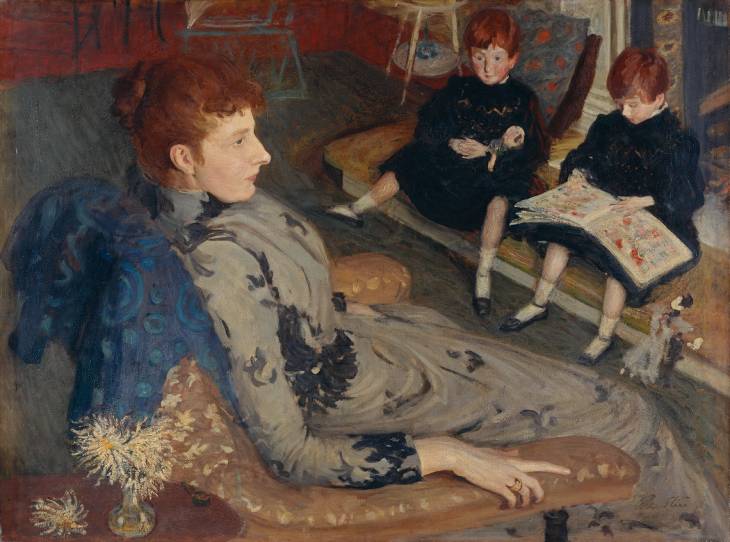
I remember the first book my mother gave me about ballet. It was already a very old book. The illustrations were of a little girl in a leotard with ballet shoes. She wanted to learn to dance. Her parents took her to a ballet class. After the lesson her new teacher asked her if she would like to come back. Her parents put a mirror her room and a barre to support her first efforts. She practiced what she had learned that day-so did I. I read and re-read this book and committed to memory the first positions explained there long before I was ever able to take a dance class. I didn’t start dancing until much later. My mother was not able to afford ballet-even in those days-but I wanted to learn. It was not until much later that I was able to afford dance classes, but that little book, and those days, came to mind.
I was working in high school and I decided that if I wanted my body to be a temple I should start treating it like one. I needed a plan, an outlet, and a safe place, and suddenly the idea of taking dance classes (probably put into my head by my mother) was born. I went to the local ballet studio in Dayton, Ohio, where they had a company, a junior company and classes and I tried to register for the adult class on Friday evenings. They asked me about any experience I had and I had to admit I had none. They recommended that I take some ballet lessons from the local community college before enrolling in their class, which required some knowledge of ballet, so I did. I registered for modern dance and beginning ballet classes. These were held 4 evenings per week.
It didn’t start with a book with my daughter, although maybe it did, and I don’t remember. I bought a lot of books-books represent about half of me. She started dressing up in costumes with her brother when she was very little and they danced! I would have to thank Daffy’s for that, because I could not have afforded tutus and things like that if it were not for Daffy’s in New York. But, it was much later, when I moved from New York to California, that I actually registered her in ballet classes-just three years ago this month. As she remembers it, she wanted to take tap , then jazz, classes with her friends at the local dance studio in Laguna Beach. She was there for the year, but when she wanted to register for more in the Spring, I informed her that I took dance very seriously and I wanted her to learn ballet as a basis for every other kind of dance she was to learn (and modern). If only I had had this opportunity with my sons, who assiduously avoid anything I formerly did! Her friends were treating dance very cavalierly, as a hobby, something anyone could do, and their expectations were not realistic, but it was fun. She liked it. I thought dance was hard work and required formal training to understand and to be good at, not something you did down at the little local studio, putting on recitals and getting on your pointes too early. I told her that if she wanted to take these classes, I would also insist that she take ballet classes from a good ballet studio three days or four days per week. That was the deal. She agreed to try it, reluctantly.
If I had waited another year, or not had my convictions about ballet and dance, perhaps she would have fought me on it-and won-as my sons did. But she didn’t, so I (hurriedly-I have two older children-you have to strike while the iron is HOT) called the local studios and researched them on the Internet to find a class appropriate for her from a reputable school. I think it is very important to look very hard for a child’s first ballet studio. Their philosophy is crucial for your child’s positive outlook about dance and especially themselves. I did find one studio on the Internet which advertised and upon calling I found that they had a level class that was appropriate for her age. That’s about all that I can say positively about it. The good side was that we possessed this impulse to register, we had some money-my grandmother had given me-and she was willing to try. Beyond that, this world was very foreign to me, and this was a pre-professional school. Admittedly, she (and the other students there) had a lot of flaws, but they had been working on theirs, were approaching it from a level of professional preparation, and whether all of them had the design or facility to become professional dancers, the opportunity was there to try. This was more than a bit intimidating for us. For me. In all fairness my daughter did not have this perspective. She was naive.
When, over the telephone, the co-director from this school said to me, “You don’t expect your daughter to have a professional dance career, do you? She is starting very late”- I should have left it, left perhaps, but she must have gone on to say something else, sometimes words just popped out of her mouth, and I think she was saying that, if I did, and she knew I was, that we would have to work harder than everyone else, and we would have to see. She would have to take more classes, and this became an issue later. This person was very knowledgeable about what it takes (now) to become a ballet dancer, and a professional dancer, but their school typically did not force movement or extra classes on students because they burnt out. This came up in a later discussion, but at this point, I cannot lie, I took her meaning perhaps in the wrong way, or perhaps she stated it somewhat differently than she meant it. But we went anyway.
She enrolled her anyway, and the tuition was much higher than the little dance school in town, but not unimaginable to pay for quality ballet education. I waited to see what the teacher was like, and my daughter went to class. I will say that an unlikely pair, these two directors were actually very professional and delivered a really good dance program for students. Their productions were beautiful, and they provided many opportunities for advancement. There is the studio politics, which they try to keep at a minimum, I suppose. It is probably much more of an issue with families who have more serious intentions for their daughters, where the children may or may not have what is required to become professionals. Parents like that want a guarantee that their children are going to have the best chance, first pick of the roles and plenty of opportunity, before they make an investment or while they are doing it. It did not result in my daughter, at her level being denied prime parts, of course she was not ready. She had parts, she took class, she learned about the ballet studio from the ground up. She had a phenomenally nice and caring first teacher, Ms. _________.
We were definitely not in that market, either, and through sheer differences, are likely never to be. By hook and by crook, we have managed to avoid a lot of those arguments, and pitfalls. We have not become (as so many have wished us) carrion of ballet on the roadside. But, I did have a very difficult time making friends there. It was very cliquey. But the directors were not the ones controlling that, and after a while, the parents (sort of) lightened up and were a tiny bit nicer or at least took the attitude of, “Well, I do not want you here, but if you are staying, then help.” But it is not until much later that you even begin to understand this and can develop a sort of callous against it, or toward it. In many cases, they mean to make you leave, want you to leave, and the children (and parents) will sometimes actually say it. It is a very emotional environment. But still, you can talk, and make friends, watch your children grow, become involved, stay busy, if you can handle the heat. Some parents there were really nice from the start, and some were in a position, or trying very hard to get into a position, to help control their children’s careers and opportunities even further, and some were never around. Even though I like that type best, it is not conducive to running a ballet studio where so much is expected it would take a King’s ransom to afford and most ballet tuition just does not cover it, so putting up with parents, inviting them to volunteer and dealing with them is usually necessary. There is the argument as well, that you need to be there for your child.
I thought, who was she to say at that point what potential my child had, or what path she would take in dance? I literally kept this in my mind, did not tell my daughter until fairly recently, and it went on the list, rightly or wrongly, of reasons to find somewhere else to study, eventually. It was a decision-making factor, however she meant it or well-intentioned she was. In fairness to her, she never brought it up again and does not remember having said it now, so after all this time, I am forced to let it go, as she probably was just having a case of verbal diarrhea, thinking out-loud, and let’s face it, being truthful. We had no idea what we were coming into and she did start very late nowadays. Much has changed since I was a little girl, or even a big one. We were literally NEW. Some people say they are NEW when they come from another studio, switch forms of dance, some even lie about their age or training. Determination is a major factor for learning dance and any limitations taught or observed, in my opinion, are a harbinger for disaster of art and teaching dance education, once in the classroom. And you will find, left alone in the classroom, most of these political issues fall away, so you have to back off. Anyway, that was not the reason for our leaving almost 2 years later.
Perhaps if my daughter did not have the negative experiences that she did she would not have been challenged enough to keep dancing. At least that is how I see it now. She was a natural in many aspects and she loved it! She loved to dance. It was a new world to her. She really wants to be successful in dance, and has her own unfiltered vision of how that is going to be. Even then, she eventually developed her own critique of the school and the teachers-saw whatever they did and judged them. This had somewhat of an influence on me because of course, I was very naive about it, and yet, wanted her to be happy where she was, felt she could be taking more classes, and needed to have more performing experience or attention. If there were things that went wrong, or unfairness (in her mind) towards other people, she judged immediately those in the position to act as adults, keep their silences, and treat children decently and fairly. She made her own decisions about that. I was the driver of the car, but at a certain point you become just that and you guide your children, approve or disapprove, but they fill the sails!
She had just turned eleven at this point and the way I was taught-my mother had been a dancer and her mother before her, going en pointe much before 12 would mishape the feet, damage the bones and muscles, shortening the life of the dancer’s primary tools and career. There is much to learn before going onto pointe, however, and my daughter has had her share of problems. We bought the regulation white demi-skirt, ballet slippers and white leotard. I will always be glad we started there if only for Ms. ______ and the white outfit, but also because when I look back, it wasn’t as bad as all that. Maybe that was the moment of truth. A lot of the inspiration for parents to spend a good part of their lives driving their children to ballet, washing leotards and tights, attaching elastics and ribbons to shoes, buying shoes and the other accoutrement that attend ballet MUST be borne from the vision of our children actually in the dance class on the stage performing. I missed that class. I admittedly was more concerned with what could take place mentally in dance, as it had for me, forgetting that my own daughter was an entirely different animal and I did not have the perspective of say a grandparent, or mature dance practitioner. This is very important in ballet actually, and I believe has a tremendous amount to do with children quitting or not continuing ballet, not putting enough into it to succeed and parents being involved with certain aspects of ballet training that they shouldn’t thus slowing the development process. It took me a long while to adjust-I am still adjusting.
Learning is taking place, and even though it is not traditional learning, it should be traditional ballet discipline and movements. For me, I was in rapture at her in her first class. She could have been Pavlova, Margot Fonteyn or Cynthia Gregory standing there in her first class. She seemed to have their natural deportment and grace. Compare it to when you first lay eyes on your child and that wet baby is the most beautiful treasure you have ever seen in your life. This was right up there, as an experience, for me, and I had not seen or felt that, to that degree, before. I never thought about it much at all. I have a feeling this happens to a lot of mothers-maybe all the hopes of what they can become lie in ballet, discipline and it is though we say, “there,” is where she will be safe, where young ladies belong, the best environment for her growth, development, comportment-as a women-where she will find her strength. It is OUR imagination that sees ballet as their calling and possibly, their savior. We want all the attributes that we fantasize about projected onto our children: the grace, beauty, sylph-like litheness, slender bodies, costumes, roles….it is how we are sucked in, moved. But in the end, although no one else really ever understands us, it is just about the best thing you can do for your child-in my opinion. Whether I am in that league, and there is of course, a lot more to it, it dawned on me, that competition and jealousy are your enemies in ballet, and now I realize they may be your only friends. That is not what I foresaw for my daughter, and I did not see her flaws at first, how much hard work she would need to put in, and how that hard work would have to be held up continually with no breaks, how expensive it would become, or that it was exclusive. In may ways, the co-director should have said more, a lot more, but that only proves that either she wanted my money, or she had hope. Hope, in the end, is all you may be left with.
Although there is nothing at all wrong with this, we often have to ask ourselves if they have it in them to succeed and their pains are our pains, making it, I am finding out very difficult for us to watch as they learn, and yet making us prouder than we have ever been if they do just one thing right. This becomes each and everything as they follow a syllabus, graded or not, for each achievement mirrors the other obstacles in life they have to take down, and day by day, we grow ever more confident of their abilities to be successful in life, if they continue to do so. Ms. ________ was the primary ballet mistress and how kind and wonderfully encouraging she was! We also project onto the teachers the values we espouse, imagining we have a clue as to what makes the dancer tick, binds us with the studio or its directors, the teaching process, or our child for that matter, and I often see parents butting in, trying to tell the teachers what to do, “helping” out, and how often these efforts by the parents anger other parents, and how petty jealousies ebb and flow, how much drama the parents bring into the studio, themselves. This must be very frustrating for the teachers as teaching ballet is no less an art than dancing it, and it requires much more patience, concentration, communication and a special, unbreakable bond between the teacher and the child-one that I warn should not be undermined by the helpful or protective parent. If there is something you cannot tolerate, tell the teacher about it privately and NEVER communicate this with your child unless it is to assist them-and think this over very thoroughly before doing so. Sometimes we pass on to our children our own fears and protectiveness and this can hurt them understandably as they need to form their own opinions and experiences. This, however, in ballet, is pretty much impossible as we are so selfish.
Putting up my daughter’s very long, thick hair was an exercise in itself, but like all the disciplines of dance, this becomes easier and then the dancer takes over, adding this skill to her ballet accomplishments. A good bun is remarked upon even by teachers (I remember mine was pronounced “beautiful” by Ms. Schwartz and I was very proud). A sloppy bun-sloppy dancer! It sounds priggish and judgmental, but this basic discipline serves the dancer well, and to support the teacher in their role as leader does your child no disservice. Command attention and respect for the teacher! Focus. Straighten your seams. Sew your own ribbons. One by one, these “exercises” add to the installation of discipline and direction, taking the young girl and leading her into womanhood, responsibility and grace. They also learn dance etiquette from all of the other students, so I am really for a firm hand by teachers in fraternity and humanity. I really do not like slovenly teachers for beginners, professionals or no. They seem to have no self respect. How can you teach that without it? No matter the parents, the children are what is important. Respect for the teacher, timeliness, cleanliness and a host of other things that you could not teach them at home easily. So why come into the dance studio at all? You have to trust them, right? In all, a dance studio is a very nice home away from home. It becomes like another family for them, and as they grow, they realize, it is a small world, which the outside world has hidden from them, and which if you are not careful, your child feels more comfortable in than the real world. This can be a good place to be these days, though, and it does protect them from some of the experiences associated with youth today, but not all. It is important that they have outside friends and social activities and experiences. They should be encouraged to continue school, no matter how ‘serious’ they become.
There was much made of the brand BunHeads in the stores, so I bought a lot of other little things like pins and sewing kits, etc..that were not available when I was young. I may have spoiled her just a little bit by buying things I wish I had when I was a child-this is probably a mistake, but I enjoyed it much more than she did. She only loved dancing, and accessories decorate her person, but she is just as happy sweating away in her favorite torn leotard, failing to be able to locate a new one like it. I only had two or three leotards the whole time I studied dance and although I recommend a stoic dance ritual, focusing on the technique and not the costumery, there does come a time when “dressing up” is part of the social environment, and preparation as a dancer, a sort of “coming out” which the dancer learns from her peers. Humorously, this might result in periods of awkward hairdoes, too much make-up, and bizarre colors and styles of leotard, but it is a phase and a sign, that the dancer wants to be an individual, a sort of rite of passage for female dancers and get pictures because chances are this elementary phase disappears eventually and there burgeons a young woman, replete in her formality and seriousness, bound for eventual maturity and grownup qualities and the little girl is put far behind her. You will want to remember these days.
I could not resist-but this did result in my daughter asking for many things she did not need. Black is the true color of your beginning dancer’s wardrobe, and until it is deemed that he/she has reached a level to merit some other color (or the studio has designated levels by color), they must get used to it. Usually, some studios relent and give the dancer’s one day a week to wear a colored leotard. You must think of this as you would of uniforms in private school-the emphasis is on the learning, not the wardrobe. As you must also remember it is easier and less distracting for teachers to view the girls in identical wardrobe and clothes for correction of mistakes and proper use and development of muscles. For me, now, important in considering a school, would be the deportment of the other students, the professional attitude of its directors, and knowledge, but perhaps most importantly, that the children are not injured and that there are proper corrections going on constantly.
There is much more flexibility in balletwear than when I or her teachers studied, you can imagine and we cannot help but to compare our own experiences with what is going on around us. I have even had the professional dancer, and even those with children, who are also dancers, expressly tell me that things have changed drastically in formalism, training and the world of dance since they were in school. It has become much more competitive. There is certainly an emphasis on gymnastic training and innate flexibility. Even of different parts of the body, not just splits, but say, back, and or feet, curvy and not straight. These aspects are hugely controversial, too, and despite these judging points, dancers continue to be successful who do not possess all of these traits, and injuries continue which cause some dancers, who would never have a chance, to be the replacement for one who had all of them. Just life and chance, persistence and dedication, and teachers. Not Descartes, but I dance, therefore I am a dancer even before I began to study the art form known as dance, I was a dancer. Dance to me is the study of ones self, the limits and abilities of the body and the mind. This I reinforce with my daughter daily, so believe me she doesn’t ask for much anymore! Sad in a way. I feel this is very important….really. As she gets older, I realize that perhaps it will come, and perhaps she is a bit of a different kind of dancer, and I am glad, either way, that she takes joy in ballet, whatever her reasons.
Likewise, practicing what they learn in ballet is very important. It is a fact that the more you dance, the better you get. You cannot expect to become something if you take a class and leave. Dancers think about dancing 24 hours per day. Some people work very hard in class and then do nothing in between. Some work more outside class. Some take privates, study other forms of dance, gymnastics and a myriad of other disciplines, too. Some are not sure about ballet. Everything changes all the time and it is common for the parent to be in one mind and the student to be typically of another with respect to their training and wishes. Who knows more is very difficult to say, but you can rarely separate the two ideologies until the dancer matures, comes into her own, progresses. I believe ballet is its own discipline and a strict and jealous master. She believes that, too, perhaps more than I do. Once asked how she prepared for surfing, what exercises she did to strengthen for surfing, a champion surfer said, “surf.”We have discussed what made me dance, why my daughter took a ballet class, but what kept her there? She did, and I did by taking her. But her happiness and zeal for learning drove me to it, forced me to endure it, and then, only begrudgingly, did I take a sort of pride or happiness in it, when I happened to catch an improvement in a step, a jump, an expression or a force-then I was truly pleased.
These two elements are key-and I know a few mothers who take their daughters to dance and the daughters do not apply themselves. They do want to be there, but they do not want to work and they do not want to become professional dancers! You cannot make someone a prima ballerina. They have to do that, they have to have it all, not you, so stop kidding yourself that when they are 14-15 they will not quit, get a boyfriend, do something else, and it can happen anytime, maybe unwittingly. All that work and labor and emotion down the toilet so you say, but it becomes part of them forever, and no matter your broken heart, they may find another career more realistic, or they may just decide that they are not really interested in working against their flaws anymore, or they are moved to do something else. Whatever the case, I think you will find they are improved as a person by the experience of ballet school. You might be best advised to find another pastime and let them do their thing, see what comes of it and not take it so seriously, for you will not matter in their or the world’s final assessment and decision. Letting go is hard, but I recommend it, eventually. I think that my friends are right in bringing their daughters regardless of the outcome, because children test you in so many ways, even threatening to hurt themselves with actions that they are aware will hurt you, too. But, if you hang in there, you send your child more positive messages than negative ones by your example and different kinds of positive reinforcement.
What makes people dance? I mean study dance, be drawn to it everyday, choose it as a way of life, a vocation, an avocation? What is it that calls to so many people on so many levels from so many walks of life and backgrounds, to know more, learn the language of dance? It is the only art I have ever known that encompassed all of me. It is usually because they are good at it. I have never known anyone to like anything that they were doing poorly in: math, sports, music, even socializing-you name it. Students who are good at it always find someone who is better. This is important because we learn, from those better than us, by watching. Also, if we are good at something, we feel rewarded by our efforts in it. If something is continually disappointing, then we lose interest. This is very self-evident in ballet. Perhaps parents getting involved in it and pushing their children into it, keep the rest of us, and our children from finding out that it is , not for them, as we are forced to wait to see if our own children have what it takes, aside from the politics, the same children getting the roles, and we would or they would realize more quickly how hard they need to work and exactly what they DO need to succeed. If you hang around enough though, your child does gets better, those children will sometimes drop out, body types change, interests do, too. So much can happen, just like real life, that you have to see it through,persevere. Much of this is up to teachers who interact with us in class and do not criticize too much, but rather give us things to work on regularly and pay attention to us as in, “You can do better!” and not, “You are hopeless.” But do not expect this to work-sometimes the tough tact is required for certain children to succeed and they like it. Other children do not like to be told they are wrong, cannot bear failure, and must be cajoled into liking it. No child is hopeless, in my opinion, but I am sure a lot of good dance teachers would disagree with me. There are many snobs, but be thankful, in a way, for the schools who take only certain students, protecting you from a too-submerged technique, because they could also be saving you a lot of money, and if your child still continues to dance, one day, they will be in the same classes with many of those students, and finally, they may exceed those students in some abilities or in their career. It’s all about the dancing and Keeping on Dancing! It’s funny, but there is definitely something to not quitting and continually working toward your goal. More about that in another post.
What definition of dance do you want for your children? Do you have a past affinity for dance, or rue lost opportunities or dreams? Do you want them to dance to be the best or to most enjoy the experience of dancing and learning and discipline? Do you want them to compete? Do YOU feel competition is the key to being noticed and being successful in dance or does your CHILD? Or do you feel the expression of dance is most important, the vitality and slow transformation of the body into an instrument capable of responding to directions to express beauty, emotion and strength or are you of the opinion that your child can do anything you MAKE them do? Children aim to please, but to demand too much of them, even if successful can mar them for other things in life, as in “parenting.” It is one thing to believe in your child’s best abilities, but it is another to hound them about things you perhaps want for yourself, as a justification of yourself as a parent, as in having the BEST children, better than anyone else. I believe a lot of people think like this and they send their children to dance, trying to find the perfect place for their children to succeed, but I have also seen the work of ballet take over and transform those parents into believers of ballet in general, and to sort it out. And if you kept the parents completely OUT of the studio, politics and business it would be a possibly better place-usually, but dance and ballet would not rise to level of importance in your community or the world, this way, in the ways that it has. Dance needs communicators and instigators, and activists or advocates. Agitators. There is a useful place for everyone in the art, I believe. Sometimes it comes down to finding your own best use. When we realize that we are all doing the same things it is laughable, really, but some people don’t like to be laughed at either. After all, the children aren’t bothered, why should we be?
This is how I found the dance studio environment, thirty years after giving up dancing, with my then eleven-year-old daughter and the answer is I was (completely) out of it, on the wrong foot, so to speak, and she was in it, trying to get on the right foot. Shame on anyone hindering her. But, what to do is puzzling, how to help them the best you can, parent etiquette, how many classes to take, what path, what supporting classes, what schools or teachers, what physical issues are there, what injuries, and a lot of other coverable topics that would clearly help parents to refocus some of that energy in a positive way. A no hands policy is just as bad as one of driving the car of your child’s life completely. A balance is sometimes hard to find and maintain. Her experience seems to be very very different than mine as I remember it. Can you separate the two parts of your own effectually? She has come farther than I did in a fewer number of years. She is solely dedicated to dance. I was not. Is this what I want for her, really? Is that, or should that be, my choice? The answer to that might be the key to everything. What about the rest of the family, financial circumstances, time? Could I have been mistaken? Was I in denial about what I needed to do and what is required of me as a parent? Am I still useful? How can you help and not be a hindrance to your child and to everyone else?
In many places ballet has become a competition-based pursuit, like gymnastics and ice skating were and continue to be. Sometimes the competition has become the basis for everything a studio does and that goes to the training as well. But you will be very hard put, in an advanced arena of teaching, to find one that does not do some competitions or tolerate students who have that desire. It has been a way for good teachers with good students to get noticed in the competitive selection process of higher education institutions like the Bolshoi or the Royal Ballet School, and helped to provide their students the consideration of companies and the world at large. A way to help students of ballet. A resort, or last resort. Also a response to parents who have demanded those guarantees, how will my child succeed if no opportunities exist for them in the field of dance without training at one of the elite schools, or from those who do not wish their children to have to leave home, give up education, etc. Jazz dance competitions have always been this way, but what about ballet? Are there two kinds and if so, is one better than the other? Has dancing changed or are dance classes at a lower level school always so political and performance selection focused? Competitions provide a student with an opportunity to show off their particular performance skills.
My mother always warned me against “performance” studios. Why? Are there some bastions left of excellence in the art of dance? Yes, many, in fact, now is probably the best it has ever been in this country, or the world, to find a reputable and caring place to study ballet, to have the best training, and the best possibility of achieving your goals in dance. Whatever may be said about the studios we have been involved with, they took my daughter and began or continued her in her path of excellence in dance, so there I did not err in my judgment or choices. They have all been exemplary in their way. They did care about her, but I may not have handled the situation correctly, or they may have left off communication misinterpreting our departure, etc. It takes work on both sides. Some studios may not be willing to go that far to keep your child, so my motivation, and hers, is to find someone who is willing to work with you. Some parents do not have that problem for many different reasons. You do have to guess and factor and plot and try, for your child.
In this environment, how do I communicate to my daughter the art of dance over scholarships, competition and “winning?” It is possible that this has been futile, because in the end, if she continues, this will inevitably be a required part of her training and to dissuade her entirely would be to her great disadvantage and she might even be missing an important part to her components as a dancer. The point is, I do not believe there is just one way. Successful studios continue to both promote competition and others to deny certain forms of it. These attributes are widely variable, not mutually exclusive and complex-each studio is different, and may change. I think to take a position one way or the other, without regard to waiting until your child’s future in dance is commenced, would be a mistake. Some considerations will not apply to you then and more questions will arise to ponder, make no mistakes! Keep your eyes wide open and your ears. Judge less, do more. Wait and see. Be proactive.
There are many other issues to discuss about ballet and I hope that this first post of our continuing saga in ballet will be helpful to those starting out. I mean to set the environment for an open communication for individuals to comment with their opinions, advice, and to share their own experiences and insight at length. I will not condone and do not mean to expiate against the virtues of one studio over another, for each has their place and merits consideration. While I might say things about the studios my daughter has been involved with, I intend to give no names, and to protect them from unverified slander, even from mysylph. While each of us may have our own experiences, they are personal, highly emotional and there are two sides (at least) to every story. They have helped my daughter on her path in ballet. Hers is not an easy one, for them, for me, or most importantly, for her and our situation is very particular-so is yours. So, let us rest in giving them the benefit of the doubt and let our own experiences and goals be the guide. They are all hard-working and provide good training.
Keep on Dancing!
 mysylph